Current Cryptocurrency News for Saturday, February 7, 2026: Key Events in the Global Crypto Market, Institutional Trends, and Review of the Top 10 Most Popular Cryptocurrencies for Investors.
The global cryptocurrency market concludes the first week of February with a sharp decline. Bitcoin has dropped to levels unseen since 2024, while other leading crypto assets have also suffered significant losses. The overall market capitalization has decreased by nearly $2 trillion compared to the peak in October 2025, reflecting a mass sell-off amid deteriorating investor sentiment. Concurrently, regulators around the world are intensifying their scrutiny of the industry, adding uncertainty to the market.
Market Overview
Following a tumultuous rise last year, the crypto market is grappling with a massive correction. As February begins, a “crypto winter” – a period of cooling characterized by falling or stagnant cryptocurrency prices – is evident. Investors are locking in profits and retreating into safer assets, leading to reduced trading volumes and liquidity. Below are the key factors contributing to the current market decline:
- Macroeconomic Pressure: Escalating uncertainty in traditional markets. A sell-off in tech stocks and volatility in gold and silver prices has dampened the appetite for risk assets, including cryptocurrencies.
- Tight Monetary Policy: Expectations of tighter policy from the U.S. Federal Reserve. The nomination of a new Fed chairman with a "hawkish" reputation has heightened fears of reduced liquidity in the economy, negatively impacting crypto assets.
- Outflow of Institutional Investments: Large funds and ETFs that actively purchased Bitcoin in 2025 have started selling it in 2026. The monthly outflow of capital from Bitcoin ETFs amounts to billions of dollars, signaling a decline in interest from traditional investors.
- Low Liquidity and Decline in Hype: Following the price peaks last year, the market has entered a cooling phase. Reduced trading volumes and the disappearance of the FOMO (fear of missing out) effect have led to intensified price pressures from any sales.
- Regulatory Uncertainty: Increased oversight of the industry in many countries (from new legislation in the U.S. to bans in China) has prompted some market participants to act cautiously and withdraw capital, further affecting prices.
Bitcoin (BTC)
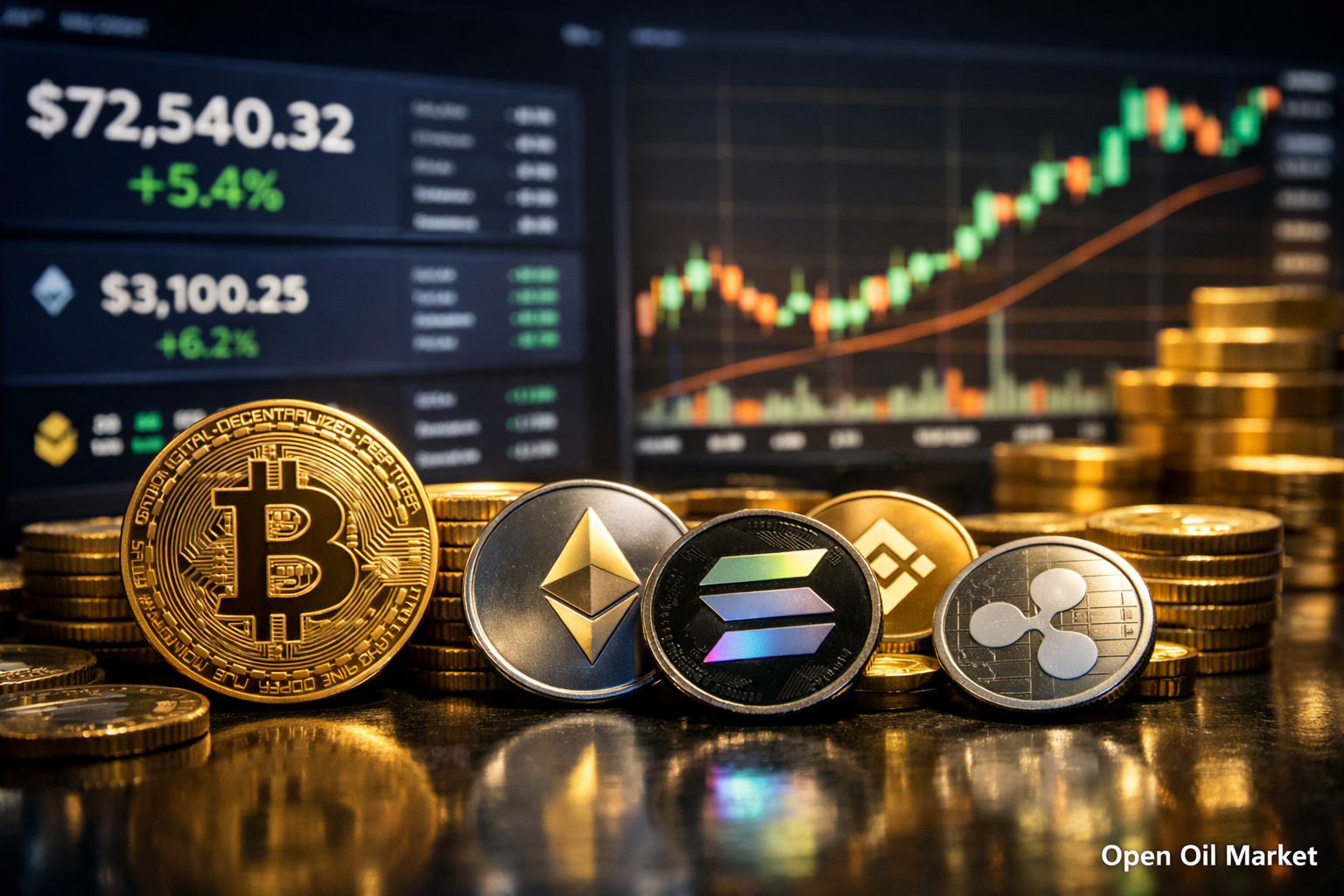
Bitcoin continued its decline, setting the tone for the entire crypto market. As of the morning of February 7, its price hovers around $63,000, marking the lowest level in over a year. Since the beginning of 2026, the leading cryptocurrency has depreciated by approximately 30%. For comparison, in October 2025, Bitcoin reached an all-time high of over $127,000, subsequently stabilizing around $90,000 by the end of the year. The breach of the psychologically significant $70,000 mark downward triggered a wave of liquidations, with approximately $1 billion in margin positions being forcibly closed in recent days, further pressuring the price.
Experts note that the current decline is largely due to external factors. Bitcoin, which in previous years was considered by some investors as “digital gold” and a hedge against inflation, is now trading more like a risk asset, correlating with the fall of stock indices. An additional blow to sentiment has been the appointment of Kevin Warsh as the new Fed chairman, known for his commitment to tightening monetary policy. Expectations of a reduction in the Fed's balance sheet have led some capital to flow out of Bitcoin. Notably, amidst the current dynamics, the price of BTC has effectively returned to levels seen prior to Donald Trump's victory in the U.S. elections, despite his professed support for cryptocurrencies.
Ethereum (ETH)
The second-largest cryptocurrency by market capitalization, Ethereum, is also experiencing significant declines. The price of ETH has fallen below the psychological barrier of $2000, trading around $1850 and losing about 19% over the past week. Since the start of the year, Ether has declined nearly 40%. Just last December, Ethereum was holding above $3000, but overall negative sentiment and outflows from risk assets have impacted this leading altcoin as well.
The fundamental factors for Ethereum remain intact: the network is still the foundational platform for decentralized finance (DeFi) and smart contracts, having successfully transitioned to a Proof-of-Stake algorithm. However, in a general correction, even technically strong projects are incurring losses. Price pressure on ETH is also coming from competition posed by alternative blockchains and Layer-2 solutions. Many investors have reduced their positions in Ethereum, awaiting stabilization in the market and clearer signals for a rebound in demand for risk.
Altcoin Market: XRP, BNB, and Others
Altcoins – the other major cryptocurrencies besides Bitcoin and Ethereum – are also under significant pressure in recent days. The Bitcoin dominance index has risen as investors, during periods of turbulence, prefer the more liquid and time-tested BTC, exiting riskier coins. However, nearly all top assets have suffered double-digit percentage losses over the week:
BNB, the native token of the Binance exchange, has depreciated to around $660 (down over 15% for the week). BNB's quotes are affected both by the overall market decline and the ongoing strict regulatory oversight of crypto exchanges. Just last year, BNB reached all-time highs amid the growth of the Binance Smart Chain ecosystem but has since retreated to levels of late 2024.
XRP (Ripple) has fallen to around $1.3, losing a significant portion of its value compared to local peaks last year (for context, in 2025, XRP rose above $2 following Ripple's partial victory in its legal dispute with the SEC). Despite legal clarity in the U.S. and XRP being included among reserve cryptocurrencies backed by the Trump administration, the current market decline has not spared the token. Nonetheless, XRP remains one of the largest cryptocurrencies used for cross-border payments, maintaining high trading volumes.
Platform tokens Cardano (ADA) and Solana (SOL), among the most popular altcoins, have also decreased in price. SOL has dropped about 15-20% over the week, falling to the $90-$100 range, despite ongoing technical developments in the Solana network. ADA is trading around $0.30, nearly 15% lower than its value a week ago. Previously, Cardano attracted investor attention with expectations of launching ETFs for its underlying assets and protocol upgrades. However, in the current "risk-off" sentiment, this news has taken a back seat.
Meme cryptocurrencies have not been spared either. The popular coin Dogecoin (DOGE), supported by the community and occasionally by Elon Musk, has dropped below $0.10, reflecting an overall decline in speculative interest. Even without negative news, DOGE and similar tokens are losing value as the market falls. Meanwhile, some coins linked to gaming and metaverse projects show relative resilience, but collectively, the altcoin segment demonstrates a decline in capitalization.
Amid falling prices, investors have intensified their shift into stable digital currencies – stablecoins. The leading stablecoin Tether (USDT) maintains its peg to the dollar at around ~$1 and shows increasing transaction volumes, as many are moving funds into a less volatile form. The same applies to USD Coin (USDC) and other stablecoins, whose demand has increased during periods of turbulence. However, regulatory risks surrounding stablecoins are also rising (e.g., new restrictions have been introduced in China, as detailed below), adding another layer of uncertainty to the market.
Regulation: U.S. and China
The regulatory environment at the beginning of 2026 is shaping mixed trends for the crypto industry. On one hand, in the U.S., the new administration declares support for digital assets. President Donald Trump, who returned to the White House in 2025, has referred to the country as the “crypto capital of the world” and initiated the creation of a national strategic reserve in cryptocurrency. This reserve includes the five largest coins at that time: Bitcoin, Ethereum, XRP, Cardano, and Solana. Additionally, the GENIUS Act has been enacted to establish rules for the industry, including the regulation of stablecoins and consumer protection. In January 2026, bills regarding the market structure of cryptocurrencies are being advanced in Congress, which aim to define which agencies will oversee digital assets. The White House is actively mediating between proponents of strict regulations and industry groups, demanding a compromise on stablecoin regulations by the end of February.
On the other hand, restrictions are tightening in several countries. In China, authorities have reaffirmed their strict stance: the People's Bank of China issued a notice on February 6, banning the issuance of stablecoins pegged to the yuan without official approval. Essentially, Beijing is preventing any attempts by local companies to create or distribute yuan-pegged digital tokens abroad. Chinese regulators also reminded that all operations with virtual currencies within the country are considered illegal financial activities. These measures highlight China’s readiness to maintain complete control over the monetary circulation and prevent circumvention of currency restrictions via crypto instruments. Analysts note that such news regarding bans heightens investor caution and may temporarily affect demand for cryptocurrencies in the Asian region.
At the same time, other jurisdictions are trying to find a balance. In the European Union, the regulatory framework law MiCA (Markets in Crypto-Assets) is starting to fully operate, aimed at providing transparent rules for the crypto industry throughout the EU. Many market participants hope that clear requirements from regulators will eventually attract more institutional investment. However, in the short term, increased oversight often accompanies caution from major players.
Top 10 Most Popular Cryptocurrencies
Despite the current price fluctuations, leading cryptocurrencies remain the focus of investor attention. Below is a list of the top 10 most popular and significant cryptocurrencies to date, along with their characteristics and roles in the market:
- Bitcoin (BTC) – The first and largest cryptocurrency, serving as a digital analog to gold. It has the highest capitalization and recognition. Used as a store of value and for hedging, although it has recently behaved more like a risk asset. Bitcoin makes up about 40% of the total market.
- Ethereum (ETH) – The largest smart contract platform. Ethereum underpins the DeFi, NFT, and numerous blockchain applications. It has the second largest market after Bitcoin. Ethereum’s transition to a Proof-of-Stake mechanism has enhanced network scalability and attracted additional interest from institutional investors.
- Binance Coin (BNB) – The token of the largest cryptocurrency exchange Binance and a key asset of its blockchain (BSC). BNB is used to pay fees, participate in new projects, and other services within the ecosystem. The coin has grown due to Binance's market dominance, but faces regulatory risks due to oversight of the exchange.
- Ripple (XRP) – A cryptocurrency focused on fast and cheap international payments. Issued by Ripple, it integrates into banking systems for cross-border transfers. XRP has gained traction among financial institutions and remains in the top five, despite past legal disputes with regulators. It is characterized by high transaction speeds and low fees.
- Solana (SOL) – A high-speed blockchain positioning itself as a platform for decentralized applications and Web3. Solana attracts developers with its high throughput and low fees. From 2021 to 2022, SOL experienced explosive growth, entering the ranks of the largest crypto assets. Despite recent corrections, Solana remains a leading competitor to Ethereum in the smart contracts sphere.
- Cardano (ADA) – A blockchain platform developed with an emphasis on scientific approaches and code reliability. The project evolves more slowly than some competitors, implementing new features gradually, but has a large community. ADA, the internal token of Cardano, is used for staking and transactions on the network. Cardano regularly makes headlines with network updates and initiatives to launch ETFs on related assets.
- Dogecoin (DOGE) – The most well-known “meme coin,” initially created as a joke but has gained immense popularity over time. DOGE is characterized by high emissions and a low price per coin, but attracts attention due to community support and prominent personalities. It is used as a tip online and for micropayments, remains volatile and heavily relies on social media sentiments.
- TRON (TRX) – A blockchain platform focusing on entertainment and the content industry. TRON offers high transaction speeds and zero fees, attracting applications for content sharing and decentralized gaming. The TRX token is actively used in the Asian region. The TRON network is also known for issuing a significant number of stablecoins (including USDT), providing it with a stable volume of transactions.
- Polkadot (DOT) – A project aimed at uniting various blockchains into a single ecosystem. Polkadot implements the concept of “parachains,” allowing different networks to interact with each other. The DOT token is used for staking and governance of the network. Polkadot has gained wide recognition thanks to its co-founder (Gavin Wood, a former developer of Ethereum) and its vision of blockchain interoperability, securing a spot in the top 10 by market capitalization.
- Polygon (MATIC) – A Layer-2 solution for scaling Ethereum, formerly known as Matic Network. Polygon provides infrastructure for faster and cheaper transactions over the Ethereum network, attracting numerous DeFi and NFT projects. The MATIC token is used for paying fees and staking within the Polygon network. The project has become one of the most successful among Layer-2 solutions, ensuring compatibility with the Ethereum ecosystem and significantly reducing the burden on the main network.
Investor Sentiment and Prospects
The current phase of the market resembles previous cycles of decline, yet industry participants try to look forward. Seasoned investors note that every “crypto winter” has previously ended with a new growth period. Analysts point out that fundamental technological advancements – network development, the adoption of cryptocurrencies by businesses and governments – have not disappeared, despite falling prices. Many projects continue active development, and companies from the traditional financial sector are exploring entry opportunities into the crypto market, awaiting clarity in regulations.
Sentiment for the near term remains cautious. Volatility may persist in the coming quarters, especially if global central banks maintain a stringent rhetoric, and investors continue to avoid risk. However, the presence of major players in the market and the experienced handling of previous downturns provide some optimism. Some experts suggest that the current decline may persist for a few more months before the market finds a “bottom” and begins to recover. Key triggers for reversal may include eased monetary policy, successful implementation of regulatory reforms (which will eliminate legal uncertainty), and the launch of new products – for instance, the approval of new ETFs or technological breakthroughs in the blockchain space.
For long-term investors, the current situation is an opportunity to reassess strategies and adjust their portfolios as necessary. Many are concentrating on the largest cryptocurrencies with an established reputation (such as BTC and ETH), expecting reduced turbulence. At the same time, there are those who view the downturn as an opportunity to enter the market at lower prices, anticipating future growth. Overall, the industry enters 2026 with a cautious mindset but a persistent belief in the long-term potential of cryptocurrencies as an integral component of the global financial landscape.