Global News in the Oil, Gas, and Energy Sectors for Saturday, February 7, 2026: Oil, Gas, Energy, Renewables, Coal, Refineries, Electricity, and Key Events in the Global Energy Market.
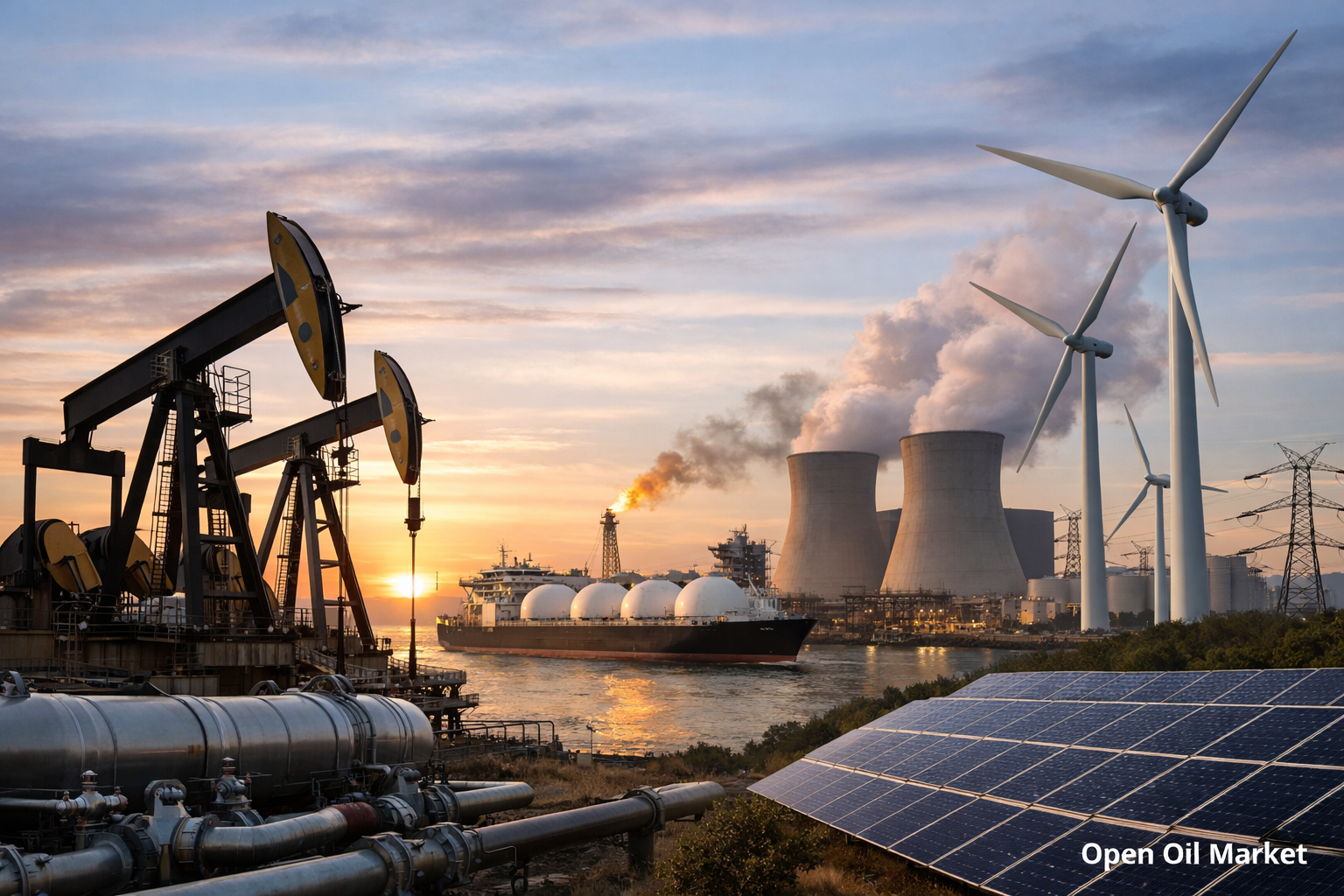
By early February 2026, the global oil and gas market is defined by opposing factors: an excess of supply and sustained geopolitical tensions. Western countries continue to tighten sanctions on energy exports from Russia (as of February, the price cap on Russian oil has been reduced to $44.1 per barrel), while key importers such as India are revising their purchasing strategy under external diplomatic pressure. Nevertheless, oil prices remain relatively stable (Brent at around $68 per barrel) due to expectations of supply overhang. The European gas market is progressing through winter without a frenzy, despite the rapid depletion of gas reserves in storage, aided by mild weather and high LNG deliveries. Meanwhile, the global energy transition is gaining momentum: renewable energy capacities are hitting records, while traditional resources—oil, gas, and coal—continue to play a crucial role in global energy supply. This overview presents current trends in the fuel and energy sector (oil, gas, petroleum products, electricity, coal, renewables) as of February 7, 2026.
Oil Market: Supply Overhang Amid Sanctions
At the beginning of February, oil prices stabilized after moderate growth: North Sea Brent is trading at around $68 per barrel, while U.S. WTI is at about $64. The market is balancing between supply excess and geopolitical risks. A significant oil surplus is expected in the first quarter of 2026—according to IEA estimates, global supply may exceed demand by approximately 4 million barrels per day. Simultaneously, supply disruption threats (Iran, Venezuela, others) prevent prices from falling significantly below current levels. Several factors are influencing the situation:
- Increased Production and Slowing Demand. The OPEC+ alliance, after a long period of restrictions, increased production in 2025; however, by early 2026, it has halted further quota increases. Nevertheless, outside OPEC, supply is growing: the U.S., Brazil, and other countries have reached record oil production levels. Meanwhile, global demand for oil is slowing in light of the restrained global economy: China's economy is projected to grow by around 5% in 2026 (compared to more than 8% in 2021–2022), and high interest rates in the U.S. and Europe are restraining consumption. The IEA forecasts an increase in global demand for oil in 2026 of only about 0.9 million barrels per day (for comparison, in 2023, the increase exceeded 2 million).
- Sanctions and Geopolitical Risks. At the beginning of February, another tightening of sanctions came into effect: the EU and the UK lowered the price cap on Russian oil to $44.1 per barrel (from the previous $47.6), aiming to cut Moscow’s oil revenues. Simultaneously, the risk of supply disruptions from problematic regions remains. The U.S. has taken a tougher stance on Iran, not ruling out the use of force against its oil infrastructure; a political crisis in Venezuela has temporarily reduced exports; drone attacks and accidents in Kazakhstan have decreased production at individual fields. All these factors raise the risk premium in the oil market, partially offsetting the pressure from supply overhang.
- Reconfiguring Export Flows. Major Asian consumers are adjusting their oil import structures. India, which recently imported over 2 million barrels per day of Russian oil, has begun to reduce these supplies under Western pressure: in January 2026, volumes fell to approximately 1.2 million barrels per day—the lowest in nearly a year. While New Delhi currently does not plan a complete rejection of Russian hydrocarbons, reduced purchases are forcing Moscow to redirect exports to other markets, primarily to China. Chinese refineries are increasing purchases of Russian crude at reduced prices, strengthening the energy partnership between Beijing and Moscow.
Gas Market: Depleting Stocks in Europe and Record LNG Imports
By February, the European gas market remains relatively calm, although underground gas storage facilities (UGS) are rapidly depleting as winter progresses. Stocks in Europe fell to approximately 44% of total capacity by the end of January—this is the lowest level for this time of year since 2022 and significantly below the ten-year average (~58%). However, mild winter and steady LNG supplies help avoid shortages and price shocks. Gas futures (TTF index) are holding at moderate levels, reflecting market confidence in resource availability. The situation is defined by several key trends:
- Depletion of Stocks and the Need for Replenishment. Winter consumption leads to a rapid decline in gas volumes in storage. If current trends persist, UGS in the EU may only be filled to ~30% by the end of March. To raise stock levels to a comfortable 80–90% before the next winter, European importers will need to inject approximately 60 billion cubic meters of gas in the interseason. Achieving this goal requires maximizing purchases in the warm months, especially since a significant portion of imported gas is consumed immediately. The market faces a challenging task of replenishing underground reserves by the autumn—this will be a significant test for traders and infrastructure.
- Record LNG Deliveries. The decrease in pipeline supplies is offset by unprecedented LNG imports. In 2025, European countries purchased about 175 billion cubic meters of LNG (+30% year-over-year), and in 2026, imports are expected to reach 185 billion cubic meters. The increase in purchases is ensured by expanding global supply: the commissioning of new LNG plants in the U.S., Canada, Qatar, and other countries is leading to an approximate 7% increase in global LNG production this year (the highest rates since 2019). The European market is counting on successfully navigating the heating season through high LNG purchases, especially since the EU has decided to completely halt gas imports from Russia by 2027, which will require replacing approximately 33 billion cubic meters annually with additional LNG volumes.
- Eastern Reorientation of Exports. Russia, having lost the European gas market, is increasing supplies to the east. Volumes flowing through the Power of Siberia pipeline to China have reached record levels (close to project capacity of ~22 billion cubic meters per year), and Moscow is accelerating negotiations on the construction of a second pipeline through Mongolia. Russian producers are also increasing LNG exports to Asia from the Far East and the Arctic. However, even accounting for the eastern direction, total gas exports from Russia have significantly declined compared to pre-2022 levels. The long-term reconfiguration of gas flows continues, solidifying a new global gas supply map.
Petroleum Products and Refining Market: Capacity Growth and Stabilization Measures
The global petroleum product market (gasoline, diesel, jet fuel, etc.) at the beginning of 2026 shows relative stability after a period of turmoil. Demand for motor fuels remains high due to the recovery of transport activity and industrial production. At the same time, the increase in global refining capacities facilitates meeting this demand. After shortages and price peaks in recent years, the situation with gasoline and diesel supply is gradually normalizing, although disruptions are still observed in some regions. Key features of the sector are as follows:
- New Refineries and Increased Processing. Large refining capacities are coming online in Asia and the Middle East, increasing the aggregate fuel output. For instance, the modernization of Bahrain's Bapco refinery expanded its capacity from 267,000 to 380,000 barrels per day; new plants have started operations in China and India. According to OPEC, global refining capacity is expected to increase by about 0.6 million barrels per day annually from 2025 to 2027. The growth in petroleum product supply has already led to a decrease in refining margins compared to record levels of 2022–2023, alleviating price pressure for consumers.
- Price Stabilization and Local Imbalances. Average global prices for gasoline and diesel have moved away from peaks, reflecting lower oil prices and increased supply. However, local spikes are still possible: for instance, winter freezes in North America temporarily increased demand for heating fuel, and in some European countries, a heightened premium on diesel remains due to the reorganization of logistics chains following the embargo on Russian supplies. In several cases, governments are employing smoothing mechanisms—from reducing fuel taxes to releasing parts of strategic reserves—to keep prices under control during sudden spikes in demand.
- Government Regulation to Ensure Market Stability. In some countries, authorities continue to intervene in the fuel market to stabilize supplies. In Russia, after the fuel crisis of 2025, restrictions on petroleum product exports remain in place: the ban on gasoline and diesel exports for independent traders has been extended until summer 2026, and oil companies are permitted only limited exports. At the same time, the price damping mechanism, where the government compensates refiners for the difference between domestic and export fuel prices, is extended, stimulating supplies to the domestic market. These measures have alleviated gasoline shortages at gas stations, although they underscore the importance of manual market management. In other regions (for example, in some Asian countries), authorities are also resorting to temporary support measures—tax reductions, transportation subsidies, or increased import supplies—to mitigate the effects of sharp fuel price fluctuations.
Electric Power Sector: Increasing Consumption and Network Modernization
The global electricity sector is experiencing accelerated demand growth, accompanied by serious infrastructure challenges. According to IEA estimates, global electricity consumption is expected to grow by more than 3.5% per year over the next five years—significantly outpacing the overall growth of energy consumption. The drivers include the electrification of transport (growth of electric vehicle fleets), digitalization of the economy (expansion of data centers, development of AI), and climate factors (active use of air conditioners in hot climates). After a period of stagnation in the 2010s, electricity demand is increasing again even in developed countries. At the same time, energy systems require massive investments to maintain reliability and connect new capacities. Key trends in the electricity sector include:
- Modernization and Expansion of Networks. The increasing load on networks necessitates modernization and the construction of new power lines. Many countries are launching programs to upgrade grid assets, accelerate transmission line construction, and digitize energy flow management. According to IEA, more than 2,500 GW of new generation capacities and major consumers worldwide are awaiting connection to electric grids—bureaucratic delays are measured in years. Overcoming these "bottlenecks" is critically important: annual investments in electric networks are forecasted to have to increase by 50% by 2030; otherwise, the growth of generation will outpace infrastructure capabilities.
- Supply Reliability and Energy Storage. Energy companies are implementing new technologies to maintain stable electricity supply under record loads. Energy storage systems are developing rapidly—industrial battery farms are being constructed in California and Texas (USA), as well as in Germany, the UK, Australia, and other regions. These batteries help balance daily peaks and integrate uneven renewable generation. Meanwhile, network protection is intensifying: the industry is investing in cybersecurity and updating equipment, considering the risks to reliability due to extreme weather, infrastructure wear, and cyberattack threats. Governments and electricity generation companies worldwide are directing significant resources to increase the flexibility and resilience of energy systems to avoid blackouts amidst the growing dependence of the economy on electricity.
Renewable Energy: Record Growth and New Challenges
The transition to clean energy continues to accelerate. The year 2025 was a record year for the commissioning of renewable energy (RE) capacities—primarily solar and wind power plants. According to preliminary IEA data, in 2025, the share of RE in the overall electricity generation worldwide equaled the share of coal for the first time (about 30%), while nuclear generation also reached record levels. In 2026, clean energy will continue to grow production at an accelerating pace. Global investments in the energy transition are hitting new highs: according to BNEF estimates, in 2025, over $2.3 trillion was invested in clean energy and electric transport projects (+8% compared to 2024). Governments of leading economies are enhancing support for green technologies, viewing them as a driver of sustainable growth. The European Union has introduced stricter climate goals requiring accelerated installation of zero-carbon capacity and reform of the emissions market, while the U.S. continues to implement stimulus packages for renewable energy and electric vehicles. However, the rapid development of the sector is accompanied by certain complexities:
- Material Shortages and Rising Project Costs. The booming demand for RE equipment has led to rising prices for critically important components. In 2024–2025, there were record prices for polysilicon (a key material for solar panels), as well as noticeable increases in the prices of copper, lithium, and rare earth metals needed for turbines and batteries. Rising costs and supply chain disruptions have at times slowed the implementation of new RE projects and reduced the profitability of producers. However, by the second half of 2025, there was price stabilization for many materials due to increased production and measures taken to eliminate bottlenecks.
- Integration of RE into Energy Systems. The growth in the share of solar and wind power plants poses new requirements for energy systems. The variable nature of RE generation necessitates the development of backup capacities and storage systems for balancing—from fast-reserve gas turbines to industrial batteries and pumped storage stations. The infrastructure of electric grids is also being modernized to transmit energy from remote areas where RE is located to consumers. The accelerated development of these areas should help to constrain CO2 emissions: according to IEA forecasts, even with the increase in electricity consumption, global emissions from the electricity sector could remain at mid-2020s levels if low-carbon capacities are installed in a timely and sufficient volume.
Coal Sector: High Demand in Asia Amid Transition Away
Global coal consumption remains at historically high levels, despite efforts to decarbonize the economy. According to IEA data, in 2025, global demand for coal rose by 0.5% and reached ~8.85 billion tons—a new record. It is expected that in 2026, coal consumption will remain close to this level with a slight decrease (effectively "plateauing"). The increase in coal burning is concentrated in developing Asian economies, while Western countries are gradually reducing their use of this fuel. The coal industry is forming the following trends:
- Asian Demand Sustains Production. Countries in South and East Asia (China, India, Vietnam, etc.) continue to actively use coal for electricity generation and in industry. For many developing economies, coal remains an accessible and important resource for providing base load generation. During peak consumption periods (for example, during extremely hot summers or harsh winters), coal-fired power plants help meet peak loads when renewable sources and gas generation cannot cope. Sustained demand in Asia supports high production volumes in the largest coal-producing countries, temporarily alleviating pressure on the industry.
- Phasing Out Coal in Developed Countries. Simultaneously, developed economies are accelerating the phase-out of coal generation. In the EU, the U.S., the UK, and other countries, the decommissioning of old coal-fired power plants continues, and restrictions are placed on launching new projects. Announced governmental goals foresee the complete elimination of coal from electricity generation within the next decades (the target is the 2030s in the EU and UK). International climate initiatives are also intensifying pressure: financial institutions are withdrawing credit for coal projects, and at UN negotiations, countries commit to gradually closing coal power plants. These trends, in the long term, limit investments in the coal sector and complicate development plans for companies.
- Ambiguous Business Prospects. For coal mining companies, the current situation is twofold. On one hand, high demand (primarily in Asia) ensures record revenues and short-term investment opportunities for modernization. On the other hand, strategic prospects are deteriorating: new projects are associated with the risk that within 10–15 years, coal will lose a significant share of the market. A stringent environmental agenda intensifies uncertainty—companies are forced to incorporate gradual diversification into their strategies. Many industry players are reinvesting current windfall profits into adjacent sectors (metallurgical raw materials, chemical production, renewables) to prepare for the declining role of coal in future energy balances.
Forecast and Prospects
Overall, the global fuel and energy complex enters 2026 with conflicting signals. The oil market is balancing between the expected supply surplus and ongoing geopolitical threats, which will likely keep prices within a relatively narrow range without sharp jumps (assuming no unforeseen events). The gas sector faces the challenge of replenishing stocks in Europe after winter: historically low UGS levels mean that the main intrigue of the year will be whether importers can secure sufficient volumes of LNG and gas from alternative sources to restore stocks by autumn.
Energy companies (both oil and gas, and electric power) and investors continue to adapt to the new reality. Some oil and gas corporations are increasing production and modernizing refineries, capitalizing on current demand for traditional energy sources, while others are actively investing in renewable energy, networks, and energy storage, focusing on long-term decarbonization trends. The volume of investments in "green" energy is now comparable to investments in the fossil sector; however, satisfying growing global demand can only be achieved by maintaining a significant share of oil and gas. For investors and market players, the main challenge is to balance strategies in a way that leverages short-term opportunities in the oil and gas market while not missing out on the advantages of the energy transition. In the coming months, the industry will closely monitor decisions from OPEC+ and regulators, successes in scaling up renewables and building infrastructure, as well as macroeconomic factors (economic growth rates, inflation, and central bank policies) that influence energy demand dynamics. The global energy market remains dynamic and ambiguous, requiring companies and investors to maintain flexibility and long-term vision amid constant changes.