Cryptocurrency News as of January 6, 2026: Bitcoin and Ethereum Dynamics, Altcoin Market Situation, Institutional Investments, and the Top 10 Most Popular Cryptocurrencies Worldwide.
As of the morning of January 6, 2026, the global cryptocurrency market continues to strengthen following a confident start to the new year. The total capitalization of digital assets has once again exceeded $3 trillion, gaining approximately 3% over the past 24 hours. Investors worldwide maintain cautious optimism: the stabilization of the macroeconomic environment and the influx of institutional capital support interest in cryptocurrencies. The Crypto Fear and Greed Index has risen from the fear zone to neutral values, reflecting improved sentiment without signs of overheating. Trading activity is picking up after the holiday lull, indicating a return of market participants to active trading.
Bitcoin: New Local Maximum and Path to $100,000
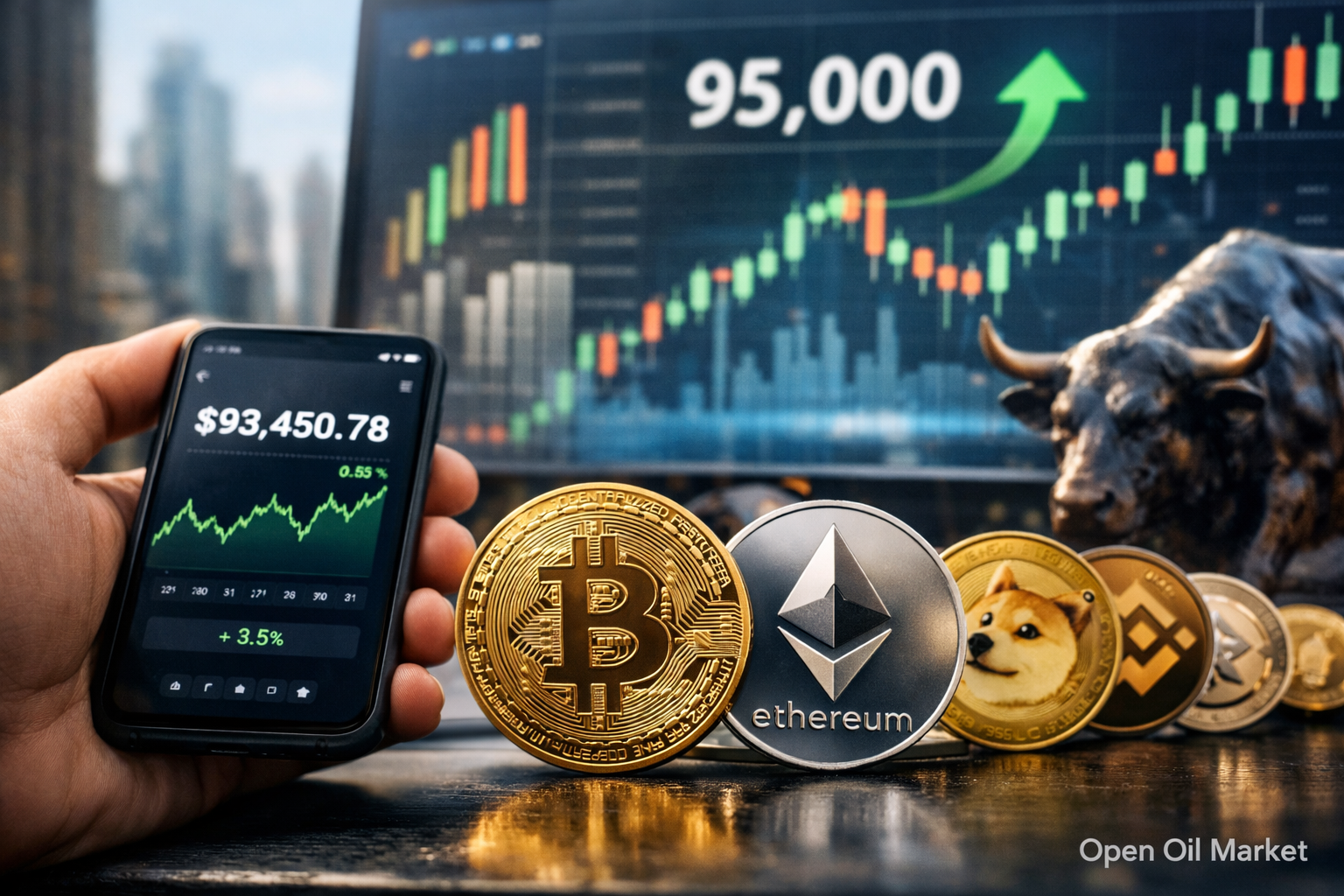
Bitcoin (BTC) is once again in the spotlight, reaching new local highs. The price of the world's first cryptocurrency approaches the $95,000 mark, representing the highest level in recent weeks. Since the beginning of 2026, Bitcoin has already risen by approximately 6%, reflecting a strengthening upward momentum following December's consolidation. The current price is only 25–30% below its historical record (around $125,000, set in 2025), and many market participants are hopeful for a breakthrough past the psychological threshold of $100,000 in the foreseeable future. Bitcoin's market share in the total cryptocurrency capitalization remains above 50%, confirming its status as the industry's primary barometer.
- Strengthening Demand: Major investors are increasing their presence in BTC. The launch of spot Bitcoin ETFs in the US and Europe last year simplified access for institutional players to cryptocurrencies, and recently, Bank of America allowed financial advisors to recommend that clients allocate up to 4% of their portfolios to Bitcoin ETFs. These actions reinforce Bitcoin's status as a legitimate asset for long-term investments.
- Market Signals: Options traders are actively purchasing contracts with targets set for six-figure levels, betting on further price increases. Concurrently, volumes in the futures markets indicate an influx of new long positions. In recent days, the sharp rise in price has led to the liquidation of short margin positions totaling over $250 million—this indicates an increase in speculative activity and the closing of "shorts," further heating the market.
- Macroeconomic Factors: Monetary policy remains a crucial backdrop: it is expected that the US Federal Reserve will adopt a more accommodative approach in 2026, supporting appetite for riskier assets, including BTC. Additionally, geopolitical uncertainty (for example, recent events in some countries) pushes some investors to seek refuge in "digital gold." Meanwhile, record-high prices for traditional gold enhance Bitcoin's attractiveness as its digital equivalent.
- Volatility and Levels: Despite the positive trend, analysts caution about potential fluctuations. The immediate test for bulls will be to breach the resistance zone around $95,000. A solid breakout could pave the way for new highs and an influx of buyers, while failure to maintain achieved heights may provoke a retracement. Nevertheless, even in the event of a correction to $80,000–85,000, the overall upward trend will remain intact, supported by fundamental factors.
Ethereum Prepares for Major Upgrade
Ethereum (ETH), the second-largest cryptocurrency by market capitalization, is trading around $3,100, showing stability after a solid rise in 2025. The community's focus is on the upcoming technical upgrade of the Ethereum network scheduled for January 7, 2026. This upgrade aims to further scale the network and reduce transaction fees: in particular, the volume of special "blob" data in each block will be increased, making transactions on Layer 2 solutions cheaper. This improvement in throughput is expected to positively impact the ecosystems of popular Layer 2 protocols (such as Arbitrum, Optimism, Base), making interactions with Ethereum faster and less expensive.
Thanks to continuous development, Ethereum retains its key role in the industry. While the current price of ETH remains below its all-time high (~$4,800), the platform firmly holds second place in terms of market capitalization and serves as the foundation for numerous decentralized applications (DeFi, NFT, gaming projects, etc.). Institutional investors are also showing interest: in 2025, the first spot ETFs for Ethereum emerged, bringing in new capital to the ETH market. The opportunity for Ethereum staking (with yield for holders) and subsequent technological updates strengthen confidence in this platform. The upcoming upgrade is another step in Ethereum's long-term "roadmap," aimed at improving network efficiency and meeting growing demand for its services.
Altcoins on the Rise: Growing Interest Beyond BTC
Amid a brief respite in Bitcoin's dominance, investors are increasingly turning their attention to the largest altcoins. Many alternative cryptocurrencies from the top 10 are indicating outpacing growth compared to BTC in the early days of January, signaling a local "altcoin season." For instance, Binance Coin (BNB) strengthened to around $420, reflecting ongoing demand for the Binance ecosystem's services. The XRP token from Ripple is holding around $0.85: following legal clarity in the US, it remains one of the market leaders, especially amid renewed interest from banks in Ripple's technologies for cross-border payments. The platform token Solana (SOL) is trading above $190, close to multi-year peak values—a positive news backdrop surrounding the potential approval of an ETF on Solana and growth of projects on this high-speed blockchain platform support price levels. Cardano (ADA) has appreciated to around $0.50; this blockchain platform maintains a devoted community, and upcoming technical updates and rumors about the launch of its own index products (ETFs) fuel long-term expectations.
Other notable altcoins include Tron (TRX) and Dogecoin (DOGE). Tron continues to attract users with low fees and high transaction speeds, remaining one of the primary networks for issuing stablecoins (a significant portion of USDT circulates on the Tron network). The TRX price is around $0.11, allowing the coin to maintain its position in the top ten. Dogecoin, the most well-known meme cryptocurrency, is trading around $0.08. Despite the lack of fundamental updates, DOGE continues to gain support from an active community and attention from certain celebrities, ensuring its place among the largest coins. Overall, the rise of altcoins is bolstered by improved market sentiment: investors who have realized profits from Bitcoin's rise are starting to look for opportunities in riskier assets, increasing demand for promising projects beyond BTC and ETH. However, experts warn that the sustainability of this "alt-rally" will depend on overall liquidity and the absence of shocks in the market.
Institutional Adoption and Traditional Finance
The cryptocurrency market enters the new year with unprecedented support from traditional financial institutions. Decisions made by major banks and investment funds are increasingly integrating digital assets into the classic financial system. As of January 5, 2026, Bank of America officially allowed its investment advisors to include Bitcoin ETFs in client portfolios (within 1–4% of assets)—a strategy previously adopted by giants such as Morgan Stanley and JPMorgan. This indicates that Wall Street has ultimately recognized Bitcoin and Ethereum as legitimate tools for diversification and hedging. The capital flow from institutional investors is growing: industry data shows that total investments through crypto ETFs and trusts have increased by tens of percent in recent months. The share of institutional participants in Bitcoin-based funds has risen from around 20% a year ago to nearly 30% at the beginning of 2026, reflecting a shift of funds from retail players to professionals.
The regulatory environment is also gradually clarifying, encouraging large capital to enter the market. In the US, the first law regulating the activities of stablecoin issuers came into force in 2025, and the Securities and Exchange Commission (SEC) has approved the issuance of exchange-traded funds for certain crypto assets. In the European Union, the MiCA regulatory framework has begun to operate, establishing clear rules for cryptocurrency companies. Such government initiatives reduce legal risks and create transparent playing conditions, which the industry has sorely lacked in previous years. Against this backdrop, traditional financial companies are expanding crypto services: major audit and consulting firms (such as PwC, Deloitte) are establishing divisions to serve crypto projects, banks are testing their own tokenized products, and central banks of several countries are advancing central bank digital currency (CBDC) initiatives to maintain control over monetary circulation. All these trends indicate that the boundaries between traditional finance and the world of cryptocurrencies are blurring, forming a unified global market for digital assets.
Top 10 Most Popular Cryptocurrencies
Despite the abundance of digital coins, the largest and most recognized cryptoassets remain the market leaders. Below is the current list of the ten most popular cryptocurrencies by market capitalization as of the morning of January 6, 2026:
- Bitcoin (BTC) — approximately $93,000. The first and largest cryptocurrency, often referred to as "digital gold." It determines the direction of the entire crypto market; its capitalization makes up over half of the total market capitalization.
- Ethereum (ETH) — approximately $3,100. The leading altcoin and smart contract platform. The DeFi and NFT ecosystems operate on the Ethereum platform, providing infrastructure for thousands of decentralized applications worldwide.
- Tether (USDT) — ~$1.00 (stablecoin). The largest stablecoin pegged to the US dollar at a 1:1 ratio. Widely used for trading and settlements, serving as the bridge between traditional currencies and the crypto market.
- Binance Coin (BNB) — approximately $420. The native token of the largest exchange Binance and its blockchain ecosystem. It is used for fee payments, participation in DeFi applications, and access to various Binance services. Despite regulatory risks surrounding the exchange, BNB maintains high capitalization due to its wide range of applications.
- XRP (XRP) — approximately $0.85. The token of the Ripple payment network for fast international transfers. After the uncertainty surrounding XRP's status in the US was lifted, the coin regained the trust of some investors and is used by financial institutions for cross-border settlements.
- USD Coin (USDC) — ~$1.00 (stablecoin). The second-largest stablecoin, issued by the Centre consortium (comprising Circle and Coinbase) and backed by dollar reserves. Known for its transparency in reporting and widely used in trading, as well as in the DeFi sector due to its stability and trust from institutional players.
- Solana (SOL) — approximately $190. A high-performance blockchain platform, one of the main alternatives to Ethereum. It boasts high speed and throughput; the Solana ecosystem is growing through DeFi applications and the tokenization of real assets. On the expectations of new products (including a potential SOL ETF), the token maintains an upward trend.
- Tron (TRX) — approximately $0.11. A blockchain platform focused on entertainment and decentralized applications. It features low fees and fast transactions; it is widely used for issuing and operating stablecoins. TRX remains in the top 10 due to a significant share of infrastructural projects and support in the Asian region.
- Dogecoin (DOGE) — approximately $0.08. The most well-known "meme" token, originally created as a joke but has grown into an asset with a multibillion-dollar market cap. The popularity of DOGE is sustained by community enthusiasm and periodic mentions by influential entrepreneurs. The coin's volatility remains elevated; however, it continues to hold its ground among market leaders.
- Cardano (ADA) — approximately $0.50. A blockchain platform developed on a research basis. It offers smart contract functionality and pays special attention to reliability and scalability. It has a dedicated community, and regular protocol updates and plans to launch its own financial products support ADA's presence among the top cryptocurrencies.
Predictions and Expectations
The ongoing rally at the beginning of 2026 creates positive expectations; however, experts urge investors to maintain a balance between optimism and caution. Many analysts are bullish: increased institutional participation and technological advancements lay the foundation for further growth. Forecasts suggest that Bitcoin could surpass the $100,000 mark and aim for new records within the year, while Ethereum might return to historical peak levels and exceed $5,000, if macroeconomic conditions remain favorable. Improvements in regulation and the emergence of new investment products (ETFs for various altcoins, DeFi exchange-traded funds, etc.) could attract even more capital into the market.
At the same time, short-term risks persist. The sentiment index has only recently emerged from the fear zone, indicating that some players are still cautiously perceiving the growth. Profit-taking periods may follow rapid price increases. Experts note that the first quarter of 2026 could experience heightened volatility and a search for new equilibrium. Factors such as changes in central bank policies, geopolitical events, or technological glitches could temporarily cool the market. Nevertheless, in the medium- and long-term perspective, the trend remains upward: cryptocurrencies are becoming increasingly integrated into the global financial system, and their role as an asset class continues to grow. Investors are advised to adhere to a balanced strategy and diversification, approaching the new year in the crypto market with reasonable optimism.