Current Cryptocurrency News for Tuesday, December 23, 2025: Bitcoin Consolidates Around $85K, Select Altcoin Growth, Institutional Inflows, and Investor Cautionary Optimism.
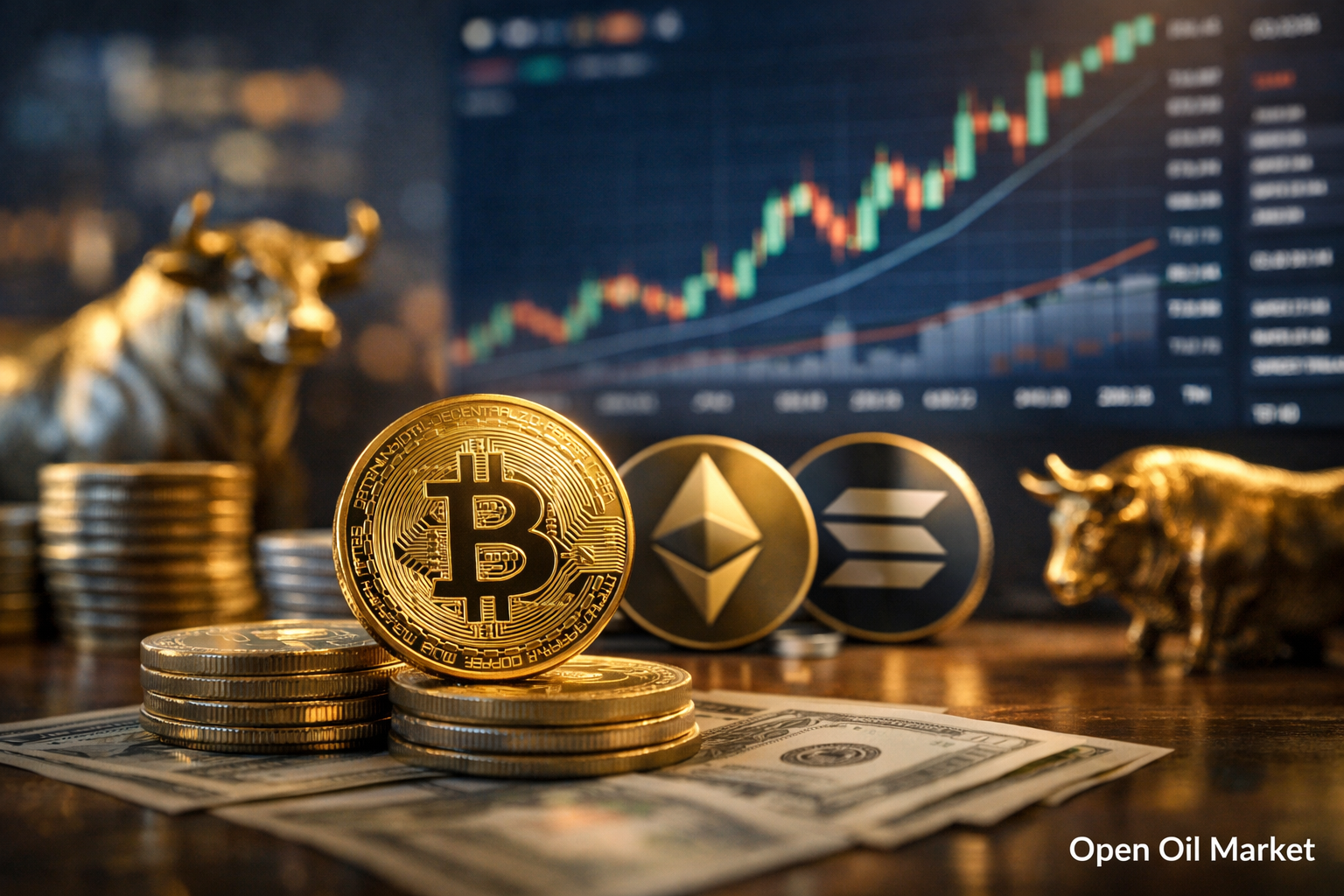
As of the morning of December 23, 2025, the cryptocurrency market is witnessing a relative stabilization following recent volatility. Bitcoin is holding steady around the $85,000 mark, forming a base after a significant autumn correction. Ethereum and most leading altcoins are trading without sharp changes, showing only moderate attempts at recovery. The overall cryptocurrency market capitalization is approximately $3 trillion, while market participants maintain vigilance towards external factors and news, hoping for a potential slight "Christmas rally" in the final days of the year.
Market Overview: Consolidation and Cautious Sentiment
At the start of the week, Bitcoin (BTC) is consolidating in the mid-$80,000 range, maintaining a key support level around $85,000. Over the past few days, its price fluctuated between $85,000 and $90,000, indicating a downturn in abrupt price movements following a tumultuous drop in October and a partial recovery in November. Simultaneously, Ethereum (ETH) has stabilized around the $3,000 mark, attempting to recover from its late autumn decline. Many major altcoins—from Binance Coin to Solana—remain under pressure: prices have declined over the past week, and Bitcoin's market share has slightly increased (to ~60%). Technical indicators for several altcoins suggest oversold conditions, potentially indicating a rebound for some in the short term.
Overall, the market is balancing between caution and hopes for growth. Macroeconomic uncertainty—including expectations surrounding central banks' decisions—is restraining some investors' risk appetite. At the same time, incoming institutional investments instill moderate optimism. Globally, the end of 2025 has been turbulent for cryptocurrencies: following record growth in the first half of the year, a substantial correction followed. Investors are now evaluating whether the current consolidation could serve as a launchpad for a new bullish trend in the upcoming year.
Bitcoin: Flagship at a Crossroads
In 2025, Bitcoin has experienced a true rollercoaster ride: in early October, the first cryptocurrency reached an all-time high (around $126,000), but soon afterwards, it suffered a sharp price drop. This was spurred by both large-scale profit taking after an extended rally and external shocks, such as the tightening of trading conditions in the U.S. this autumn, which sparked tensions in financial markets. As a result, BTC's price dropped to around $85,000 by the end of November, where it found solid support. Currently, Bitcoin remains at relatively high historical levels—around $85,000 to $88,000—though this is significantly lower than the peak values of the year.
Bitcoin's market capitalization is approximately $1.7–1.8 trillion (around 60% of the entire cryptocurrency market), affirming its dominant role. Analysts note that successful defense of the $80,000–$85,000 range is strengthening belief in the formation of a new growth foundation. If sentiment improves, Bitcoin may attempt to surpass the psychologically important barrier of $100,000. Notably, for the first time since 2022, BTC might close the year with negative performance compared to the previous year—by December 2025, its price is about 10% lower than year-ago levels. Nevertheless, long-term investors ("Hodlers") continue to hold their positions: the record level of realized capitalization for Bitcoin indicates that cumulative investments in BTC are at an all-time high, despite the recent correction. This reflects ongoing confidence in the asset's long-term potential.
Ethereum and Leading Altcoins: Mixed Dynamics
Ethereum (ETH), the second-largest digital asset by market capitalization, is in a phase of gradual recovery after the autumn downturn. The current price for ETH is around $3,000, approximately 40% lower than its yearly peak (~$4,800 in August). Nonetheless, Ether remains the fundamental platform for smart contracts and decentralized finance, keeping fundamental demand intact. In 2025, Ethereum successfully transitioned to a Proof-of-Stake mechanism, and developers are preparing new updates aimed at further enhancing the network's scalability and reducing fees. Institutional investors are also showing persistent interest in ETH: following the launch of the first spot Ethereum ETFs in the U.S., there was a significant influx of capital into these products, strengthening Ether's market position.
The broader altcoin market demonstrates uneven dynamics. Many leading altcoins are trading significantly below their peak values. For instance, Ripple (XRP) is holding around $2.0 (down from ~$3.0 at its peak following Ripple's summer court victory against the SEC), while Cardano (ADA) has dropped to approximately $0.40 after briefly surpassing $0.80 in the autumn amid speculation about an ADA ETF launch. On the other hand, selected projects are showing signs of life: the high-performance platform Solana (SOL) managed to bounce back to about $150 after falling to around $125, supported by news of a potential approval for ETFs based on it. At the same time, the Binance exchange token (BNB), previously exceeding $1,000, is under pressure around $600–650 due to ongoing regulatory uncertainty surrounding Binance. In general, investors continue to favor more reliable assets—Bitcoin's share of capitalization has increased over the quarter, reflecting a partial capital shift from riskier altcoins to BTC and ETH.
Institutional Investments and ETF Funds
One of the key trends of 2025 has been the strengthening presence of institutional investors in the cryptocurrency market. Major financial players are increasingly integrating digital assets into their strategies. A historic event occurred in the U.S. with the approval of the first spot ETFs for Bitcoin and Ethereum, granting hedge funds, asset management companies, and even pension funds easier and more regulated access to cryptocurrencies through familiar exchange-traded instruments. According to recent reports, the total capital under management in cryptocurrency funds has reached approximately $180 billion, reflecting a gradual return of confidence from major players in the industry.
Despite the recent price fluctuations, institutional investors have continued to increase their investments. December has seen inflows into crypto funds for the third consecutive week, with approximately $600–700 million in new investments entering global digital asset products over the past week. Experts characterize the mood as "cautiously optimistic": institutional investors are increasing their exposure to crypto assets, albeit without taking excessive risks. The highest demand in this sector is for the largest coins—Bitcoin, Ethereum, and XRP. Besides direct investments, corporations continue to make strategic purchases: for instance, MicroStrategy, led by Michael Saylor, continued buying BTC during the autumn downturn, raising its reserves to a record level. The involvement of such players provides long-term support for the market and enhances confidence among a broader audience of investors.
Regulation and Global Factors
In 2025, the regulatory environment for cryptocurrencies has evolved significantly. In the United States, after several years of uncertainty, some clarity has emerged: legal precedents (including Ripple’s partial victory against the SEC) have clarified the status of certain tokens, while legislators are advancing a comprehensive digital asset bill. It is expected that in 2026, this legislation will establish a unified regulatory framework for the crypto market in the U.S.—covering everything from stablecoins to the taxation of transactions. In the European Union, the MiCA (Markets in Crypto-Assets) regulation came into effect, standardizing cryptocurrency trading rules across EU member states and enhancing market transparency. In Asia, the approach is mixed: financial hubs like Hong Kong and Singapore are positioning themselves as crypto hubs, implementing clear industry regulations, while China maintains strict restrictions on crypto trading.
General macroeconomic conditions are also influencing the sentiment of cryptocurrency market participants. By the end of 2025, the world's major central banks are maintaining a policy of relatively high-interest rates. However, inflation in the U.S. and Europe is gradually decreasing, and markets are pricing in the expectation of a monetary policy easing in 2026. This outlook could support risk assets, including cryptocurrencies, in the new year. Geopolitical factors and economic data remain in the spotlight for investors: any changes—from the Fed's decision on rates to global economic growth indicators—could impact appetite for digital assets. In a positive scenario, clearer global regulation and improved macroeconomic conditions could reduce uncertainty and create a foundation for new capital inflows into cryptocurrency markets worldwide.
Top-10 Most Popular Cryptocurrencies
Despite the turbulence, investors continue to focus on the top ten largest digital assets, largely shaping the mood of the entire market:
- Bitcoin (BTC) – the first and largest cryptocurrency, "digital gold" with a limited emission of 21 million coins. BTC remains the key market barometer (≈60% of total capitalization) and attracts institutional investors as a means for value preservation.
- Ethereum (ETH) – the number one altcoin and leading smart contract platform (Ethereum blockchain underpins DeFi and NFT ecosystems). ETH confidently ranks second in capitalization (~12% of the market) and has transitioned to a Proof-of-Stake algorithm, increasing interest in it as the "digital oil" of the blockchain industry.
- Tether (USDT) – the largest stablecoin pegged to the U.S. dollar 1:1. USDT provides high trading liquidity in crypto markets, allowing participants to quickly move capital into dollar equivalents and back for transactions and volatility protection.
- Binance Coin (BNB) – the native token of the largest cryptocurrency exchange Binance and the related BNB Chain blockchain network. BNB is used to pay exchange fees and participate in ecosystem services, keeping it in the top five cryptocurrencies. Despite regulatory pressure on Binance, the wide range of token applications supports its demand.
- Ripple (XRP) – the token of the Ripple payment network, designed for fast cross-border settlements. XRP has garnered investor attention again following legal clarity in the U.S.: a court confirmed that XRP sales do not violate securities laws. This alleviated significant uncertainty and strengthened XRP's position among market leaders, although its price remains below historical highs.
- USD Coin (USDC) – the second-largest stablecoin issued by the Centre consortium (Circle and Coinbase). USDC is fully backed by dollar reserves and undergoes regular audits, which earns trust from institutional players. The coin is widely used in trading and DeFi as a reliable digital dollar.
- Solana (SOL) – a high-performance blockchain platform for decentralized applications. SOL is known for its transaction speed and low fees. Recovering from the 2022 crisis, Solana regained its footing in 2025: new DeFi and NFT projects have been launched on its platform, and the anticipated introduction of ETFs based on SOL is fueling investor interest despite recent price corrections.
- TRON (TRX) – a blockchain platform popular in Asia, used for smart contracts, entertainment, and stablecoin issuance. TRX maintains its place in the top 10, supported by a steadily growing user base and the development of decentralized applications. A significant portion of USDT is issued on the TRON blockchain, which also boosts the network's popularity.
- Dogecoin (DOGE) – the most well-known meme cryptocurrency that started as an internet joke. Despite its humorous origins, DOGE has become a significant asset due to its dedicated community and periodic support from prominent entrepreneurs on social media. Dogecoin's volatility remains high, but its network effect and mass recognition allow it to stay among the largest coins.
- Cardano (ADA) – a blockchain platform for smart contracts developed with a scientific approach and rigorous code verification. ADA boasts one of the most active communities and remains among the top leaders, although real-world adoption of applications built on it is progressing slower than expected. The project attracts long-term investors with a focus on reliability and scalability in the future.
Outlook: Cautious Optimism
As the new year, 2026, approaches, a cautiously optimistic sentiment is forming in the cryptocurrency market. The multi-month correction in the second half of 2025 has somewhat sobered market participants, and the "Christmas rally" has yet to live up to expectations—December is passing without sharp price spikes. Nevertheless, potential growth drivers remain ahead, capable of giving momentum to digital assets at the start of the year. Key factors that investors are closely monitoring include:
- Easing Monetary Policy – if central banks transition to lowering interest rates in 2026, improved macroeconomic conditions may enhance the appeal of risk assets, including cryptocurrencies.
- New Investment Products – an expansion of the range of crypto ETFs and other regulated instruments will provide even more institutional investors access to the market, and new capital inflows will support growth.
- Technological Development – launching blockchain upgrades (e.g., solutions for Ethereum scaling), increasing the adoption of blockchain technologies in business, and the emergence of new popular dApps may bolster trust in the industry.
Consensus forecasts for the near term remain moderately positive. According to derivatives market assessments, the probability of Bitcoin surpassing $100,000 in the early months of 2026, while not exceeding 50%, is considered to have limited risks for a deep decline. Most analysts expect that following the consolidation phase, the cryptocurrency market is likely to return to growth next year. Provided the favorable convergence of factors—from the economic backdrop to reasonable regulation—the cumulative market capitalization could soar to new records, again surpassing $4–5 trillion. At the same time, experts warn that the market's structure has changed: Bitcoin's dominance is expected to remain elevated until global risks subside and confidence in altcoins is fully restored.
Thus, the cryptocurrency industry enters 2026, maintaining its status as one of the most dynamic and discussed sectors of the financial world. Global investors will continue to seek a balance between high potential returns and associated risks, building diversified strategies. The cautious optimism emerging in the market may lay the groundwork for a new phase of digital asset evolution in the coming year.