Current News on Startups and Venture Investments for Sunday, June 14, 2026: Prometheus Mega-Round, Growth of Physical AI, Tech IPO Preparations, and New Benchmarks for Venture Funds
The global startup and venture investment market enters mid-June with a rare combination of factors: record AI rounds, a return of tech IPOs, increased interest in deep tech, and intensified competition among funds for access to the best deals. For venture investors and funds, a key theme for Sunday, June 14, 2026, is not merely the volume of capital, but its concentration around companies vying for systemic influence: artificial intelligence, physical AI, space infrastructure, fintech, quick commerce, and European sovereign AI.
While the market evaluated startups more cautiously in 2024-2025, in 2026, venture capital is shifting back towards larger bets. However, this is no longer a universal growth across all categories. Money is flowing to companies with an infrastructural role, strong revenue, technological barriers, and the prospect of going public.
Prometheus Sets the Main Tone of the Week: Physical AI Takes Center Stage in Venture Discourse
The most notable event was the mega-round for Prometheus—a physical AI startup associated with Jeff Bezos and Vik Budjey. The company raised approximately $12 billion at a valuation of around $41 billion. This signals to the venture market that investors are ready to fund not only language models and AI services but also platforms capable of transforming design, manufacturing, and engineering cycles in the real economy.
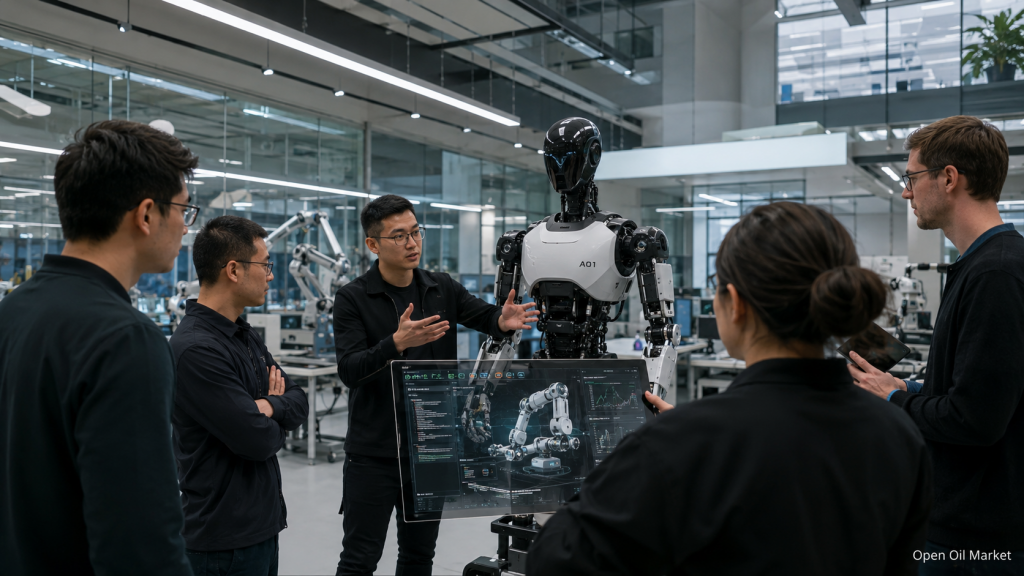
Prometheus is positioned around the idea of an "artificial general engineer"—a system that can assist in developing complex physical products: from aircraft engines and medical devices to industrial components. For funds, this marks an important pivot: physical AI is viewed as a more secure segment than pure software since there are higher capital barriers, greater expertise, and it is more challenging to quickly replicate the product.
AI Startups Continue to Absorb Venture Market Liquidity
Artificial intelligence remains the primary direction for venture investments in 2026. However, the market structure is changing. Investors are increasingly categorizing AI startups into several segments:
- foundation models and large AI labs;
- AI infrastructure and computational platforms;
- AI agents for corporate processes;
- physical AI, robotics, and engineering systems;
- applied AI in fintech, healthtech, cybersecurity, and industry.
This approach is important for funds: the previous bet on "any AI" is becoming insufficient. In 2026, the market is tightening its assessment not just on the mere use of artificial intelligence but on data access, computation costs, distribution quality, profitability, and customer retention capabilities of the company.
Mistral AI Strengthens Europe's Bid for Technological Sovereignty
French Mistral AI is reportedly negotiating to raise around €3 billion at a valuation of approximately €20 billion. This is a key signal for the European venture market: Europe is striving to reduce dependence on American AI platforms and create its own center of power in large language models.
For venture investors, Mistral is significant not only as an AI company but also as a political-economic asset. Demand for sovereign AI is rising amid data regulation, digital sovereignty, defense technologies, and corporate security. European funds, family offices, and strategic investors will increasingly view such companies as long-term infrastructural bets.
SpaceX, OpenAI, and Anthropic Open a New Phase of Tech IPOs
SpaceX’s record IPO is a strong indicator that the window for major tech IPOs is once again open. After a period of shrinkage in public offerings, the market has received proof: investors are ready to purchase the largest private tech companies if they possess infrastructural scale and a compelling growth narrative.
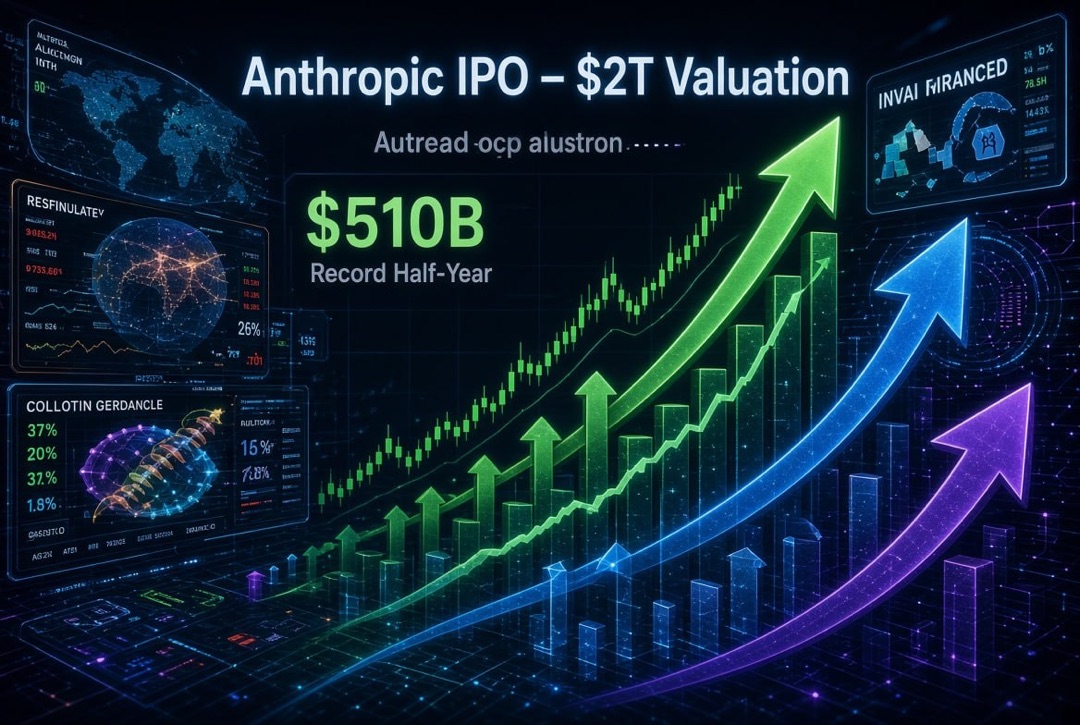
Against this backdrop, both OpenAI and Anthropic are also moving towards the public market. Anthropic had previously raised $65 billion in its Series H round at a valuation of about $965 billion, and OpenAI has filed confidential documents for its IPO. For venture funds, this means a potential return of liquidity: for many years, portfolios have been burdened with late-stage private companies without a clear exit. Now, the market is once again discussing DPI, secondary transactions, and public offerings as real mechanisms for returning capital to LP investors.
Bending Spoons Represents an Alternative Model of Tech Growth
Italian company Bending Spoons has submitted a listing application on Nasdaq and could be valued at around $20 billion. What makes the company interesting is that it is building not a classic venture narrative of "one product—hypergrowth," but a tech holding model: acquiring digital assets, optimizing them, monetizing via subscriptions, and scaling the portfolio.
For investors, this is an important case. In the face of high uncertainty around AI valuations, Bending Spoons offers a clearer financial logic: revenue, subscriptions, a portfolio of digital products, and M&A as drivers of growth. Such companies could serve as a bridge between venture capital, private equity, and the public market.
India Remains One of the Key Markets for Growth Investors
Indian quick commerce startup Zepto plans to raise up to $837 million as part of its IPO. The company is demonstrating rapid revenue growth but is also maintaining a high level of losses due to logistics, dark stores, technology, and competition costs.
For venture investors, this is a classic test of the public market: is the market willing to pay for scale and growth rates when profitability remains questionable? India, however, continues to maintain its status as one of the most attractive regions for late-stage investments due to demographics, mobile commerce, digital payments, and a high density of consumer services.
Venture Funds Are Again Raising Capital for a New Wave of Deals
On the investor side, there is also a significant movement. Benchmark has raised around $2 billion, including its first growth fund in its history. This marks a notable departure from the previous model of small, concentrated funds and signals that even the most disciplined venture players must adapt to a more capital-intensive market.
Kindred Ventures, meanwhile, has raised $355 million for new funds focused on AI, infrastructure, computational biology, and robotics. For the market, this shows that capital is returning not only to giants but also to early stages—provided that the startup operates at the cutting edge of the technological cycle.
Europe Strengthens Its Position in Deep Tech, but Competition with the U.S. Remains Fierce
The European venture ecosystem in 2026 appears more mature than in previous cycles. According to market reviews, European startups attracted a significant volume of capital in the first quarter and continue to strengthen in deep tech, AI, defense technologies, robotics, and climate solutions.
However, Europe's main challenge is scaling. Startups are increasingly emerging in Paris, London, Berlin, Amsterdam, and Munich, but large rounds and public markets still frequently shift to the U.S. Therefore, for European funds, the key question is how to retain promising companies until late stages without relinquishing control to American capital.
What Matters to Venture Investors and Funds on June 14, 2026
- AI remains the primary magnet for venture capital, but investors are becoming more selective.
- Physical AI and industrial AI are emerging as separate major investment categories.
- The IPO market is once again becoming a real channel of liquidity for late-stage startups.
- European sovereign AI gets an additional boost from Mistral AI.
- India remains one of the main growth markets, but public investors will require proof of profitability.
- Venture funds are increasing fund sizes to compete in capital-intensive AI deals.
The main takeaway for venture investors is that 2026 is becoming a market of concentration. Capital is available, but it is distributed unevenly. The best companies receive record valuations and access to public markets, while weak startups without revenue, technology protection, and clear unit economics will face increasing pressure. For funds, this means the need to make faster decisions on quality assets, deeper scrutiny of AI company economics, and advanced planning of exit strategies.
Sunday, June 14, 2026, demonstrates that the global startup and venture investment market is entering a phase of renewed risk appetite, but this risk is becoming more professional. Winners are not just trendy tech companies, but platforms capable of becoming the infrastructure of the next economic cycle.