Main Startup and Venture Investment News for Sunday, May 24, 2026: AI Infrastructure, Major Funding Rounds, Fintech, Cybersecurity, Biotech, and New Venture Fund Priorities
The venture capital market approaches Sunday, May 24, 2026, with a high concentration of capital focused on artificial intelligence, computing infrastructure, fintech for entrepreneurs, and corporate AI services. For venture investors and funds, the key question is no longer whether there is demand for AI startups, but rather which companies can translate the hype into sustainable revenue, protected margins, and a clear path to public market entry.
The recent startup agenda shows that global funds continue to finance fewer companies, but with larger checks. Founders who control critical infrastructure are coming to the forefront: computing power, AI agents, corporate interfaces, cybersecurity, financial services for business, and applied solutions for high-cost-error industries.
The Venture Market is Again Centered Around Artificial Intelligence
The main theme of the week is the shift of the AI sector from experimental products to capital-intensive infrastructure. While in 2023-2024 investors were actively buying into the idea of generative artificial intelligence, by 2026 venture investments are increasingly being directed towards companies addressing the practical limitations of the market: computational shortages, high inference costs, the security of autonomous agents, and the integration of AI into corporate processes.
For venture funds, this changes the evaluation logic. At early stages, user growth speed and team quality remain important, but at later stages, investors are increasingly demanding:
- proven annual revenue or rapidly growing ARR;
- control over the cost of computations;
- sustained demand from corporate clients;
- a clear scaling strategy without constant dependence on subsidized capital;
- the potential for exit through IPO, strategic sale, or large infrastructure partnership.
AI Infrastructure Becomes the Main Focus for Large Checks
One of the most significant signals for the market has been the new wave of investments in AI infrastructure. Funds and strategic investors are increasingly financing not only model developers but also companies providing access to computing resources, cloud services, data centers, and specialized chips.
This is particularly important for startups working with AI coding, autonomous agents, biotechnology, weather modeling, financial analytics, and industrial automation. Such companies require not just software solutions but reliable access to GPUs, TPUs, and other computational resources. As a result, infrastructure startups gain a strategic advantage if they can reduce the cost of launching and testing AI applications for clients.
For venture investors, this segment is both attractive and risky. On one hand, demand for computing is growing faster than the traditional cloud market. On the other hand, business models require significant capital expenditures, long-term contracts, and a high level of discipline in margin management.
Major Rounds Confirm Demand for AI Platforms
The most discussed deals in recent days have been large rounds in AI platforms and services for developers. Important examples include companies raising hundreds of millions of dollars that operate at the intersection of AI coding, corporate interfaces, customer experience automation, and infrastructure for next-generation applications.
These deals indicate that venture capital in 2026 is still very much present in the market, but has become more selective. Funds are willing to pay high multiples for startups that demonstrate rapid revenue growth, strong product differentiation, and the capacity to become a platform rather than just a standalone tool.
What This Means for Funds
- Late-stage rounds are becoming competitive again, especially in AI infrastructure.
- Investors are willing to accept high valuations if they see commercialization speed.
- Companies without strong revenue and clear unit economics will face discounts.
- Strategic investors are strengthening their influence on the venture market through partnerships and access to infrastructure.
Fintech for Founders Remains a Resilient Segment
Besides AI, investors continue to show notable interest in fintech platforms catering to entrepreneurs, startups, and small businesses. Against the backdrop of a new wave of AI companies, there is a growing demand for banking services, cash flow management, corporate cards, treasury products, and financial analytics for rapidly growing teams.
Fintech startups focusing on founders gain an advantage through the expansion of the entrepreneurial base. If artificial intelligence lowers the cost of launching a product, the number of new companies is increasing. This creates demand for infrastructure around startups: from checking accounts and payments to accounting, compliance, and capital management tools.
For venture funds, such companies are attractive as less cyclical compared to pure AI applications. Their business model may be closer to financial infrastructure, where trust, customer retention, transaction scale, and cross-selling are crucial.
Agent-Based Artificial Intelligence is Moving Out of the Experimental Phase
Another emerging area is agent-based artificial intelligence. This refers to systems that do not just respond to user queries but autonomously execute chains of actions: gathering information, interacting with corporate applications, preparing documents, analyzing data, and automating repetitive processes.
For the venture market, agent-based AI startups represent the next layer after chatbots and generative assistants. However, investors will closely assess security, action control, legal risks, and the capability of such solutions to operate in regulated sectors.
The most promising projects appear to be those that solve specific challenges in the corporate environment:
- sales and marketing automation;
- legal analysis and document preparation;
- cybersecurity and threat monitoring;
- customer support and issue management;
- analytics for financial, industrial, and healthcare companies.
Cybersecurity Gains New Momentum Due to AI Threats
The rise of artificial intelligence not only boosts business productivity but also heightens risks. Malicious actors are using AI to identify vulnerabilities, engage in phishing, automate attacks, and circumvent traditional protection systems. Therefore, startups in the cybersecurity sector are once again becoming a priority for venture investors.
Companies that apply AI for real-time attack detection, cloud infrastructure protection, user behavior analysis, and automated incident response are particularly in demand. Unlike many consumer AI applications, cybersecurity has a clear corporate budget and a high cost of the problem for the client.
For funds, this means that cybersecurity startups with an AI component can receive a premium on their valuation if they can demonstrate not only technological prowess but also measurable economic benefits for their clients.
Biotech, Medtech, and Scientific Startups Remain a Niche for Long-Term Capital
Against the backdrop of prominent AI rounds, it is important not to overlook biotech, medtech, and scientific startups. Investors continue to explore projects that utilize artificial intelligence, quantum methods, ultrasound technologies, new drug development approaches, and protein engineering.
These areas may be slower than software AI platforms, but they possess a high potential for creating fundamental value. For venture funds, they require a different investment horizon: extended hypothesis testing, clinical trials, regulatory support, and more complex expertise.
A biotech or medtech startup today must not only be a scientific advancement but a comprehensive investment story with a clear market, intellectual property protection, and a realistic commercialization plan.
The Geography of Venture Investments is Becoming More Multipolar
The global venture market remains concentrated around the U.S., but noticeable activity persists in Europe, India, Israel, Japan, and Southeast Asia. Indian agentic AI companies, Israeli cybersecurity and AI startups, European legaltech and biotech projects, as well as Japanese medical innovations are becoming part of a unified investment map.
For funds, this opens opportunities for diversification but requires local expertise. Evaluating startups in different jurisdictions increasingly depends on data regulations, export controls, access to talent, and relations between major technological powers.
Political risk is becoming a particularly important factor. Stories surrounding cross-border deals with AI companies demonstrate that strategic technologies are increasingly perceived not only as business assets but also as elements of national security.
Key Takeaways for Venture Investors and Funds
Sunday, May 24, 2026, solidifies several key conclusions for participants in the venture market. First, artificial intelligence remains the primary driver of venture investments, but capital is shifting from simple applications to infrastructure, agent-based systems, and corporate platforms. Second, major rounds are returning a sense of growth to the market but are raising the risk of inflated valuations. Third, strategic investors, cloud providers, and computational resource owners are becoming just as important players as traditional funds.
For venture investors and funds, the most rational strategy now is to seek companies that combine technological depth, commercial traction, high customer retention, and a clear scaling path. In the current cycle, not every AI startup will win, but rather those capable of transforming technological breakthroughs into sustainable business models.
Key areas to monitor in the coming weeks include:
- AI infrastructure and compute-as-a-service;
- agent-based artificial intelligence for the corporate market;
- next-generation cybersecurity;
- fintech services for founders and startups;
- legaltech, biotech, and medtech utilizing AI;
- strategic investor deals with private tech companies;
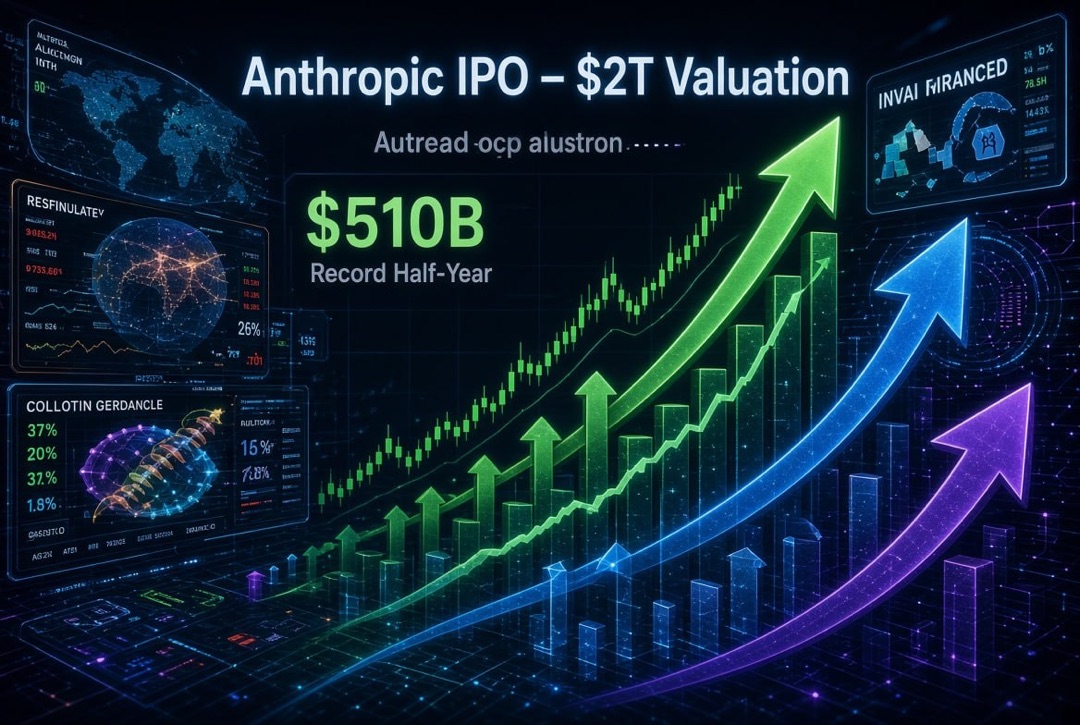
- preparations of major AI companies for public markets.
Thus, the news from startups and venture investments as of May 24, 2026, illustrates a market where capital remains accessible yet significantly more demanding. Funds are willing to finance growth when they see not just a compelling technology narrative but also proof that the startup can become an infrastructural asset of the new economy.