Current News on Startups and Venture Investments as of March 31, 2026, Including AI Infrastructure, Defense Tech, and the Development of the European Market
By the end of March 2026, the global startup and venture investment market remains highly active, although capital structure is becoming increasingly selective. Key areas of focus include artificial intelligence, defense technologies, semiconductors, asset tokenization, and infrastructure projects that are capable of forming the foundation for the next technological cycle. For venture investors and funds, this signifies a shift from broad ideation searches to more stringent selection of companies that can scale quickly, control capital expenditures, and operate within strategically important segments.
The main topic of the day is the market's shift of interest from "just AI applications" to AI infrastructure, defense tech, and deep technological specialization. Against this backdrop, Europe is striving to create a more favorable environment for scaling startups, Asia is applying pressure in the AI chip segment, while the U.S. continues to shape the upper layer of mega-valuations within the venture ecosystem.
Key Highlights of the Day
- Venture capital continues to concentrate around artificial intelligence and AI infrastructure.
- Defense startups rank among the fastest-growing sectors in terms of large funding rounds.
- Europe amplifies institutional support for startups and bets on a single market for tech companies.
- Fintech and tokenization are back on the agenda as sectors with clear monetization and regulatory potential.
- The market is becoming increasingly polarized: the largest projects attract huge capital, while the mid-segment of funding remains under pressure.
AI Infrastructure Becomes the Main Focus for Funds
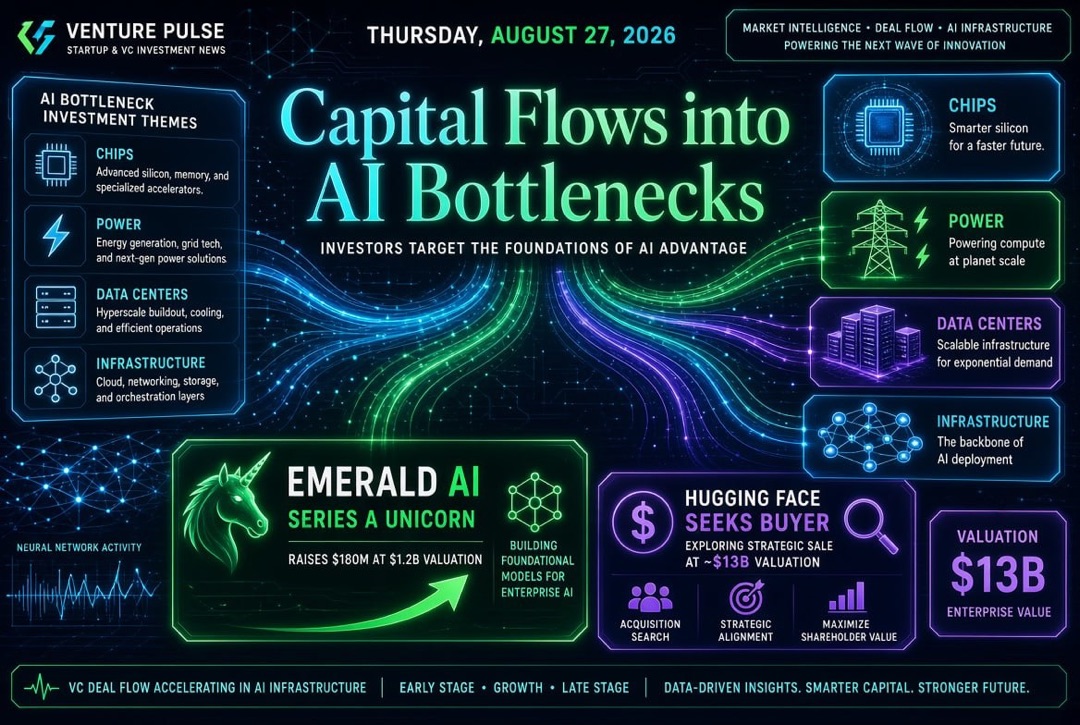
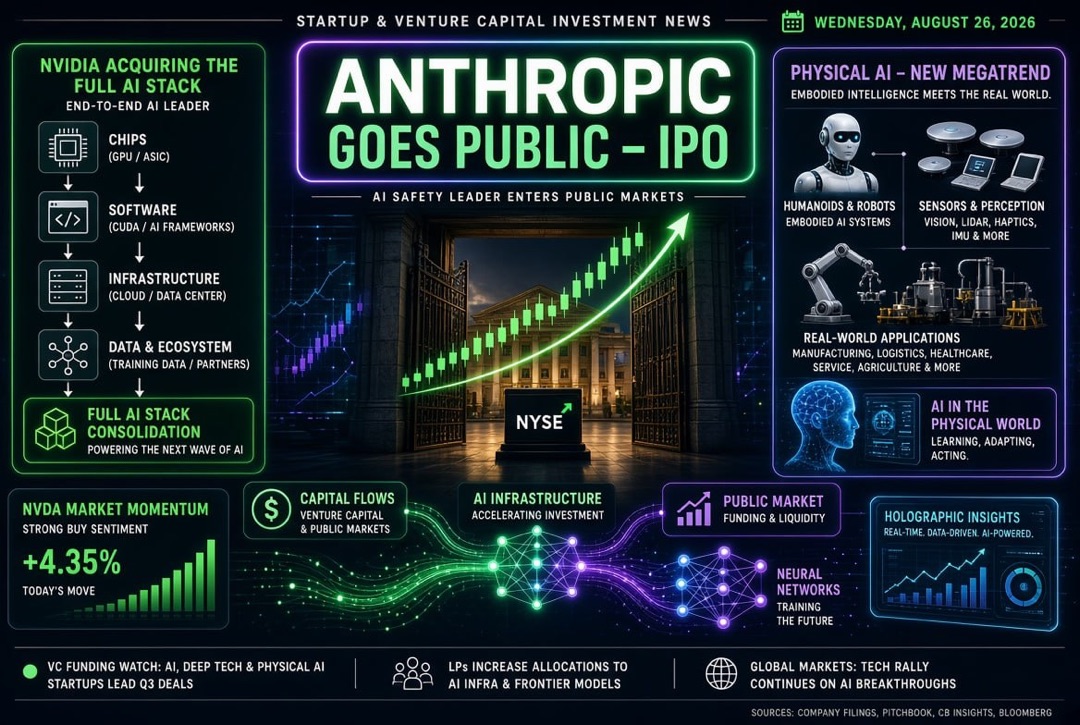
If in previous years a significant portion of investors sought growth in applied AI services, by spring 2026 the focus has shifted significantly towards infrastructure. Funds are increasingly investing in companies that build computational power, optimize access to chips, create new data center formats, and ensure long-term independence from computational shortages.
This is why the biggest news in the market now is not only associated with model developers but also with players who can ensure their scaling. This shift alters the logic of startup valuation: investors are ready to finance not just a product but an entire technological chain—from computational base to final corporate application.
- Startups controlling critical infrastructure are at an advantage.
- Demand is growing for projects with high capital intensity if they are backed by a strategic market.
- Interest in hybrid models combining software, hardware, and service revenue is increasing.
Europe Bets on Sovereign AI and a Scalable Ecosystem
For the European venture market, one central theme is transforming the region from a research platform to a scaling platform. The most indicative signal is the increased investment in sovereign AI infrastructure. This is especially crucial for funds seeking not local stories in Europe but platform companies with global potential.
Simultaneously, the institutional base is strengthening. The European agenda is increasingly centered around the idea of a unified regime for startups, designed to lower barriers to company formation and accelerate entry into the European market. For venture investors, this is critical: the fragmentation of laws, corporate structures, and hiring conditions has long hindered the growth of European tech companies and made exits less predictable.
If the new regulatory architecture truly takes off, Europe could become substantially more competitive in the race for founders, capital, and new unicorns. For funds, this provides an additional argument in favor of early entry into high-quality European deals.
Defense Tech Transitions from Niche Topic to Full-Fledged Venture Megasector
Defense technologies can no longer be viewed as a narrow vertical segment. In 2026, defense tech increasingly enters the mainstream venture stream alongside AI, fintech, and enterprise software. The reason is clear: autonomous systems, drone platforms, simulators, navigation technologies, and software designed for complex application conditions are becoming not only military but also technological drivers.
For the startup market, this means the emergence of a new class of companies where growth is driven by multiple factors:
- long-term government demand;
- increased interest from strategic investors;
- high technological complexity of the product;
- the potential for dual-use technology applications in the civilian sector.
This is why large rounds in defense tech today are seen not as exceptions but as confirmations of a new norm. Venture funds, which had recently avoided the sector due to reputational and regulatory constraints, are now increasingly viewing it as a source of superior returns over a multi-year horizon.
Asia Strengthens Its Position in AI Chips and Hardware
Another significant trend for the global venture market is the strengthening of Asian startups in segments addressing performance, energy efficiency, and the accessibility of AI computations. The most interesting companies are those creating alternatives to dominant chip suppliers or building their own architectures for inference and specialized corporate tasks.
For investors, this means that the AI race is now taking place not only at the level of models and applications but also at the hardware base level. In this structure, startups that can offer cheaper, more localized, or more energy-efficient computing infrastructure have increased chances of success. Asian rounds in this area signal that the market has long since ceased to be solely an American story.
Fintech and Tokenization Return as Mature Venture Directions
Against the backdrop of the AI boom, some investors are once again turning their attention to fintech, particularly projects that connect traditional financial instruments with digital asset packaging, new investment access logic, and institutional demand. Asset tokenization no longer appears as an experiment for a narrow circle of crypto enthusiasts. It is increasingly viewed as an infrastructural layer for future capital markets.
This is an important signal for the venture market since fintech remains one of the few sectors where investors can relatively quickly see clear revenue, high product usage frequency, and a transparent scaling funnel. Unlike some AI companies that are currently trading on expectations, many fintech startups offer a concrete service with clear economics.
The Funding Market Becomes Increasingly Polarized
Despite the high-profile funding rounds, the overall picture of the startup and venture investment market remains uneven. Money is available, but it is distributed extremely unevenly. The upper layer of high-quality companies continues to secure mega-deals and grow in valuation, while the mid-segment faces tougher conditions.
For funds, this signifies a return to classic venture selection discipline:
- Is the company's market large enough?
- Does the startup have technological protection and a real moat?
- Can the team transition from rapid growth to sustainable unit economics?
- Is there strategic value for corporations, the government, or major platforms?
In practice, this creates a market where good companies are very expensive, while mediocre ones are increasingly left without follow-up. This imbalance will define venture dynamics in the second quarter of 2026.
What This Means for Venture Investors and Funds
The current agenda indicates that the startup market is entering a phase of more mature capital redistribution. The winners are not the loudest projects but those embedded in major strategic themes: AI infrastructure, defense technologies, computing power, sovereign tech platforms, and new fintech.
For investors, this necessitates looking at the market simultaneously across three dimensions:
- Theme. The strongest capital flow is directed towards AI, defense tech, chips, and infrastructural fintech.
- Geography. The U.S. maintains dominance in scale, but Europe and Asia are strengthening their positions in specific niches.
- Stage. Early deals remain interesting, but the main magnet for capital continues to be companies that have already demonstrated technological and commercial viability.
As of Tuesday, March 31, 2026, the global startup and venture investment market appears robust, yet no longer indiscriminate. Capital is concentrating where there is infrastructural value, political support, high product complexity, and a chance to establish new industry standards. These segments will set the tone for the venture market in the coming months.