Current News in Oil, Gas, and Energy as of March 31, 2026: Including Oil Price Increases, Supply Shortages of Gas and LNG, Pressure on Refineries, and Global Energy Dynamics
On Tuesday, March 31, 2026, the global energy sector enters a new phase of heightened turbulence. For investors, oil companies, refineries, and participants in the gas, electricity, renewable energy, coal, and petroleum product markets, the key theme is shifting from merely rising oil prices to a broader energy shock that simultaneously affects physical supply chains, refining, logistics, fuel costs, and inflation expectations. The global energy market is no longer trading solely on fundamental supply and demand balances but is also influenced by a geopolitical risk premium.
Against this backdrop, several interconnected trends emerge as significant for the oil, gas, and energy sector: supply disruptions through the Middle East, intensified competition for available barrels in the Atlantic Basin, soaring prices for LNG and petroleum products, pressure on the electricity sectors in Europe and Asia, and an accelerated reevaluation of portfolios in favor of more resilient and diversified energy assets.
Oil Market: Risk Premium Becomes the Primary Driver
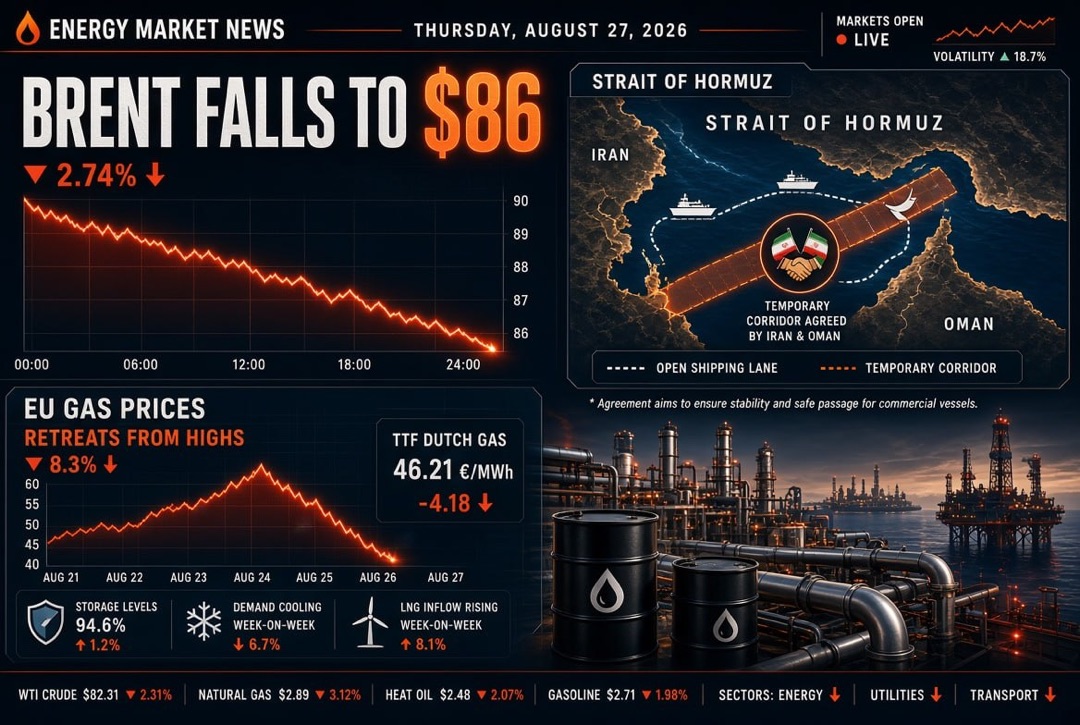
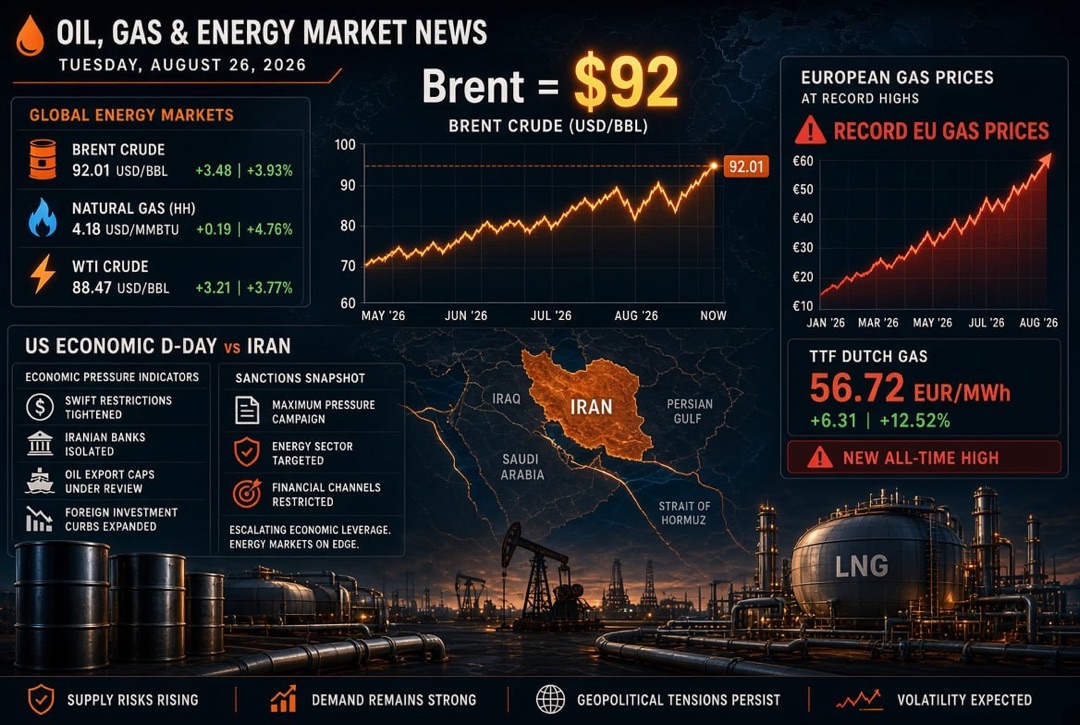
As of early Tuesday, oil remains at the center of global energy market attention. The main factor is disruptions in the Hormuz Strait, which is traditionally one of the most critical arteries of global oil, gas, and petroleum product trade. The market is not only assessing the current volume of disrupted supply but also the probability of further escalation, which includes risks to export infrastructure, terminals, and routes in the Persian Gulf and Red Sea.
For the energy sector, this means:
- oil prices increasingly depend on the safety of logistics rather than just production;
- the spot market is becoming significantly tighter than the futures market;
- physical barrels are gaining increased value compared to the futures curve.
For oil companies and traders, this creates an environment where flexible logistics, access to alternative ports, in-house freight systems, and the ability to rapidly redistribute raw material flows are becoming more crucial.
Physical Raw Material Market: Europe and Asia Compete for Every Available Volume
The next significant narrative is the tightening situation in the physical market. As the largest importer of oil and gas, Asia is actively pulling available volumes from Europe, Africa, and the Atlantic Basin. This intensifies shortages in segments that were previously considered relatively secure. Consequently, the global oil and gas market is experiencing uneven price increases: specific grades and routes are rising faster than benchmark standards.
For market participants, this is particularly important for three reasons:
- the premium on timely deliveries is increasing;
- the shortage of light and medium grades, which are convenient for refinery processing, is intensifying;
- the supply map is being reshaped between Europe, Asia, and Africa.
Therefore, for investors in the energy sector, it is now essential to focus not only on Brent and WTI quotes but also on differentials, freight rates, availability of cargoes, and the resilience of supply chains. In such periods, the physical market frequently provides a more accurate signal than exchange indicators.
Petroleum Products and Refineries: Refining Becomes a Major Beneficiary
In the petroleum products market, pressure is felt even more acutely than on crude oil. Diesel, jet fuel, gasoline, and gasoil are rising at an accelerated pace, as disruptions in Middle Eastern supply immediately reflect on the loading of Asian refineries and the availability of fuel in import-dependent economies. For the petroleum products segment, this signifies a classic scenario: raw material shortages rapidly transform into finished product shortages.
For refineries and petroleum product traders, the current environment presents both opportunities and risks:
- refining margins are rising, especially in medium distillates;
- volatility in gasoline and diesel export flows is increasing;
- planning raw material purchases and shipping finished fuel is becoming more complex;
- the importance of inventories, tank infrastructure, and long-term contracts is increasing.
For investors, this makes refining and logistics one of the most interesting segments of the energy sector for the upcoming weeks. While oil prices reflect fear, the petroleum products market is already reflecting a real shortage. This is why stocks of companies involved in refining, storage, and transportation of fuel may appear stronger than the broader energy index.
Gas and LNG: Renewed Pressure on Europe and Asia
The gas market also remains under significant pressure. The LNG segment is as sensitive to disruptions in the Hormuz Strait as the oil market. For Europe, this is particularly critical ahead of the active fill-in season for storage. While oil affects inflation and transportation, gas and LNG directly impact electricity, industry, fertilizers, and household budgets.
Key trends in the gas sector as of March 31 include:
- Europe is entering the stockpiling season under heightened price uncertainty;
- Asia is competing more actively for spot LNG cargoes;
- risks to supply from the Middle East are heightening interest in U.S. LNG;
- projects with already established export infrastructure are structurally benefiting.
Importantly, new U.S. LNG export capacity continues to come online. While this does not resolve the issue immediately, it creates an important stabilizing factor for the global energy market. For U.S. oil and gas companies, as well as suppliers of equipment, services, and transport infrastructure, this is a positive signal.
Electricity, Coal, and Renewables: The Energy Balance Changes Again
The electricity market in 2026 is again demonstrating how closely tied oil, gas, coal, and renewable energy are. As gas prices rise, some systems transition to cheaper or more accessible sources of generation. In Asia, this is already boosting interest in coal and domestic energy sources. In Europe, a high share of renewable energy helps mitigate price shocks but does not eliminate the problem of expensive gas in electricity pricing.
For energy market participants, this creates a mixed picture:
- coal receives short-term support as a backup source of reliable generation;
- renewable energy strengthens its strategic investment attractiveness, especially where it reduces dependency on imported gas;
- the electricity sector faces renewed political pressure due to rising bills for industries and households;
- interest is accelerating in storage systems, networks, and demand response management.
In other words, the current crisis simultaneously assists traditional generation in the short term while enhancing the investment logic for renewables in the medium term. For the global energy sector, this is not a contradiction but a new normal.
Politics and Regulation: Governments Enter Crisis Management Mode
Another important factor for the oil, gas, and energy market is the reaction of governments. Regulators and authorities are already compelled to discuss measures for stabilizing prices, supporting consumers, and mitigating inflationary effects. This means that in the coming days and weeks, the energy sector will depend not only on quotes but also on administrative decisions: from strategic reserves to tax relief and targeted subsidies.
For the market, this brings several consequences:
- state intervention may temporarily smooth out price increases but will not eliminate physical shortages;
- there will be increased attention to export restrictions on petroleum products and gas in certain countries;
- companies with domestic sales markets and regulated returns may gain relative stability;
- the volatility of stocks in the energy sector will depend on the quality of national crisis policies.
For global energy sector investors, this indicates the need to monitor not only commodity charts but also decisions from the G7, the European Union, the largest Asian importers, and producing countries.
Implications for Oil and Gas Companies, Refineries, and Investors
The current market is shaping different scenarios for various segments of the energy sector. There is no universal gain: those who benefit the most are primarily those with access to physical resources, logistical flexibility, diversified refining operations, and stable cash flows.
The most notable takeaways as of March 31, 2026, include:
- upstream companies benefit from high oil prices but face increased geopolitical risks;
- refineries and petroleum product sellers receive support through strong margins, especially in diesel and jet fuel;
- gas and LNG players remain in the spotlight due to global shortages of flexible supplies;
- the electricity and renewable sectors appear more resilient where dependence on imported gas is lower;
- coal temporarily strengthens its position as an instrument of energy security, although it strategically lags behind renewables.
The Global Energy Sector Shifts to High Price Security Mode
On Tuesday, March 31, 2026, news in oil, gas, and energy centers around one central idea: the global energy market has begun to incorporate not only the cost of raw materials but also the cost of supply reliability into prices. For oil, gas, LNG, petroleum products, electricity, coal, renewables, and refineries, this signifies a new cycle of margin and capital redistribution.
For global investors and energy sector participants, the main takeaway is simple: the market is entering a phase where access to physical products, diversification of routes, resilience of supply chains, and the ability to swiftly respond to changes in trade flows are particularly valued. These factors will define who in the energy sector will emerge victorious in the coming days, and who will face rising costs and decreased business predictability.