Latest News on Startups and Venture Investments as of Wednesday, January 14, 2026: Record Mega Funds, Significant AI Rounds, Biotech Deals, and Key Global Trends in the Venture Market.
The beginning of 2026 has been marked by heightened activity in the global startup and venture capital market. The largest venture funds are attracting record amounts, while promising tech startups are closing funding rounds totaling hundreds of millions of dollars, despite investors' ongoing selectivity. Venture investors are particularly focused on artificial intelligence, biotechnology, and strategic technologies—industries poised to shape the future markets and national competitiveness. Below is an overview of key startup and venture investment news as of January 14, 2026.
Venture Market Gains Momentum Following 2025 Upsurge
The global venture market enters 2026 on a wave of growth. According to industry analysts, investment volumes in startups surged significantly in 2025 compared to previous downturns. For instance, startups in North America raised approximately $280 billion in venture investments during 2025, an increase of nearly 46% over the previous year. The main driver of this growth was the boom in artificial intelligence projects, with AI startups attracting the lion's share of capital. Venture investors worldwide are once again ready to invest in innovative companies, especially in breakthrough sectors. The start of 2026 confirms this trend: several major deals and new funds have already been announced in the first weeks of January, signaling a continued positive momentum in the venture capital market.
Andreessen Horowitz Raises Record Mega Fund
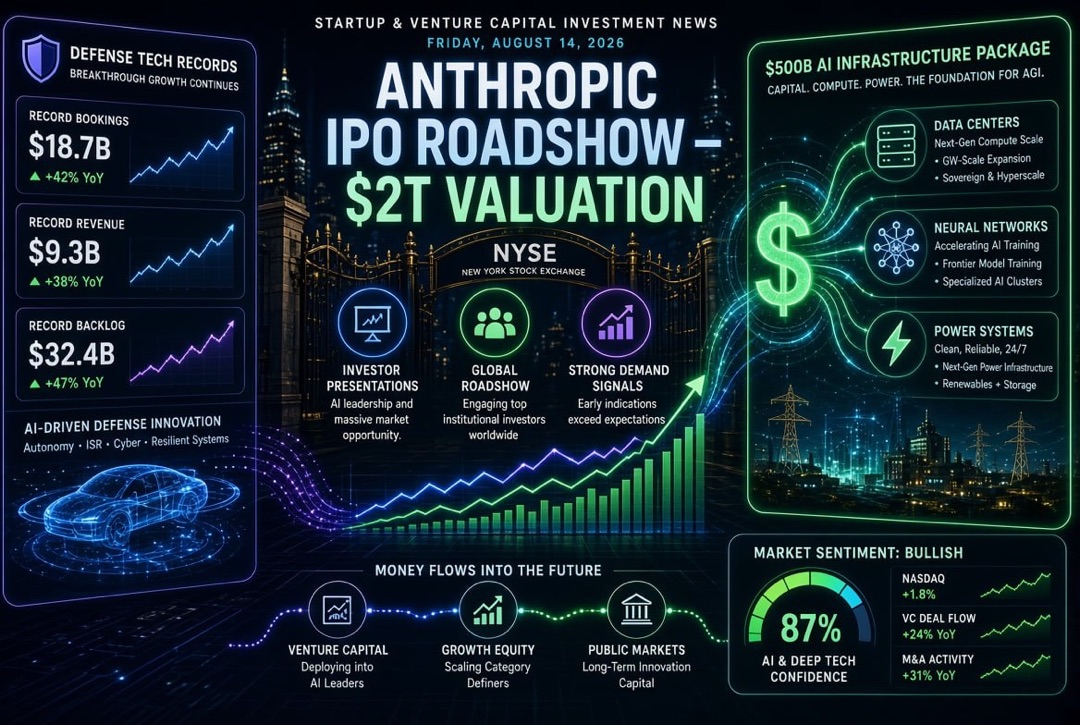
One of the most notable signals of investor confidence is the unprecedented new fund from Andreessen Horowitz (a16z). The largest Silicon Valley venture firm announced that it has raised over $15 billion for various new funds. This marks a record amount for a16z and is one of the largest venture capital fundraising rounds in the industry's history. The funds are allocated across several vehicles, including approximately $6.75 billion for growth-stage investments, around $1.2 billion for its American Dynamism fund targeting startups in national security and defense, as well as separate funds of about $1.7 billion aimed at applications and infrastructure projects, $700 million for biotechnology and healthcare, among others. The leadership at Andreessen Horowitz emphasized their intention to invest in technologies that strengthen the U.S. technological leadership—from artificial intelligence and cryptocurrencies to biotech, defense, and education. Co-founder Ben Horowitz stated that the firm’s mission is to "ensure America's victory in the technological race of the coming decades." Notably, a16z has effectively concentrated a significant share of available capital: estimates suggest the firm's funds accounted for roughly 18% of all venture dollars invested in the U.S. last year. The new mega fund, in the context of the quietest year for venture fundraising since 2017, signals a return of confidence—investors are ready to entrust major players with record amounts in the search for "the next big ideas" among startups.
AI Investment Boom Continues
The artificial intelligence sector remains the main magnet for venture investments in 2026. Companies working with AI technologies continue to attract large funding rounds, affirming that interest in AI remains strong following last year's frenzy. A representative example is the startup Deepgram, specializing in voice AI. The San Francisco-based company announced that it secured $130 million in a Series C round at a valuation of $1.3 billion. The round was led by AVP, a fund focused on technology startups in North America and Europe, with participation from investors such as Citi Ventures, Alumni Ventures, and others. The funds raised will be used for international expansion, launching new AI models, and strategic acquisitions. Deepgram provides businesses and developers with an AI-powered platform for creating custom voice assistants capable of processing speech and dialogue context in real-time. The demand for such solutions is rapidly increasing: enterprises across multiple sectors—from retail and fintech to healthcare—are implementing voice AI agents in call centers and support services. As noted by the co-founder and CEO of Deepgram, “Voice AI has gone mainstream over the past year; almost every product with text input or a button is now trying to add a voice interface.” This trend is supported not only by Deepgram's success but also by dozens of other AI startups securing funding for solutions in generative AI, computer vision, automation, and other areas. Venture investors continue to view artificial intelligence as a key growth area, and in 2026, competition for the most promising AI teams remains high.
Unicorns in AI and Defense Technologies
The success of major deals in the AI sector is leading to the emergence of new "unicorns"—private companies valued at over $1 billion. Early in 2026, several startups reached this status through venture rounds. Deepgram entered the unicorn club after its latest funding round, achieving a valuation of $1.3 billion, cementing its status as a leader in the voice AI segment. Simultaneously, an important event occurred in Europe: the French startup Harmattan AI, developing defense technologies utilizing artificial intelligence, raised around $200 million in a Series B round, resulting in a market valuation exceeding $1 billion. This made Harmattan AI one of the few unicorns in continental Europe within the strategically important field of defense technologies. The rising valuations of such companies reflect an increasing investor focus on national security and advanced technology projects—echoing the trend set by funds like American Dynamism. Notably, in the U.S., defense startups are among the most valuable: for instance, the American company Defense Unicorns, providing secure software solutions for the Pentagon, completed a Series B round of $136 million, achieving a valuation of over $1 billion. Thus, amid the continued interest in AI and cybersecurity developments, the global pool of startups is seeing an increase in unicorns addressing both commercial needs (client servicing through AI) and state-level issues (defense and cybersecurity). This confirms the global nature of the technology venture race—not just Silicon Valley, but also Europe and other regions contribute to the emergence of new highly valued tech companies.
Multi-Million Dollar Rounds in Biotech
The biotech sector is also keeping pace: in the first weeks of January, several biotech startups announced mega funding rounds, signaling a resurgence in healthcare investments. The most significant deal involved a Series F round of $305 million for Parabilis Medicines (formerly known as FogPharma) from Massachusetts. The capital raised will allow Parabilis to advance its experimental anti-cancer drug (the peptide zolucatetide) into the crucial phase of clinical trials, as well as to expand its peptide cell penetration technology platform for other drugs. Interestingly, Parabilis is raising venture funding for the sixth time, remaining private longer than is typical for biotech companies—such a large "late" round indicates investor confidence (including from major public market funds) in the prospects of its developments. Another notable player is the California-based startup Soley Therapeutics, which secured around $200 million in a Series C round. The company employs artificial intelligence and computer analysis of cellular responses to identify new anti-cancer drugs and will direct the funds toward bringing two candidates into clinics. Record deals are also occurring at early stages: for instance, the young biotech firm AirNexis Therapeutics received $200 million in initial funding (Series A) for developing an innovative treatment for lung diseases. Such a volume of investment for Series A is a rarity and signals high confidence in the scientific basis of the project: AirNexis licensed a promising drug from China’s Haisco Pharmaceutical and plans to take it to the global market for COPD treatment. Besides these giant rounds, the sector is witnessing a series of smaller deals (ranging from $50–100 million)—observers note that in the first decade of January, at least half a dozen biotech startups secured funding above $50 million. All this indicates a renewed interest in biotech following a challenging period: venture funds are once again actively financing healthcare, particularly projects with breakthrough science or ready products. Major crossover investors (focused on both private and public markets) are returning to biotech, laying the groundwork for potential IPOs if market conditions prove favorable.
New Specialized Venture Funds
In addition to financing startups themselves, there is a noticeable influx of capital into new venture funds, often focused on narrow niches or strategic themes. The startup industry is diversifying, which is reflected in the emergence of specialized funds worldwide. Here are a few notable examples from early 2026:
- Superorganism (USA) – the first venture fund dedicated to biodiversity conservation, raised $25.9 million for investments in startups focused on ecosystem and natural resource preservation.
- Penn BioNTech Fund (USA) – a joint fund from the pharmaceutical company BioNTech and the University of Pennsylvania with a capital of $50 million aimed at supporting biotech startups emerging from the Penn research ecosystem. The goal is to commercialize scientific developments in new therapeutic approaches and diagnostic technologies.
- Servier Ventures (France) – the venture arm of the French pharmaceutical group Servier with an initial capital of €200 million, targeted at investing in European startups in oncology and neurology, reflecting large pharmaceutical companies' desire to more actively participate in the venture ecosystem.
- VZVC – a new venture firm founded by former a16z partner Vijay Pande, is raising its first fund (~$400 million according to industry sources) to invest at the intersection of artificial intelligence and consumer health. This example demonstrates how experienced investors are leaving major firms to focus on individual niches with significant growth potential.
Alongside these listed funds, there are also public-private initiatives—in some regions, government-supported funds are launching, aimed at developing local startup ecosystems (such as an AI hub in New Jersey with $20 million of capital, among others). Such steps demonstrate that the venture landscape is becoming increasingly diverse: large mega funds coexist with compact targeted funds covering sectors from climate and biomedicine to defense and artificial intelligence. Collectively, all this signifies more funding opportunities for startups worldwide, even in segments that were previously considered exotic for venture capital.
Expectations and Prospects: IPOs and Further Growth
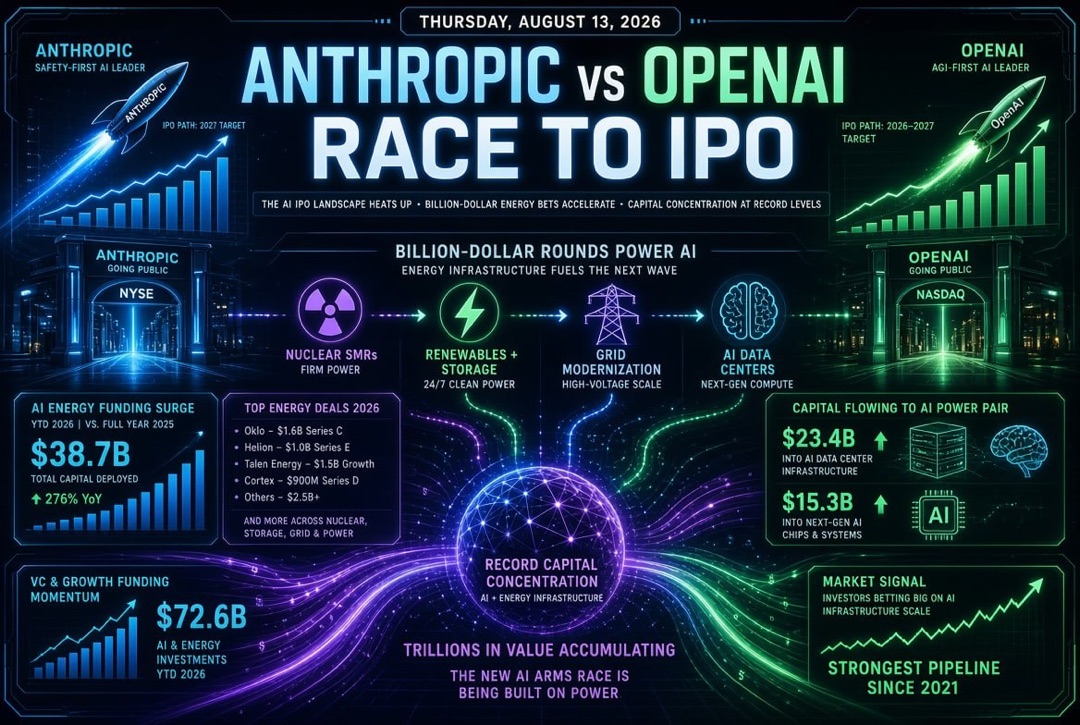
Given the active start to the year, players in the venture market are cautiously optimistic in their forecasts for 2026. Large rounds and new funds mean that startups have access to capital; however, investors will now closely monitor the efficacy of these investments. One indicator will be the resumption of companies going public: after a lull in recent years, only a few notable tech companies went public in 2025, so in 2026, a queue of unicorns ready to test their luck is expected if market conditions improve. Venture funds are already preparing potential IPO candidates—both among tech enterprises in Silicon Valley (rumors about large fintech and AI companies' IPO plans are circulating) and among biotech firms that have attracted crossover investors at later stages. High valuations in recent funding rounds often imply an expectation of an imminent exit, whether through strategic sale or public offering. Meanwhile, the volume of "dry powder"—uninvested capital in funds—remains significant, ensuring competition for the best deals. According to PitchBook, impact investment funds alone control over $200 billion of unallocated capital, while the total global venture "dry powder" amounts to hundreds of billions of dollars. These capital reserves may sustain a high pace of venture financing even amid changing economic conditions.
Certainly, certain macroeconomic factors instill a degree of caution: rising interest rates, geopolitical instability, and market volatility may adjust risk appetite. However, at this moment, the startup ecosystem enters the new year with a noticeable buffer of resilience and optimism. Venture investors and funds worldwide are demonstrating readiness to continue financing technological innovations—from AI and cloud services to new medicines and environmentally friendly solutions. If market conditions remain favorable, 2026 could become a time of new records and bright breakthroughs for startups, with venture capital continuing to play a pivotal role in global technological progress.