Oil, Gas and Energy News June 4, 2026: EIA Inventory Data, Analyst Forecast Through 2027, OPEC+ Meeting June 7, Jet Fuel, LNG, and the Power Market
Global Fuel and Energy Complex June 4, 2026: Oil and Petroleum Product Inventories Below Normal, Analysts Predict Protracted Supply Crisis, OPEC+ Prepares for Meeting, Jet Fuel in Shortage, LNG and Power Sector Under Demand Pressure
The global fuel and energy complex enters Thursday, June 4, 2026, in a new informational mode. The market is no longer merely awaiting a diplomatic breakthrough in the Strait of Hormuz—it has shifted to acceptance. Leading industry analysts, including those invited by OPEC+ to a technical briefing in Vienna, have reached a consensus that the supply disruption from the Middle East will last through the end of 2026 even if the strait reopens soon. ADNOC CEO Sultan Al-Jaber added an even harsher assessment: full restoration of oil flows from the region is unlikely before 2027.
On the previous day, June 3, the EIA released its weekly Petroleum Status Report: data on crude oil and petroleum product inventories confirmed that a physical deficit is real and intensifying. Commercial crude stocks fell to levels below the five-year average, gasoline dropped even further, and distillates—including jet fuel—proved to be in the most vulnerable position. Meanwhile, refineries are running at maximum utilization, and U.S. crude imports have declined. In this configuration, energy market participants on June 4 are focused on five axes: EIA data and its interpretation, the OPEC+ meeting on June 7, the growing jet fuel deficit, competition for LNG, and peak electricity load ahead of summer.
EIA Data: Crude, Gasoline, and Jet Fuel—All Inventories Below Normal
The weekly EIA report, published June 3 and covering the week through May 29, became the key informational event for the oil market on June 4. The numbers are unambiguous: the system is in a state of growing deficit across several key products simultaneously.
U.S. commercial crude oil inventories declined by 3.3 million barrels to 441.7 million barrels—roughly 2% below the five-year seasonal average. This alone is not critical, but combined with an import drop of 804,000 barrels per day to 5.2 million b/d—7.1% lower than the same period last year—the picture becomes more alarming. The market is receiving less crude than a year ago while processing it at record intensity: refinery inputs rose 652,000 b/d to 17.0 million b/d, and refinery utilization reached 94.5% of operable capacity.
The situation is even more acute for petroleum products. Motor gasoline inventories fell by 2.6 million barrels and are now 6% below the five-year average—just as the summer driving season ramps up, with consumption traditionally rising. Distillate fuel—diesel, heating oil, and jet kerosene—dropped by 2.1 million barrels and now sits roughly 11% below the seasonal norm. This metric causes the greatest concern because distillates serve several critically important sectors simultaneously: trucking, agriculture, aviation, and heating.
For investors and energy market participants, the EIA data offers three practical conclusions. First, refineries are already operating near their technical limits, and further processing increases are constrained. Second, the decline in imports means the U.S. is compensating for lost Middle East supplies by drawing down inventories rather than sourcing additional crude. Third, distillate stocks at 11% below normal represent a structural vulnerability that will keep refinery margins and retail prices elevated for several more weeks.
Crude Oil: Brent and WTI in the “Acceptance of the Long Scenario” Phase
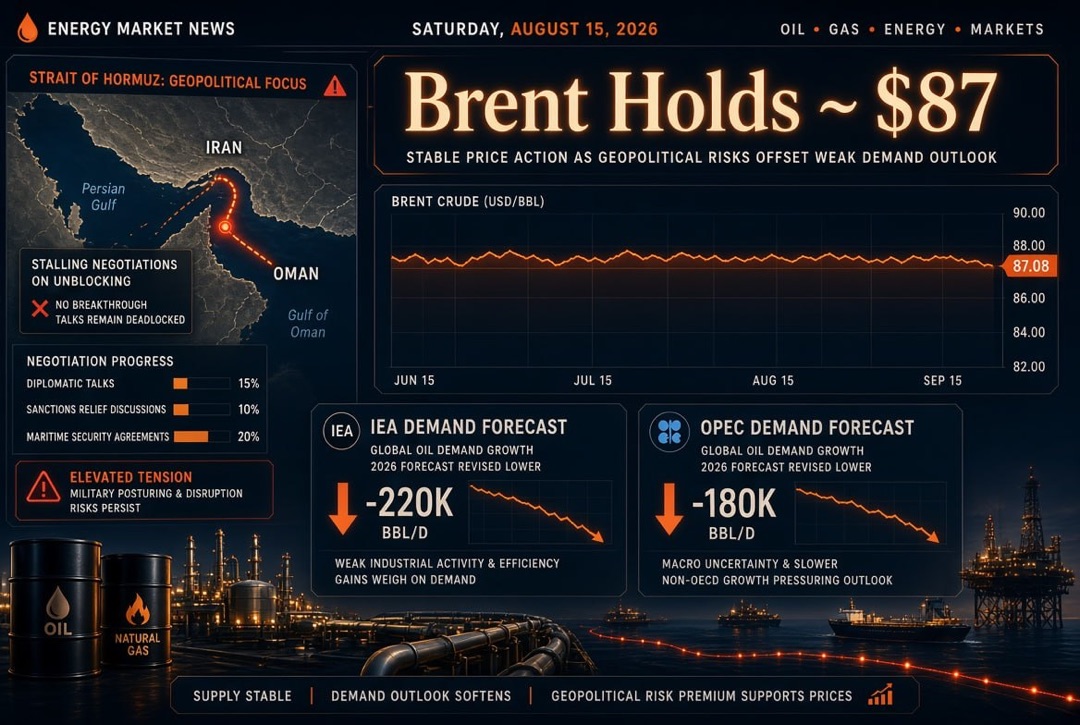
The oil market on June 4 is in a state analysts call “acceptance.” After a month of acute volatility—from an April peak above $138 per barrel for Brent to subsequent corrective declines—the market has found a new range reflecting not expectations of a quick normalization but pricing for an extended period of constrained supply.
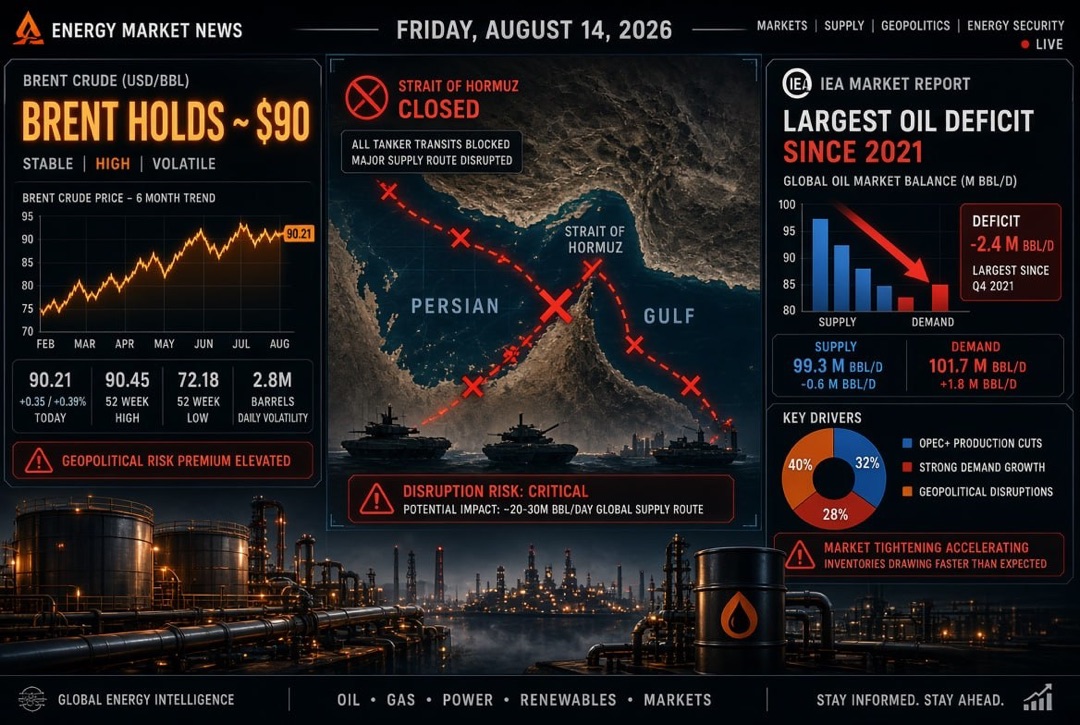
Brent holds in the lower $90s per barrel, WTI trades around $90–92. At first glance, these levels appear moderate compared with April’s highs. But they embed a persistent geopolitical premium, elevated freight costs, war risk insurance surcharges on routes bypassing Hormuz, and a discount for the physical unavailability of a portion of Middle East supply. The Brent–WTI spread remains unusually wide, reflecting a structural gap between global logistics and the relatively import-independent U.S. domestic market.
A key detail: the market has stopped reacting to every diplomatic statement or military signal as a reversal trigger. This indicates that trading algorithms and major participant positioning have switched from event-driven to structural mode. Oil is now priced less through the lens of “will Hormuz open this week” and more through “how long will the physical deficit pressure inventories and margins.” The analysts’ answer, delivered at the briefing in Vienna, is unambiguous: long.
- Brent retains a geopolitical premium even after falling from April peaks.
- WTI reflects the relative resilience of U.S. upstream amid an import deficit.
- The Brent–WTI spread signals a structural gap in supply logistics.
- The market transitions from event-driven to structural pricing.
OPEC+: Three Days to the June 7 Meeting
Three days remain until the key OPEC+ ministerial meeting. The market has already priced in the baseline scenario: the group of seven countries—excluding the UAE, which left the organization on May 1—will approve an output target increase of roughly 188,000 barrels per day, the same pace as in June. This will do little to change physical supply, but it matters as a political signal of the alliance’s intentions.
The key question to be discussed on June 7 goes beyond the output target number. It is different: how does OPEC+ function when its largest members—Saudi Arabia, Iraq, Kuwait—cannot physically deliver agreed export volumes due to the closure of Hormuz? In April, the total shut-in for Iraq, Saudi Arabia, Kuwait, UAE, Qatar, and Bahrain was about 10.5 million b/d. This means that production quota increases are largely declaratory: physical supply from these countries remains severely constrained.
The UAE’s exit from OPEC in May added another structural complication. The Emirates had one of the largest spare capacities within the group. Their absence reduces OPEC’s projected spare capacity for 2027 from 3.8 million b/d to 2.5 million b/d—the system’s safety cushion has contracted significantly. At a time when the global market expects accelerated output recovery to normalize prices, this is a long-term material loss.
For investors, the main issue on June 7 is not so much the quota number but the tone of the communiqué, the alliance’s assessment of the crisis duration, and any signals regarding compensation mechanisms upon future normalization. These signals will determine how the market reads the decision.
Analyst Consensus: Hormuz Recovery Is 2027
The most fundamental news on June 4 from a long-term positioning standpoint is the solidification of professional consensus on when Middle East supply will return to pre-conflict levels. Analysts from leading industry agencies—S&P Global, FGE NexantECA, Vortexa, Kpler, and Energy Aspects—who spoke at the technical briefing at OPEC’s Vienna headquarters on June 1 stated it unequivocally: even if the Strait of Hormuz were opened immediately, normalizing production and exports would take many months.
The reasons for this slow recovery are systemic. During the closure, the region’s oil infrastructure underwent critical stress: some facilities were damaged, logistics chains and insurance networks were reconfigured, and tanker fleets oriented toward Hormuz were partially redeployed to other routes. Restoring all this is far harder and slower than disrupting it. ADNOC CEO Sultan Al-Jaber made the assessment specific to the UAE: even with an immediate end to the conflict, oil flows from the Middle East will not fully recover before 2027.
This consensus matters for the market for several reasons. First, it eliminates any remaining bets on a V-shaped supply recovery that some traders had kept in reserve. Second, it redirects investment thinking from “trading the news” to “managing a position in a long cycle.” Third, it underscores the strategic value of alternative routes: Saudi Arabia’s East-West pipeline to the Red Sea, the UAE’s pipeline to Fujairah, and Egypt’s SUMED pipeline. The capacity of these routes is far smaller than the volumes historically transiting Hormuz, but they define the real physical ceiling on regional supply in the coming months.
Jet Fuel: Shortage on a Scale Not Seen Since 2001
Among all petroleum products, jet kerosene is in the most vulnerable position in early June 2026. Distillate inventories 11% below the seasonal norm, according to aviation industry estimates, create a situation comparable in scale to the fuel disruptions after the events of September 2001. At that time, air travel nearly completely halted for several days, and restoring jet fuel supply chains took weeks. The mechanism today is different—not a demand shutdown but a supply constraint—yet the scale of dislocation is comparable.
Airlines face a double blow: jet fuel itself has become more expensive in line with crude and petroleum products, and logistics for delivering it to hubs have grown more complex due to the restructuring of the entire oil trading system. Some kerosene supply contracts tied to Middle East refineries have been disrupted, and alternative routes from the United States, Europe, and the Asia-Pacific region do not provide full replacement.
Practical consequences are unfolding along several fronts. Airline tickets are becoming more expensive, especially on long-haul routes where fuel constitutes the largest cost component. Carriers without long-term hedging contracts incur direct operating losses. Logistics companies using air freight pass fuel surcharges on to clients. For the oil market, this means additional structural demand for distillates, supporting refinery margins regardless of crude price dynamics.
Gas and LNG: Second Month of Market Reshaping
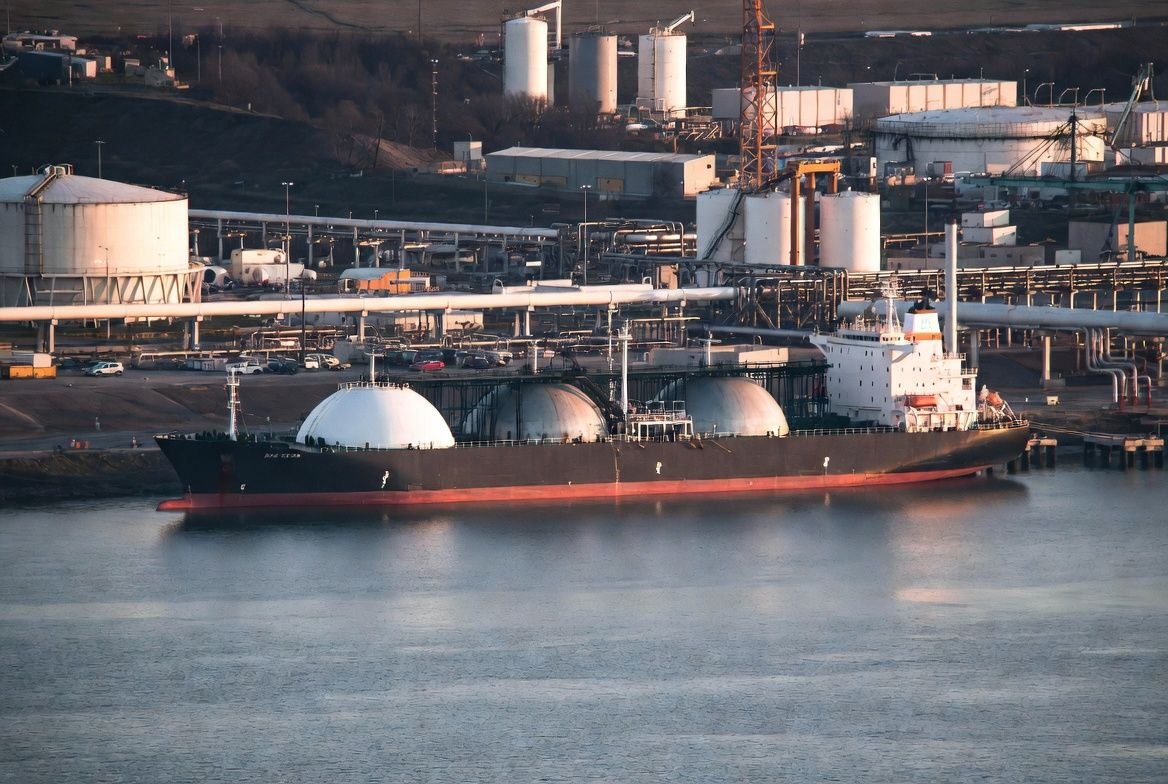
The gas market on June 4, 2026, is operating steadily in the “new normal” established after the initial shocks of February–March. Supplies from the Middle East—primarily Qatari LNG, a portion of which was historically shipped through Hormuz—are being rerouted via alternative pathways. This is technically possible but slower and more expensive, directly impacting spot prices in Asia and Europe.
Competition between the two regions for limited available LNG volumes shows no sign of easing. Asian buyers are willing to pay a premium over European prices to secure sufficient supply for power plants during the peak summer period. European importers respond with long-term contracts and advance slot bookings at regasification terminals. The United States, Australia, Norway, and new projects in West Africa are in an advantageous position: their supplies do not depend on Hormuz, and buyers pay an additional premium for that reliability.
For countries where gas-fired generation forms the backbone of the power sector, the price of LNG becomes an even more sensitive variable. Expensive gas translates directly into wholesale electricity prices, and those feed into bills for industry and households. In this linkage, the rise in LNG cost on June 4 is not just an oil and gas story—it is a story about future inflation and competitiveness.
- Qatari LNG is rerouting, but partially losing logistics competitiveness.
- The U.S. strengthens its position as the leading reliable supplier for both hemispheres.
- Asia and Europe compete for cargoes with record spot premiums.
- Long-term contracts displace spot trading as the pricing foundation.
- New LNG capacity independent of the Middle East generates the fastest investment returns.
Petroleum Products and Refineries: Capacity Ceiling and Summer Stress Test
The petroleum product market on June 4 faces a rare combination: refineries operating at maximum, inventories declining, and crude imports falling. This means there is virtually no spare capacity to ramp up production, and any disruption at an individual plant—planned maintenance, outages, feedstock delays—immediately translates into a local supply shortage.
U.S. refinery utilization at 94.5% is a level near the technical ceiling for the system as a whole. At such levels, the buffer to absorb unexpected events shrinks. Refineries with high conversion capacity and access to diversified crude sources gain a competitive advantage: they can switch between crude grades to optimize gasoline, diesel, or jet fuel output based on current conditions. Simple refineries tied to specific crude grades are in a more vulnerable position.
For the petrochemical market, the situation is dual: expensive crude feedstock pressures margins, but some petrochemical products also rise in price, supporting the profitability of vertically integrated companies. Overall, on June 4, the product market confirms the thesis from the EIA data: it is not crude as a raw material, but petroleum products as end goods, that are the key indicator of system stress.
Power Sector: Peak Summer Demand and the Role of New Consumers
The power sector on June 4 enters a phase of escalating summer pressure. A heat wave in the Northern Hemisphere—the United States, Europe, South and East Asia—is progressively driving air conditioning consumption toward seasonal peaks. Meanwhile, base demand from data centers and AI infrastructure does not abate: it creates a constant load independent of time of day or season.
This is a fundamental change in demand structure. Historically, power systems had clear peak and trough periods, allowing generation and grid planning with a certain safety margin. Data centers break that logic: they consume electricity 24/7 regardless of time, weather, or weekends. Adding a seasonal air conditioning peak on top of this constant base load creates stress that some power systems are encountering for the first time.
Grids become the bottleneck. The issue is not a lack of generation capacity per se—in many regions, the generation fleet is adequate. The problem is that transmitting that energy to points of consumption is prevented by infrastructure constraints. This makes investments in grid infrastructure, storage, and digital balancing management more urgent than building new power plants. For the oil and gas market, this means sustained demand for gas as a flexible backup fuel over at least a 5–7 year horizon.
- Data center base demand does not follow seasonal logic.
- Summer air conditioning peaks are layered atop persistent AI load.
- Grids, not generation, become the primary bottleneck for power systems.
- Gas solidifies its role as an indispensable fuel for backup and flexible generation.
Energy Investments: Business Model Adaptation in a Long Crisis Phase
The investment landscape in the global energy sector on June 4, 2026, reflects not panic but rational adaptation to a changed reality. Capital is moving in two fundamentally different directions simultaneously, and this movement accelerates as it becomes clear that neither a quick return to pre-conflict supply nor a collapse in oil prices over the coming quarters should be expected.
The first direction is conventional energy. Expensive oil restores the profitability of upstream projects even in high-cost regions: offshore, oil sands, deepwater. Refineries with high margins attract downstream-focused investors. LNG projects outside the Hormuz zone receive accelerated funding. This is long-term capital that will influence the market 5–10 years out.
The second direction is low-carbon and infrastructure energy. Renewables, storage, grids, small modular nuclear, hydrogen, and energy efficiency gain additional political and economic momentum: the crisis vividly demonstrates the cost of dependence on a single region or supply route. Gulf countries, historically oil and gas exporters, are actively diversifying into solar and wind generation—not as a concession to climate policy but as a strategy for economic survival in a post-oil horizon.
For oil and gas majors, this means a need to reassess strategic positioning. Companies building portfolios spanning upstream, refining, trading, LNG, petrochemicals, and power assets navigate the crisis more resiliently. Companies with a mono-profile bet on rising oil prices are more vulnerable. Diversification of the energy value chain, not the size of reserves in the ground, becomes the key investment evaluation criterion in 2026.
What Matters for Investors and Energy Market Participants on June 4, 2026
Thursday, June 4, 2026, marks the transition of the global oil, gas, and energy sector from a waiting phase to a phase of structural adaptation. The EIA data confirmed a physical deficit, the analyst consensus has locked in a long recovery horizon, and the jet fuel crisis has made obvious that petroleum products are not a secondary market but a key link in the global economy. With the OPEC+ meeting on June 7 and the next EIA STEO on June 9 just days away, these events will define the narrative for the coming week.
Key benchmarks for investors, oil and fuel companies, and energy market participants:
- Interpretation of EIA data—crude and product inventories below normal at maximum refinery utilization;
- OPEC+ signals and tone ahead of the June 7 meeting and their readability beyond stated quotas;
- Analyst consensus on Middle East supply recovery no earlier than 2027;
- Jet fuel crisis—scale, duration, and impact on aviation and inflation;
- LNG competition between Asia and Europe and spot pricing dynamics;
- Summer power load from data centers, AI, and air conditioning;
- Investment flows between conventional and low-carbon energy;
- The next EIA STEO, scheduled for June 9—the first after the analyst consensus was locked in.
The main takeaway of June 4, 2026: energy has ceased being a backdrop to the global economy and has become its primary variable. Oil, petroleum products, gas, LNG, jet fuel, electricity, and renewables are linked in a single system where a disruption at one point—the Strait of Hormuz—unfolds into a multi-month structural crisis stretching from the filling station to the airline ticket, from the data center to the wholesale power price. The advantage in this environment goes to those who manage not individual positions but the entire energy value chain—from production and maritime logistics to refining, grids, and the end consumer.