Global News on the Oil, Gas, and Energy Sector for Tuesday, January 27, 2026: Oil, Gas, Electricity, Renewable Energy, Coal, Oil Products, and Key Trends in the Global Energy Sector for Investors and Market Participants.
The current events in the fuel and energy complex on January 27, 2026, draw the attention of investors, market participants, and major energy companies with their ambiguity. After years of lows at the end of last year, oil prices are showing signs of recovery—Brent quotes have returned to the mid-$60s per barrel amid supply disruptions and geopolitical risks. At the same time, the gas markets are experiencing a divergence: Europe still enjoys comfortable stocks and moderate prices, whereas North America is witnessing a price spike due to LNG exports and a harsh winter. Sanction pressure on the Russian energy sector remains: the West is implementing new restrictions, however, there are initial hints of a possible compromise in the future, provided the crisis is resolved. In Asia, the largest oil and gas consumers—India and China—continue to balance between profitable energy resource imports (including from Russia at discounted prices) and the development of their own production. At the same time, the global energy transition is gaining momentum: renewable energy is breaking records in generation and investments, although traditional resources remain necessary for the reliability of energy systems, especially during periods of weather anomalies. Demand for coal, despite the environmental agenda, remains around historical highs, underscoring the dependence of many economies on this fuel in the short term. Meanwhile, in the domestic market of Russia, government measures to curb gasoline and diesel prices have yielded results: by early 2026, the situation stabilized, and authorities are ready to extend regulation if necessary to prevent a new round of the fuel crisis. Below is a detailed overview of the key news and trends in the oil, gas, electricity, and raw materials sectors as of the current date.
Oil Market: Disruptions and Geopolitics Support Prices
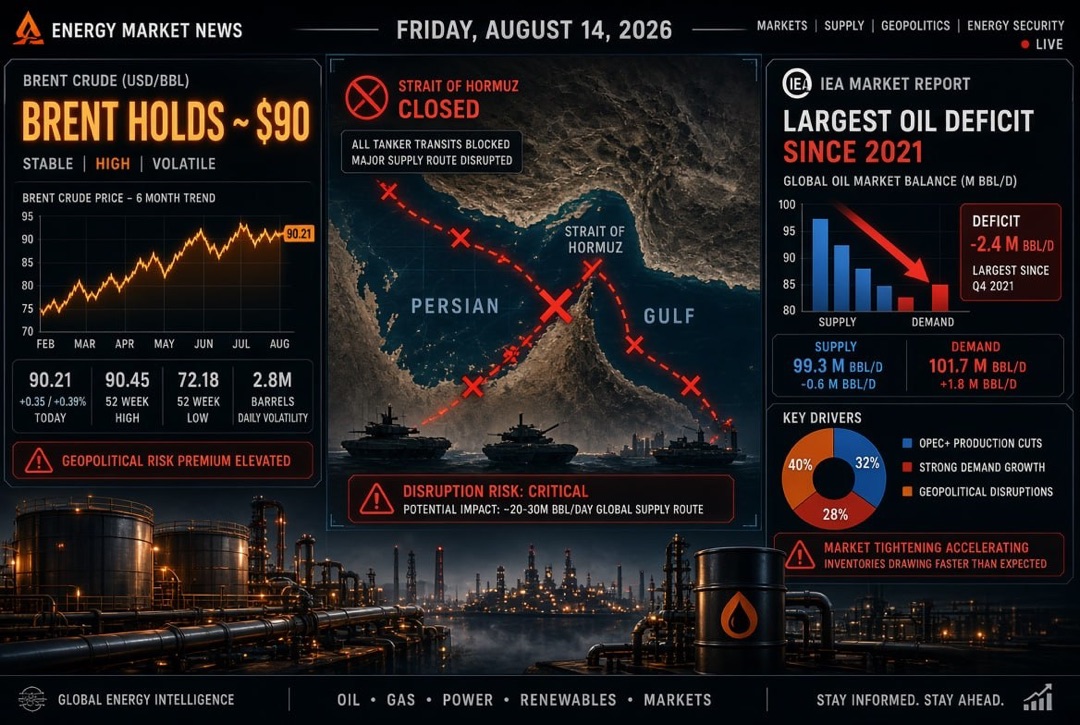
Global oil quotes continue to rise gradually following last year’s decline. The North Sea Brent is trading around $65 per barrel, while American WTI is hovering around $60, which is approximately 10% higher than recent lows. Despite persistent signs of oversupply, emerging supportive factors are steering the market towards a bullish momentum. Firstly, oil production in some regions has temporarily decreased: a winter storm in the U.S. forced the suspension of about 250,000 barrels of oil per day, shutting down several wells in Texas and Oklahoma. Moreover, in Kazakhstan, the largest Tengiz field is only partially resuming operations after an accident, while the Caspian Consortium's export pipeline (CPC) recently underwent repairs—these disruptions are restricting supply in the market. Secondly, geopolitical tensions have escalated: the deteriorating relations between the U.S. and Iran keep traders on edge. Washington's announcements regarding the deployment of an aircraft carrier group to the Persian Gulf region and mutual threats heighten the risks for the stability of oil supplies from the Middle East. Against this backdrop, hedge funds and other investors have started to increase long positions in oil, anticipating a potential shortage in the event of conflict escalation. At the same time, fundamental factors continue to restrain a sharper price increase. Economic growth in China has slowed, and high interest rates in the West cool down demand—oil consumption is growing at a slower rate than before. OPEC+ maintains a cautious stance: according to insiders, the alliance will refrain from increasing production at its upcoming meeting, aiming to keep the market balanced. Thus, oil at the end of January trades significantly above recent lows, but the further price trajectory will depend on geopolitical developments and the recovery of global demand.
Gas Market: European Stability and Price Spike in the U.S.
Diverging trends are emerging in various regions in the gas market:
- Europe: EU countries are entering mid-winter with still sufficiently high gas stocks. As of the end of January, underground storage facilities in the European Union are filled to approximately 45-50% of total capacity (although this is lower than last year's level, which was above 55%). Thanks to active LNG imports and previously accumulated reserves, European prices remain relatively moderate. TTF hub quotes, which fell below €30 per MWh (~$320 per thousand cubic meters) in December, are currently fluctuating around €40 amid recent cold weather—this level is several times lower than the peaks of 2022. This price environment is favorable for industry and electricity generation in Europe, allowing for a winter period without extreme fuel costs.
- U.S.: Conversely, the American gas market is experiencing a significant price spike. Wholesale prices at the Henry Hub have risen above $5 per million BTU (about $180 per thousand cubic meters), which is more than 50% higher than the year-ago level. This sharp increase is linked to record LNG exports and abnormal cold weather. During winter, the U.S. is actively sending liquefied gas to Europe and Asia, reducing supply in the domestic market and leading to increased gas prices for power plants and consumers. The situation was exacerbated by severe frost in January: heightened heating demand coincided with production disruptions due to the icing of infrastructure. As a result, some American energy companies were forced to increase generation at coal-fired power plants to mitigate shortages and control costs—temporarily, coal's share in U.S. generation increased, despite environmental costs.
- Asia: In key Asian markets, gas prices remain relatively stable. Importers in the region—such as Japan, South Korea, and China—are secured by long-term LNG contracts, and the relatively mild start to winter has not triggered undue demand. Moderate economic growth in China and India limits the increase in gas consumption; therefore, competition with Europe for spot LNG cargoes has not yet intensified. However, analysts warn that a sudden cold snap or an acceleration in industrial growth in Asia could change this situation. Should China or other major consumers significantly increase purchases, global gas prices would rise again, intensifying the competition between East and West for additional LNG volumes.
Thus, the global gas market shows a dual picture. Europe is currently enjoying relatively low prices and reliable stocks, while expensive gas in North America creates local challenges for energy supply. The Asian market is balanced at current demand but remains sensitive to weather and economic dynamics. Industry participants are closely monitoring developments: weather conditions and economic growth in the coming months could significantly affect the gas supply and demand balance worldwide.
International Politics: Sanction Pressure and Cautious Signals for Dialogue
The geopolitical sphere remains characterized by tensions surrounding Russia's energy resources. At the end of 2025, the European Union approved yet another, the 19th sanctions package, further tightening restrictive measures. In particular, the last channel for circumventing oil sanctions was closed—a ban was introduced on any financial and transport service connected to the export of Russian oil, which practically excluded Russian raw materials from entering EU markets. At the beginning of 2026, the introduction of the 20th sanctions package by the EU is expected, which, according to forecasts, will affect new sectors (including nuclear, metallurgy, oil refining, and fertilizer exports). Simultaneously, the U.S. has intensified its own pressure: at the end of the year, significant Russian oil companies "Rosneft" and "Lukoil" fell under American restrictions, and additional 25% tariffs were imposed on a number of Indian goods—Washington openly linked this measure to the continued import of Russian oil by India. As a result, the cumulative sanctions regime remains extremely tough, and energy resources from Russia continue to be sold only to a limited number of countries at significant discounts (the Urals grade is trading at a discount of about $10 to Brent, close to record levels in recent years).
At the same time, initial hints of a possible easing of confrontation have emerged on the diplomatic horizon. According to insiders, in recent weeks, U.S. representatives have conveyed unofficial proposals to European allies regarding how a gradual return of Russia to the global economy might look—of course, only under the condition of achieving peace and resolving the Ukrainian crisis. No actual easing of sanctions has been implemented yet, but the mere fact of such discussions indicates a search for pathways to dialogue in the long term. Furthermore, Washington is sending targeted signals of a readiness for compromise with its partners: for instance, the U.S. Department of the Treasury recently signaled the possibility of lifting additional tariffs on India after New Delhi significantly reduced its purchases of Russian oil. Although these steps are limited in nature, markets respond positively to any signs of decreased sanction tensions. For now, however, the strict sanctions regime remains in place, and new restrictions for the Russian energy sector are still possible in the absence of progress in negotiations. Investors are closely monitoring the situation: the emergence of real peace initiatives could improve market sentiment and weaken sanction rhetoric, while the lack of movement threatens further barriers for the Russian oil and gas sector.
Asia: India and China Between Imports and Domestic Production
- India: Faced with Western sanctions, New Delhi is making it clear that it cannot sharply cut its imports of Russian oil and gas, given their critical importance for national energy security. Indian refiners have negotiated favorable terms: Russian suppliers are offering Urals oil at substantial discounts (the current discount is estimated at around $10 to Brent price) to maintain market share in India. As a result, India continues to purchase significant volumes of Russian oil at preferential prices. However, by the end of 2025, under the pressure of sanction risks, Indian imports of raw materials from Russia decreased somewhat—according to traders, December supplies fell to the lowest level in two years. The U.S. had previously imposed additional tariffs on Indian exports due to the Russian oil issue, and now, following the reduction in purchases, Washington is signaling a readiness to cancel these 25% tariffs. Simultaneously, India is ramping up efforts to reduce dependence on imports in the future. In August 2025, Prime Minister Narendra Modi announced the launch of a national program for the exploitation of deep-water oil and gas fields. Under this program, the state company ONGC began drilling ultra-deep wells (up to 5 km) in the Andaman Sea, and initial results look promising. This "deep-water mission" aims to unlock new hydrocarbon reserves and bring India closer to its goal of energy independence in the future.
- China: The largest economy in Asia is also increasing its energy resource purchases while simultaneously boosting domestic production. Chinese importers remain the leading buyers of Russian oil (Beijing has not joined the sanctions and is taking the opportunity to purchase raw materials at reduced prices). In 2025, total oil imports to China reached record levels—according to official data, the country imported about 557.7 million tons of crude oil (≈11.5 million barrels per day), which is approximately 4.4% more than the previous year. The end of the year was particularly active: in December, imports exceeded 13 million barrels per day, setting a historical record, partly due to purchases for strategic reserves amid low prices. Simultaneously, Beijing is investing significant resources into developing its national oil and gas production. In 2025, oil production in China increased by approximately 1.7%, and gas production by more than 6%. Increasing domestic production helps to partially meet the needs of the economy, but does not eliminate the need for imports. Given the colossal demand, China's dependence on external supplies remains high: about 70% of consumed oil and about 40% of gas continue to be imported. Beijing strives to diversify sources—from expanding imports from the Middle East and Russia to enhancing domestic "green" generation —however, in the coming years, China will retain its status as the world's largest importer of energy resources.
Thus, the two largest Asian consumers—India and China—continue to play a key role in global commodity markets, combining strategies for securing imports with the development of their own resource base. Their actions significantly influence the oil and gas supply and demand balance: the volumes of purchases in these countries are crucial for global prices and the effectiveness of the West's sanction initiatives.
Energy Transition: Records in Renewable Energy and the Role of Traditional Generation
The global transition to clean energy accelerated significantly in 2025, setting new records. Many countries are experiencing unprecedented growth in electricity generation from renewable sources (RES). In Europe, by the end of 2024, total generation at solar and wind power plants for the first time exceeded electricity production at coal and gas-fired plants. This trend continued into 2025: thanks to the introduction of new capacities, the share of "green" electricity in the EU is steadily increasing, while coal use in the energy balance is again declining (after a temporary increase during the 2022-2023 gas crisis). In the U.S., renewable energy has also reached historic levels—over 30% of total generation now comes from RES, with the combined volume of electricity produced by wind and solar in 2025 for the first time exceeding that generated by coal plants. China, the world leader in installed RES capacity, annually adds tens of gigawatts of new solar panels and wind generators, continuously breaking its own generation records.
Companies and investors across the globe are pouring substantial resources into the development of clean energy. According to IEA estimates, total investments in the global energy sector in 2025 exceeded $3 trillion, of which more than half went to RES projects, modernization of electricity networks, and energy storage systems. In line with this trend, the European Union has approved a new ambitious goal—to cut greenhouse gas emissions by 90% from 1990 levels by 2040, requiring an accelerated phase-out of fossil fuels in favor of low-carbon technologies.
However, energy systems still rely on traditional generation for stability. The rising share of solar and wind creates challenges for grid balancing during times when RES are unavailable (for instance, at night or during calms). To cover demand peaks and prevent disruptions, operators sometimes have to revert to coal and gas plants as backup capacity. Last winter, several European countries had to temporarily increase generation at coal-fired power stations during windless cold periods—despite environmental costs. Similarly, in fall 2025, expensive gas in the U.S. forced utilities to briefly increase coal use to lower electricity costs. To enhance reliability of energy supply, governments in many countries are investing in expanding energy storage systems (industrial batteries, pumped storage plants) and creating "smart" grids capable of flexibly managing loads. Experts predict that by 2026-2027, renewable sources will come to dominate global electricity generation, surpassing coal for the first time. However, in the coming years, there will remain a need to keep some traditional power plants in reserve—acting as a safeguard against unforeseen disruptions. In other words, the global energy transition is reaching new heights, but it requires a delicate balance between "green" technologies and established resources to ensure the uninterrupted operation of electricity supply.
Coal: A Stable Market Amid Persistently High Demand
The accelerated development of renewable energy has not yet supplanted the critical role of the coal industry. The global coal market remains one of the largest segments of the energy balance, and global demand for coal remains consistently high. The need for this fuel is especially great in the Asia-Pacific region, where economic growth and the needs of electricity generation support intense coal consumption. China—the world’s largest consumer and producer of coal—burned it at nearly record rates in 2025. Each year, Chinese mines extract over 4 billion tons of coal, covering most of the domestic demand, yet even this volume is barely sufficient during peak load periods (for instance, during summer heat when air conditioning use surges). India, with significant coal resources, is also increasing its consumption: over 70% of electricity in the country is still generated at coal-fired plants, and absolute consumption of this resource is rising along with the economy. In other developing Asian countries—such as Indonesia, Vietnam, Bangladesh, and others—new coal-fired power plants continue to be constructed to meet the rising needs of the population and industry.
The supply on the global market has adapted to this persistent demand. Major coal exporters—Indonesia, Australia, Russia, South Africa—have significantly ramped up extraction and shipments of thermal coal to the external market in recent years. This has helped maintain prices at relatively stable levels. After price spikes in 2022, thermal coal quotes have returned to a familiar range and have fluctuated recently without sharp changes. The balance of supply and demand appears to be stable: consumers continue to receive the necessary fuel, while producers secure steady sales at reasonable prices. Despite many countries’ declarations of plans to gradually reduce coal use for climate purposes, in the short term, this resource remains irreplaceable for powering billions of people. Experts estimate that over the next 5-10 years, coal-fired generation—especially in Asia—will maintain a significant role despite global decarbonization efforts. Thus, the coal sector is currently experiencing a period of relative equilibrium: demand remains high, prices moderate, and coal continues to serve as a backbone of the world energy system.
The Russian Oil Products Market: Measures to Stabilize Fuel Prices
In the domestic fuel sector of Russia, emergency measures were taken in the second half of 2025 to normalize the pricing situation. Back in August, wholesale exchange prices for gasoline and diesel in the country soared to new record highs, surpassing levels from the previous year. Causes included a spike in summer demand (active tourism and the harvest season) and reduced fuel supply amid unplanned repairs at oil refineries and logistical issues. The government was forced to bolster market regulation, quickly implementing a range of measures to cool prices:
- Export Ban on Fuel: A complete ban on the export of gasoline and diesel fuel was introduced in September and then extended through the end of 2025. This measure affected all producers (including major oil companies) and aimed to redirect additional volumes of oil products to the domestic market to eliminate shortages.
- Distribution Control: Authorities tightened monitoring of fuel shipments within the country. Refineries were instructed to prioritize meeting domestic market demands and to curb the practice of multiple resales on the exchange. Additionally, work has commenced on implementing direct contracts between refiners and gas station networks, which will exclude unnecessary intermediaries from the supply chain and prevent speculative price increases.
- Industry Subsidization: Incentive payments for fuel producers were maintained. The state compensates oil companies for part of the lost profit from selling gasoline and diesel domestically (the so-called “damper”), which encourages enterprises to allocate sufficient volumes to the domestic market, even if exports would be more profitable.
The cumulative effect of these measures has already yielded tangible results—the fuel crisis was largely stabilized in the fall. Although exchange prices for gasoline set records in 2025, retail prices at gas stations rose significantly more slowly. According to official data, the average gasoline price in Russia increased by approximately 10% over the year, which slightly exceeded the overall inflation rate. Fuel shortages at gas stations were avoided: the gas station network is well supplied with necessary resources, and there are no queues or sales restrictions. The government, for its part, states its readiness to continue controlling the situation. If necessary, export restrictions will be extended in 2026 (an extension of the ban on gasoline and diesel exports is being considered at least until the end of winter), and in the event of new price spikes, authorities promise to deploy state fuel reserves to saturate the market. Monitoring of the fuel market’s condition is conducted at the highest level—relevant agencies and the Deputy Prime Minister oversee the issue and assure that all efforts will be made to maintain stable gasoline and diesel prices for Russian consumers within economically justified limits.