Current News in the Oil, Gas, and Energy Sector as of April 10, 2026, with Market Analysis on Oil, Gas, LNG, Refineries, and Renewable Energy Sources
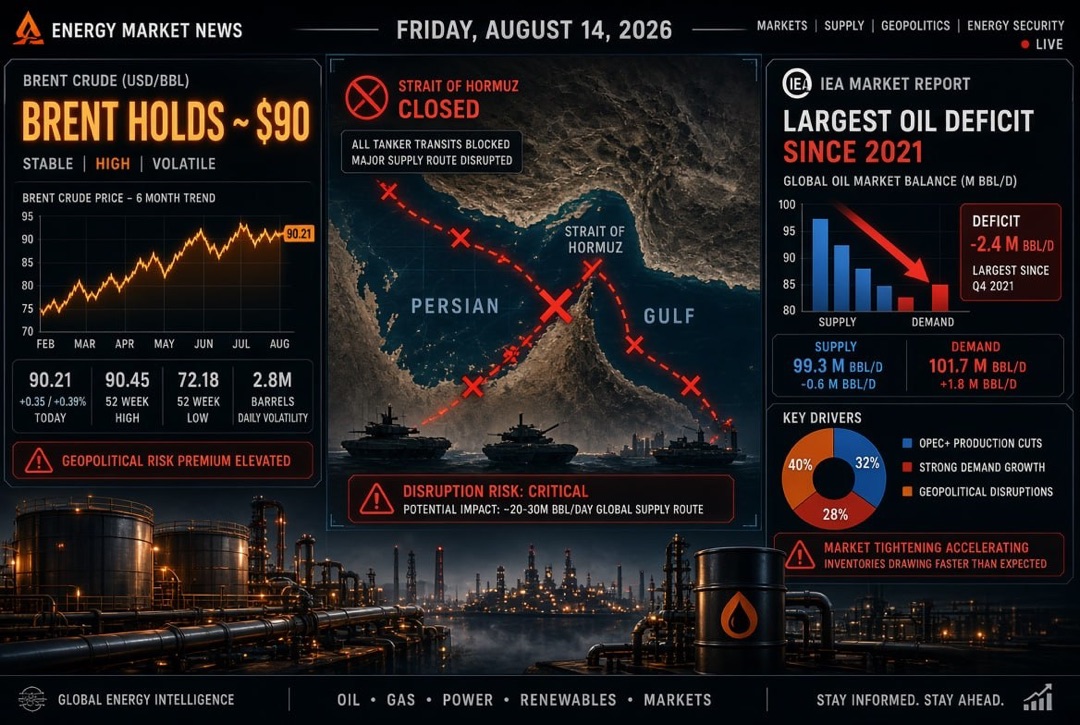
On Friday, April 10, 2026, the global fuel and energy complex is experiencing a rare divergence between market expectations and the physical market. Following political signals for de-escalation in the Middle East, part of the speculative premium in oil futures has begun to decrease. However, for investors, oil companies, fuel traders, refineries, and gas and electricity players, the key concern is not the movement of paper assets, but rather the real availability of raw materials, fuel, LNG, and logistical capacities. This is why the markets for oil, gas, petroleum products, electricity, renewable energy sources, coal, and refining are currently moving asynchronously: somewhere the tension is easing, while elsewhere it is only beginning to manifest in margins, premiums, and replacement costs.
The current moment is significant for the global energy sector for three reasons:
- First, the energy sector is transitioning from a phase of shock price growth to assessing damage to infrastructure and supply chains;
- Second, the oil and gas sector and energy increasingly depend not only on production, but also on the resilience of ports, pipelines, LNG facilities, refineries, and energy networks;
- Third, the increasing demand for electricity and accelerated investment in renewable energy sources are intensifying structural changes in the global energy balance.
Oil Market: Futures Cool Down, but Physical Oil Remains Expensive
The main feature of the oil market as of April 10 is that the decline in futures prices does not signal a normalization of the physical balance. After sharp volatility, investors observed a pullback in exchange prices, yet premiums for physical grades in Europe and Africa remain high. This indicates that oil companies, refiners, and traders continue to price in the risk of supply disruptions and limited availability of cargoes.
For market participants, this means the following:
- A falling futures price does not guarantee a reduction in the real cost of oil for refineries;
- Spreads between regions may remain wider for longer than the market expects;
- Volatility in petroleum products may prove to be more persistent than in crude oil.
In practice, this creates a mixed picture for investors: upstream may receive support from still high selling prices, while downstream and independent refineries face the risk of expensive raw materials and unstable loading.
OPEC+ and Supply: Political Signal is Present, but Quick Additional Barrels are Not Yet Available
OPEC+'s decision to increase quotas for May appears to be an important signal for the market, but not an immediate source of new volumes. If logistics and infrastructure remain constrained, then a formal increase in quotas does not automatically translate into additional oil supplies to the global market. For oil companies and investors, this means that the balance will still be determined not only by the cartel's policies but also by the actual capacity of exporters to restore shipments.
Key takeaways for the sector:
- Free capacities are important only when export infrastructure is available;
- OPEC+'s production discipline remains a supporting factor for the oil market;
- Countries with diversified logistics benefit from premiums and market share more quickly than others.
This is why the supply issue in the energy sector is now shifting from the question of "how much can be produced" to "how much can be safely delivered to the customer."
Gas and LNG: The Market Retains a Premium for Supply Reliability
In the gas sector, the consequences of the crisis appear even more prolonged. Even with a reduction in military escalation, the global LNG market has already received an important signal: the reliability of deliveries from key export regions is no longer considered unquestionable. For Asia, this means a higher cost of energy balance insurance, and for Europe, it signals a more turbulent gas storage injection season.
The European market is entering the summer refill season in a less comfortable position than a year ago. This intensifies competition for LNG cargoes and increases price sensitivity to any new disruptions. For the global oil and gas sector, this means that gas remains not only a transition fuel but also a strategic tool for energy security.
The most important implications for the gas market are:
- The LNG premium for flexibility and vessel availability remains elevated;
- Europe must compete more actively with Asia for spot cargoes;
- Gas companies with a robust contract portfolio appear stronger than those reliant on spot purchases.
Petroleum Products and Refineries: Refining Becomes the Bottleneck
For the petroleum products market and refineries, the key risk lies in refining's inability to adapt as rapidly as the financial market. If raw material availability is disrupted, and part of the processing and export capacities operates unstably, then shortages may transition from crude oil into gasoline, diesel, jet fuel, and fuel oil.
This is especially crucial for fuel companies, traders, and industrial consumers. During such periods, refinery margins can exhibit uneven behavior:
- Enterprises with guaranteed raw materials and stable logistics benefit;
- Plants dependent on spot supplies must reduce their load;
- The petroleum products market becomes significantly more sensitive to local disruptions than the crude oil market.
For the energy sector, this indicates a return to interest in those assets where not just barrels matter, but the entire value chain—from raw materials to end fuel.
Electricity: Demand is Growing Faster than the Market Can Reassess System Capacity
Electricity generation in 2026 is becoming one of the main topics for global investors. The surge in electricity consumption is accelerating not only due to the economy but also due to data centers, artificial intelligence, digital infrastructure, and the electrification of transport and heating. This is changing the demand structure for gas, coal, nuclear generation, and renewable energy sources.
For electricity companies and grid operators, this signifies a new cycle of capital investments:
- In generation and reserve capacities;
- In grids and substations;
- In storage systems and peak load management.
Investors must recognize that the rising demand for electricity is no longer a temporary episode but a structural driver for the entire energy sector.
Renewable Energy Sources: The Energy Transition is Accelerating Not Despite the Crisis, but Largely Because of It
Renewable energy sources continue to gain weight in the global energy balance. Renewable energy no longer represents merely a climate narrative; it is increasingly being seen as a solution to energy security issues. The higher the geopolitical premium in oil and gas, the greater the interest in solar generation, wind energy, storage solutions, and decentralized local electricity.
For the market, this is significant for several reasons:
- Renewable energy reduces dependence on imported fuels;
- Solar and wind projects enhance the attractiveness of grid modernization;
- Companies that combine traditional energy with low-carbon assets present a more resilient investment narrative.
Furthermore, oil and gas and renewable energy no longer appear mutually exclusive in 2026. On the contrary, the global energy sector increasingly demands a mixed model where oil, gas, electricity, and renewable energy function as complementary elements of the new market architecture.
Coal: Its Role is Diminishing in Developed Systems, but Remains a Price and Reliability Factor in Asia
The coal sector is gradually losing ground in international maritime trade; however, it is not disappearing from the global energy landscape. For Asia, coal remains an essential source of base-load electricity and a tool for protection against expensive LNG. This indicates that the global coal market is moving not towards a rapid decline but towards greater regionalization.
For investors and energy sector players, this is a crucial nuance: the diminishing share of coal in some countries does not negate the fact that in other jurisdictions, coal continues to be a factor in energy balance, electricity pricing, and industrial competitiveness.
What This Means for Investors and Energy Sector Companies
As of April 10, 2026, the fundamental conclusion for the market is that the oil and gas sector and energy are entering a period where the physical resilience of supply chains is more critical than short-term price movements. For investors, oil companies, gas players, refineries, electricity providers, and raw materials sector participants, priorities are shifting towards business models capable of withstanding logistical disruptions, price fluctuations, and rising capital costs.
Key factors to monitor in the coming days:
- Real recovery rates of physical oil and petroleum product exports;
- The cost of LNG and dynamics of the European gas balance;
- Refinery utilization rates and processing margins;
- Investment signals in electricity, grids, and renewable energy;
- Whether the high premium for supply reliability will persist in the raw materials and energy sectors.
This set of factors currently shapes the new global energy agenda: the market is becoming less linear, more regional, and significantly more sensitive to infrastructure quality. In such an environment, it is not just the producers of oil, gas, and electricity who benefit, but those companies that control delivery, processing, flexibility in the energy balance, and access to the end consumer.