Current News on Oil, Gas, and Energy for Tuesday, December 30, 2025. Oil, gas, electricity, renewables, coal, petroleum products, and key events in the global fuel and energy complex for investors and market participants.
By the end of 2025, the global energy sector is at a crossroads of diverging trends. The oil market continues to experience pressure from oversupply and moderate demand, which limits price growth and may lead to a potential decline in quotes in 2026. In the gas sector, European countries have filled underground gas storage almost to capacity before the winter, stabilizing prices, while the expansion of LNG projects is poised to provide new momentum to the market next year. At the same time, a surge in investments in renewable energy is shifting the balance of demand—wind and solar generation are achieving record highs, and global coal consumption remains significant, particularly in Asia. Global politics, including increasing sanctions pressure and the ongoing conflict in Ukraine, contributes to high uncertainty in raw material markets, as major importers (China, India) are actively increasing their energy resource purchases, thereby supporting global demand. Thus, the themes of oil surplus and the transition to "clean" energy sources remain key for investors and market participants around the world.
Oil Market: Oversupply and Weak Demand
The global oil market is experiencing a trend of oversaturation. Recent decisions by OPEC+ (firmed in November) maintain production quotas at previous levels; however, since spring 2025, the alliance has already increased production volumes by about 2.7 million barrels per day, trying to regain market share. The production increase is occurring against a backdrop of modest demand growth—IEA estimates global oil consumption growth for 2025 at less than +0.7 million barrels per day, significantly lower than previous years' figures. Consequently, the long-term balance is shifting toward overproduction.
- Increase in OPEC+ Production. Most OPEC+ participants have maintained or increased their production at this year's turn. The lack of new cuts is expected to lead to further increases in global oil and petroleum product inventories.
- Demand Slowdown. The global economic slowdown and the effect of last year's high prices are suppressing oil demand. Concurrently, the transition to electric vehicles is accelerating, and energy efficiency is increasing, which reduces consumption growth rates.
- Geopolitical Factors. Intensifying sanctions against Russia (including new US restrictions on the Russian oil sector) partially limit hydrocarbon exports and cause short-term price spikes. Moreover, the stagnation of peace negotiations between the US and Russia maintains uncertainty. The conflict in Ukraine continues to pose risks of disruptions and affects investment sentiment.
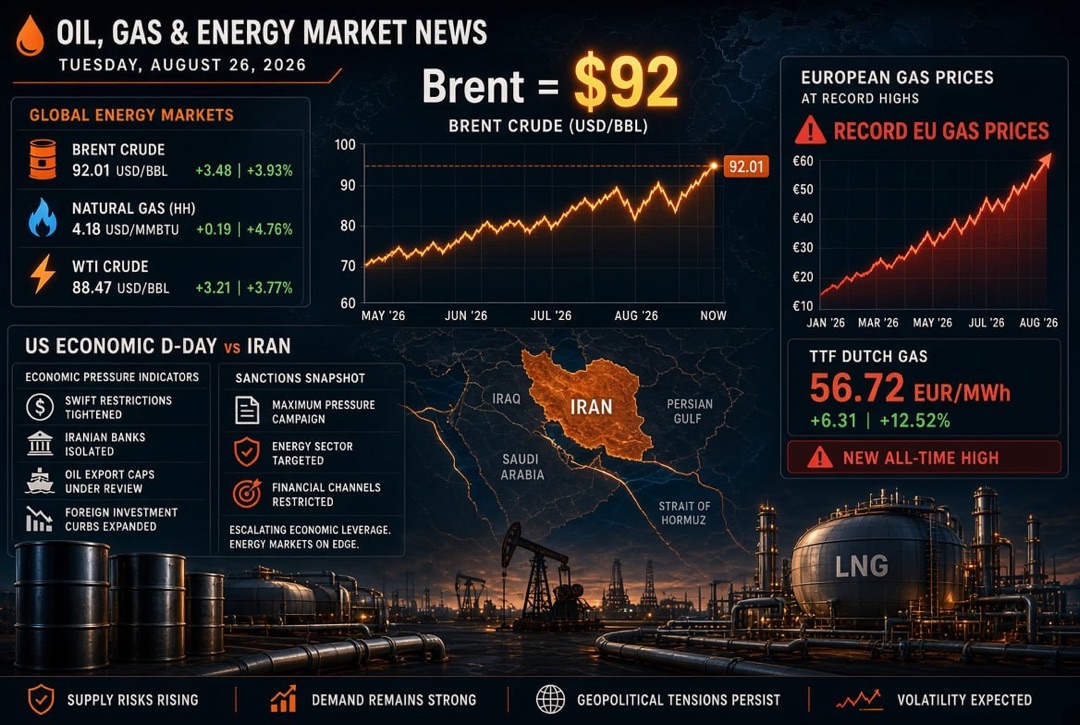
As a result, Brent oil is holding around $60–62 per barrel (average values for December 2025), approximately 15–20% below levels from a year ago. Many analysts forecast further price declines: if current trends persist, the average Brent price in 2026 could be around $55–60/barrel. Diesel fuel continues to be a scarce commodity: due to attacks on refineries and export restrictions on Russian petroleum products, diesel futures in Europe have shown a stable increase in margins, although the overall surplus of crude oil inhibits significant fuel price hikes.
Gas Market: High Stocks and Supply Diversification
The European gas sector is preparing for winter with record high stocks. By the end of December, the continent's underground storage is filled to 85–90% capacity, significantly exceeding average figures from previous years. This was made possible by unprecedented LNG imports, which compensated for the reduction in transit from Russia. As a result, spot prices in Europe have remained moderate: the TTF futures remain around €30/MWh (≈ $9–10 per 1,000 m³), well below the peaks of 2022–2024.
- Strong Growth in LNG Supplies. Amid geopolitical risks, Europe is diversifying its supplies: the US and the Persian Gulf have increased LNG exports, and Azerbaijan has ramped up throughput through the "Southern Corridor." Collectively, these measures have helped fill storage and ease winter demand.
- Price Stability. Thanks to high stocks and moderate demand, gas prices in Europe have remained below last year's levels. The reduction in the risk premium is linked to hopes for diplomatic achievements (a possible peace agreement on Ukraine), which alleviates the geopolitical component.
- Divergent Trends in Asia and the US. In Asia, LNG prices have fallen to multi-week lows (around $10–11/MMBtu), driven by record global LNG terminal overloads and slowing industrial demand in China and South Korea. In the US, however, gas prices have remained above $4/MMBtu due to cold weather and record LNG exports, creating additional demand.
Thus, the gas market remains balanced: Europe enters winter with a reliable stock, while strong exports from the US support global demand. However, the upcoming "LNG boom" (planned export growth of 50% by 2030) threatens to intensify competition and dilute producer margins in the coming years.
Renewable Energy and the Electricity Sector
The year 2025 marked a significant breakthrough in the "green" energy sector. In the first half of the year, global wind and solar power generation surpassed that of coal-fired power plants for the first time. This shift occurred thanks to a robust expansion of solar generation (growth of ~30% by the first half of 2024) and moderate yet steady growth in wind energy. Major markets—China, India, and the US—are hitting records for renewable power capacity additions.
- Record Growth in Renewables. China added more renewable generation to its grids than the rest of the world combined, leading to a decline in the share of fossil fuels in their energy balance along with India. The International Energy Agency (IEA) projects that net renewable generation will more than double by 2030, dominated by solar panels.
- Decreasing Role of Coal. Despite the influx of renewables, countries in Asia (India, China) still exhibit high demand for coal, which continues to restrain a global decline in consumption. However, in the US and Europe, the share of coal generation is decreasing: recent weather fluctuations temporarily increased gas and coal use, but the long-term trend will continue downward.
- Energy Innovations. Oil and gas companies are actively developing low-carbon projects. Notable examples include TotalEnergies' plans to build a synthetic methane plant in the US (together with Japanese partners) and green hydrogen projects (Sinopec in China, with investments in billions of dollars). Large-scale energy storage projects are emerging, and the network of charging stations is expanding, supporting the electrification of transport.
The electricity and renewable energy sectors anticipate rapid demand growth: global electricity demand is increasing by 4% annually due to the rise of data centers and infrastructure. In the coming months, countries will balance the pace of the "green" transition with ensuring energy security; however, the continuing trend of expanding solar and wind capacities will inevitably constrain long-term fossil fuel demand growth.
Coal Sector: High Demand in Asia Remains
Despite the influx of renewable energy, global coal consumption remains significant, especially in developing regions. China and India—the leading coal consumers—continue to use it intensively for electricity generation. In the US, coal production increased in 2025 due to rising gas prices and electricity consumption.
- Production Stabilization. Major coal exporters (Australia, Indonesia, Russia) are maintaining production at high levels. Despite short-term price fluctuations, the global coal market is currently characterized by moderate prices and sufficient liquidity.
- Imports in China and India. In 2025, China's coal imports fell by nearly 20% compared to the previous year due to the growth of domestic capacity and stockpiling (price factor). In India, demand is still rising, which stimulates purchases and investments in the coal sector.
- Role as a Transitional Fuel. Coal remains a bedrock of the energy balance in many countries. However, as the share of coal generation decreases in developed economies and cheaper alternatives emerge, it is losing part of its demand. Environmental regulations and competition from gas and renewables provide support.
Thus, the coal market continues to benefit from Asian demand, but long-term prospects remain uncertain due to the energy transition. Investors are monitoring the balance of supply and demand: currently, Chinese prices have stabilized at low levels, restricting import volumes.
Geopolitics and Energy Security
International politics continues to exert a strong influence on energy markets. The tightening of Western sanctions against Russia is targeting the oil and gas sector: at the end of December, the US imposed additional restrictions against the largest Russian oil companies. Moscow announced a pivot to supply "friendly countries" and readiness to take retaliatory measures.
- The Ukrainian Conflict. Efforts by the US and its allies to agree on a peace plan remain unresolved, which sustains the sanctions regime against Russia. This restrains part of the exports from the RF and impacts long-term investment plans for new projects.
- Saudi Arabia and OPEC. Despite calls to balance the market, Saudi Arabia, together with the UAE, has yet to announce additional production cuts. Their strategic alliances are strengthening, and the prospects for new agreements remain ambiguous.
- Energy Policies of Other Countries. The US is discussing options for legalizing oil extraction on domestic territory to reduce prices ahead of elections. China and the EU are accelerating their clean energy programs, announcing new electrification projects. Important roles are played by free trade agreements (including energy resources) and environmental standards, shaping long-term demand.
Overall, high geopolitical tension maintains volatility in raw material markets. Investors are closely monitoring changes in sanctions policies and diplomatic signals (for instance, statements of support from China and negotiations between the US and Russia), as they can either exacerbate global oversupply (if sanctions are lifted and supplies increase) or intensify market tensions.
Asia: China and India Increase Purchases and Domestic Production
Key Asian players continue to strengthen their positions in the energy sector. China remains the largest importer of oil and gas, purchasing hydrocarbons at attractive prices. In 2025, due to discounts, Russia increased Urals oil supplies to China, as well as expanding gas exports. Meanwhile, Beijing is ramping up its domestic oil production and specifically gas (shale gas, coalbed methane) to reduce dependence on imports.
- Indian Demand. India is actively importing both oil and petroleum products from Russia and the global market. Estimates suggest that it is gradually changing supply partners, but at present cannot abruptly abandon Russian energy sources without harming the economy. Simultaneously, New Delhi is investing in oil and gas exploration and production, including shale projects.
- Chinese Strategies. Beijing has not imposed restrictions on Russian energy exports and bolsters its raw material security through state-led strategic stockpiling. The program to transition to electric vehicles is in full swing but is still considerably smaller than India's portfolio due to the rapid growth of China's economy.
- Regional Role. China and India are primary drivers of global hydrocarbon demand. Their decisions regarding energy sources (for example, plans for green hydrogen, expanding renewable networks, and local fuel production) influence global trends. Both markets are also major buyers of coal and LNG from various regions worldwide.
As a result, Asia is providing fundamental support for global demand: all else being equal, increased purchases from Russia and competitive local projects ensure the Chinese-Indian demand, which balances part of the excess supply from other regions. It is crucial for investors to consider that if these countries change their policies (for example, a rejection of Russian supplies or an acceleration of the energy transition), the balance of supply and demand could rapidly readjust.
Conclusions and Forecasts
The results of December 2025 demonstrate that the global energy sector is on the brink of a turning point. In the coming months, experts predict a continuation of the moderate decline in oil prices (due to rising stocks) and the emergence of a slight positive trend in petroleum products due to diesel shortages. The gas market may remain divergent: Europe has benefited from ample stocks and lowered prices, while Asia is looking for greater LNG supply. Meanwhile, the energy transition and geopolitics will play a pivotal role: investors and companies must prepare for potential volatility spikes depending on the fortunes of "clean" projects and diplomatic processes.