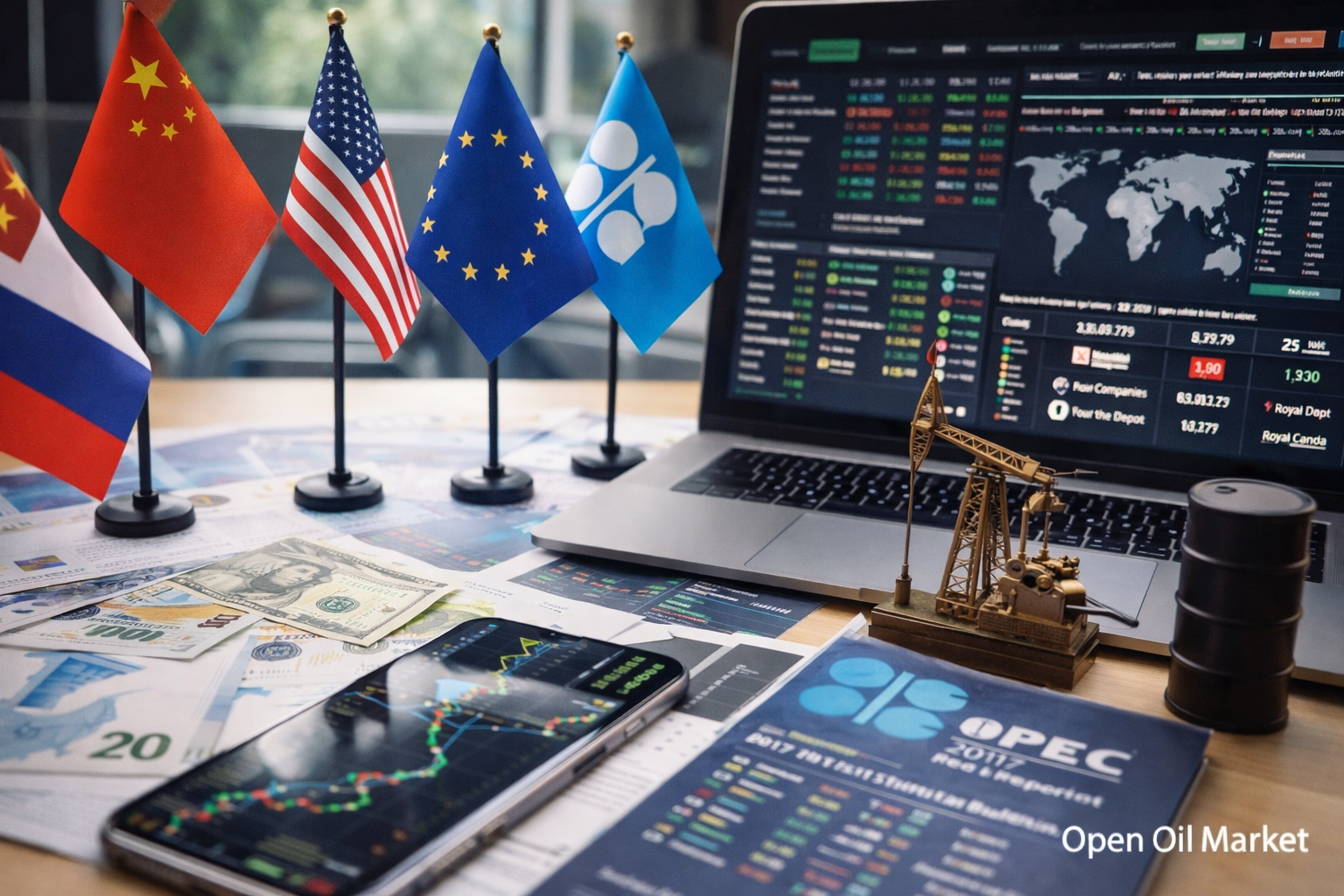
Overview of Key Economic Events and Corporate Reports for the Week of February 23 - March 1, 2026: EU Sanctions, New US Global Tariff of 15%, CPI and PPI Inflation, Earnings Season for Nvidia, Banks, and IT Companies, OPEC+ Meeting. Analysis for Investors.
The week of February 23 to March 1, 2026, is marked by several drivers impacting global markets: trade restrictions and tariff agendas in the U.S., the European Union's sanction decisions against Russia, a block of data related to inflation and business activity, and a busy corporate earnings season. For investors, the key question of the week is how swiftly these trade measures and sanctions will affect inflation, supply chains, corporate profitability, and central bank interest rate expectations.
Special attention is given to the technology sector and the artificial intelligence market (reports from Nvidia and cloud companies), the consumer sector (Home Depot, Lowe’s), the financial sector (major North American banks), and the Russian market, which continues trading normally. Geographically, the week is significant for the U.S., Europe, and Russia, while Asia starts the week amid holidays in the region's largest economies.
Monday, February 23: Holidays in Asia, EU Sanctions, and Kickoff of Earnings Week
- China: No trading (New Year).
- Japan: No trading (Emperor’s Birthday).
- Europe and Russia: A decision is anticipated regarding the 20th EU sanctions package against Russia (sectoral risks for raw materials, logistics, insurance, settlements, and compliance).
- Russia: Trading continues (Moscow Exchange and SPB Exchange) — heightened sensitivity to sanctions headlines and exchange rate dynamics.
- U.S.: Chicago Fed National Activity Index (January) — 16:30 Moscow time.
- U.S.: Factory Orders (December) — 18:00 Moscow time.
- ECB: Speech by ECB President Christine Lagarde — 20:30 Moscow time.
Corporate Reports (Focus of the Day)
- U.S. (Major/Notable Issuers): Domino’s Pizza, Keysight Technologies, Diamondback Energy, ONEOK, BWX Technologies, Hims & Hers, Freshpet, Axsome Therapeutics, Ovintiv.
- Market Commentary: The mix of reports in the consumer segment, industry/defense, and energy sets the tone for risk at the start of the week and shapes expectations ahead of the technology earnings peak.
What to Watch For as an Investor: The market's reaction to the potential EU sanctions package and signals from Lagarde will be more significant than individual macro publications. In stocks, assess whether there is a shift between "quality growth" and cyclical sectors amid trade risks and interest rate expectations.
Tuesday, February 24: US Global Tariff of 15%, China's LPR, and Retail/Platform Reports
- U.S.: A new 15% global tariff on all countries comes into effect — risk of renewed inflation acceleration for goods, pressure on importers and industries with a high share of foreign components.
- U.S.: Donald Trump's address to both chambers of Congress (annual state of the union and administration's plans) — potential clarifications on trade and fiscal policy.
- China: LPR (Loan Prime Rate) announcement — 04:15 Moscow time.
- U.S.: ADP Employment (weekly publication) — 16:15 Moscow time.
- U.S.: S&P/Case-Shiller (December) — 17:00 Moscow time.
- Bank of England: Speech by Bank of England Governor Andrew Bailey — 17:15 Moscow time.
- U.S.: Consumer Confidence (February) — 18:00 Moscow time.
- U.S.: Richmond Fed Manufacturing Index (February) — 18:00 Moscow time.
- ECB: Lagarde's speech — 20:45 Moscow time.
- Oil (U.S.): API inventories — 00:30 Moscow time.
Corporate Reports (All Key Public Companies of the Day)
- U.S.: Home Depot (an important consumer indicator and housing repair cycle), AMC Entertainment, MercadoLibre (Latin America, e-commerce/fintech), Axon Enterprise, Workday, DigitalOcean.
- Canada: Preliminary focus on the financial sector ahead of a wave of bank reports later in the week.
- Market Commentary: The combination of Home Depot and IT platforms (Workday) helps investors gauge the resilience of household spending and corporate software budgets amid tariff pressures.
What to Watch For as an Investor: U.S. trade policy and the tone of the Congressional address may generate momentum for the dollar, yields, and commodity prices. In reports — compare margins and forecasts for companies that are most dependent on imports and logistics.
Wednesday, February 25: Australia’s Rates, Eurozone CPI, and the Peak of Tech Reports
- Australia: RBA rate decision — 03:30 Moscow time.
- Germany: GDP (Q4 2024) — 10:00 Moscow time.
- Eurozone: CPI (January) — 13:00 Moscow time.
- Oil (U.S.): EIA inventories — 18:30 Moscow time.
- Russia: CPI (weekly estimate) — 19:00 Moscow time.
Corporate Reports (Largest Issuers of the Day)
- U.S.: Nvidia (a key benchmark for demand in AI infrastructure), Salesforce, Lowe’s, TJX Companies, Snowflake, Synopsys, Agilent Technologies.
- Market commentary: Nvidia’s results and related companies across the “semiconductors → software/cloud → corporate budgets” chain can determine the dynamics of the technology sector and risk appetite in global portfolios.
What to Watch For as an Investor: The connection between Eurozone CPI and U.S. tech reports may simultaneously impact rate expectations and growth multiples. In reports — priority should be given to revenue forecasts, client capital expenditures (capex), delivery timelines, and pricing comments.
Thursday, February 26: Geneva Negotiations, U.S. Jobless Claims, and a Strong Block of Bank/IT Reports
- Geneva: Possible U.S.-Iran negotiations (risk factor for oil) and agenda on Ukraine (geopolitical premium in commodity and currency markets).
- ECB: Lagarde's speech — 11:30 Moscow time.
- Eurozone: Consumer Confidence (February) — 13:00 Moscow time.
- Eurozone: Consumer inflation expectations (February) — 13:00 Moscow time.
- U.S.: Initial Jobless Claims — 16:30 Moscow time.
- Gas (U.S.): EIA inventories — 18:30 Moscow time.
- U.S.: KC Fed Manufacturing Index (February) — 19:00 Moscow time.
Corporate Reports (All Key Public Companies of the Day)
- U.S.: Dell Technologies, Intuit, Baidu, Warner Bros. Discovery, Zscaler, Duolingo, CoreWeave.
- Canada: Royal Bank of Canada, Toronto-Dominion, Canadian Imperial Bank of Commerce.
- Russia: Sberbank (for investors in MOEX — an important benchmark for banking profitability, credit quality, and dividend expectations).
- Market Commentary: The combination of banking (credit cycle), cybersecurity (Zscaler), IT financial infrastructure (Intuit), and hardware (Dell) provides a comprehensive view of the state of corporate demand and revenue quality.
What to Watch For as an Investor: In the oil and gas markets — risk response to Geneva and weekly stock reports. In earnings, banks will critically review reserve dynamics and net interest margin, while IT will focus on customer retention, ARR/subscription growth, and customer acquisition costs.
Friday, February 27: GDP Reports from Switzerland, India, and Canada, U.S. PPI, and Final Macro Signals of the Week
- Switzerland: GDP (Q4 2025) — 11:00 Moscow time.
- Russia: Annual government report to the State Duma (fiscal priorities, government programs, sectoral and OFZ market impacts).
- India: GDP (Q4 2025) — 13:30 Moscow time.
- Canada: GDP (Q4 2025) — 16:30 Moscow time.
- U.S.: PPI (January) — 16:30 Moscow time.
- U.S.: Chicago PMI (February) — 17:45 Moscow time.
Corporate Reports (Focus of the Day)
- U.S./Global: Publications continue across a wide range of issuers (especially in the energy sector, small/mid-cap, and cyclical companies), but the core "heavy" agenda of the week has already been revealed in reports from Tuesday to Thursday.
What to Watch For as an Investor: The U.S. PPI is one of the key indicators of "input prices" for companies and potential pressure on consumer inflation. The combination of PPI and GDP data from Canada/India is important for assessing global demand and a "soft landing" scenario.
Saturday, February 28: Weekend and Reporting Guidelines
- Reporting Season: Individual companies may publish results outside of standard trading windows. Investors are advised to check corporate releases within their portfolios and consider potential revisions of analysts' forecasts after the week closes.
- U.S.: Berkshire Hathaway (often releases results on weekends) — a gauge of profit quality in insurance and investment portfolios.
Sunday, March 1: OPEC+ Meeting and Portfolio Adjustment for March
- OPEC+: Meeting — a potential driver of oil prices, inflation expectations, and currencies of commodity economies.
OPEC+ decisions are significant not only for oil quotes but also for inflation trajectories and rate expectations in importing and exporting countries. For portfolios, this may influence allocation between energy, transportation, consumer sectors, and bonds.
Conclusion: Key Takeaways and Practical Insights for Investors
- The Main Macro Risk of the Week — the intensification of U.S. trade barriers (15% tariff) and the EU sanction agenda: both factors may quickly transform into inflationary pressure and revised rate expectations.
- Technology Focus — Nvidia's report and the group of cloud/software companies: the market will evaluate not only current figures but also the quality of forecasts, demand for AI infrastructure, and the resilience of corporate budgets.
- The Consumer and Housing Sector — Home Depot and Lowe’s, when combined with the housing index and consumer confidence, provide a practical picture of demand in the U.S.
- Financial Sector — the block of reports from major North American banks and Sberbank is crucial for assessing the credit cycle, reserves, and net interest margin amid shifting inflation.
- Commodities — U.S. oil/gas inventories and the OPEC+ meeting create a short-term corridor for oil, thereby influencing inflation and the energy sector stocks.
During the week of February 23 - March 1, 2026, investors should focus on the relationship between "policy → inflation → rates → multiples," while in earnings reports — on forecasts, margins, and management commentary regarding tariffs, supply chains, and capital expenditures. This combination of factors will determine whether the market continues to support risk assets or shifts to a defensive allocation mode.