Overview of Key Economic Events and Corporate Earnings for Tuesday, November 18, 2025: ADP Report, U.S. Industrial Production, Saudi Prince's Visit to Washington, Earnings Releases Before and After Market Close.
Today promises to be eventful for market participants, with several topics coming to the forefront: from international politics and macroeconomics to corporate results in the U.S. and China. Let's take a closer look at Tuesday's key events by category.
Geopolitics and Macroeconomics
Visit of the Saudi Prince to Washington. Crown Prince Mohammed bin Salman has arrived for an official visit to the U.S. - the first in seven years following the scandal surrounding the killing of Jamal Khashoggi. His meeting with President Donald Trump will take place on Tuesday and aims to restore the prince's image on the global stage. This event underscores the strategic partnership between the U.S. and Saudi Arabia, based on shared interests in energy, defense, and technology (AI). Discussions are expected to include security issues, potential defense deals, and cooperation in the energy sector. For the oil market, this visit is significant as Saudi Arabia is the largest oil exporter; any statements made could affect oil prices and shares of oil and gas companies. Furthermore, enhanced defense cooperation may also bolster stocks in the defense sector. Overall, the geopolitical nature of this event adds confidence in the stability of U.S.-Saudi relations, which reduces geopolitical risks for investors (key term: Saudi prince visit).
House of Representatives Vote on Epstein Files. A resonant political move is brewing in the U.S. Congress, as the House of Representatives plans to vote on the publication of investigation materials related to Jeffrey Epstein's case. President Trump has unexpectedly urged his fellow Republicans to support the disclosure of the Epstein files, despite previously being against the idea. Trump stated that "we have nothing to hide" and labeled the Epstein scandal as a "Democrat insinuation" that needs to be moved past. The aim of this step is to dispel suspicions about Trump's connections to the late financier, who was accused of sex trafficking of minors. While the topic garners significant public interest (epstein-congress scandal), its immediate impact on financial markets is limited. Investors mainly view this as a political backdrop: even if high-profile names appear in the files, the influence on broad indexes is likely weak, affecting individual reputation risks more than overall market indices. Thus, this vote introduces volatility into the information landscape but is unlikely to materially impact stock forecasts or the dynamics of the S&P 500 and Nasdaq.
RBA Minutes: Outlook of the Australian Regulator
Early in the morning, the minutes from the Reserve Bank of Australia's latest meeting will be released (at 03:30 MSK). In November, the RBA left the interest rate unchanged at 3.60% per annum, facing an unexpected jump in inflation in Q3. Investors will glean insights into the discussions among the Australian regulator from the minutes. The tone of the minutes is likely to be cautious: despite slowing economic growth and a weakening labor market, inflation in Australia remains above target levels. The RBA, "caught between a rock and a hard place," notes that core inflation is still too high while economic growth is weaker than anticipated. Previously, many economists ruled out a rate cut this year, with some even suggesting a rate hike could be the next step if inflationary pressures do not abate. The minutes will likely emphasize that monetary policy remains somewhat "restrictive" to curb inflation, and that the regulator is unlikely to pursue easing measures in December. Importantly, a rate hike was not even considered at the November meeting, signaling an absence of a "hawkish" tilt. For the market, this represents stability: the Australian dollar may react with moderate strengthening if the RBA's rhetoric proves to be firmer than expected, or weakening if the comments are softer. Nevertheless, the global impact of RBA decisions remains limited – its stance serves as an indicator of regional trends and risk appetite in Asia but will not drive major world indices.
ADP Data: Labor Market Signal in the U.S.
In the afternoon, an important indicator of the U.S. labor market will be released – the ADP employment report for the private sector for November (at 16:15 MSK). This figure is often seen as a preliminary signal ahead of the official Nonfarm Payrolls data. Recent months have indicated a noticeable cooling in hiring in the U.S.: the October ADP report recorded only +42 thousand new jobs following a decrease of 29 thousand in September. By comparison, a year ago, the monthly increase reached hundreds of thousands, so the current rates are significantly lower, reflecting the impact of high interest rates and a weakening U.S. economy. If the new ADP data shows an unexpected surge in hiring, it may alarm markets – bolstering expectations for a more hawkish Fed policy, which could raise bond yields and dampen enthusiasm on the stock market. Conversely, a weak report (e.g. near zero growth or another employment drop) would confirm the trend of a weakening U.S. labor market, which investors would perceive positively for stocks (after all, less pressure on the Fed). Thus, the ADP report will set the tone for expectations regarding the U.S. economy: labor market data directly influences Fed projections and, consequently, the dynamics of the S&P 500 and other indices.
Industrial Production: Stress Test for the Economy
Another U.S. macroeconomic indicator will be released closer to the evening – industrial production data for October (at 17:15 MSK). This release will reveal how resilient the manufacturing sector is amidst high rates and other economic challenges. Previous data has been mixed: for instance, in August, industrial output saw a slight increase of +0.1%, but the summer months were marked by stagnation. Leading indicators signal difficulties in the sector: the ISM manufacturing index fell to 48.7% in October, dipping below the 50% mark, indicating a contraction in activity. Against this backdrop, analysts do not expect a significant increase in industrial production – forecasts hover around zero. If actual figures exceed expectations (for example, with a notable increase in output), this would suggest a better-than-expected adjustment of industry to high costs and could support the stock market, alleviating recession concerns. However, a weak result (a production decline) would heighten fears that the U.S. economy is losing momentum in Q4. For the Nasdaq and S&P 500 indices, this report is not determining in itself, but when taken alongside other data (such as ADP), it will influence investors' overall perception of the U.S. economy’s strength. Special attention – to the industrial sector within the S&P 500: unexpectedly strong production could propel stocks of industrial and energy companies, while weakness could hurt these segments. In general, this indicator will add another piece to the puzzle of assessing the state of the U.S. economy.
Pre-Market Earnings Reports
Before the start of the main trading session in the U.S. (before 17:30 MSK), a series of quarterly earnings reports from major companies across different sectors will be released. Morning results will set the tone for market pre-positioning:
- Home Depot (HD) – the largest home improvement retailer in the U.S. Being a component of the Dow Jones and S&P 500, Home Depot serves as a barometer for consumer spending on housing. The report for the third quarter will reveal how the American consumer is faring in the DIY segment amidst high mortgage rates. Analysts expect moderate revenue growth, as expensive loans are suppressing demand for renovations. However, any surprises in the figures will immediately reflect on the market: strong results from Home Depot could bolster retail sector stocks and U.S. indices (S&P 500, Dow Jones), while weak sales could impact market sentiment. Home Depot shares are one of the "blue chips," so investors closely monitor its forecasts and management comments regarding consumer demand (keywords: Home Depot stock, stock forecast).
- Baidu (BIDU) – a leading Chinese technology company, primary search engine and AI platform in China. Reporting in the U.S. (listed on Nasdaq). Investors are eager to see how China's economic slowdown affected Baidu's online advertising and cloud services. Revenue growth is anticipated, particularly in the AI segment – Baidu is actively investing in AI models and cloud AI services. The company's successes in autonomous driving and neural networks are also attracting attention. While Baidu isn’t in the S&P 500, its report is globally significant: it serves as a bellwether for the condition of the Chinese tech sector. A strong report from Baidu could improve sentiment towards Chinese stocks and support the Nasdaq, while disappointment could heighten investor caution (search queries: Baidu report, Chinese technology).
- BellRing Brands (BRBR) – an American food manufacturer focused on fitness and healthy eating (protein bars and shakes, Premier Protein brand). Although the company is relatively small and not included in major indices, its results are interesting as a gauge of health-conscious demand trends. Analysts are forecasting confident double-digit revenue growth due to distribution expansion. Investors will assess the business's margins amidst rising raw material inflation. BRBR shares are not in the S&P 500, yet the report may attract attention from small-cap enthusiasts and provide insights for the consumer goods sector forecasts.
- Amer Sports (AS) – an international provider of sporting goods and equipment, owning well-known brands (Wilson, Salomon, Atomic, Arc’teryx, etc.). **Amer Sports recently returned to the stock market** and is trading on the NYSE, making this one of its first reports as a public company. The Q3 results will indicate global demand for sporting goods: from tennis rackets and skis to outdoor apparel. Given the post-pandemic sports and outdoor boom, investors expect sales growth. Weak spots – China (slowing demand) and Europe. Although the company isn’t in Euro Stoxx 50 or S&P 500, its report will capture interest from those focusing on the consumer sector and new listings. Analysts' average forecast stands at around $0.25 earnings per share for the quarter; confirmation or denial of this will signal for valuation revisions.
- Futu Holdings (FUTU) – a Chinese fintech broker known for its Moomoo online platform for stock trading. Listed on Nasdaq but not included in Nasdaq-100. FUTU will report for Q3, and investor focus will be on client base growth and trading volumes. In 2023, the company faced regulatory constraints from China preventing it from attracting new clients from the mainland, making the dynamics of new accounts in Hong Kong and Singapore crucial. If FUTU reports strong revenue growth from fees and interest income, this will bolster interest in Chinese fintech stocks. Weak results or a cautious outlook could lead to a downturn. The company is not in the S&P 500 or Euro Stoxx 50, but its results will provide insight into the appetite of Chinese retail investors for the stock market (the U.S. labor market isn’t related here, but overall – reflection of investment sentiment).
- Klarna (KLAR) – a Swedish fintech unicorn, leader in the "Buy Now, Pay Later" segment, **recently conducted an IPO** on the New York Stock Exchange (in September 2025 raised $1.37 billion). Now, the company is presenting its quarterly report for the first time as a public entity – for Q3 2025. Impressive turnover growth is expected: consensus indicates Klarna's quarterly revenue increased by ~26% year-over-year to ~$0.89 billion. Investors will check whether the company has made strides towards profitability: currently, Klarna's strategy sacrifices profitability for growth, as evidenced by losses ($52 million in Q2 vs. $7 million a year earlier amidst revenue of $823 million). Metrics of credit losses and trading volumes through the platform are crucial – reflecting the health of online consumer demand and borrowers' creditworthiness. As Klarna's shares are traded in the U.S., the company is not in either European indices (such as Euro Stoxx 50) or S&P 500. However, its successes or setbacks will influence perceptions across the fintech sector and installment technology landscape. A strong report will reinforce confidence in the prospects of IPO fintechs, while a weak one could cool investors' enthusiasm (keywords: Klarna IPO, fintech Europe).
- Pinduoduo (PDD) – one of the giants of Chinese e-commerce, owner of the popular group purchasing platform Pinduoduo and rapidly advancing the global market app Temu. The company will report results before the market opens (expected at 15:30 MSK). **PDD's scale is impressive**: analysts forecast revenue of around $15.1 billion for the quarter, with approximately $2.2 earnings per share. This is significantly higher than last year's levels, despite the slower growth of China's economy. Investors will look for signs in the report of how competition with Alibaba and JD.com is impacting Pinduoduo's business and how successful Temu's expansion into U.S. and European markets has been. If PDD shows acceleration in user growth and trading volume, it will bolster the narrative about Chinese consumer technology and may drive up not only PDD shares but also those of other Chinese ADRs on Nasdaq. It's worth mentioning that PDD shares rank among the largest technology companies in China and are actively traded by global funds, though they do not formally belong to indices like the S&P 500. A strong report from Pinduoduo could boost the Nasdaq and Asian markets, while disappointment may heighten concerns over demand in China.
- James Hardie Industries (JHX) – a multinational company from Australia, one of the world leaders in construction materials (fibrocement panels for facades and roofing). It is listed on the Australian Stock Exchange (ASX) and has the ticker JHX on the NYSE (American depositary receipts). The quarterly report (for the period ending September 30) will showcase how global trends in construction are affecting the business. In the U.S. – a key market for James Hardie – housing construction is slowing due to high rates, yet the renovation market remains active. Investors will be interested in management’s outlook on demand in North America and the Asia-Pacific region. The company is not part of the S&P 500 or Nikkei 225, however, its results will serve as an indicator of the health of the construction sector. An improvement in margins and sales growth in the U.S. could positively reflect market sentiments regarding housing and construction company shares.
- Canaan Inc. (CAN) – a Chinese manufacturer of cryptocurrency mining equipment (ASIC miners for Bitcoin mining). CAN’s report is of interest against the backdrop of the cryptocurrency market revival: Bitcoin is showing volatile growth in 2025, possibly driving demand for new equipment. However, Canaan's past quarters have been challenging due to falling prices of crypto-assets. If the company reports growth in revenue and new orders for miners, it will signal a revival of the investment cycle in the industry. Weak results will continue a series of disappointments. Canaan shares are traded on Nasdaq but do not belong to major indices. CAN's report will primarily affect a niche circle of investors monitoring the crypto-equipment sector and may slightly shift sentiment around cryptocurrency stocks.
- Elbit Systems (ESLT) – an Israeli defense conglomerate specializing in electronics, drones, communication systems, and precision weaponry. The company is traded on Nasdaq and the Tel Aviv Stock Exchange and is not part of the S&P 500, but its market cap and global outreach make its report significant. In Q3, Elbit may have benefited from heightened demand for armaments amid global geopolitical tensions (including the conflict in the Middle East). Investors will focus on the growth of the order portfolio, especially from the U.S. and Europe. If revenue rose substantially and the company improved its forecast, this would support interest in defense stocks. ESLT shares do not move major indices by themselves, but they act as a "litmus test" for the entire defense sector. In the context of the Russian market, it’s interesting to note that increased global demand for weapons indirectly supports Russian arms exporters (though there is no direct link to MOEX). Overall, Elbit Systems is one of those reports significant to specialists tracking geopolitical trends in business.
Post-Market Earnings Reports
After the close of the main U.S. session (after 00:00 MSK on Wednesday), another block of corporate earnings will be published. Evening reports may lead to notable movements in individual stocks during after-hours trading and set the tone for the following morning:
- Powell Industries (POWL) – an American engineering company manufacturing electrical equipment for power distribution (distribution devices, control systems for electric grids). This relatively small firm (small-cap) is not part of the S&P 500 or Nasdaq-100. Nevertheless, its results signal the state of investment activity in energy infrastructure. An increase in orders for POWL will indicate a continuation of network and generation facility renewals, which is positive for the industrial sector. Conversely, declining revenue may hint at project slowdowns. Investors will also focus on margins – whether Powell can pass cost inflation onto customers. Overall, the POWL report is significant for a narrow audience, while serving as an indirect indicator for the energy construction segment.
- KULR Technology Group (KULR) – a California-based innovative company in the clean technology sector. Specializes in thermal management and battery safety solutions (cooling systems for batteries, fire prevention). KULR is another small company (small-cap), traded on NYSE American. KULR's results are interesting in the context of the EV boom and the rising demand for batteries: the company collaborates with electric vehicle manufacturers and the aerospace industry (including NASA). Investors expect increasing revenue as contracts scale. The report will reveal how quickly the startup is transitioning into a commercially successful business. Although KULR is not represented in key indices, strong news may attract short-term traders and enthusiasts in "green" technologies.
- Star Bulk Carriers (SBLK) – a large Greek-American shipping company, one of the leaders in the dry bulk market (transportation of bulk raw materials: ore, coal, grain). The SBLK Q3 report will provide insights into the state of global commodity trading. In 2021-2022, freight rates peaked but adjusted downward in 2023-2025. Investors will look at the average time-charter rates, fleet utilization, and dividends (Star Bulk generously shares profits with shareholders). If management reports a revival in demand for transportation (e.g., due to rising raw material imports by China), SBLK shares could rebound. Otherwise, a lack of movement may continue. The company is traded on Nasdaq but does not belong to indices such as S&P 500. However, its results indirectly reflect the health of the global economy: growth in trading volumes is a positive signal for global markets, while a decline is a warning about weakness in global demand.
- SQM (Sociedad Química y Minera de Chile) – a Chilean mining and chemical giant, one of the world's two largest lithium producers (a key component for electric vehicle batteries). SQM will present its Q3 results and is likely to update its lithium market forecast. In the first half of the year, the company experienced pressure from lithium prices falling by about a third compared to last year, leading to a 59% drop in quarterly profits in Q2. However, SQM management stated it expects improvements in the third quarter – with rising prices and sales volumes of lithium due to recovering demand in the battery sector. If the report confirms this trend (e.g., if there’s an increase in the average sale price and an uptick in lithium exports to China), it will be a bullish signal for the entire lithium sector. SQM shares are traded on NYSE and are part of popular commodity and "green" energy ETFs, though not included in the S&P 500. Increased profits for SQM might support global stocks of battery and EV producers, while any further decline may indicate that the "lithium rush" has yet to return.
- Varex Imaging (VREX) – an American manufacturer of X-ray and medical equipment, specializing in components for X-ray machines and detectors. This company spun off from the Varian corporation and is now independent. Its quarterly results will showcase the demand for medical technology and non-destructive testing systems (e.g., in safety and manufacturing). Post-pandemic, hospitals are ramping up capital expenditures, and Varex strives to regain growth. Investors will evaluate order dynamics, especially from China (a major market for X-ray systems). VREX shares are not part of S&P 500 or Nasdaq-100, but news could cause movements in the company's stock. Overall, the Varex report is an indicator of investment spending in healthcare: strong sales signify that healthcare continues modernizing, while weak data suggests budget constraints are restraining advancements.
- The Carlyle Group (CG) – one of the largest global private equity investment firms. Carlyle manages assets over $330 billion, and its shares are traded on Nasdaq. The Q3 report will be particularly scrutinized by financiers: it reflects the state of the mergers and acquisitions market, venture deals, and private equity. In a high-rate environment, Carlyle, like other PE firms, is facing rising borrowing costs for company buyouts. Investors will look for growth in the Fee-earning AUM (assets under management that generate fees) and revenue breakdown – from fees and investment profits. The management may provide an assessment of whether the deal market has intensified in the fall of 2025. Carlyle could also announce new funds or major exits. Since CG shares are not in the S&P 500 (it’s more of a mid-cap), they do not directly influence the index. However, Carlyle's successes or challenges set the tone for the asset management sector. If results exceed forecasts and optimistic plans are announced, positives in competitor stocks (Blackstone, KKR, etc.) and an overall improved sentiment in the financial market may follow. Conversely, a weak report or cautious fundraising outlook could cool investor enthusiasm in the alternative investment sector.
- Dolby Laboratories (DLB) – an American technology company known for its audio and multimedia technologies (Dolby Digital formats, Dolby Atmos, etc.). Dolby's business is based on licensing its developments to electronics manufacturers, cinemas, and streaming services. The quarterly report will showcase how successfully Dolby monetizes the new cycle of technology upgrades – for instance, with Dolby Atmos implementation in home entertainment and cars. Investors will pay attention to growth in licensing fees and comments on the spread of proprietary technologies' prospects. Dolby’s shares are included in the S&P MidCap 400 but not in the main S&P 500. Nevertheless, the company stands as a barometer for trends in the entertainment industry and consumer electronics. Strong results (profit growth, new partnerships) will bolster confidence in the tech licensing segment, while weak results will prompt reevaluation of forecasts for similar companies. The outlook for the holiday season is especially significant for Dolby, as year-end electronics sales directly impact its revenues.
- Golub Capital BDC (GBDC) – an investment fund (BDC – Business Development Company) providing loans to middle-market businesses in the U.S. Essentially, Golub Capital serves as an intermediary between investors and private companies needing capital. BDCs are traded on the stock exchange and are known for high dividends. The quarterly GBDC report is interesting as it reflects the state of lending to small and medium businesses: default rates, interest income, new issuances. In high-rate conditions, Golub is likely receiving higher interest on its loans, but the risk of defaults is also increasing. Investors will assess the net investment income and NAV (net asset value) of the fund. GBDC shares are not included in major indices and are focused on income investors. However, the condition of this BDC indicates the health of the credit market: if Golub reports stable repayments and portfolio growth, it implies that middle-market businesses are doing well. Problems (debt write-offs, declining NAV) could raise alarms about the financial health of borrowers outside the public market.
- La-Z-Boy (LZB) – an American furniture manufacturer, globally known for its recliners. The LZB quarterly report (fiscal Q2 2026) will provide insights into consumer demand for durable goods – furniture, interiors. In a high-rate environment, consumers tend to delay large purchases, which has pressured the furniture market. Investors will focus on La-Z-Boy's order volumes and changes in finished goods inventories (to understand if unsold stock is accumulating). Profitability is also important: rising material costs (wood, metal, upholstery) could hurt margins. If La-Z-Boy manages to sustain sales through discounts or online channels, it will be a good sign for the housing sector. LZB shares are traded on NYSE and are not part of the S&P 500 but serve as a benchmark for the furniture industry. A strong report may boost other furniture companies, while a weak one may confirm that consumers are cutting back on major purchases.
- Qifu Technology (QFIN) – a fintech company from China, previously known as 360 DigiTech, providing online lending and financial services to individuals. Qifu reports on Nasdaq (ticker QFIN). Its results reflect consumer credit trends in China – how many new loans are issued, delinquency rates, regulatory influences. Last year, the sector experienced tightening rules, but the situation has stabilized now. Investors expect to see growth in Qifu's credit portfolio as consumer activity recovers. Special attention is on asset quality: if the default rate remains low, this instills confidence. QFIN shares are relatively volatile and not included in global indices, but a successful report may draw interest toward Chinese fintechs. Conversely, any signs of slowing down (e.g., declining profitability or cautious outlook amid competition) could trigger a sell-off. For the global market, the fintech sector in China is a niche driver, but for CIS investors, such companies offer opportunities for high returns accompanied by increased risks.
Oil Markets: API Report and Volatility
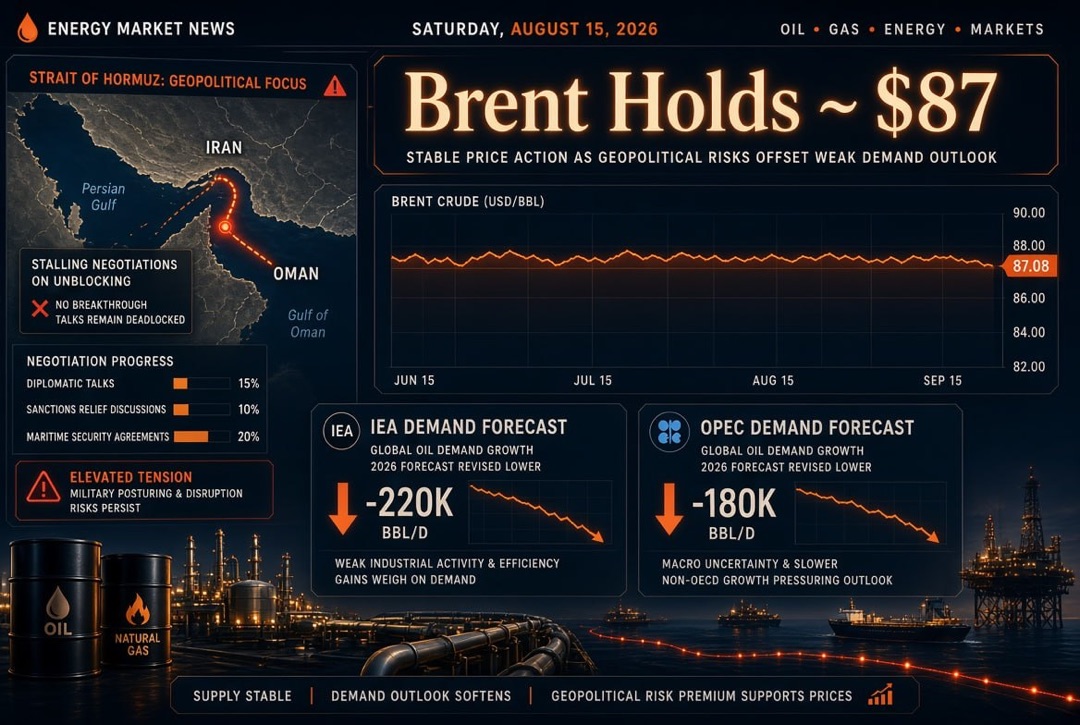
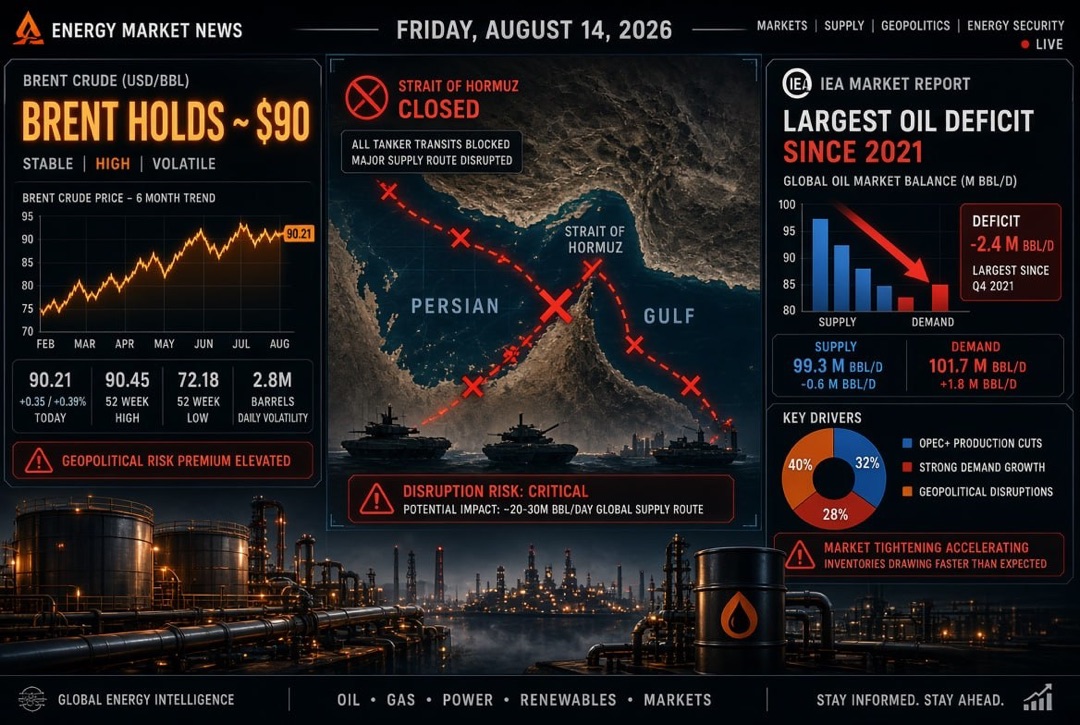
Late Tuesday evening, a fresh reference for the oil market will be released – the weekly report from the American Petroleum Institute (API) on U.S. crude oil inventories (expected around 00:30 MSK on Wednesday). Although this data is unofficial (the main statistics are released by the EIA the following day), traders closely monitor API, and it is capable of inducing short-term volatility in oil prices. Over the past weeks, oil prices have been very volatile: the market is influenced by both fundamental factors of demand/supply and geopolitics. If the API report shows a significant reduction in inventories (for instance, a large drawdown), prices may rise, signaling stronger demand or supply issues. In turn, rising oil prices will support oil and gas company stocks and may strengthen the currencies of commodity-exporting countries. If, on the contrary, the API reports a significant increase in inventories (build), the market will perceive this as a sign of oversupply - likely pushing prices down, negatively affecting the energy sector. For the Russian market, this report is also important: the MOEX index is significantly dependent on oil and gas stocks, so the reaction to API may manifest in the dynamics of MOEX as early as Wednesday morning. Overall, investors will compare API data with the broader news backdrop – for example, OPEC+ agreements or the situation in the Middle East. Oil volatility remains high, and unexpected inventory statistics often serve as triggers for sharp price movements.
Conclusion: What Investors Should Focus On
Tuesday, November 18, 2025 blends a variety of drivers, and investors will need to efficiently filter information to focus on the primary issues. Among corporate events, reports from major companies are of particular significance: Home Depot's results as an indicator of consumer spending in the U.S. could influence the entire retail sector and set the tone for the S&P 500, while reports from Chinese tech giants (Baidu, Pinduoduo) will serve as a barometer for sentiment in the technology sector and in emerging markets in China. It is crucial to study not just the profit figures but also management forecasts – comments about future quarters and trends will assist in revising forecasts for these companies' stocks. Macro signals on Tuesday will also garner attention: ADP labor market data and industrial production indicators will either confirm the resilience of the U.S. economy or point to its weakening. In the first case, investor confidence may strengthen (supporting stocks and raising the chances for growth in Nasdaq and S&P 500), whereas in the second case, discussions about recession could intensify and risk appetite could decrease. Meanwhile, geopolitical news – such as the Saudi prince's visit or the Congress vote on the Epstein case – will primarily create an informational background. These may temporarily increase volatility or redirect press attention, but they are unlikely to alter medium-term trends in the stock market.
Investors from the CIS should separately consider the influence of the oil market. The late API report on oil inventories may set the momentum for energy prices and thus for the morning dynamics of oil and gas stocks and the Russian MOEX index. Against the backdrop of high oil prices in recent weeks, any new information on the balance of supply and demand will immediately be reflected in quotes. Thus, active traders should prepare for potential price spikes in oil during the night from Tuesday to Wednesday. Overall, concluding the day, November 18 offers substantial material for analysis and investment decision-making. Investors must highlight key signals: real demand trends (from company reports and macro data) and any potential changes in regulator sentiment. Future market movements will hinge on this. If most of the day's news turns out to be positive – if reports exceed expectations and data demonstrate resilience – global indices will gain support and continue to rise (with S&P 500 and Nasdaq potentially hitting new highs). Conversely, if negative notes emerge (weak reports or concerning macro data), short-term corrections may occur alongside renewed discussions regarding central banks' easing policies. By keenly following the news on this Tuesday, investors will be able to adjust their portfolios and investment strategies in line with emerging risks and opportunities, maintaining a balance between returns and risks in global markets.