Key Economic Events and Corporate Earnings Reports for Wednesday, February 11, 2026: China's CPI, U.S. Labor Market, EIA Oil Inventories, U.S. Federal Budget, and Reporting from Major Public Companies Worldwide.
Wednesday, February 11, 2026, promises to be action-packed for investors in the CIS: the day will simultaneously feature key economic events and comprehensive corporate earnings reports for the fourth quarter. On the global stage, attention is focused on inflation data (CPI) and labor market statistics that could impact central bank decisions, as well as quarterly earnings from corporations in the U.S., Europe, Asia, and Russia. Below is a detailed overview of what investors can expect—ranging from macro statistics and oil prices to corporate publications—with timely metrics and insights for the stock market.
Macroeconomics
Among the major macroeconomic events today:
- All day, Japan: National holiday, financial markets are closed.
- 04:30 MSK, China: Consumer Price Index (CPI) for January. Inflation is expected to remain moderate—forecast is around +0.5–1.0% year-on-year, reflecting subdued domestic demand. This data is important for Asian markets: a weak CPI confirms the absence of inflationary pressure and gives the People's Bank of China room for a dovish policy.
- Day, Russia: Speech by Foreign Minister Sergey Lavrov in the State Duma. Focus is on foreign policy statements, sanctions, and geopolitics. Investors will look for signals that could influence the investment climate or asset prices (e.g., comments on relations with key trading partners or new foreign economic initiatives).
- 16:00 MSK, Russia: Trade balance for December. The previous figure showed a significant surplus due to high commodity prices. New data will allow for assessing the dynamics of oil and gas exports and the state of Russia's external trade against the backdrop of sanctions. A strong trade balance supports the ruble and fundamentally impacts the Russian stock market, especially the shares of commodity companies.
- 16:30 MSK, USA: Non-Farm Payrolls (NFP) and unemployment rate for January. The consensus forecast is approximately +70,000 new jobs (up from +50,000 in December), with unemployment around 4.4%. These key labor market indicators could adjust expectations regarding the Fed's monetary policy: weaker data would confirm an economic slowdown and strengthen expectations of policy easing, while unexpectedly strong job growth could increase the likelihood of maintaining high rates for longer.
- 18:30 MSK, USA: Weekly oil inventories from the Energy Information Administration (EIA). The oil market is closely monitoring demand and supply balance: moderate changes in inventories are expected (analysts forecast a slight seasonal increase in gasoline stocks and a decrease in crude oil inventories). EIA data will affect the prices of Brent and WTI crude oil and, consequently, shares of oil and gas companies.
- 19:00 MSK, Russia: Weekly Consumer Price Index (weekly inflation for Russia). Previous weeks showed a price increase of about 0.1–0.2% per week, indicating an annual inflation trend around 5–6%. The fresh figure will help assess whether inflationary pressure is accelerating towards the end of winter, which is significant for expectations regarding the key rate of the Bank of Russia.
- 22:00 MSK, USA: Federal budget for January. The Treasury report will reveal the size of the deficit/surplus for the month. Typically, January is characterized by increased budget expenditures and may record a deficit. Significant deviations will affect the yields of U.S. Treasury bonds and investor sentiment regarding fiscal sustainability: an increasing deficit could intensify discussions about the need for austerity measures or its impact on the debt ceiling.
Oil
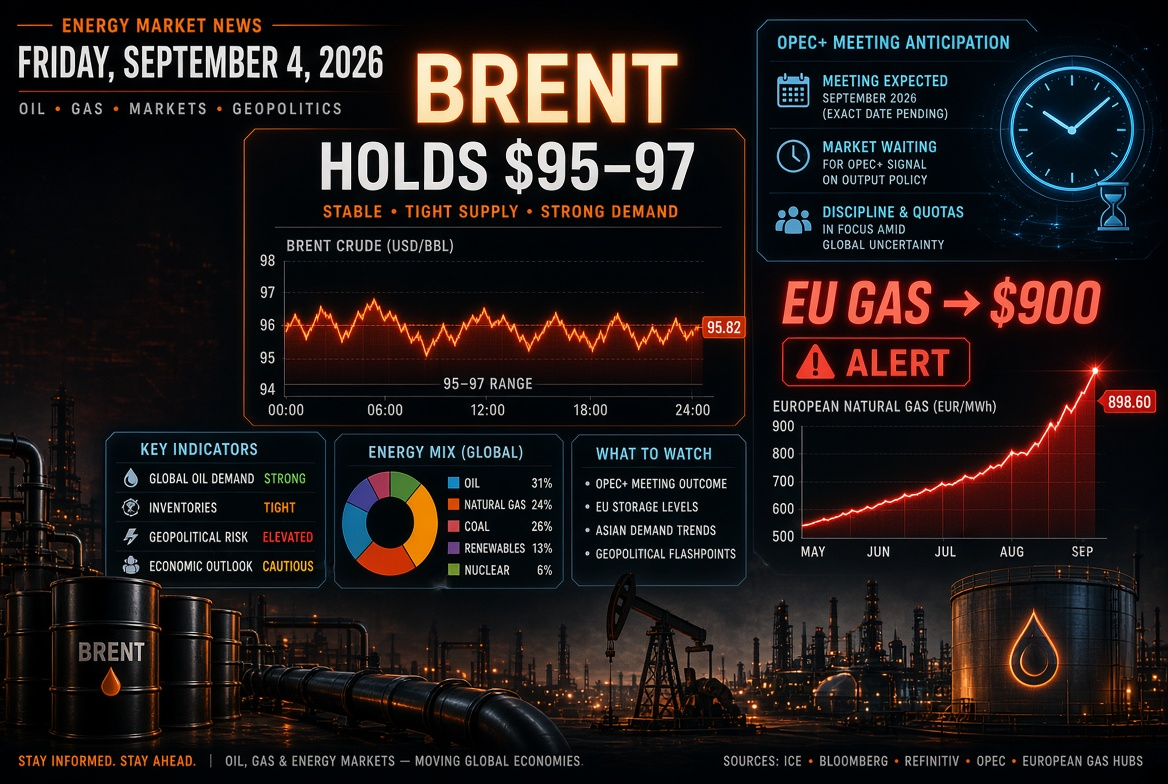
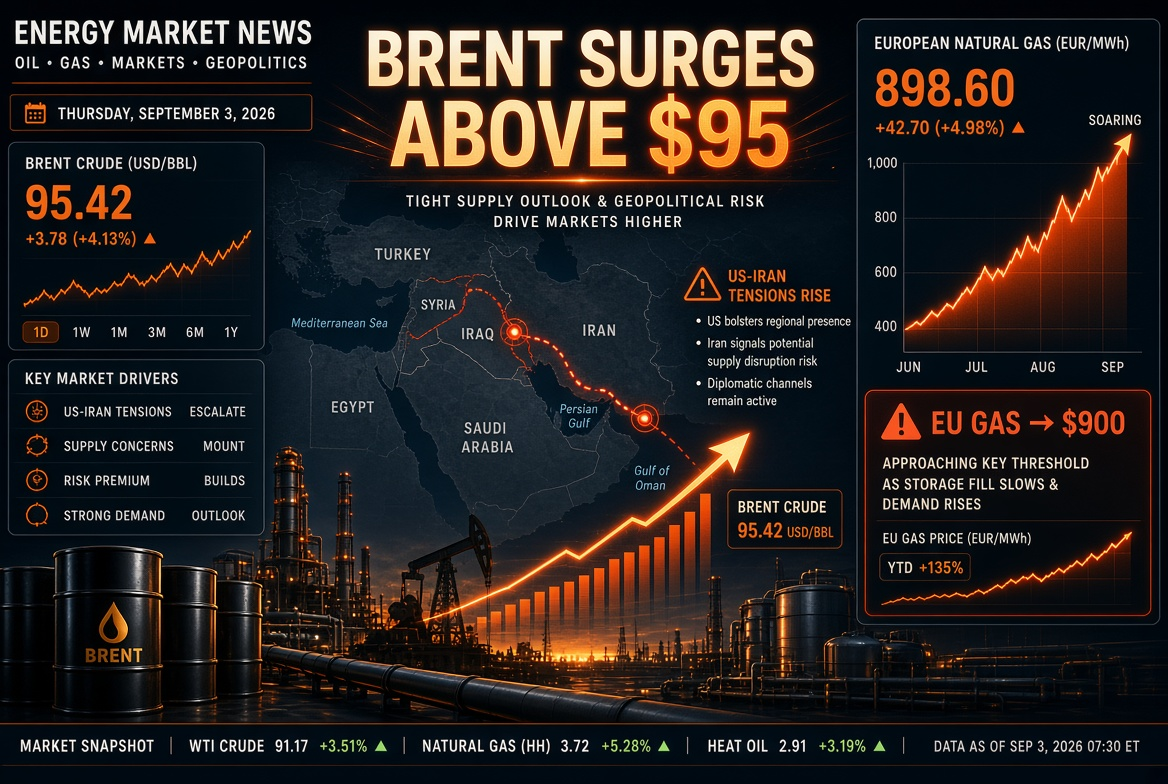
The oil market today is influenced by mixed factors. On one hand, the EIA statistics on inventories (releasing in the evening) set the tone: the past weeks have shown a mixed trend—declines in commercial crude oil inventories against a backdrop of steady U.S. exports, but an increase in product inventories due to seasonally weak demand. Investors expect fresh data to confirm a relative balance: global consumption is supported by China's recovery, while supply remains sufficient due to high exports from the U.S. and stable OPEC+ production.
Brent futures are trading at around $80 per barrel this morning, keeping prices within a narrow range. Market participants are assessing whether today's macro news will impact prices: weak CPI data from China may raise concerns about demand for crude, while Non-Farm Payrolls statistics in the U.S. could reshape forecasts for economic growth and, indirectly, energy consumption. Additionally, the trade balance of Russia for December (published today) will reflect volumes of oil and gas exports; steady exports at relatively high prices support Russia's current account surplus and budget revenues.
In general, the oil market maintains cautious optimism: investors see global inflation declining and major economies avoiding recession, indicating stable oil demand. However, in an environment of geopolitical uncertainty and fluctuations in production (e.g., potential OPEC+ production cuts or unexpected disruptions), price reactions to any news can be sharp. Special attention will be paid to the EIA inventory figures and Lavrov's rhetoric concerning energy to assess short-term price prospects for oil.
American Companies
In the U.S., the peak of the quarterly earnings season continues today, with numerous large companies set to release their results before and after market opening. Q4 2025 earnings will be reported by representatives from various sectors—from technology and telecommunications to retail and manufacturing. Below are key reports from American issuers, along with expectations for profit and revenue and important points for investors:
Before market opens (U.S. premarket):
- Shopify (SHOP): Expected sharp revenue growth of ~+28% YoY to $3.6 billion and adjusted earnings of $0.47 per share (up from $0.44 a year ago). The Canadian e-commerce platform benefited from the holiday season—investors will assess the sales growth rate amid competition with Amazon and other marketplaces. Business profitability and the company's 2026 forecast, considering potential consumer spending slowdowns, are also in focus.
- Vertiv (VRT): Manufacturer of data center equipment (UPS, cooling systems)—revenue forecast is around $2.9 billion (+double-digit YoY growth) and earnings of ~$1.29 per share (+30% YoY) due to strong demand from data centers and cloud providers. Vertiv's stock surged in 2025 due to investments in AI infrastructure; investors are waiting for confirmation of the order backlog's sustainability and comments on how long this "supercycle" in data center equipment will last.
- Unity Software (U): Developer of a platform for creating 3D content and video games. Consensus estimates revenue of ~$492 million (+7–8% YoY) and adjusted earnings of ~$0.21 per share, marking a return to growth after a decline last year. In 2025, Unity reduced costs and focused on monetization, so the market will evaluate how this impacted profitability. Key risks include competition (especially after the merger of Unreal's competitor with Epic Games) and Unity's ability to capitalize on VR/AR and generative AI trends in media content.
- Humana (HUM): One of the largest health insurers in the U.S. For Q4, a rare quarterly loss of about $4.00 per share is expected, despite revenue growth to ~$32 billion (+10% YoY). Reasons include one-off factors: increased medical payouts and reserve recalculation in the Medicare Advantage segment. Investors are interested in how these factors will affect annual profit and dividends. Attention will also be paid to Humana's 2026 forecast: can the company maintain insured growth and reduce costs considering healthcare reforms and increased competition (e.g., from UnitedHealth).
- Kraft Heinz (KHC): Food conglomerate producing consumer goods. Quarterly earnings are expected to decline to ~$0.61 per share (around -27% YoY) and revenue to drop slightly to ~$6.4 billion (-3% YoY). High food inflation and changing consumer preferences (shifting to cheaper brands) are weighing on results. Investors await comments on whether the company was able to raise prices to offset raw material costs and forecasts regarding margins in 2026—especially considering efforts to reduce debt and restructure its brand portfolio.
- T-Mobile US (TMUS): American telecom operator competing with AT&T and Verizon. Despite expected revenue growth of ~+11% (to ~$24.3 billion) driven by subscriber inflows and 5G network expansion, quarterly earnings may drop to ~$2.00 per share (-22% YoY). Profit pressure stems from customer acquisition costs and the integration of the previously acquired Sprint. Key metrics are post-paid subscriber growth, customer churn, and free cash flow indicators. Investors will also assess T-Mobile's stock buyback plans and infrastructure development after completing major capital investments in 5G.
- GlobalFoundries (GFS): Global contract semiconductor manufacturer (with factories in the U.S., Europe, and Asia). Consensus for Q4 is revenue around $1.80 billion (+2% YoY) and earnings of ~$0.47 per share. The microchip sector experienced a decline in 2025 in smartphones and PCs; however, GlobalFoundries partially offset this due to high demand for specialized chips in the automotive and industrial sectors. Investors will focus on production capacity utilization, prospects for new large contracts, and management comments on cost inflation (e.g., electricity prices in Europe).
- McDonald's (MCD): The world's largest fast-food restaurant chain. Analysts expect revenue of ~$6.8 billion (+7% YoY) and earnings of approximately $3.00 per share (+8% YoY) due to increased traffic and menu prices. A key metric is comparable sales (LFL) growth by region: in the last quarter, McDonald's showed double-digit growth in Europe and Asia, with steady demand in the U.S. Attention is now on China (post-COVID restrictions) and Europe (ability to maintain demand despite inflation). Investors are also waiting for news on network expansion plans in 2026 and outcomes of automation and delivery initiatives affecting future costs and revenues.
- Oatly (OTLY): Swedish producer of oat milk, reporting in the U.S. Revenue is expected to remain about the same as last year (a slight increase) while losses are expected to decrease—the company is close to achieving operational breakeven. 2025 was a turning point for Oatly as expenses were reduced and inefficient plants were closed. Investors will look for indications of improved profitability and evaluate management forecasts for returning to profit in 2026. Also important are demand figures for plant-based milk in different regions—whether the product remains popular in key markets (U.S., Europe, China).
- NetEase (NTES): Chinese internet company, a leader in online gaming (ADR traded on Nasdaq). The report will be released before U.S. market opens (evening Moscow time). Forecast: revenue of about $4.0 billion for the quarter and net profit of ~$2.0 per ADS. The focus will be on gaming divisions: successful releases of new games and steady revenues from core titles (e.g., Fantasy Westward Journey) could support results. However, analysts note that growth may slow due to tightening regulatory environments in China and a high base from last year. Investors also expect comments on NetEase's cloud services development and other initiatives (music service Cloud Music) that diversify the business.
After market closes (U.S. postmarket):
- AppLovin (APP): Developer of a platform for mobile app and game monetization. Strong financial growth is expected: earnings around $3.0 per share (+~70% YoY) on revenue of ~$1.6 billion (+~17%). This leap is attributed to AppLovin's successful strategy in mobile advertising—the MAX platform has attracted many developers, and advertiser demand in gaming remains high. Now the market's attention is on the company's forecast: can double-digit growth be sustained in 2026 amid potential market slowdowns and competition (e.g., from Unity Ads and IronSource).
- Albemarle (ALB): Leading global lithium producer (used in electric vehicle batteries). The consensus forecast anticipates a quarterly loss of ~$0.60 per share, which is significantly better than last year's loss (losses are reducing by ~40% YoY). Revenue is estimated at around $1.34 billion, close to last year's level. In 2025, lithium prices significantly decreased from peaks in 2022, prompting Albemarle to cut forecasts. Investors will seek signs of recovery in the report: mentions of rising demand from automakers, new long-term contracts for lithium supply, or progress in geographical expansion (projects in Australia, Chile). Information on cost control and capital expenditures is also crucial—previously, the company stated measures to optimize amid volatility in raw material markets.
- Cisco Systems (CSCO): A flagship in the technology sector, a network equipment manufacturer. It will publish results for the 2nd financial quarter of 2026 (corresponding to calendar Q4 2025). Forecast: revenue of ~$15.1 billion (+2% YoY) and earnings of ~$1.02 per share (+8% YoY). Although revenue growth is moderate, investor sentiment is optimistic due to Cisco's order backlog (~$43 billion at the end of the previous quarter) and increased demand for data center solutions. Special attention in the report will focus on the segment related to infrastructure for artificial intelligence: buyers are investing in modernizing networks (routers, switches, optics) to meet AI needs, and Cisco stands to benefit from this trend. Key topics also include dynamics of new orders (book-to-bill), comments on supply chains (global chip shortages have practically diminished by 2026), and margin forecasts, considering the rising share of software and services in Cisco's business.
- QuantumScape (QS): A Silicon Valley startup developing solid-state batteries for electric vehicles. Financial results are secondary for now—another quarterly loss (~$0.17 per share) is expected with minimal revenue. More importantly, the company will address progress in technology: investors await updates on achieved energy density, charge/discharge cycles, and prototype readiness for automakers (Volkswagen is a strategic partner). Following a turbulent IPO a couple of years ago, QS stocks have been highly volatile, reacting to news about the first battery sample deliveries to clients and prospects for commercial launches. Any positive developments in testing or new partnerships could trigger significant price movements.
- HubSpot (HUBS): Provider of cloud software for marketing, sales, and customer support (CRM for small and medium-sized businesses). Strong growth is expected: revenue of ~up to $830 million (+18% YoY) and adjusted earnings of approximately $2.20 per share (up from $1.70 a year earlier). Despite an overall cooling market in SaaS due to shrinking client IT budgets, HubSpot manages to maintain double-digit growth rates through product line expansion and international expansion. Investors will pay attention to customer churn/retention metrics and comments on competition from major players (Salesforce, Oracle). Additionally, how the company predicts demand in 2026 is crucial—whether margin growth will continue following investments in AI capabilities on the platform.
- Comstock Resources (CRK): An independent oil and gas company specializing in natural gas extraction in the Haynesville Basin (U.S.). The forecast for Q4 indicates earnings of ~$0.11 per share (down from ~$0.16 last year) with revenue around $500 million. The decline is attributed to lower gas prices in 2025 compared to the high levels of 2024. Nevertheless, in recent months, gas prices have recovered from historical lows, and investors await signals indicating whether Comstock plans to increase or limit production to maintain prices. Additionally, important data includes hedging: how the company has secured gas sales for 2026 amid high market volatility (especially considering the rise in U.S. LNG exports affecting domestic gas prices).
- Aurora Innovation (AUR): A pioneer in autonomous driving technologies (for trucks and robo-taxis). The company remains in the R&D phase—expected revenue is only ~$1.5 million (pilot projects) with a net loss of ~$0.12 per share. Aurora's primary "report" is progress in testing autonomous vehicles. Last week, Aurora announced an expansion of driverless pilot deliveries in Texas, which investors perceived positively. Today's release is likely to clarify whether Aurora has enough cash reserves (around $700 million at the end of September) before commercializing technology. Focus will be on plans for raising new capital or partners in 2026, as well as any details on collaborations with logistics giants (e.g., FedEx, Uber Freight) in the field of driverless freight transport.
- Fastly (FSLY): An American provider of content delivery (CDN) and cybersecurity services. Following several years of losses, Fastly is nearing profitability: a slight profit of ~$0.06 per share is expected compared to a loss last year on revenue of ~$161 million (+15% YoY). The company successfully implements a strategy for improving efficiency—in 2025, Fastly revamped its product line, focused on large corporate clients, and optimized expenses. Investors will examine client growth rates and average revenue per client: competition from Cloudflare and Akamai remains a significant challenge, so Fastly's progress in offering additional services (API protection, edge computing) is crucial. The market is also awaiting forecasts for 2026: will Fastly continue to achieve double-digit sales growth, and can it consistently generate positive free cash flow?
- Confluent (CFLT): Developer of a streaming data processing platform based on Apache Kafka. Strong financial results are anticipated: revenue of ~$308 million (+~18% YoY) and profit of ~$0.10 per share (last year showed a small loss). Confluent's business demonstrates sustainable growth, although its pace has slightly slowed as the company scales. However, the key context is not just the numbers but a recent deal: in December 2025, it was announced that IBM would acquire Confluent for approximately $11 billion. Thus, this report may become one of the last for Confluent as a public company. Investors will closely examine whether the company meets quarterly guidelines (which are essential for assessing the fairness of the deal's price) and what comments are provided regarding integration with IBM. CFLT stocks are now moving in line with the arbitrage against the acquisition price, but any complications (e.g., regulatory) or improvements in fundamental metrics may affect the deal's spread.
- Cognex (CGNX): An American manufacturer of machine vision systems, in demand for production automation. Forecast: revenue of around $239 million (+4% YoY) and earnings of ~$0.20 per share. After a pandemic boom in automation, Cognex faced some cooling in demand in 2025 (especially from electronics), but the automotive and logistics segments are supporting sales. Investors expect updates on the launch of the new unified Cognex One platform, which should simplify the integration of machine vision solutions in enterprises. Also on the agenda is the situation with supply chains (sensitive for Cognex’s high-tech cameras) and recovery prospects for double-digit growth given improved macro conditions.
- CVS Health (CVS): A diversified company combining a pharmacy chain and insurance via Aetna. The report is set to release in the premarket; analysts forecast ~ $1.00 earnings per share (adjusted) with revenue around $85 billion (+8% YoY). The main drivers are growth in the pharmaceutical segment (retail pharmacies and PBM services) and health insurance. However, net profit for 2025 may have decreased due to one-off write-offs and expenses for integrating new acquisitions (in 2023, CVS acquired healthcare companies Oak Street Health and Signify Health). Investors will assess how these new divisions (primary healthcare and home services) are performing and how they improve business synergy. A key point is the confirmation from management of the forecast for 2026: CVS previously stated a target of $7.00–$7.20 earnings per share in 2026, and the market is keen to hear whether these goals remain intact, considering changes in the healthcare service market and possible reforms in drug price regulation in the U.S.
European Companies
Europe also sees a busy day of quarterly earnings reports from a number of corporate leaders. One of the main events will be the release of results from TotalEnergies (France)—one of the largest oil and gas companies in the world. The company has indicated in advance that the Q4 2025 metrics will be comparable to last year's: an approximately 5% YoY increase in oil and gas production and record margins in oil refining are expected to offset a decrease in raw material prices, with profit anticipated to be nearly at Q4 2024 levels (consensus ~$1.80 per share). Investors are interested in how TotalEnergies will allocate its high cash flows: generous dividends and continued stock buybacks are likely to be announced. The company may also provide an updated outlook on capital investments in energy transition projects (renewable energy, hydrogen) and plans to maintain stable oil production levels.
Among other European blue chips publishing earnings today are the French manufacturer of premium optics EssilorLuxottica and the leader in engineering software Dassault Systèmes. Their results will reflect consumer demand for luxury goods (Ray-Ban and Oakley glasses) and business investments in digital solutions (3D modeling, PLM), respectively. Both companies are expected to show solid revenue growth in the range of 5–10% YoY, maintaining high profitability.
Reports will also come from European industrial and consumer giants. In the Netherlands, the brewing company Heineken will report: after a weak summer, the company could increase beer sales in the autumn period; however, inflation in costs (grain, energy) may have hit the operating margin. Overall, investors forecast moderate revenue growth for Heineken (~+5%) with stable profits and will await forecasts for European and Asian markets for 2026. The French tire manufacturer Michelin is likely to report stable revenue, supported by demand for premium tires for electric vehicles and trucks, although rising raw material prices (rubber, oil) may slightly reduce profitability—the market will evaluate how well Michelin has transferred costs to customers and the demand for its products in China and North America.
In the European banking sector, the focus will be on results from Commerzbank (Germany's second-largest bank) and ABN AMRO (a major Dutch bank). Thanks to higher ECB interest rates in 2025, banks likely witnessed growth in interest income and margin expansion. However, investors will analyze asset quality: have the banks created additional provisions for potential problem loans amid economic slowdown? It is expected that Commerzbank will report a quarterly profit at the level of the previous year or slightly above (benefitting from growth in corporate lending rates), while ABN AMRO, focusing on the retail market, may have increased profits against the background of rising mortgage rates. Any management announcements regarding dividend payments or stock buybacks will also influence the stock prices.
Separately, the situation with Siemens Energy (Germany) is noteworthy—this industrial giant publishes its report today amid serious difficulties in its subsidiary Siemens Gamesa (wind energy). Recently, Siemens Energy warned of multi-billion dollar losses due to defects in wind turbine blades and costs for their rectification; the company even received state guarantees for financial support. Therefore, a quarterly loss is expected, and dividends may not be paid. Investors will pay close attention to comments on the recovery plan: what results can be expected in 2026, whether parts of the business will be sold or whether the offshore wind energy business will be restructured. Any progress in negotiations with the government or creditors (e.g., increased credit lines) will be key to restoring confidence in Siemens Energy’s stock.
Asian Companies
In the Asia-Pacific region, February 11 sees a relative lull in significant corporate releases, partly because it is a holiday in Japan (markets are closed). Nonetheless, the macro context from Asia is important: weak CPI in China (mentioned above) indicates an absence of overheating in the economy, which could prompt authorities to stimulate— a positive factor for the Asian stock market. Investors are also evaluating other data released this week from the region—such as trade and inflation statistics from South Korea and Taiwan—to gauge the state of global supply chains in electronics.
Among the companies in Asia, the previously mentioned Chinese NetEase is noteworthy, with its earnings report (see the American companies section) serving as an indicator for the entire Chinese technology sector. Additionally, several smaller Asian firms are releasing results today: for example, the developer Sunac China will report in Hong Kong, and in Seoul, chipmaker SK Hynix released a detailed forecast for 2026 (expecting a recovery in memory demand in the second half of the year). Although February 11 is not rich in notable reports in Asia, the market is set against the backdrop of expectations for further government action: investors are anticipating measures to stimulate the economy of the PRC ahead of the annual session of the National People's Congress in the spring. Therefore, any signals from Lavrov's speech regarding Russia and China relations or China's plans to stimulate domestic demand could be sharply perceived by regional markets.
Russian Companies
In the Russian corporate calendar for February 11, there are no publications of financial results from the largest public companies. The fourth quarter 2025 reporting season for Russian issuers will start later; the main state banks and commodity producers will present annual results only closer to March. Accordingly, the attention of local investors is focused on macro events and external factors. Lavrov's speech in the State Duma may shed light on potential changes in foreign economic policy or sanctions risks, which indirectly affect Russian assets. Trade balance data and weekly inflation figures will provide guidelines for the ruble exchange rate and the monetary policy of the Central Bank of Russia: a sustainable trade surplus and moderate inflation support the idea of keeping the key rate unchanged.
Although there are no key corporate releases today, news regarding individual companies may still emerge. Investors should keep an eye on operational updates: companies often publish production reports or provide preliminary data in February. For example, oil and gas giants may report on extraction volumes for January, metallurgists on production output, and retailers on holiday sales dynamics. Any unexpected information could lead to movements in corresponding stocks on the Moscow Exchange. Overall, the external backdrop (global data on inflation and unemployment, sentiments in international markets) will be the main focus for the Russian stock market today.
What Investors Should Focus On
The complex of events today combines factors that can both support and destabilize global risk appetite. It is crucial for investors to carefully analyze incoming information and relate it to their own strategies. Below are brief recommendations on what to watch:
- Macrostats and central bank policies: CPI (inflation) and Non-Farm Payrolls data directly influence expectations for rates set by the U.S. Fed, the PBC of China, and other central banks. A sharp deviation from forecasts could lead to a re-evaluation by investors—for instance, a weak labor market would intensify discussions about Fed rate cuts in March. For Russian investors, although the Central Bank of Russia operates independently, it is important to consider this global dynamic as it affects capital flows to emerging markets and commodity prices.
- Corporate forecasts and comments: During the height of earnings season, not only the profit/revenue figures are important, but also what company management says about the future. It is noteworthy if companies downgrade forecasts for 2026 or warn of risks—this may signal an impending slowdown in the sector. For instance, comments from Cisco on equipment demand or Kraft Heinz on consumer behavior, or TotalEnergies on oil prices—all of these are signals that reach beyond individual stocks and impact entire industries and markets.
- Stock market reactions and sector rotation: On days with such a high news volume, increased volatility is possible. Investors should be prepared for significant price movements in stocks, especially in companies whose earnings deviate significantly from expectations. Sector rotation may occur: for example, if technology firms' reports disappoint, we may see a capital shift into more defensive sectors (telecom, healthcare). Similar global trends also manifest in the Russian market—through changes in commodity prices and foreign investor sentiments regarding risk assets.
February 11, 2026, is one of those days when it is crucial for investors to keep their fingers on the pulse across many fronts. Inflation and employment statistics will set the tone for the macroeconomic picture, while a vast array of corporate reporting across the U.S., Europe, and Asia will provide fresh guidance on corporate profits and business cycles. In such a situation, we recommend investors maintain a diversified approach: tracking both global indicators (CPI, unemployment, oil prices) and specific news regarding portfolio companies. Careful reading of press releases and participation in conference calls following reports can provide valuable insights into trends ahead of general market data. Finally, heightened volatility on such days is not a reason for panic but an opportunity for long-term investors to identify undervalued stocks or, conversely, to timely lock in profits on overheated papers. The key is to maintain composure and an analytical approach to correctly highlight priorities and make informed investment decisions in the context of today’s information flow.