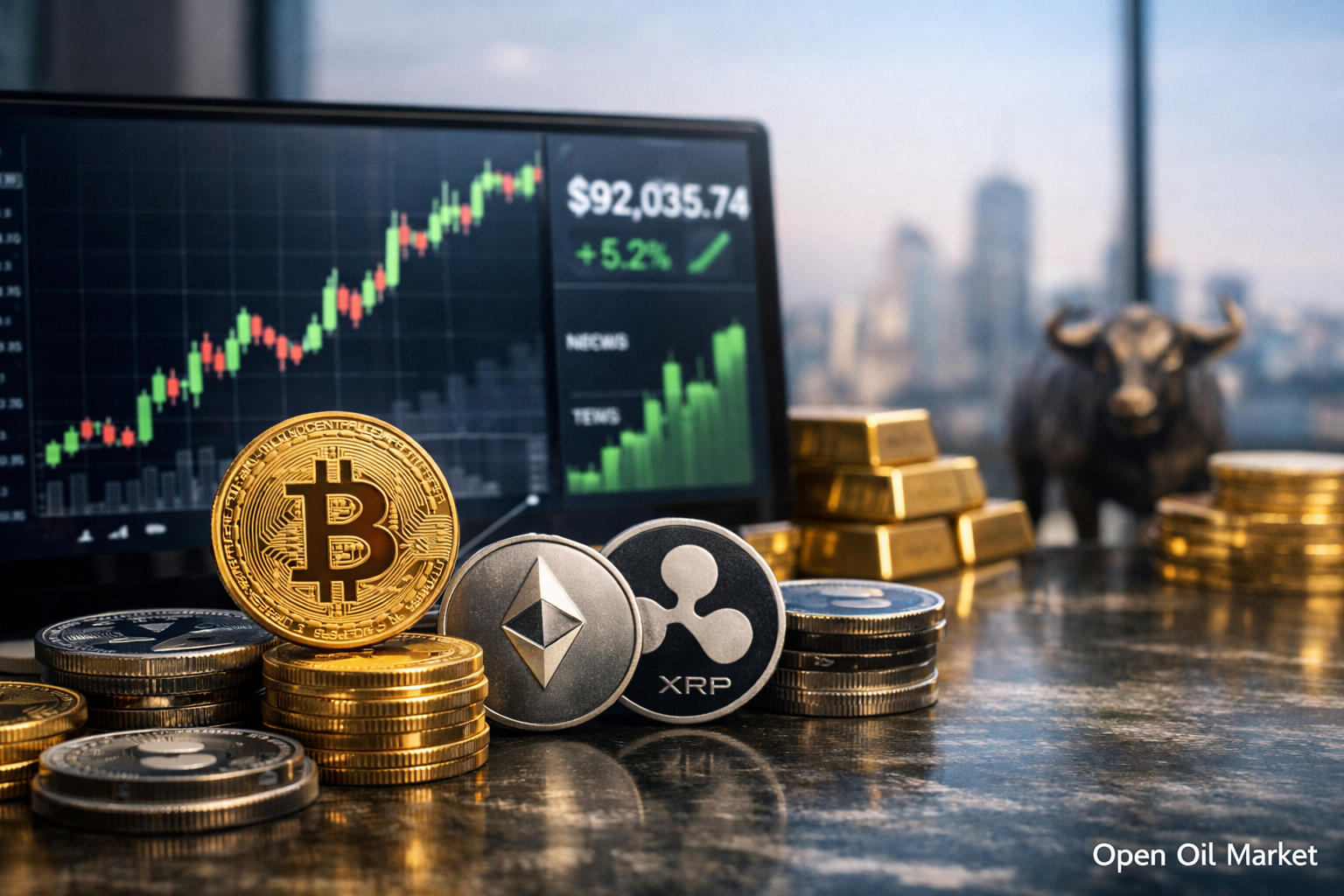
Current Cryptocurrency News for Friday, January 9, 2026: Bitcoin Holds Above $90,000, Altcoin Growth, Top 10 Cryptocurrency Overview, and Key Global Trends for Investors.
The global cryptocurrency market is confidently entering 2026. The total market capitalization of digital assets has surpassed $3 trillion, gaining around 5% in the first week of January. Bitcoin (BTC) remains steadily above the $90,000 mark, while several major altcoins are outpacing its growth rate. For instance, Ethereum (ETH) has increased by approximately 10% since the beginning of the year, while XRP has surged over 25%, signaling a renewed interest from investors in risk assets.
The optimism in the market is supported by a combination of factors: expectations of a monetary policy easing, the introduction of new institutional products (such as spot Bitcoin ETFs), and technological advancements. With regulatory clarity emerging, several large financial firms are expanding their presence in the crypto industry, boosting investor confidence worldwide.
Bitcoin: Dynamics and Trends
Bitcoin is showing a moderately positive trend in the first week of January following a volatile end to the previous year. At the beginning of the week, BTC's price rose above $93,000, and it now holds around $92,000, which is approximately 6% higher than the start of the year. Despite the decline at the end of 2025, when Bitcoin retreated from its record high (~$126,000 recorded mid-last year), the current recovery signals a return of bullish sentiments.
Experts note that to confirm a new upward trend, Bitcoin must surpass the psychologically significant level of $100,000. The nearest technical resistances are around $94,000–$95,000, while key support zones are estimated to be in the range of $88,000–$90,000. Interest from institutional investors and signs of decreasing inflationary pressure reinforce the optimism surrounding Bitcoin.
Ethereum: Network Upgrade and Price
The second-largest asset by market capitalization, Ethereum (ETH), is trading around $3,200, having strengthened by about 10% since the beginning of the year. ETH's price remains below its record high ($4,950, reached in August 2025), but sentiments surrounding Ethereum are positive due to progress in network development. On January 7, Ethereum developers successfully activated the "Fusaka" upgrade (BPO-2), increasing the blockchain's throughput due to a rise in the data limit (so-called "blobs") per block. Improvements in scalability and reductions in fees enhance Ethereum's appeal for developers and DeFi users, potentially supporting ETH's value in the future.
Altcoins: XRP and Other Growth Leaders
Among altcoins, XRP stands out at the beginning of 2026 as it enters the top 5 cryptocurrencies. Its price has soared approximately 25% (to ~$2.20) in just the first week of January. The main reasons for XRP's rally include:
- Inflow into XRP funds: At the end of 2025, amid a general decline, capital inflow was noted in spot ETFs for XRP, while Bitcoin and Ether ETFs experienced outflows. This created a foundation for XRP's rise in January.
- Increased attention: XRP has gained significant media prominence as a "favorite" at the beginning of 2026, fueling demand from both retail and institutional investors.
- Fundamental factors: Ripple is expanding its global presence (partnerships in Asia, plans to launch a crypto bank in the US), while XRP supply on exchanges is decreasing. These changes bolster confidence in the token.
As a result, XRP is demonstrating the best performance among major cryptocurrencies, although such a sharp rise may lead to increased volatility. Other altcoins have also continued to grow. Solana (SOL) has strengthened above $130 due to the revival of its ecosystem and interest from institutional investors (including expectations of an ETF launch for SOL). Binance Coin (BNB) set a new maximum, reaching ~$900, indicating confidence in the Binance platform. Tron (TRX), Cardano (ADA), and meme token Dogecoin (DOGE) also remain in the top ten, although their recent growth has been more restrained.
Institutional Adoption and Regulation
The integration of cryptocurrencies into the global financial sector continues to deepen, driven by several key developments:
- New products from banks: Morgan Stanley has become the first major bank to file for ETFs linked to Bitcoin and Solana with the SEC. This move enhances the legitimacy of the crypto industry and may prompt competitors to follow suit.
- Crypto in client portfolios: Bank of America has allowed its advisors to include cryptocurrencies up to 4% in client portfolios. This signifies the recognition of cryptocurrencies as an asset class in traditional banking.
- Regulatory adaptation: Regulatory policies in the U.S. have become more lenient; for instance, in December, the Office of the Comptroller of the Currency (OCC) permitted banks to facilitate crypto transactions, bridging traditional finance and digital assets. In the European Union, a comprehensive MiCA regulation comes into effect, introducing unified rules for the crypto market and enhancing institutional investor confidence.
- Expansion of payment infrastructure: Visa has reported that spending on its crypto cards increased by 525% in 2025. The company is expanding its support for stablecoins (across various blockchains), indicating the integration of cryptocurrencies into the global payment system.
Top 10 Most Popular Cryptocurrencies: Market Overview
At the beginning of 2026, the largest cryptocurrencies by market capitalization include the following digital assets:
- Bitcoin (BTC): the largest cryptocurrency (~$1.8 trillion). BTC is holding around $92,000, attributed to a return of institutional interest (ETFs, etc.) following the decline at the end of 2025.
- Ethereum (ETH): the second-largest asset (~$380 billion). ETH is trading around $3,200 (+10% since the start of the year); recent network upgrades improve its scalability and strengthen investor confidence.
- Tether (USDT): the leading stablecoin ($1, market cap ~$187 billion), providing high market liquidity and widely used for transactions in the crypto economy.
- XRP (XRP): one of the top 5 crypto assets (~$130 billion). XRP (~$2.20) surged by ~25% at the start of the year, driven by institutional inflows and Ripple's successes in promoting the token.
- Binance Coin (BNB): token of the Binance ecosystem (~$124 billion). BNB (~$900) is near its historical maximum, reflecting high demand for Binance's services and use of the coin within the platform.
- Solana (SOL): a platform for decentralized applications (~$76 billion). SOL (~$135) continues its recovery due to the high speed of the network and attention from major investors (ETF launch expected).
- USD Coin (USDC): stablecoin ($1, ~$75 billion), issued by the Centre consortium. USDC attracts users with its transparent reserves and recognition by regulators.
- Tron (TRX): token of the Tron network (~$28 billion). TRX (~$0.29) is in high demand in Asia due to the active use of the network for cross-border transfers and operations with stablecoins.
- Dogecoin (DOGE): meme cryptocurrency (~$25 billion). DOGE (~$0.15) remains among the leaders due to community support and occasional spikes in social media interest.
- Cardano (ADA): smart contract platform (~$14 billion). ADA (~$0.40) is gradually developing, allowing the project to maintain its position among leading crypto assets, although its price growth remains restrained.
Macroeconomic Environment
External conditions at the beginning of 2026 exert a mixed influence on the crypto market. On one hand, the U.S. Federal Reserve lowered its key interest rate for the first time in a long period in December 2025, spurring a rally in equity markets. Easing monetary policy traditionally enhances the attractiveness of risk assets, including cryptocurrencies.
However, there are also restraining factors. By the end of 2025, gold rose to a record $4,300 per ounce amid geopolitical risks, signaling an outflow of capital into "safe havens." Furthermore, interest rates remain high, restricting the flow of funds into digital assets. Thus, some investors have begun to increase their cryptocurrency allocations in anticipation of further easing, while others still prefer safe assets.
Market Outlook
The start of 2026 instills cautious optimism among market participants. Many experts believe that the market reached "the bottom" at the end of 2025, suggesting a likely period of recovery ahead. Ongoing institutional inflows, technological progress, and easing monetary policy support the scenario of further growth.
If positive trends persist, Bitcoin and leading altcoins could eventually return to their historical peaks (and potentially surpass them). Nonetheless, swift growth does not rule out risks: worsening macro conditions (such as a new wave of capital flight into gold) or stringent regulatory measures could cool the market. In such circumstances, investors should maintain a balanced approach and remain vigilant about external signals.
Overall, the industry is entering 2026 with a more developed infrastructure and support from major players. In the absence of significant upheaval, cryptocurrencies stand a chance for a successful year, although high volatility necessitates discipline and a long-term perspective when investing.