Cryptocurrency News for Friday, January 30, 2026: Bitcoin Dynamics, Altcoin Market, Key Trends, and Top 10 Cryptocurrencies. Current Overview for Global Investors.
As of the morning of January 30, 2026, the global cryptocurrency market is exhibiting relative stability following recent volatility. The total capitalization of digital assets stands at around $3.2 trillion, showing little change over the past day. The dynamics among leading cryptocurrencies are heterogeneous: some coins continue to recover after a mid-month correction, while others remain under pressure. Investors are maintaining interest in crypto assets amid signals of easing monetary policy and a gradual improvement in the regulatory environment worldwide. The start of 2026 is characterized by cautious optimism: despite recent price fluctuations, the industry is strengthening its position thanks to an influx of institutional capital and expanding integration of blockchain technologies.
Macroeconomic Background and Market Reaction
External factors continue to influence sentiments in the crypto market. This week, the focus was on the first Federal Reserve meeting of 2026. The FOMC's decision to keep the key interest rate unchanged aligned with market expectations and was perceived positively: short-term uncertainty in monetary policy has decreased. This alleviated pressure on risk assets, including cryptocurrencies. Prices of Bitcoin and Ethereum, which had been declining before the announcement, stabilized and entered a phase of cautious growth. However, several factors remain capable of restraining momentum: the global economy still faces geopolitical uncertainty and signs of slowing growth, which may limit investors' risk appetite. Overall, the macroeconomic backdrop at the beginning of the year appears more favorable for the crypto market than at the end of 2025, thanks to diminishing inflationary pressure and expectations of further easing by central banks.
Bitcoin: Stability After Correction
Bitcoin (BTC) is holding steady around the $90,000 mark, demonstrating stabilization after sharp fluctuations in recent weeks. In early January, the leading cryptocurrency surged above $95,000 and approached the psychological barrier of $100,000, only to experience a correction due to overall investor caution. The current recovery of Bitcoin is attributed to improved sentiments following the FOMC's decisions and an influx of new capital: major investors view the nearing of peak interest rates as a signal to resume purchases of risk assets. The market capitalization of BTC still exceeds $1.7 trillion, accounting for over 55% of the total cryptocurrency market capitalization and reflecting Bitcoin's status as "digital gold" and a key industry indicator.
Analysts note that for a confident return to a bullish trend, Bitcoin must overcome the resistance zone of $95,000–$100,000. If the macroeconomic backdrop continues to improve and institutional interest remains high, BTC may attempt to reach historical highs again. The nearest support levels during a pullback remain in the range of $85,000–$88,000.
Ethereum: High Network Activity Sustained
Ethereum (ETH), the second-largest cryptocurrency by market capitalization, is trading above $3,000 and also attempts to consolidate after a recent decline. Currently, the price of ETH fluctuates around $3,200, which is close to the levels seen at the beginning of the month. Over the past two weeks, Ethereum, like Bitcoin, has lost around 10% from local peaks, yet investor interest in it remains high.
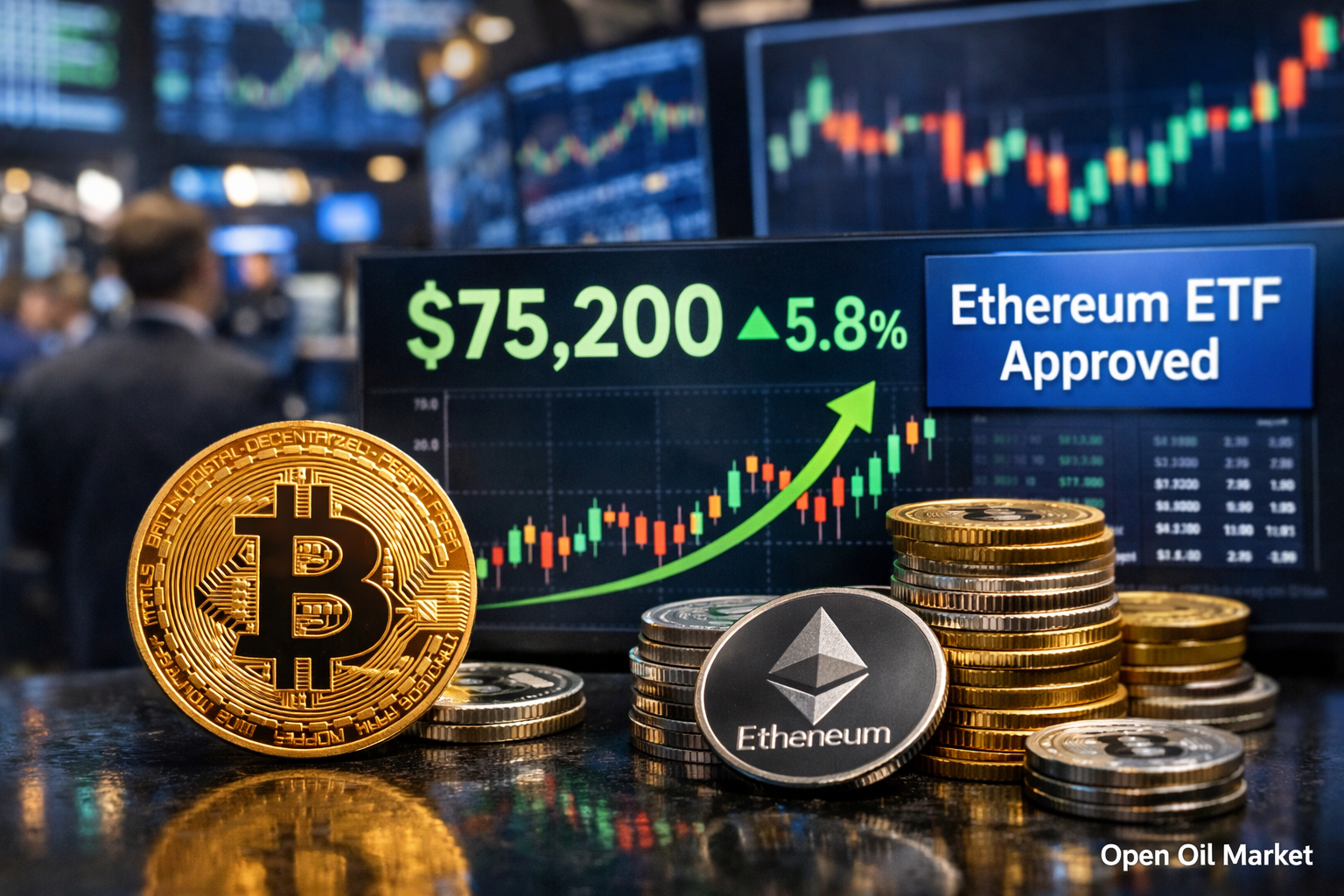
Amid market stabilization, activity on the Ethereum network continues to grow: transaction volumes and total value locked (TVL) in DeFi protocols remain at elevated levels. Ethereum developers are focused on further updates aimed at scaling the network and reducing fees, which reinforces confidence in the platform's long-term potential. Additionally, there is an influx of capital into investment products related to Ethereum: new ETFs targeting baskets of leading altcoins and ETH tokens are hitting the market, enhancing the inflow of funds into the ecosystem. Overall, Ethereum moves in tandem with Bitcoin, maintaining a market share of around 18; many participants view current levels as attractive for long-term investments given expectations of further technological improvements.
Altcoins: Mixed Dynamics
The altcoin market is showing mixed results as January comes to a close. Some large alternative coins are following Bitcoin, attempting to recover losses, while others continue to decline. Notably, Ripple (XRP) has strengthened its position: the token of the Ripple payment network has gained value in recent days and is holding around $2.10. Investors are positively assessing the resilience of XRP following the resolution of regulatory uncertainty in the U.S. last year and the growing use of Ripple solutions for cross-border payments by large financial companies. Attention is also focused on Chainlink (LINK) – this oracle project recently broke into the top ten by market capitalization thanks to double-digit growth following the launch of the first spot ETF based on LINK tokens. Currently, LINK is consolidating after its surge, trading just below $50, but it retains significant support from the community and developers who have integrated its oracles into numerous blockchain applications.
Overall, leading altcoins are moving unevenly: Solana (SOL) is trying to strengthen after a dip, driven by growth in application activity on its blockchain, while some projects that previously surged sharply (for instance, meme cryptocurrencies) are facing profit-taking. Nonetheless, the combined share of altcoins in the market capitalization remains around 45%, and periodic capital rotations between Bitcoin and alternative assets continue based on news flow and risk appetite.
Top 10 Most Popular Cryptocurrencies
Despite the abundance of digital coins, the largest and most recognized crypto assets continue to define the state of the market. Below is the current list of the ten most popular cryptocurrencies by market capitalization as of the morning of January 30, 2026:
- Bitcoin (BTC) — The first and largest cryptocurrency. BTC is trading around $90,000, confirming its role as "digital gold" and a key market sentiment indicator. Limited supply and recognition from institutional investors support long-term demand for Bitcoin.
- Ethereum (ETH) — The second-largest digital asset and the leading platform for smart contracts. The price of ETH is around $3,200; Ethereum serves as the foundation for decentralized finance (DeFi) and non-fungible token (NFT) ecosystems. Continuous technical upgrades and high demand for network services strengthen Ether's market position.
- Tether (USDT) — ~$1.00 (stablecoin). The largest stablecoin pegged to the U.S. dollar at a 1:1 ratio. Widely used for trading and settlements, serving as a bridge between traditional currencies and the crypto market. Tether's capitalization exceeds $150 billion, and the coin remains steadily priced at $1.00 due to reserve backing.
- Binance Coin (BNB) — The native token of the largest cryptocurrency exchange, Binance. BNB is used for paying fees on the platform and within applications on the BNB Chain. The coin is trading around $900, remaining close to historical highs, with a market capitalization of about $140 billion. Despite regulatory risks surrounding the exchange, BNB maintains high capitalization due to its wide range of applications.
- XRP (XRP) — The token of the Ripple payment platform for fast international transfers. XRP is holding around $2.10, with a market capitalization of approximately $110 billion. Following the removal of uncertainty about XRP's status in the United States, the coin has regained trust among some investors and is being used by financial institutions for cross-border settlements.
- USD Coin (USDC) — ~$1.00 (stablecoin). The second-largest stablecoin issued by the Centre consortium (Circle and Coinbase) and backed by dollar reserves. Known for transparent reporting; widely used in trading as well as in the DeFi sector due to price stability and trust from institutional players. Current capitalization is around $60 billion.
- Solana (SOL) — A high-performance blockchain platform for decentralized applications. SOL is trading around $140 (market cap ~ $55 billion), trying to recover after a recent correction. Solana attracts developers with the network's scalability and low fees, competing with Ethereum in the smart contracts space. The Solana ecosystem is growing due to DeFi applications and tokenization of real assets; expectations for the launch of new products (including a potential ETF on SOL) support the token's upward trend.
- Tron (TRX) — A blockchain platform aimed at entertainment and decentralized applications. TRX holds around $0.30 (market cap ~ $27 billion) and remains in the top 10 thanks to its widespread popularity in the Asia region and active use for issuing and circulating stablecoins (a significant portion of USDT circulates on the Tron network).
- Dogecoin (DOGE) — The most well-known "meme" cryptocurrency, created as a joke but evolved into an asset with multi-billion capitalization. DOGE is trading around $0.14 (market cap ~ $20 billion) and is supported by community enthusiasm as well as periodic mentions by celebrities. The coin's volatility remains high; however, it continues to be used for micropayments and maintains its position among market leaders.
- Cardano (ADA) — A blockchain platform developed based on scientific principles. ADA is priced around $0.40 (market cap ~ $14 billion) after significant growth in previous years and subsequent correction. The project offers smart contract functionality with a focus on reliability and scalability. Cardano has a dedicated fanbase, and regular protocol updates and plans to launch its own financial products enable ADA to maintain its position among the most popular cryptocurrencies.
Institutional Investments and Cryptocurrency ETFs
The cryptocurrency market at the beginning of 2026 is receiving significant support from institutional investors. Inflows into specialized crypto funds continue to grow: in January, total investments in cryptocurrency funds and exchange-traded funds (ETFs) surpassed last year's figures. There is particular interest in the Bitcoin ETFs launched in the fall of 2025 in the U.S.: analysts estimate that in the first weeks of January, inflows into spot Bitcoin funds reached a record $1.5 billion. Additionally, new ETFs targeting Ethereum and baskets of leading altcoins are entering the market, expanding opportunities for traditional financial players to invest in digital assets. At the same time, trading volumes in regulated derivatives markets are increasing: open interest in Bitcoin futures and options has grown by more than 10% since the beginning of the year, reflecting a resurgence in trading activity among investors.
Institutional interest is also manifesting through direct purchases of crypto assets. Large public companies continue to add to their cryptocurrency reserves: this week, several corporations from the technology and finance sectors announced the acquisition of Bitcoin and Ethereum to diversify corporate treasury assets. The consistency of players like MicroStrategy (whose holdings exceed 700,000 BTC) serves as an indicator of long-term confidence in the potential of cryptocurrencies. Payment giants are also increasing their engagement with digital assets: for example, Visa and Mastercard report growth in transactions using stablecoins and cryptocurrency cards, integrating blockchain solutions into their global payment infrastructure. Moreover, cryptocurrency companies strive to enhance their presence in traditional capital markets: one of the leading exchanges, Kraken, announced plans for an IPO in 2026, underscoring the industry's maturation and the growing trust in the crypto business.
All these trends indicate that digital assets are penetrating deeper into the classical financial system and gaining recognition as a legitimate investment asset class.
Regulation and Global Integration
The regulatory environment in the field of cryptocurrencies is gradually improving, establishing conditions for broader acceptance of digital assets worldwide. As of early 2026, new regulations aimed at enhancing market transparency and safety for investors have come into effect in many jurisdictions, without stifling innovation. Key changes and initiatives in different regions include:
- European Union: A comprehensive regulation known as the Markets in Crypto-Assets (MiCA), which introduces unified requirements for crypto assets and crypto companies in the EU, came into effect in January. The new rules increase market transparency and establish investor protection standards, which strengthens the trust of institutional participants.
- United States: In the United States, work continues on comprehensive cryptocurrency regulation. Although final laws have yet to be enacted at the federal level, regulators (SEC, CFTC, etc.) are actively discussing supervisory approaches to the industry. In early 2026, Congress resumed hearings on stablecoin regulation and the legal classification of digital tokens, raising hopes for clearer rules in the near future. Moreover, the White House initiated negotiations between the banking sector and representatives from the crypto industry to craft compromise legislation, signaling the authorities' desire to ensure legal clarity in the market.
- Asia: Countries in the Asia-Pacific region are accelerating the integration of cryptocurrencies into the financial system. Hong Kong and Singapore have implemented licensing regimes for crypto exchanges and platforms, attracting blockchain companies from around the world to these financial hubs. In Japan, regulators are easing restrictions for banks wishing to offer crypto services, while South Korea is discussing tax incentives for investors in digital assets.
- Middle East: Gulf states are striving to become hubs for the crypto industry. The UAE is introducing progressive regulatory standards to attract major crypto exchanges to Dubai and Abu Dhabi, while Saudi Arabia is investing in blockchain startups as part of its economic diversification strategy. These steps strengthen the region's stature as one of the centers of global crypto business.
In addition to legislative initiatives, technological integration is also on the rise: central banks in many countries continue experimenting with their central bank digital currencies (CBDCs) and exploring the potential of blockchain to enhance the efficiency of financial services. The traditional financial sector is also actively adopting distributed ledger technologies: major exchanges and banks are testing the tokenization of stocks and bonds, leveraging blockchain to accelerate settlements and reduce costs. All these trends indicate the gradual embedding of cryptocurrencies and related technologies into the global economy while simultaneously increasing oversight and enhancing trust among regulators.
Market Prospects
Despite the volatility of recent months, the overall outlook for the cryptocurrency market remains cautiously optimistic. The correction at the end of 2025 has created the groundwork for healthier growth ahead: excessive hype has been alleviated, allowing long-term strategy participants to enter the market. In the short term, the dynamics of digital assets will depend on external factors—primarily the evolving macroeconomic situation and geopolitical events. Easing tensions in global markets and maintaining a soft monetary policy could enhance investors' risk appetite, giving impetus to a new wave of cryptocurrency rallies.
At the same time, the strengthening of institutional infrastructure and the clarification of "rules of the game" are forming a more solid foundation for the industry compared to previous years. The emergence of regulated investment products, growing trust from corporations, and the integration of blockchain solutions across various sectors of the economy reflect the maturation of the crypto market. In 2026, the market's high sensitivity to global events is likely to persist; however, each cycle is making the industry more mature: investors are gaining experience, technologies are improving, and digital currencies are being integrated deeper into the global financial system. Investors are advised to remain vigilant while recognizing that fundamental trends—growth in cryptocurrency adoption and development of innovations—remain favorable for the industry's long-term development.