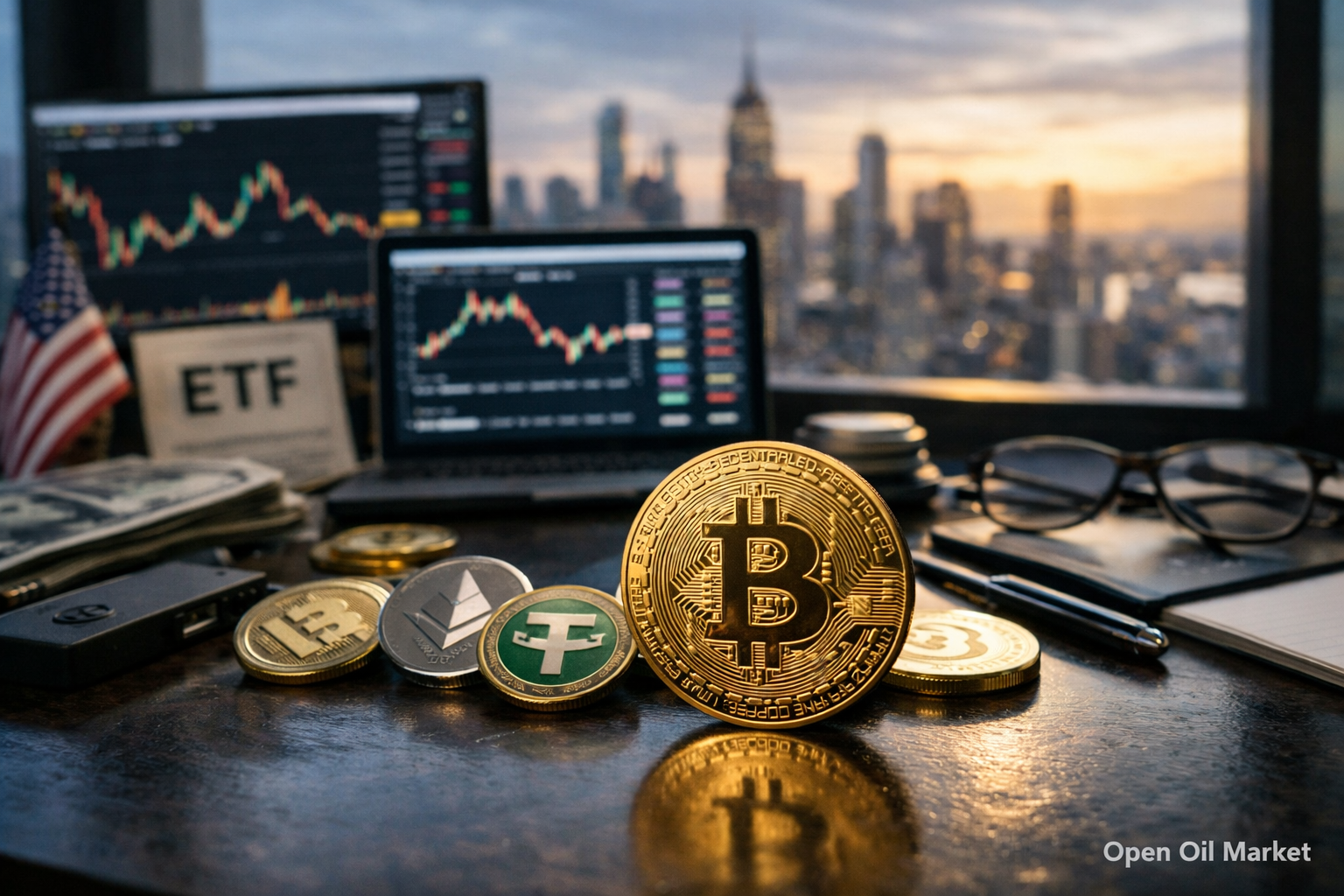
Current Cryptocurrency News as of February 21, 2026: Market Dynamics, Macroeconomic Influences and Regulations, Institutional Capital Flows, Ethereum and DeFi, and an Overview of the Top 10 Most Popular Cryptocurrencies.
The cryptocurrency market is entering the end of the week in cautious risk management mode: after notable volatility in February, participants are returning to fundamental questions — where is the "fair" price of risk, how quickly is leverage stabilizing, and how resilient is demand from institutional investors? For retail investors, this typically means shifting the focus from aggressive bets on altcoins to liquidity management, quality selection, and discipline regarding stop levels.
Cryptocurrency Market: Liquidity, Leverage, and Capital Behavior
In cryptocurrency news, the key signal from recent sessions is a decrease in risk appetite amid an "orderly" reduction in leverage. This does not necessarily indicate capitulation, but it is not a reversal either: the cryptocurrency market often undergoes a phase of "position alignment" when:
- margin positions are reduced, and the share of short-term speculative trades decreases;
- spreads and order book depth become more sensitive to large orders;
- capital "flows" into more liquid assets and stablecoins.
For investors, this is typically a period when it is essential to distinguish technical rebounds from sustainable trends and avoid "chasing" the market on impulse.
Macroeconomics: Interest Rates and the "Price of Liquidity" for Bitcoin and Altcoins
Bitcoin and major altcoins remain closely tied to global financial conditions. The cryptocurrency market reacts to expectations regarding interest rates, inflation, and the dollar's dynamics: easing financial conditions support risk assets, while a "hawkish" tone from central banks increases required yields and pressures valuations. Investors are focused on any data that could change the trajectory of rates in the US and Europe, as well as signs of economic slowdown in key regions (US, Eurozone, Asia).
Institutional Investors and ETFs: Capital Flows Matter More than Headlines
For institutional investors, "cryptocurrency news" increasingly boils down to one metric — capital flows, rather than emotional headlines. When inflows/outflows into exchange-traded instruments and funds become unstable, the cryptocurrency market typically enters a sideways range characterized by sharp intraday movements. This enhances the importance of strategy:
- step-wise buying and partial profit-taking on growth;
- reducing exposure to high-beta altcoins in favor of liquidity leaders;
- portfolio-level risk control (rather than on individual positions).
Regulation: The US, Europe, and Asia Set the Stage for the Next Cycle
The regulation of digital assets remains one of the main drivers — especially in the US, where legislative initiatives and the stance of regulatory authorities directly affect listings, infrastructure, and capital access. In Europe, the practice of applying regulations to crypto services is still evolving, while in Asia, models of "strict admission" and "regulatory sandboxes" are competing. For the global investor audience, the takeaway is clear: the clearer the rules of the game, the higher the chance of sustainable institutional demand — and the lower the premium for regulatory risk.
Ethereum and the Technological Agenda: Scaling, UX, and Security
Ethereum remains the foundational platform for DeFi and tokenization, so any updates to the roadmap and development priorities resonate in market sentiment. The focus is on scaling (throughput and transaction costs), enhancing user experience, and "strengthening" the foundational level of security. Investors typically evaluate such cryptocurrency news through the lens of two questions:
- will the costs of using the ecosystem decrease (fees and operational complexity);
- would trust in the infrastructure increase (security, resilience, predictability of updates).
Altcoins: Where is "Quality" and Where is Just Volatility?
In a phase of heightened uncertainty, the cryptocurrency market more frequently "rewards" liquidity and utility rather than promises. Sectors that typically perform better during such periods include:
- infrastructure L1/L2 with real user traffic and active development;
- stablecoin infrastructure and payment scenarios (where growth depends on turnover, not narrative);
- DeFi protocols with a clear revenue model and risk management.
Conversely, high-risk "stories" without sustainable economies are more likely to experience sharp downturns during any liquidity downturn.
DeFi and Security: The Market Matures but Risks Remain
On the global cryptocurrency market, the theme of cyber risks and hacks does not fade away: the higher the real value managed by smart contracts, the stronger the incentives for attacks. For investors, this means the necessity for basic hygiene:
- diversifying storage platforms and avoiding excessive permissions (approve) in wallets;
- prioritizing protocols with audits, a long history, and transparent risk management;
- understanding that yields in DeFi are always associated with technological and counterparty risk.
Top 10 Most Popular Cryptocurrencies (Liquidity and Market Capitalization Reference)
Below is a list of assets that most frequently belong to the global "first tier" in terms of liquidity and presence on major exchanges. This list is not a recommendation and does not imply a price assessment — it serves as a navigation guide for investors:
- Bitcoin (BTC)
- Ethereum (ETH)
- Tether (USDT)
- USD Coin (USDC)
- BNB (BNB)
- XRP (XRP)
- Solana (SOL)
- Cardano (ADA)
- Dogecoin (DOGE)
- TRON (TRX)
What It Means for Investors: A Checklist for the Coming Days
If you are reading this cryptocurrency news as an investor, a practical focus for the coming days looks like this:
- Macro: monitor data and comments from regulators that could change rate expectations.
- Capital Flows: observe whether inflows into Bitcoin- and Ethereum-based instruments stabilize and whether volatility decreases.
- Risk: manage leverage and position size; in a "digestion" phase of the market, preserving capital is more important than chasing rebounds.
- Quality: prioritize assets with liquidity, infrastructural value, and clear drivers.
- Security: reassess wallet settings and approaches to DeFi, especially if you regularly use smart contracts.
Overall, the cryptocurrency market remains sensitive to liquidity and regulation: sustainable growth typically begins not with isolated spikes, but with stabilizing macro expectations, restoring capital flows, and reducing technological risks.