Current Cryptocurrency News as of December 15, 2025: Trends in Bitcoin and Ethereum, Overview of the Top 10 Cryptocurrencies, Key Market Events, and DeFi Trends. A Global Analysis for Investors.
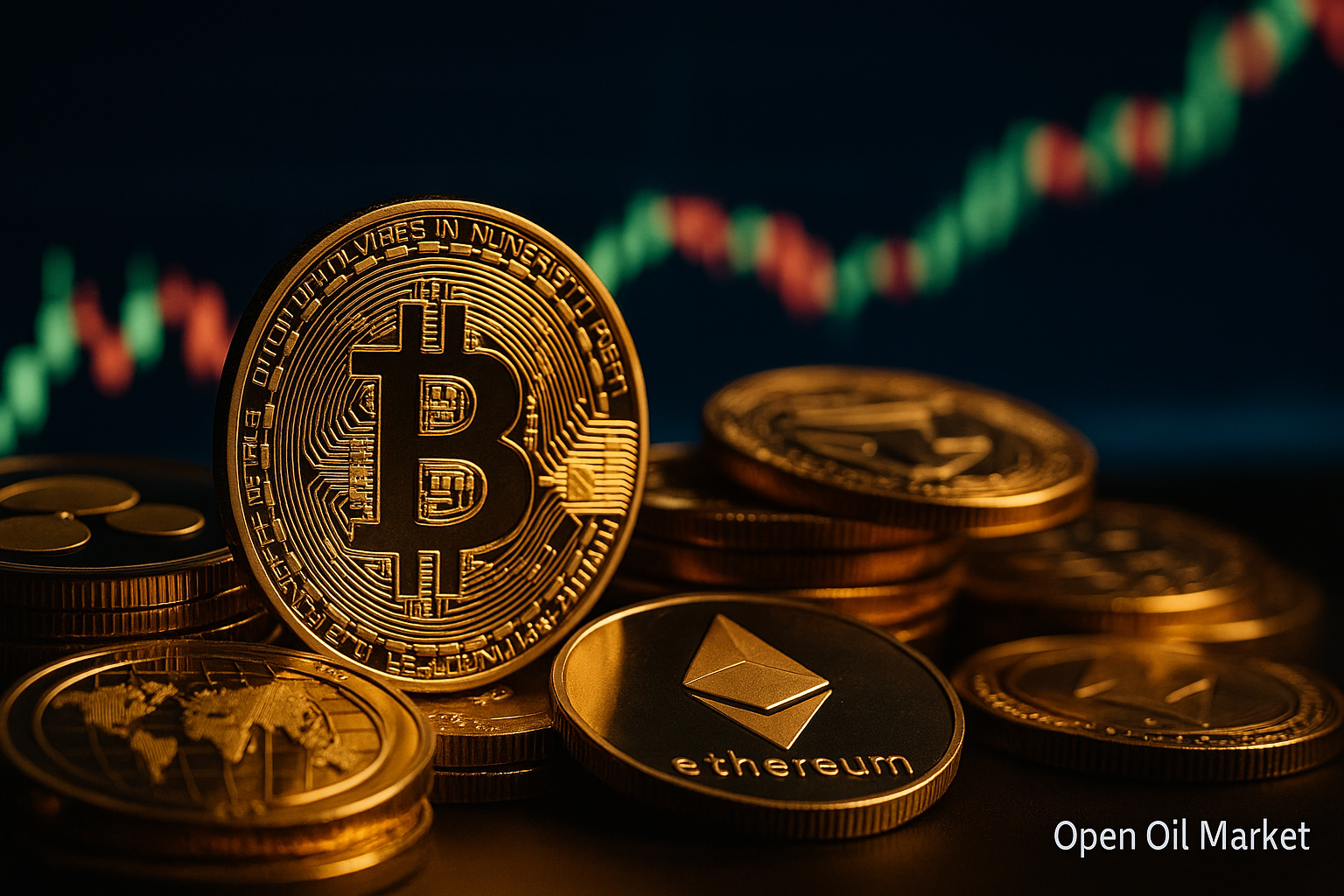
As the new week begins, the global cryptocurrency market remains near high levels following a volatile autumn conclusion. Over the weekend, Bitcoin fluctuated around the $90,000 mark, significantly higher than values at the beginning of the year, although still below the record peak of October. Ethereum consistently trades above $3,000, retaining much of its gain from the past year. The total market capitalization of digital assets exceeds $3 trillion, significantly more than a year ago. Investor optimism is fueled by expectations of a loosening monetary policy from the Fed and positive regulatory shifts. As volatility decreases, some traders are shifting their focus to altcoins, many of which hold their positions and are poised for growth under favorable conditions.
Cryptocurrency Market Overview
After a powerful rally and subsequent correction in the autumn, the crypto market is consolidating at the heights reached. In October, Bitcoin hit an all-time high (around $126,000), but external factors – such as heightened trade tensions in the U.S. – triggered a sharp decline in prices. Currently, the leading cryptocurrency trades near $90,000, attempting to build momentum for another upward push. As the weekend approached, Bitcoin managed to stay around $90,000, indicating sustained buyer interest. Moreover, in 2025, the correlation between Bitcoin and stock indices has notably increased – a sign that more traditional investors have entered the market.
Bitcoin: Attempting to Break the $100,000 Barrier
Bitcoin (BTC) continues to hover near a key level, aiming to break the psychological barrier of $100,000. The largest cryptocurrency experienced significant fluctuations in 2025: following the arrival of a crypto-friendly administration in the U.S., its price surged, reaching a record $126,000 in early October. However, a sharp correction soon followed due to negative news – such as new trade tariffs from Washington – becoming one of the largest downturns in recent years. Nevertheless, Bitcoin has avoided a prolonged decline: by November, sales stabilized, and in December, a cautious revival in demand appeared. Many traders hedged against the risk of a downturn (notably an increase in put option purchases with strikes ranging from $90,000 to $100,000), but a mass sell-off did not occur – the price decline was quickly met with interest from long-term holders. As a result, BTC ends the year at roughly the same level it began, with the risk of the first negative annual result since 2022 still looming. Meanwhile, institutional investors continue to accumulate coins: together, publicly traded companies hold hundreds of thousands of BTC. Many market participants anticipate that further easing of the Fed's policy and an expanded range of crypto ETFs could provide Bitcoin with a new impetus for growth in 2026.
Ethereum: Price Stability and Staking Effect
Ethereum (ETH), the second-largest cryptocurrency by market capitalization, shows resilience even after a pullback from autumn peaks. In early October, Ether rose to a local maximum of about $4,800 (close to its all-time high), and now it trades around $3,200. Although it did not conquer this peak on the first attempt, Ethereum's fundamental positions remain strong. Institutional investors continue to increase their presence: specialized funds based on ETH are experiencing regular capital inflows. One of Ethereum's key advantages is staking – holding ETH yields approximately 4% annually, enhancing the asset's investment appeal by combining price growth with regular income. Ethereum has long been the fundamental "fuel" for decentralized finance: thousands of DeFi protocols and NFT platforms operate on its blockchain. Network activity remains high, with approximately 2 million transactions processed daily, reflecting the extensive reach of the Ethereum ecosystem.
DeFi: Growth of the Decentralized Finance Sector
The decentralized finance (DeFi) sector experienced a new wave of development in 2025. The total value locked (TVL) in DeFi protocols rose to a record high of about $170 billion in the autumn before retreating to the current level of approximately $120 billion amid market correction. However, even the current volume is significantly higher than last year's levels, highlighting the increased interest in alternative financial services built on blockchain. Investors are increasingly utilizing decentralized exchanges, lending platforms, and stablecoin protocols in search of returns and flexibility outside the traditional banking system. One key trend of the year has been the tokenization of real-world assets (RWA) – ranging from bonds to real estate – through DeFi applications, attracting new institutional players to the market. The multi-chain ecosystem is expanding: alongside Ethereum, alternative networks are showing significant growth in the DeFi sector. For example, the Solana blockchain has attracted billions of dollars in liquidity to lending and exchange protocols due to its high transaction speed and low fees. Furthermore, some large banks and fintech companies are beginning to experiment with using DeFi platforms, indicating a gradual convergence of traditional and decentralized finance.
Other Leading Cryptocurrencies: Dynamics and Growth Factors
Among the largest cryptocurrencies by market capitalization, alongside BTC, ETH, and XRP, several popular altcoins have their own growth drivers:
- Binance Coin (BNB): The token of the largest exchange, Binance, remains at the top of the rankings. By the end of the year, BNB trades around $900, demonstrating relative stability amid broader market fluctuations. The Binance ecosystem, despite regulatory scrutiny, remains one of the most active in the industry. The BNB token is in demand for transaction fees on the exchange and in Binance Smart Chain applications, supporting its demand even during uncertain times.
- Cardano (ADA): A cryptocurrency focused on a scientific approach to blockchain development, Cardano confidently holds its place in the top 10. The project attracts long-term investors: recent updates to the Cardano network have improved the scalability of smart contracts and strengthened community trust. Although ADA's volatility persists, continuous technological progress and community support help the coin maintain its position among market leaders.
- Solana (SOL): Solana has regained its reputation following the challenges of 2022–2023 and has re-entered the ranks of the largest altcoins. The development of its application ecosystem and interest from the traditional business sector (for instance, Solana's integration by Visa for stablecoin payments) distinguish this project. Many view SOL as one of the main beneficiaries of future capital influx into the crypto market.
- Dogecoin (DOGE): The most well-known meme cryptocurrency continues to hold a place in the top 10. The price of DOGE was relatively stable in 2025, although community activity and media mentions still significantly influence its price. The unlimited supply limits its long-term growth potential, but the coin remains a popular speculative tool and often serves as the "first cryptocurrency" for newcomers.
- Tron (TRX): Tron has secured its spot in the top 10 cryptocurrencies for the first time. The success of its stablecoin ecosystem (with the network becoming a major hub for USDT due to low fees) and the growth of DeFi applications have strengthened the platform's position. Investors gained additional confidence from Tron Foundation's announcement of a buyback of TRX tokens worth up to $1 billion for reserves, demonstrating the team's belief in the asset's long-term value.
Regulation and Institutional Adoption
In 2025, a more defined and favorable regulatory environment for the crypto industry is forming globally. The United States took a significant step by passing its first comprehensive law on digital assets. This act establishes strict requirements for the issuance and backing of stablecoins (coins tied to fiat currencies like USDT and USDC), mandating issuers to maintain 100% backing and transparent reporting. Simultaneously, the SEC and CFTC are easing their approach to the industry: "sandboxes" for new projects have been launched, and spot trading of cryptocurrencies on regulated exchanges has been permitted. Collectively, U.S. policy has become noticeably more favorable to cryptocurrencies, stimulating industry growth in the national market.
The European Union has begun implementing the unified regulation MiCA (Markets in Crypto-Assets), which standardizes rules for crypto asset transactions across all member countries. MiCA introduces requirements for registration, disclosure of information, consumer protection, and anti-money laundering measures for sector companies. The first licenses under the new rules have already been issued, and the European market is becoming more transparent and mature. A unified regulatory framework allows for the legal provision of cryptocurrency services throughout the EU, attracting large fintech companies and banks to participate in the industry.
Asia is also striving to occupy leading positions. In Hong Kong, licensing for stablecoin issuers has been introduced, requiring full backing and regular audits, thereby strengthening the city's status as a crypto hub. Other centers (Singapore, UAE) are also easing regulations in a bid to attract blockchain businesses.
Concurrently, the integration of cryptocurrencies into the traditional financial system is on the rise. In 2025, the first spot Bitcoin ETFs were launched in the U.S., instantly attracting billions of dollars from institutional investors. The appearance of ETFs for Ethereum is also anticipated, further simplifying access for traditional capital to the crypto market. Meanwhile, payment giants are expanding support for digital currencies in their services: Visa has integrated stablecoin operations and blockchains into its global network, while PayPal has enabled millions of merchants to accept payments in cryptocurrencies. Such actions by major corporations reinforce the ties between traditional finance and the crypto world, confirming that digital currencies have firmly entered the mainstream.
Market Prospects: Expectations and Risks
As 2026 approaches, investors are assessing the prospects of the crypto market with measured optimism. On one hand, the factors driving growth in the past year – monetary policy easing, institutional capital inflows, and technological innovations – continue to be influential. If the macroeconomic environment remains favorable, many predict that Bitcoin and major altcoins could set new price highs in the coming year. On the other hand, recent volatility serves as a reminder of the risks that remain. Possible economic downturns, a new wave of speculative frenzy (for instance, surrounding AI stocks), or geopolitical events could temporarily dampen risk appetite. Nevertheless, the industry enters 2026 more mature: the participation of large corporations, progress in regulation, and successful examples of DeFi implementation instill confidence that even in the face of turmoil, the cryptocurrency market will recover faster and attract even more capital.