Cryptocurrency News, Saturday, December 13, 2025: Market Seeks Balance After Fed Rate Cut, Ethereum Shows Moderate Growth, Institutional Interest Remains Strong, Top-10 Cryptocurrencies and Market Prospects
As of the morning of December 13, 2025, the global cryptocurrency market has relatively stabilized following a volatile reaction to the U.S. Federal Reserve's decision to cut interest rates. The market leader, Bitcoin, briefly dipped below the psychological level of $90,000, but is now consolidating near this mark. Key altcoins are showing mixed dynamics: some are trying to recover recent losses, while others remain under profit-taking pressure from investors after the rally in the first half of the year. The overall market capitalization of the cryptocurrency market is maintained around $3.2–3.3 trillion, with Bitcoin dominance at about 59–60%. The Fear and Greed Index is in the "fear" zone, reflecting market participants' caution despite the theoretically positive move for risk assets by the regulator. Nevertheless, fundamental factors inspire optimism: institutional investors continue to increase their presence, major economies are forming clearer rules, and technological upgrades are improving blockchain infrastructure. In this overview, we will examine the latest trends and events in the industry: from the state of the top-10 coins to regulatory shifts, technological breakthroughs, institutional inflows, security issues, and future market prospects.
Top 10 Most Popular Cryptocurrencies
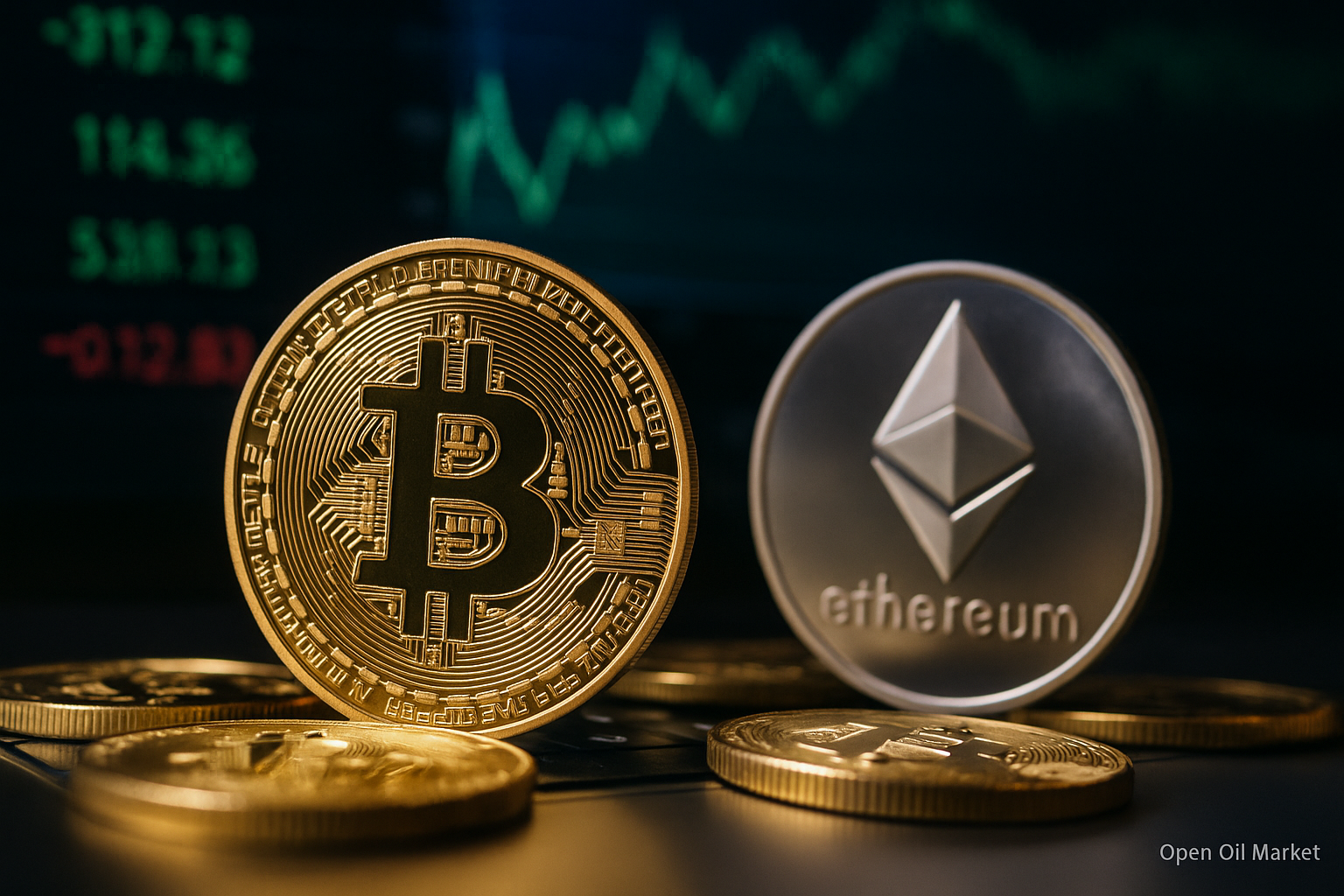
- Bitcoin (BTC) – The largest cryptocurrency, accounting for about 58–60% of the total market. In October, BTC reached a new all-time high (around $126,000), but the subsequent correction has brought the price down to its current ~$90,000. Despite the sharp volatility seen in recent months, Bitcoin remains the main indicator of sentiment in the crypto market and is perceived by investors as "digital gold" – a safe-haven asset with limited issuance (21 million coins) and growing recognition in traditional finance.
- Ethereum (ETH) – The second-largest coin by market capitalization and the leading platform for smart contracts. ETH is trading around ~$3,200, which is below its peak values from early autumn but indicates a recovery from the November slump. The Ethereum blockchain underpins decentralized finance (DeFi) and NFT ecosystems. Recently, the network successfully underwent a hard fork called Fusaka, which enhanced scalability and reduced fees – strengthening Ethereum's position in the market and laying the groundwork for further adoption.
- Tether (USDT) – The largest stablecoin pegged to the U.S. dollar at a 1:1 ratio. USDT remains a key source of liquidity on cryptocurrency exchanges, allowing traders to weather periods of volatility by "parking" capital in a stable asset. The market capitalization of Tether is estimated at approximately $180 billion, and its price consistently hovers near $1.00, making it a kind of "digital dollar" for the global crypto economy.
- XRP (Ripple Token) – A cryptocurrency focused on instant global payments. XRP firmly holds its place in the top-5 with a market capitalization of around $120 billion, at a price of approximately $2 per token. Interest in XRP notably surged in 2025 following favorable legal developments: the legal confrontation between Ripple and the SEC in the U.S. is nearing resolution, restoring investor confidence and driving price increases. The token is actively used in banking blockchain solutions for cross-border transfers and remains one of the most recognizable cryptocurrencies.
- Binance Coin (BNB) – The native token of the largest cryptocurrency exchange, Binance, and the base asset of the BNB Chain network. BNB is widely used for paying trading fees, participating in Launchpad token sales, and executing smart contracts in the Binance ecosystem. The coin is currently trading near $850, with a market capitalization of around $120 billion, allowing it to remain among the market leaders. Despite regulatory pressure on Binance in several jurisdictions, the limited supply of BNB and mechanisms such as regular token burns support its value and position in the top tier of cryptocurrency assets.
- USD Coin (USDC) – The second-largest stablecoin, issued by Circle and fully backed by reserves in U.S. dollars. USDC consistently trades at a rate of $1.00, with a market capitalization estimated at $75–80 billion. This coin is often favored by institutional investors and DeFi protocols due to its transparency and regular audits of reserves. Although in 2025, USDC's market share slightly declined in favor of the more popular USDT, this stablecoin continues to be regarded as one of the most reliable and regulated digital alternatives to the dollar.
- Solana (SOL) – A high-performance blockchain focused on scalability and minimal fees. The price of SOL hovers around $130 (capitalization of over $70 billion), significantly higher than early-year levels, despite a recent setback. In 2025, Solana significantly strengthened its infrastructure: a series of updates improved network stability (sharply reducing the number of outages from the previous year), and plans are in place to implement parallel transaction processing technologies for further scalability. The development of DeFi and GameFi projects on Solana, along with expectations for the launch of exchange-traded funds based on this asset, fuel demand for SOL and help it secure its position among leading cryptocurrencies.
- Tron (TRX) – A blockchain platform known for its active use in entertainment and for issuing stablecoins. TRX trades around $0.28 with a market value of ~$26 billion. The Tron network attracts users with low fees and high throughput, leading to significant circulation of USDT issuance on its platform. The project, led by Justin Sun, continues to develop, supporting decentralized applications (including DeFi and games), which allows TRX to remain in the top-10 of global crypto assets.
- Dogecoin (DOGE) – The most recognized meme coin, which started as a joke but has since transformed into a cryptocurrency with a multibillion-dollar capitalization (over $20 billion at a price of ~$0.14). The popularity of DOGE is bolstered by an active community and periodic attention from celebrity figures (notably Elon Musk). The volatility of this coin is traditionally high, but Dogecoin has shown remarkable resilience in maintaining investor interest throughout several market cycles, remaining the "people's coin" and a constant participant in the top ten cryptocurrencies.
- Cardano (ADA) – A major blockchain platform using the Proof-of-Stake algorithm, evolving with a focus on a research-driven approach. ADA trades around $0.40 (market capitalization of about $15 billion), significantly retracting from its historical highs. In 2025, the Cardano team continued technical updates aimed at improving scaling of the network – for instance, solutions like Hydra have been implemented to create off-chain channels, which should increase throughput in the long term. Despite intense competition in the smart contract segment and relative price stagnation, Cardano maintains one of the most dedicated communities that believe in the project's long-term potential.
Global Market Overview
Overall, the global cryptocurrency capitalization is now close to the levels observed during the peak of the autumn rally. However, recent weeks have brought a notable correction. As of the morning of December 13, the total value of the cryptocurrency market remains approximately 20% below the historical peak recorded earlier this year, and a few percent lower than a week prior. All major coins in the top-10 have shown declines in recent days amid the general market pullback. Bitcoin, after a sharp spike and subsequent retracement, is consolidating around $90,000 – investors are trying to decipher whether the recent Fed rate cut will serve as a catalyst for renewed growth or a signal for caution. Interestingly, traditional stock indices (S&P 500, Nasdaq) reacted positively to the Fed's decisions, while crypto assets, conversely, lost some value. Analysts note an increasing correlation between Bitcoin and high-tech stocks: in 2025, both markets experienced similar rises and falls linked to fluctuating sentiment surrounding artificial intelligence prospects and monetary policy changes.
After an impressive rally in the beginning of the year (largely provoked by capital inflows in anticipation of the first spot Bitcoin ETFs being approved and the arrival of a more crypto-friendly administration in the White House), the cryptocurrency market has faced a period of turbulence. The October drop, triggered by unexpected macroeconomic moves from the U.S. (imposing new trade tariffs and increasing geopolitical tensions), resulted in a record wave of liquidations of margin positions amounting to over $19 billion. Since then, Bitcoin and several major altcoins have struggled to return to their recently achieved peaks. November turned out to be one of the worst months in recent years: the month-to-month price drop was the largest since 2021, significantly dampening the optimism of some investors.
Nonetheless, when comparing current quotes to the start of 2025, many crypto assets still show substantial growth. Several altcoins (e.g., XRP or Solana), despite the current dip, are trading significantly above their late 2024 levels, thanks to previously achieved successes (regulatory clarity regarding XRP, technological breakthroughs for Solana, and others). Bitcoin's share in total capitalization hovers around 55–60%, indicating investors' intent to hold a significant portion of funds in the most reliable digital asset during market uncertainty. Sentiment among players can currently be characterized as cautious optimism: the Fear and Greed Index for cryptocurrencies, although slightly up after recent turmoil, still predominantly signals an element of fear. Market participants are awaiting new signals — from macroeconomic data to progress in launching new investment products (e.g., upcoming crypto-ETFs or institutional services) — before a confident upward trend can resume.
Regulatory News
- United States: The regulatory landscape for the crypto industry in 2025 has become significantly clearer. After years of discussions, U.S. authorities have greenlit the first spot exchange-traded funds (ETFs) for Bitcoin and Ethereum, marking an important milestone for the legitimization of crypto assets. Additionally, financial regulators have officially allowed U.S. banks to act as custodial keepers of cryptocurrencies for clients, paving the way for pension and investment funds to invest safely in digital assets. Despite these advancements, regulatory bodies continue to monitor the market closely: the SEC still requires compliance with securities laws in token issuance, and Congress is discussing new rules for stablecoins and crypto exchanges with a focus on investor protection.
- Europe: A comprehensive regulatory framework, MiCA (Markets in Crypto-Assets), has come into effect in the European Union, establishing uniform rules for the cryptocurrency market within the EU. This means clearer requirements for token issuers, crypto exchanges, and wallet providers across areas such as registration, capital adequacy, and anti-money laundering measures. European crypto firms have generally welcomed MiCA, as standardized regulation facilitates their operations across all markets in the Union. Concurrently, authorities in various EU countries are continuing initiatives to implement CBDCs (central bank digital currencies) and test blockchain solutions in the public sector.
- Asia and Other Regions: In the Asia-Pacific region, a mixed approach to cryptocurrencies prevails. On one hand, the financial hub of Hong Kong launched regulated platforms for retail cryptocurrency trading in 2025, and Singapore expanded licensing requirements while encouraging blockchain innovation. On the other hand, mainland China continues to impose strict limitations on cryptocurrency operations for the populace, focusing on its own digital yuan. In several other countries (e.g., UAE, Switzerland), efforts to establish crypto-friendly jurisdictions with clear rules for businesses continue to attract blockchain startups and investment funds. Overall, by the end of 2025, regulatory clarity in key jurisdictions has increased significantly, reducing legal risks for the industry and enhancing trust from traditional investors.
Blockchain Technological Updates
- Ethereum – Fusaka Hard Fork: In December, the Ethereum network successfully activated a major protocol update codenamed Fusaka. This hard fork marks the second significant upgrade for Ethereum in the year and aims to enhance the blockchain's base throughput. The update increased the gas limit per block, improved compatibility with Layer 2 (L2) solutions, and included optimizations for smart contracts. These changes will help lower transactional costs and speed up transaction processing on the network, considering the increasing load from DeFi applications. Ethereum continues to follow its roadmap directed toward further scalability (with plans for Danksharding) and enhancing the network's security.
- Bitcoin – Scalability and New Use Cases: In 2025, there were no hard forks in Bitcoin's main network; however, the ecosystem surrounding the first cryptocurrency has evolved dynamically. The capacity of the Lightning Network (Layer 2, designed for fast micropayments) reached record levels in terms of total channel capacity, expanding Bitcoin's practical application in retail payments and transfers. At the same time, the Bitcoin community is actively discussing several improvement proposals (BIPs) aimed at increasing the network's privacy and functionality – such as partially-signed transaction mechanisms and so-called "covenants" for more flexible fund management. Moreover, cross-chain initiatives have also gained traction: the emergence of Bitcoin Ordinals protocols and other solutions for issuing tokens on the BTC network has demonstrated that even conservative Bitcoin can support new use cases (issuing NFT collections, stablecoins on the Bitcoin blockchain, etc.) without altering its fundamental consensus.
- Other Blockchain Projects: Among altcoins, 2025 has been marked by several technological breakthroughs. The Solana platform, after critical updates, has significantly enhanced operational reliability – the outages that characterized the previous year have practically ceased. Solana developers are preparing to implement parallel transaction execution technologies (for instance, through the client-accelerator Firedancer), which could drastically increase network throughput. Cardano has made progress in implementing scaling protocols: the launch of the Hydra solution for creating off-chain channels should increase transactions per second without overloading the main network. Additionally, the rapid development of Layer 2 (L2) networks for Ethereum, such as Polygon, Arbitrum, and Optimism, has solidified their place as an integral part of the industry, offering cheaper and faster transactions. The total value locked (TVL) on these L2 platforms has significantly grown over the year, reflecting the demand for solutions to offload the main Ethereum network. New projects at the intersection of blockchain and artificial intelligence have also emerged, promising synergistic opportunities (such as decentralized AI platforms), albeit currently in early stages of development. Overall, technological progress in the crypto industry shows no signs of slowing down: each update enhances the efficiency, security, and attractiveness of blockchains for businesses and users.
Institutional Investments
- Breakthrough with Crypto ETFs: The outgoing year has been marked by a historic breakthrough for institutional integration – for the first time, spot ETFs for cryptocurrencies have appeared on traditional exchanges. In the U.S., followed by a number of other countries, regulators approved exchange-traded funds that invest directly in Bitcoin and Ethereum. Famous Wall Street firms (including investment giant BlackRock) have become issuers of such funds. Since trading began, they have attracted significant capital: the total influx in the first months amounts to billions of dollars. For instance, on one December day, U.S. Bitcoin ETFs received over $200 million in investments. The emergence of accessible exchange instruments based on crypto assets has significantly increased trust among conservative players – pension funds, insurance companies, and banks that previously shunned direct purchases of digital coins.
- Involvement of Banks and Payment Systems: Major banks and financial corporations have expanded their presence in the crypto market in 2025. Many Wall Street banks have launched custodial services for storing cryptocurrencies for affluent clients, as well as established trading divisions for digital assets. Global payment giants have begun integrating blockchain technologies into their products: for example, PayPal released its own stablecoin (PYUSD) to simplify digital transactions, while Visa implemented the capability for cross-border payments using the Solana blockchain and the USDC stablecoin, significantly speeding up and reducing the cost of international transactions. These steps by traditional financial institutions demonstrate an increasing institutional demand for cryptocurrencies and recognition of them as a fully-fledged asset class.
- Corporate Treasury and Venture Capital: Institutional acceptance of crypto assets has also manifested in the corporate sector. An increasing number of S&P 500 companies are including Bitcoin in their treasury reserves or investing in blockchain startups. Notorious enthusiast Michael Saylor, through his company MicroStrategy (which has transformed into a holding company), continued to accumulate BTC in its balance sheet, although after the autumn volatility, he warned of the possibility of another "crypto winter." Venture investments in the sector have also picked up: major funds (Andreessen Horowitz, Binance Labs, etc.) announced the launch of new investment products aimed at Web3, decentralized finance, and blockchain+AI projects. The influx of institutional and venture capital in 2025 supported the market during downturns and provided funding for infrastructure developments.
- Role of Sovereign Funds and States: An important trend has been the increasing involvement of governmental structures in the crypto market. Sovereign wealth funds from Middle Eastern and Asian countries have made significant investments: from acquiring stakes in global cryptocurrency exchanges to directly purchasing top cryptocurrencies for their portfolios. Some central banks (e.g., El Salvador, where Bitcoin is an official means of payment) have increased their cryptocurrency reserves against a backdrop of a declining dollar. In the U.S., regulators have finalized the legal framework allowing banks to service clients wishing to invest in digital assets, facilitating access to cryptocurrencies through familiar financial intermediaries for pension and investment funds. These shifts indicate that institutional and even state actors have firmly entered the crypto ecosystem, enhancing market liquidity and stability.
Major Hacks and Scams
- Record Hacker Attacks: Despite the overall maturation of the industry, 2025 has become one of the most problematic years in terms of the volume of funds stolen due to hacks. In the first six months, criminals stole cryptocurrencies worth over $2 billion, and by the end of the year, this figure approached historic lows. The most high-profile incident was a February attack on one of the leading exchanges, Bybit, when hackers withdrew around $1.5 billion in digital assets – an unprecedented amount for a single hack. Experts estimate that this attack was conducted by North Korean hacker groups, who were active in 2025 and cumulatively responsible for about $2 billion in stolen funds. The stolen assets were subsequently laundered through complex transaction chains, mixers, and decentralized exchanges, complicating their traceability.
- Vulnerabilities in DeFi Protocols: Decentralized finance platforms have also frequently become targets. Mid-year saw a wave of attacks on DeFi applications: for instance, an exploit related to vulnerabilities on the popular decentralized exchange GMX resulted in losses of approximately $40 million, while an insider scheme at the Indian centralized exchange CoinDCX led to around $44 million being withdrawn. In total, five of the largest hacks on DeFi platforms in July caused users losses exceeding $130 million. These incidents underscore the persistent risks associated with smart contracts: coding errors, insufficient security audits, and sophisticated attack methods result in immediate financial losses, leading DeFi users to remain especially vigilant.
- Frauds and Legal Consequences: Law enforcement agencies across various countries have intensified the fight against organizers of major crypto scams from the past years in 2025. In New York, the trial of Do Kwon, co-founder of the failed stablecoin project Terra/Luna, is nearing its conclusion: prosecutors are seeking more than 10 years in prison for him for defrauding investors of billions of dollars. Recall that the collapse of the Terra ecosystem in 2022 triggered a chain reaction of bankruptcies (including the high-profile fall of the FTX exchange) and became one of the most instructive events for the industry. Additionally, international investigations into the activities of the creators of the OneCoin pyramid scheme and a number of dubious DeFi projects suspected of defrauding investors continue. Regulators and police have markedly intensified their crackdown on fraudsters this past year: dozens of arrests were made globally, hundreds of millions of dollars in crypto assets were confiscated, and the first real sentences were handed to top executives of bankrupt crypto companies. All this demonstrates that the era of unregulated schemes is nearing its end. Nonetheless, users should remain vigilant — schemes promising quick riches, "one-day" projects (rug pulls), and phishing attacks continue to emerge, especially around new tokens and NFT collections.
Conclusions and Prospects
As 2025 draws to a close, the cryptocurrency market presents a mixed picture. On one hand, the industry has achieved impressive successes: new price records were established in the first half of the year, digital assets became more deeply integrated into traditional finance (through the launch of ETFs and banking services), and technological progress enhanced the reliability and scalability of blockchains. On the other hand, high volatility and a series of upheavals (both external and internal) have reminded investors of the inherent risks of this asset class. In the near term, much will depend on the macroeconomic environment: further easing of monetary policy by leading central banks may spur demand for risk assets; however, persistent uncertainty in the global economy (including the potential for a "bubble" in the high-tech stock market) will continue to influence sentiment in crypto as well.
Nevertheless, fundamental trends point to continued maturation and growth of the crypto industry. Increased institutional participation brings greater liquidity and stability to the market, while expanding regulatory clarity in key regions reduces barriers for new major players. Technological innovations are broadening the applications of cryptocurrencies — from payment services and decentralized finance to gaming platforms and metaverse projects. Investors are advised to maintain a balanced approach: diversifying their portfolios within major cryptocurrencies, closely monitoring regulatory news and the adoption of crypto instruments by large companies, and, importantly, not neglecting cybersecurity principles when dealing with digital assets. Entering 2026, the crypto market remains a dynamic and global phenomenon capable of surprising with rapid growth as well as challenging investors with unexpected hurdles. It is in such conditions that new opportunities emerge for those investors willing to think strategically and for the long term.