Current Cryptocurrency News as of February 3, 2026: Bitcoin Holds Key Level After Deep Correction, Altcoins Trading at Multi-Month Lows, Institutional Investors Use Dip for Long-Term Purchases, Overview of Top 10 Popular Cryptocurrencies, and Market Outlook.
As of the morning of February 3, 2026, the global cryptocurrency market remains tense, yet signs of stabilization are beginning to emerge following a recent selloff. Bitcoin (BTC) has attempted to find a local bottom around the psychologically significant $75,000 mark, rebounding from these levels. The first cryptocurrency is currently consolidating in the $78,000–$80,000 range, having lost approximately 35% from its all-time high (nearly $125,000 in October 2025). The total cryptocurrency market capitalization has dropped below $3 trillion (down from a peak of over $4 trillion in autumn), reflecting some capital flowing out of risk assets amid global economic uncertainty. Major altcoins in the top 10 are also trading at multi-month lows, declining by 30–50% from recent highs. Investors are exhibiting caution: the sentiment index (fear and greed) remains in the "fear" zone, contrasting sharply with the euphoria of a few months ago. Nevertheless, some major players are taking advantage of the current decline as an opportunity to enter the market, anticipating long-term growth in the sector.
Market Overview: Seeking Stabilization After the Selloff
At the end of 2025, the cryptocurrency market was on the rise, but the trend sharply reversed at the beginning of 2026. A combination of harsh external conditions—from tightening monetary policies to geopolitical risks—has led to a reduced risk appetite among global investors. January 2026 became the most challenging month in a while: total cryptocurrency market capitalization shrunk by around a quarter from peak values. Trading activity shifted towards stablecoins, as many traders temporarily moved funds into these "digital dollars" to preserve capital. As February begins, sentiment remains cautious—market participants are waiting for clarity on the macroeconomic situation and regulatory measures before returning to active purchases of crypto assets. Nevertheless, after the sharp declines of recent weeks, a stabilization attempt has been noted in the market: the pace of declines has slowed, and the most resilient coins are attempting to hold important support levels.
Bitcoin: At Key Support After Annual Low
In recent days, Bitcoin (BTC) dipped to its lowest level since spring 2025, briefly breaching the ~$75,000 mark. This price has become a new local minimum following last year's record rally. From the October peak (~$125,000), Bitcoin has seen a decline of approximately 35–40%, partly due to a mass profit-taking by early investors and reduced market liquidity during the holiday period. Nevertheless, the price held above ~$75,000: at the beginning of the week, BTC rebounded and is currently trading around $78,000–$80,000, which is close to a significant support zone. Bitcoin's market capitalization still exceeds $1.8 trillion, dominating roughly 60% of the entire cryptocurrency market. Experts note that even after the correction, the flagship cryptocurrency remains one of the largest financial assets globally, and long-term holders ("whales") are largely not in a rush to sell their coins. They view Bitcoin as a strategic reserve and an analog of "digital gold." Furthermore, several public companies have announced their intention to utilize the price decline: for instance, the fintech holding Strategy (formerly known as MicroStrategy) reported that it purchased another ~855 BTC for $75 million at the end of January. Despite the average purchase price of these BTC (~$88,000) exceeding the current price, the company demonstrates confidence in Bitcoin's long-term value and plans to maintain and increase its crypto reserves. Such interest from "big players" reinforces the market's belief in the strong fundamentals of BTC, even as short-term volatility remains high.
Ethereum: Price Pressure and Strong Fundamentals
The second-largest cryptocurrency by market capitalization, Ethereum (ETH), is also experiencing prolonged price declines. Since autumn 2025, ETH's price has halved from its peak (~$5,000) and recently dipped below $2,300. During the January selloff, Ethereum lost more than 10% in a single day, while waves of automatic liquidations on derivative exchanges exacerbated the decline. The current price of ETH fluctuates around ~$2,400–$2,500, significantly lower than its all-time high; however, Ethereum continues to play a key role in the crypto industry. The network is successfully evolving: in January, another technical hard fork was executed aimed at increasing scalability and efficiency of the blockchain. Additionally, the growth of Layer-2 solutions continues, which reduce the load on the main network and lower fees. A significant portion of the total ETH supply remains locked in staking or held long-term, limiting the coin's availability in the market. Institutional interest in Ethereum, though reduced amid the overall correction, remains significant: in 2025, the first Ethereum ETFs emerged in the U.S., attracting billions in investments. Large funds and financial companies continue to include ETH in their long-term crypto portfolios alongside Bitcoin, given Ethereum's fundamental importance to the DeFi, NFT, and various dApp ecosystems. Thus, despite temporary price pressures, the fundamental indicators of the ETH network remain strong, instilling optimism about its long-term prospects.
Altcoins: Selloff and Capital Redistribution
The broader altcoin market has been under significant pressure, becoming the epicenter of the recent selloff. Many previously rapidly growing tokens, led by some top-altcoins, have lost substantial value at the beginning of 2026 as investors cut their riskiest positions. Capital is flowing from highly volatile alternative coins into more stable assets or out of the crypto market entirely, as evidenced by the increased share of stablecoins and Bitcoin's strengthened dominance. BTC's share of the overall market capitalization has exceeded 60% again, indicating that some funds have shifted from altcoins to the flagship asset.
Only recently, coins like XRP, Solana, and BNB captured investor attention with their outperformance driven by positive news. For instance, the XRP token (Ripple) surged to ~$3 last summer following a notable legal victory for Ripple in the U.S., returning to the forefront of the market. However, by early February, XRP had retraced approximately half of that peak and is now trading around $1.5, following the overall downward trend. Solana (SOL) displays a similar pattern: after an impressive spike above $200 in autumn 2025 due to ecosystem recovery, SOL has also corrected and is currently just above $100, still significantly higher than last year's lows. Binance Coin (BNB), despite prolonged regulatory risks surrounding the Binance exchange, remained relatively resilient until recently, even reaching records of ~$880 in 2025; however, it has decreased to ~$500 since January against the overall market downturn.
Other major altcoins in the top ten—such as Cardano (ADA), Dogecoin (DOGE), and Tron (TRX)—are also under pressure and trading significantly below their peak levels. Nevertheless, they retain their top 10 standings due to still high market capitalizations and community support. In an environment of increased uncertainty, many market participants prefer to ride out the turbulence in stablecoins (USDT, USDC, etc.) or Bitcoin. This limits the influx of new capital into the altcoin segment until the overall situation clarifies. In the future, interest in altcoins may revive if Bitcoin stabilizes and the risk appetite returns, but caution and preference for the most reliable digital assets prevail in the near term.
Regulation: Global Drive for Clear Rules
Worldwide, regulatory bodies have intensified their work on rules for the cryptocurrency industry amid its rapid growth. **Key regulatory directions at the beginning of 2026 include:**
- U.S.: The administration is promoting a comprehensive digital asset legislation (Digital Asset Market Clarity Act) aimed at clearly defining regulators' jurisdiction (SEC and CFTC) and establishing clear rules for market participants. The initiative also discusses requirements for 100% backing of stablecoins to enhance transparency and trust in digital dollar tokens. Although consideration of this bill in Congress has stalled due to disagreements (e.g., on yield issues in DeFi), it is expected that work will continue in the coming months, given substantial federal support. Meanwhile, U.S. financial regulators continue oversight through targeted measures: at the end of 2025, the SEC actively shut down fraudulent schemes (such as pyramid schemes disguised as AI investments), and legal precedents like Ripple's victory regarding XRP gradually clarify the legal status of key crypto assets.
- Europe: Since January, the European Union's MiCA regulation has come into force, establishing transparent rules for cryptocurrency operations across EU nations. Moreover, the implementation of a tax reporting standard for cryptocurrencies (DAC8) is approaching—new rules effective in 2026 will require companies to report users' transactions to combat tax evasion. These measures are expected to standardize oversight and reduce legal uncertainty for businesses and investors in the European crypto market.
- Asia: Regulators in Asian financial hubs are striving to find a balance between control and attracting innovation. For example, Japan plans to ease the tax burden on cryptocurrency operations (even considering a reduction of the trading tax rate to about 20%) and is looking into launching the first crypto ETFs to strengthen the country's position as a progressive digital asset hub. In Singapore, Hong Kong, and the UAE, licensing regimes for crypto exchanges and blockchain projects are being introduced—this enables authorities to attract tech companies while simultaneously providing investor protection. The overall global trend is shifting from outright bans and fragmented regulatory actions to the integration of the crypto market into the existing financial system through clear norms and licensing. It is expected that as clearer and more unified rules emerge, the trust of significant institutional players in the crypto industry will grow, which will benefit the market in the long term.
Institutional Trends: Cautious Pause and Selective Purchases
Following a record influx of institutional capital into crypto funds in 2025, the beginning of 2026 has marked a pause. The sharp rise in market volatility has led to a temporary outflow of funds from several crypto ETFs and trusts: funds have partially taken profits and reduced risks while awaiting stabilization. According to analytical firms, over the past weeks of January, more than $1 billion was withdrawn from U.S. spot Bitcoin ETFs, alongside notable outflows from Ethereum funds. These figures reflect the heightened caution of "smart money"—large investors and managers—who, amid the market decline, have decided to decrease their exposure to crypto assets.
Nonetheless, strategic interest in digital assets has not disappeared. Major players are not abandoning long-term plans in the cryptocurrency space. For example, in January, exchange operator Nasdaq lifted position limits on options for crypto ETFs, equating their conditions to those of conventional commodity ETFs—this step expands hedging opportunities for institutional traders and demonstrates further integration of crypto products into traditional markets. Public companies holding cryptocurrencies also maintain their positions despite the price declines. One of the largest corporate holders of Bitcoin, the aforementioned Strategy holding, has made it clear that it maintains long-term confidence in BTC and is ready to increase its reserves during price drops. The company's management hinted that current levels are close to the average cost of its Bitcoin portfolio (~$76,000 for BTC) and are considered attractive for additional purchases. Overall, many institutional investors have now adopted a wait-and-see position: some have reduced their share of crypto assets in the short term, but strategic initiatives (infrastructure development, product launches, investing in crypto startups) continue. With improving macro conditions and clarity in regulatory rules, major financial players may resume increasing their investments in cryptocurrencies at an accelerated pace.
Macroeconomics: Tight Policies and Flight to Safe Assets
The macroeconomic backdrop at the beginning of 2026 remains challenging for risk assets, directly impacting the cryptocurrency market. In the U.S., there has been a leadership change at the Federal Reserve, with Kevin Warsh—a known proponent of a stricter monetary policy—being nominated as the new head of the Fed. Expectations for maintaining high interest rates and possible balance sheet reductions have heightened investor concerns, as an abundance of liquidity in recent years had fueled the cryptocurrency rally. At the January meeting, the Fed left the key rate unchanged (3.5–3.75%); however, the regulator's hawkish rhetoric indicates a readiness to curb inflation by any means. This has intensified the capital outflow from risk assets into safe havens.
The political environment has further contributed to the negative backdrop. By the end of January, the U.S. faced the threat of a government shutdown due to budget disagreements. Although Congress managed to reach a last-minute temporary agreement to avoid a shutdown, the possibility of such an event heightened market nerves. Meanwhile, trade risks have escalated: the Trump administration threatened to impose new high tariffs on several countries (including NAFTA partners and the EU)—even ultimatums regarding Greenland had been issued, putting transatlantic relations on the brink of a trade war. In Asia, economic signals are also concerning: Japan saw a spike in government bond yields to multi-year highs at the beginning of the year, destabilizing the local market and provoking a portion of global liquidity to flow out of risk instruments. All these events have triggered a classic "flight to quality" mechanism—investors fleeing to quality and safe assets.
Precious metal prices have continued to set records due to heightened demand. Gold in the global market has surpassed $5,000 per troy ounce, establishing a new all-time high, while the U.S. dollar index (DXY) has strengthened significantly. As a result, Bitcoin and other crypto assets temporarily lost their “digital gold” status in the eyes of some investors, who opted to transfer capital into traditional safe havens amid uncertainty. For a brief period, high-liquidity instruments—government bonds, the dollar, and gold—became the favorites over cryptocurrencies. Nonetheless, as soon as the macroeconomic situation begins to clarify (for example, if the Fed signals towards easing policy or geopolitical tensions lessen), interest in the crypto market has the potential to revive. Historically, cryptocurrencies have demonstrated the ability to recover swiftly after periods of turbulence, particularly when external threats retreat and global risk appetite returns.
Top 10 Most Popular Cryptocurrencies
As of today, the top ten largest cryptocurrencies by market capitalization include the following assets:
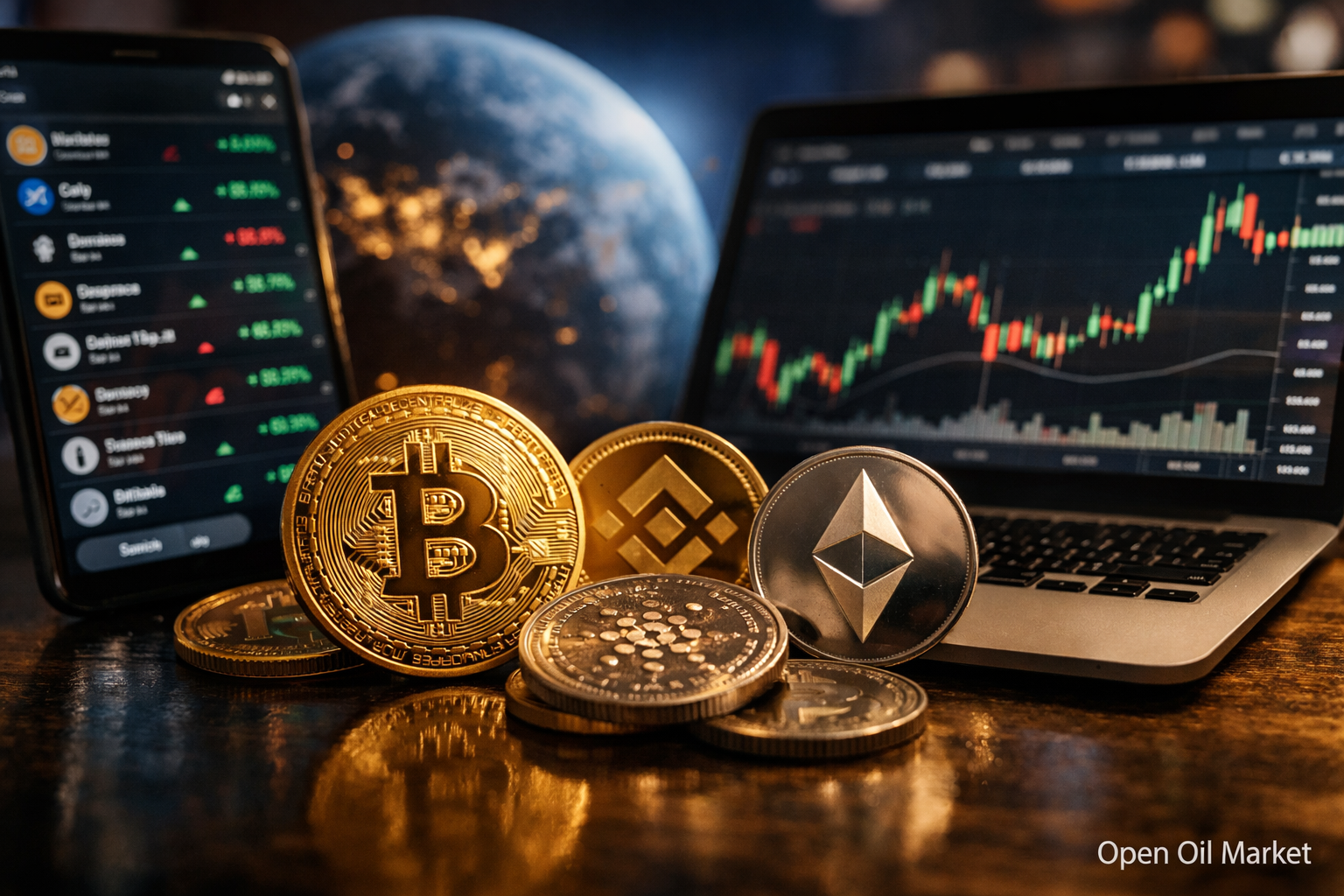
- Bitcoin (BTC) – the first and largest cryptocurrency, dominating ~60% of the market. BTC is trading around $80,000 after a recent correction, remaining for many investors the primary "digital gold" and the core of crypto portfolios.
- Ethereum (ETH) – the second-largest crypto asset and leading smart contract platform. The current ETH price is approximately $2,400; Ether underpins the DeFi, NFT ecosystems, and many dApps, maintaining its key relevance in the industry.
- Tether (USDT) – the largest stablecoin pegged to the U.S. dollar 1:1. USDT is widely used for trading and capital storage, providing market liquidity; its market cap of around $80 billion reflects its demand in the ecosystem.
- Binance Coin (BNB) – the native token of the global crypto exchange Binance and the BNB Chain blockchain. It provides discounts on fees and fuels DeFi applications. After a correction, BNB is priced around $500; despite regulatory pressure, the coin remains in the top five due to its wide range of applications.
- XRP (Ripple) – the token of the Ripple payment network for fast cross-border transfers. XRP is trading around $1.5 (approximately half of its multi-year high); thanks to the legal clarity of its status in the U.S. and interest from funds, XRP retains its position among the largest cryptocurrencies.
- USD Coin (USDC) – the second most popular stablecoin from Circle, fully backed by dollar reserves. USDC is known for its transparency and regulatory compliance; it is widely used in trading and DeFi (market cap around $30 billion).
- Solana (SOL) – a high-performance blockchain platform known for low fees and transaction speeds. In 2025, SOL reached over $200, attracting investor attention; however, it is now trading at approximately half that price (slightly above $100) after the market correction, remaining one of the leading protocols for DeFi and Web3.
- Cardano (ADA) – the cryptocurrency of the Cardano platform, developed with an academic approach. ADA retains its spot in the top ten due to its large market capitalization and active community, although its price (~$0.50) is significantly lower than historical highs. The project continues its technical updates, strengthening the foundation for future growth.
- Dogecoin (DOGE) – the most recognized "meme" cryptocurrency that started as a joke but became a mass phenomenon. DOGE holds around $0.10; the coin is supported by a dedicated community and periodic attention from celebrities. Despite increased volatility, Dogecoin still ranks among the top ten coins, demonstrating surprising resilience of interest.
- Tron (TRX) – the token of the Tron blockchain platform, focused on decentralized applications and digital content. TRX (~$0.25) is in demand for issuing and transferring stablecoins (a significant portion of USDT circulates on the Tron network due to low fees), helping it to remain in the top ten alongside other market leaders.
Outlook and Expectations
In the short term, sentiment in the cryptocurrency market remains uncertain and likely negative. The “fear and greed” index, which has dipped into the "fear" territory, indicates prevailing cautious sentiments among investors. Analysts warn that if macroeconomic risks persist, price corrections could continue: some expert forecasts suggest potential declines for Bitcoin toward $70,000–$75,000 if current support levels are breached. The heightened volatility of recent weeks and waves of forced liquidations of margin positions serve as reminders of the necessity of strict risk management when working with crypto assets.
Nonetheless, many specialists hold a positive outlook on the medium- and long-term prospects of the industry. Each downturn phase has historically led to a "cleansing" of the market from excessive speculative capital and laid the groundwork for a new growth phase. The industry continues to advance technologically: new projects are emerging, infrastructure is improving, and traditional financial institutions are integrating blockchain solutions more deeply. The largest global companies have not lost interest in cryptocurrencies—instead, they view the current retreat as an opportunity to strengthen their positions. Historically, after periods of rapid growth (such as in 2025), cool-down and price consolidation phases often follow before the market resumes an upward trend.
Fundamental drivers of demand for cryptocurrencies remain strong: mass adoption of distributed ledger technologies, growth of decentralized finance, and development of Web3 continue irrespective of short-term price fluctuations. Several investment firms maintain ambitious long-term forecasts. For example, with improved macroeconomic conditions, Bitcoin could not only regain the psychological threshold of $100,000 but also establish new records over the next 1–2 years. Of course, much will depend on the actions of regulators and central banks: if the Fed shifts toward easing its policies in the face of declining inflation, and if new laws eliminate legal uncertainty, the capital inflow into the crypto market could significantly accelerate. For now, investors are advised to maintain a balance between caution and strategic vision, remembering that high volatility is an inherent part of the cryptocurrency market's development. With a measured approach, the current correction may unveil new opportunities for long-term investments in digital assets, which will continue to play an increasingly prominent role in the global financial system.