The global press seems to have embraced a new form of geopolitical responsibility: announcing wars at the moment when politicians are just beginning to tie their ties. The situation with Venezuela and the United States is a classic example of such a media spectacle. Headlines screamed of an impending invasion and "oil war," yet in reality, we are witnessing a carefully staged act of political pressure, complemented by naval aviation and tankers on convoy. The war so insistently heralded on social media and in the press did not materialize. Instead of a full-scale operation, we experienced a "escort thriller" in the Caribbean Sea. It is no wonder: rattling weapons today is indeed more convenient than sitting in trenches, and when it comes to markets, including oil, they have long learned to differentiate noise from real threats.
Geopolitical tensions peaked amid reports of a possible "complete and total blockade" of Venezuela, promised by Donald Trump. The U.S. president did not shy away from expressing his intentions, stating that Washington aims to reclaim rights to Venezuelan oil, which he claimed had been “unlawfully taken” by local authorities during nationalization.
Against the backdrop of these statements, tangible "hawks" appeared in the skies over the Caribbean: U.S. naval aviation was demonstratively deployed. Data from Flightradar24 recorded F/A-18E/F Super Hornet fighters, two Boeing EA-18G Growler electronic warfare aircraft, and an E-2D Advanced Hawkeye airborne early warning aircraft in the airspace. This array of technology, which can be presented as "readiness to strike," is, in fact, a standard demonstration of force within the framework of "diplomacy of pressure."
Caracas responded symmetrically and quite practically, playing its own card: military escort.
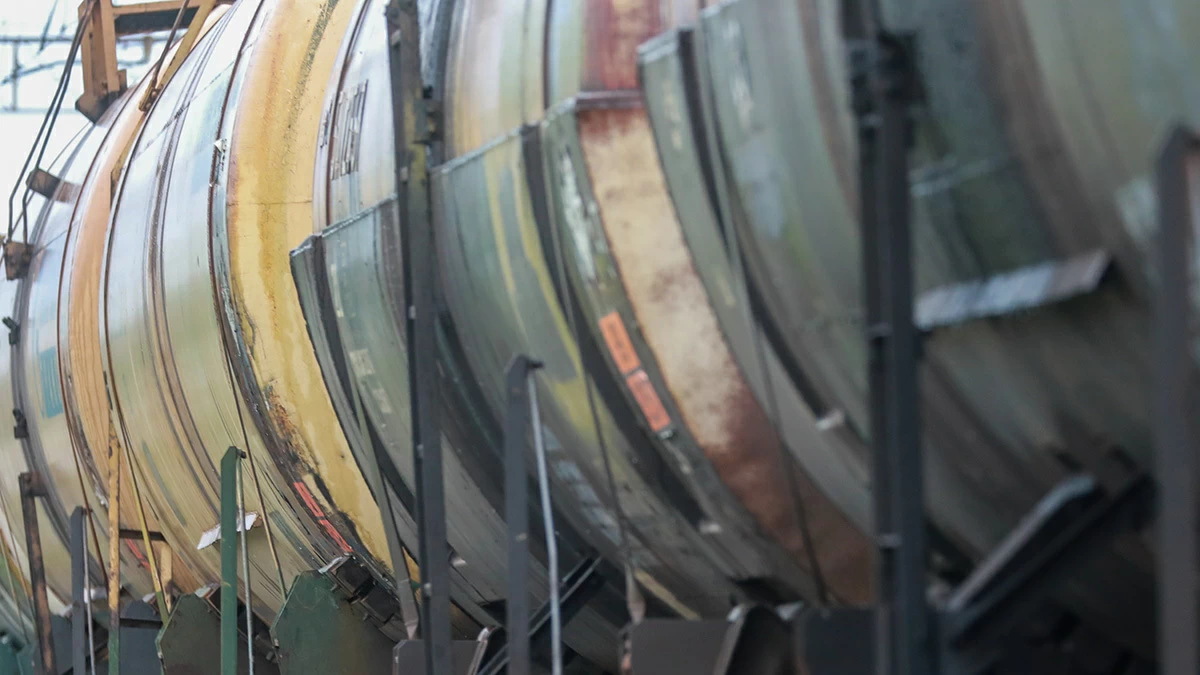
Western media reported that tankers transporting petroleum by-products (carbamide, petroleum coke) from José port set sail for Asia under the protection of the Venezuelan Navy. The state company PDVSA hurried to assure that its vessels were in complete safety and exercising their legal right to freedom of navigation.
Apocalypse enthusiasts faced disappointment: Trump addressed the nation, criticized the previous administration, praised himself, and did not declare war on Venezuela. Instead of an invasion—there was a pause, instead of an operation—rhetoric about "restoring justice" and reclaiming "stolen" assets, referring back to the history of nationalization initiated under Hugo Chávez.
It is also noteworthy that support for a forceful scenario within the U.S. is minimal. A Quinnipiac University poll showed that two-thirds of Americans (63%) oppose an invasion of Venezuela, which lowers the political risks for the White House. Politically rattling the weapons is safe, but going into the trenches is extremely disadvantageous. This entire geopolitical drama would make sense if Venezuela maintained its role as a leading supplier. However, the figures indicate otherwise, which is why the oil market did not succumb to panic. “The oil market should not anticipate serious upheavals, as Venezuela has reduced its oil production more than threefold over the last two decades—from 3.1 million barrels per day (b/d) in 2004 to 910,000 b/d in 2024,” said Sergey Tereshkin, CEO of Open Oil Market. “For comparison, global oil and gas condensate production in 2024 is expected to be 82.8 million barrels per day (excluding light hydrocarbons).
Venezuela has lost its position as the largest oil producer in South America: Brazil now holds that title, with Guyana and Argentina significantly increasing production... Therefore, sharp increases in oil prices are unlikely: in the coming weeks, Brent prices will hover around $60 per barrel, and next year may see quotations drop to $55 per barrel.”
Consequently, Venezuela's share accounts for only about 1% of global supplies. This renders short-term impacts on prices minimal.
Independent expert Kirill Rodionov concurs, emphasizing that the impact on quotations will be brief and weak:
“If there is any effect on quotations, it will last for 1-2 days, and fluctuations will not exceed $1-2 per barrel. For the market as a whole, this is not a very significant event.”
However, if prices remain globally stable, it does not mean that tension lacks cost.
The geopolitical game translates into direct expenses for logistics and insurance. The presence of naval aviation and the threat of blockade compel shipowners to avoid risky routes, increase freight rates, and, crucially, raise insurance premiums. The "oil war" does not impact spot prices but affects the margins of Venezuelan exporters and the logistics costs of buyers.
The current crisis is not about collapse but about potential. Experts agree that the show of force could serve as a prologue to the long-awaited and large-scale economic transformation of Venezuela.
“I expect that these events will serve as a prologue to Venezuela's full return to the oil market. Currently, oil production in the country is less than 1 million barrels per day, whereas in the mid-2000s it exceeded 3 million barrels,” continues Kirill Rodionov. “Caracas will gradually increase oil production, likely due to the anticipated demopolization of PDVSA, paving the way for several independent entities that will include investments from American companies... I am confident that within the next ten years, Venezuela could become another significant source of oil production growth and return to the levels seen in the mid-2000s.”
The reason for such a move lies in the catastrophic state of the industry. Experts draw a historical analogy; according to Mr. Rodionov, the collapse of the oil sector in Venezuela is now even more profound than it was in the Soviet Union at the end of the 1980s. At that time, the Russian government was forced to turn to the World Bank for loans to rehabilitate oil production in 1992. This is roughly the state of the Venezuelan oil industry today.
“It is quite manageable, in fact, including reducing the tax burden, lifting sanctions, privatizing the sector, and removing export restrictions. You simply privatize the oil sector, demopolize it, and invite the best oil service companies, and they will quickly restore oil production. Now, changes that have long been overdue are happening in the country,” says Mr. Rodionov.
For Russian oil exports, the short-term threat is minimal—Venezuelan volumes are insignificant, and logistical issues can be compensated within weeks.
However, if the recovery plan proves effective and Venezuela returns to producing 3 million barrels per day within 5-10 years, it will intensify competition.
The emergence of an additional one or two million barrels of oil, similar to Russian grades, could complicate the position of domestic exporters in Asian markets. Russia will need to factor this new element into its sales strategies and pricing.
Trump enjoys playing the peacemaker role. The losses incurred by American companies date back nearly 20 years. The Venezuelan oil industry was officially nationalized on January 1, 1976. All foreign oil companies conducting business in the country were replaced by Venezuelan ones.
A state oil company, Petróleos de Venezuela S.A. (PDVSA), was established and still exists today. In 2007, Venezuelan President Hugo Chávez conducted a second nationalization. This affected not only local enterprises but also the branches of Western oil companies—American Exxon Mobil, Chevron, and ConocoPhillips, British BP, French Total, and Norwegian Statoil. Chávez's decision sparked outrage from the U.S. and other Western countries, which responded with the first severe sanctions against Venezuela, leading to the production crisis.
Furthermore, it can be assumed that Maduro's army and navy possess a substantial arsenal of anti-aircraft and anti-ship missiles of Russian manufacture, and it is unlikely that the U.S. president would want to experiment to see how adept the South American "compañeros" have become at using them.
For now, this remains more of a geopolitical spectacle—carefully staged for a media series—than a real oil war. The tanker escort and naval aviation are serious gestures, but without societal support and a readiness for direct invasion, they remain elements of bargaining. The market, meanwhile, counts barrels, not words, and waits for the noise to give way to actual privatization. The war that journalists love to announce may, in fact, be the prologue to a new phase in the development of the oil industry.
Source: Vgudok