The State Duma Approved Amendments to Stimulate the Fuel Market in Russia

/ /
The State Duma Approved Amendments to Stimulate the Fuel Market in Russia
1
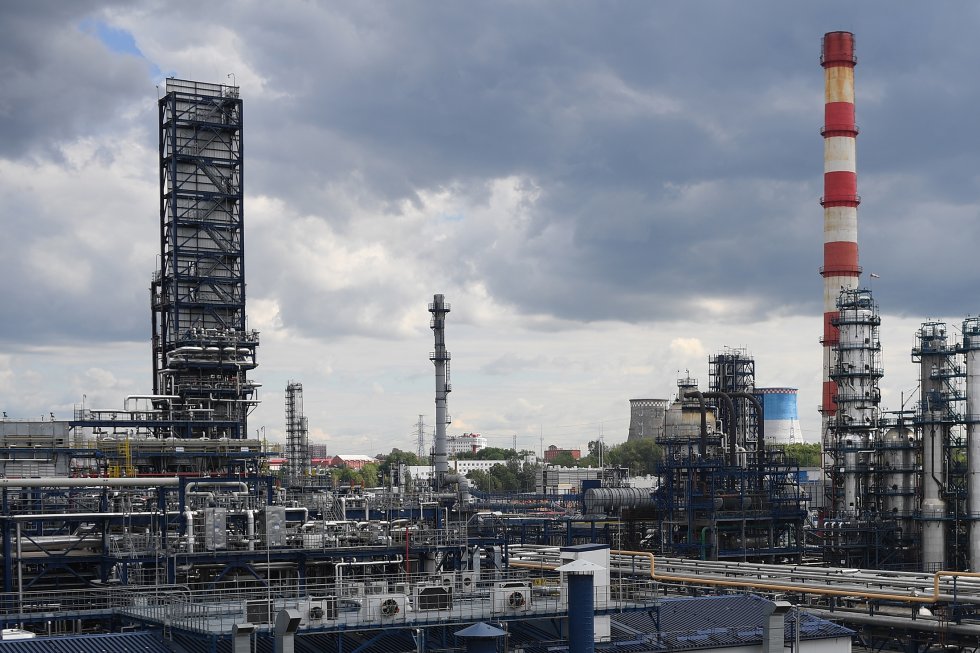
The State Duma has adopted amendments to the Tax Code in its second and third readings to support oil refining. The authorities will increase payments for the import damping mechanism, with the Indian market serving as the benchmark for calculating compensations. On Wednesday, the State Duma approved amendments to the Tax Code aimed at stimulating the supply of gasoline in Russia’s domestic market and supporting oil refineries (refineries) affected by Ukrainian drone attacks. The corresponding document was published on the website of the lower house of parliament.
  • Incentives are created for gasoline supplies to Russia from EAEU countries and abroad through increased payments for the import damping system;
  • The possibility of calculating the damping for companies producing gasoline obtained by blending straight-run gasoline with other components is established;
  • The timelines for modernization agreements for large refineries are extended.
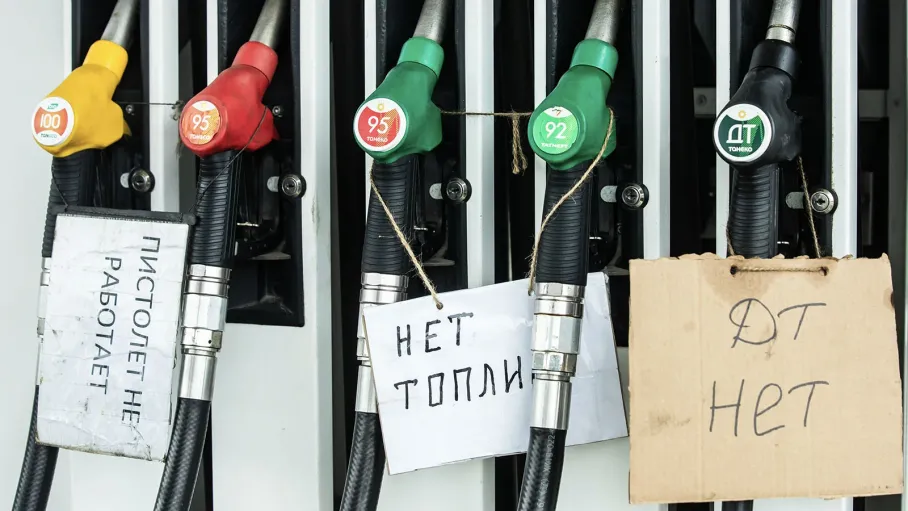
All changes related to additional fuel supply for the domestic market will apply to legal relationships arising from June 1, 2026, and for the modernization of oil refineries — from January 1, 2026. The day before, on June 23, this bill was endorsed by the State Duma’s committee on budget and taxes. The fuel market has been under increased scrutiny since spring. Since May, the Federal Antimonopoly Service (FAS) has been sending recommendations to oil companies to adhere to responsible pricing principles for petroleum products. Meanwhile, the Ministry of Energy reported that the situation in the domestic fuel market remains stable and controllable. The Kremlin also has not identified any risks regarding fuel supply to the regions. However, a number of regions and oil companies were forced to impose restrictions on fuel supply volumes at gas stations. On June 24, Rosstat reported that the index of petroleum product production in Russia (part of the overall industrial production index) declined by 13.5% in May 2026 compared to May 2025. In April, the year-on-year decrease was 9.1%. Over the month (compared to April 2026), petroleum product production dropped by 2.3%. As a result, from January to May, the index fell by 4.9% compared to the same period the previous year.

Need for the Damping Mechanism

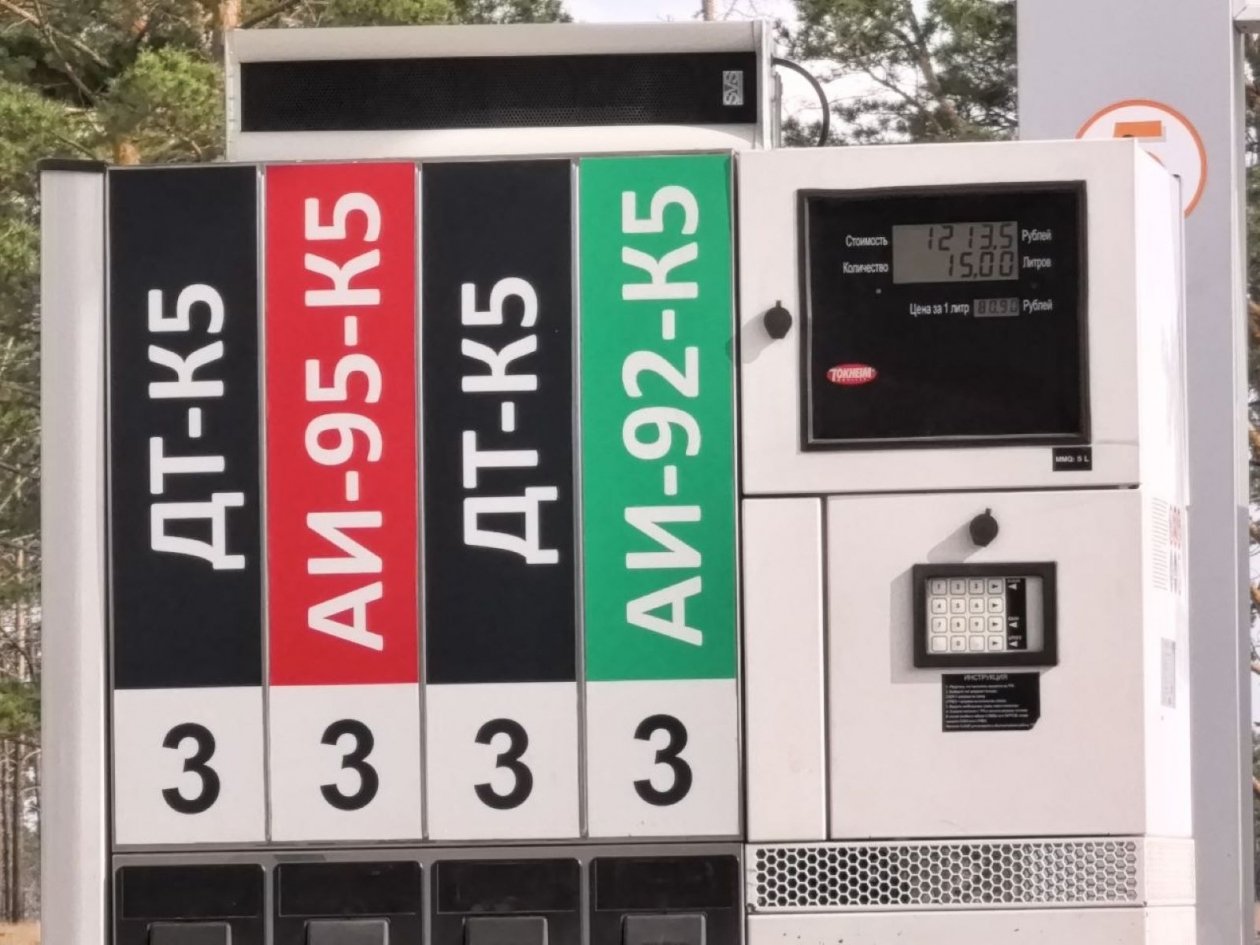
The essence of the fuel damping mechanism lies in the government's payment of subsidies to refineries, encouraging oil companies to supply more gasoline and diesel to the domestic market rather than for export. If it is more profitable to sell fuel abroad than domestically, the damping mechanism compensates oil companies for the price difference with exports, thereby stabilizing price dynamics. However, if domestic fuel prices exceed certain thresholds, damping payments are eliminated. This elimination occurs during significant price fluctuations. According to the Tax Code, if wholesale (exchange) prices for fuel deviate from established indicative prices by more than 20% for gasoline and 30% for diesel fuel on average over the month, damping for that month is not paid. For 2026, indicative prices are set at 62,300 rubles per ton for AI-92 gasoline and 58,950 rubles per ton for diesel fuel. In May, gasoline prices in Russia increased by 0.9% compared to April, according to Rosstat data. Year-on-year, the increase accelerated to 12.9% from 12.3% the previous month. According to the agency's statistics, gasoline has risen in price by 4.6% since the beginning of the year. The average consumer price of gasoline in Russia reached 67.7 rubles per liter by the end of May. The price for AI-92 gasoline was 64.04 rubles, AI-95 — 69.65 rubles, and AI-98 and higher — 94.25 rubles per liter.

Increased Subsidies for Imports

The mechanism for obtaining damping upon processing Russian oil abroad and subsequently importing the produced fuel into Russia was legally established back in November 2025. Since then, contract processing of Russian oil abroad has become economically comparable to processing within the country. Until now, the tool was mainly intended for supplies from Belarus. Now, the authorities are significantly expanding the scope of its application and the amount of payments. Corresponding instructions from Deputy Prime Minister Alexander Novak were reported by RBC on June 1. The amendments establish the possibility of obtaining damping for imported gasoline by organizations authorized by the government. For fuel produced in EAEU countries, the CAB_COMP coefficient (one of the parameters in the formula for calculating damping compensation for automotive gasoline) will be 0.85 in 2026, and will subsequently decrease to 0.33 in 2027. “Currently, coefficients of 0.68 (for gasoline) and 0.65 (for diesel) are being used, and the introduction of a higher coefficient of 0.85 for gasoline importers essentially means subsidizing fuel imports from abroad,” explains Sergey Tereshkin, CEO of the petroleum products marketplace Open Oil Market. For gasoline produced outside the EAEU, a separate compensation calculation mechanism is introduced. It will be determined based on the import parity price, which consists of the indicative price of AI-92 gasoline on the Indian market and the cost of delivery from Indian ports to Russia. This indicator will be determined by the Federal Antimonopoly Service (FAS). Experts surveyed by RBC note that the new rules do not mean an automatic start for fuel supplies from India, but they create economic conditions for importing gasoline from abroad if needed. Choosing the Indian market as a benchmark indirectly means that Russia will import petroleum products from India, which has, in turn, become one of the largest importers of Russian oil since 2022, according to independent energy expert Kirill Rodionov. He believes that importing fuel from abroad is quite expected since Belarus, which started increasing fuel supplies to Russia from 2024, is limited by its own refining capacities. Kazakhstan could potentially become another supplier of petroleum products among EAEU countries, but the country is not yet capable of significantly increasing exports. Serious volumes of Kazakh fuel supplies will only become possible after the launch of a fourth large-tonnage refinery with a designed capacity of up to 10 million tons of fuel per year, believes Rodionov. The investment decision for this project is expected by the end of this year. On June 24, the agency Reuters, citing sources, reported on negotiations between Russia and Kazakhstan. However, sources assured that Moscow and Astana are discussing importing only about 50,000 tons of AI-92 gasoline, while the Kazakh side previously denied receiving such a request. At the same time, India is not the only potential supplier of fuel to Russia, according to managing partner at Kasatkin Consulting Dmitry Kasatkin. “The Indian market has been chosen because it is one of the largest centers for processing and trading petroleum products outside the Western context, and it actively works with Russian oil. The indicative price is used not so much as an indication of a single physical source of supply, but rather as a calculation base for external alternative pricing,” he explains. He is supported by Tereshkin, who adds that the parity calculation is usually made taking into account transportation costs, which, in the case of India, are significantly higher than for the hub of Rotterdam in the Netherlands, which had been considered for damping calculations until recently. Another potential supplier of fuel to Russia is China, believes Tereshkin. There, new refining capacities have been introduced alongside the electrification of passenger vehicles and the gasification of freight transport in recent years. Therefore, there may be surplus fuel volumes available in the country in the future. Analysts believe that stimulating fuel imports will help saturate the market in times of crisis, but the scale of the effect will still depend on the speed of recovery of Russian plants, absence of logistical issues, and control over fuel distribution among regions. Kasatkin believes that the import damping appears as a temporary safety measure. Once the operations of Russian refineries stabilize and fuel supplies are restored, the demand for fuel should decrease; otherwise, the mechanism may begin to distort the economics of domestic refining. Additional questions arise regarding the very method of calculating compensations. As noted by senior lawyer at Rustam Kurmaev and Partners, Vladislav Gates, the amount of damping for gasoline outside the EAEU becomes a function of import parity defined not by law, but by the methodology of a single regulator, which directly affects the principle of legal certainty: taxes and the conditions for their calculation should be formulated in such a way that the taxpayer understands their rights and obligations in advance, and any unavoidable uncertainties are interpreted in their favor. According to Gates, as long as the FAS methodology remains unpublished and untested, importers will not be able to model the amount of payments, which increases the likelihood of disputes over the correctness of the indicator itself.

How Authorities Plan to Rapidly Increase Gasoline Production

Another significant innovation in the Tax Code relates to gasoline production through the blending of straight-run gasoline with other components. The amendments allow it to be counted within the total volumes of produced gasoline, thus enabling companies to receive damping, as well as excluding excise tax from the cost of straight-run gasoline used for blending. Companies are given three months to collect documents confirming that high-octane gasoline has been produced from straight-run gasoline through blending. According to Kasatkin, allowing blending of straight-run gasoline with other components will be an important support for the market during periods of high seasonal demand and unscheduled refinery repairs. The technology is widely used in the industry and does not create issues for vehicles. However, this mechanism may raise questions regarding the control of component origins and the quality of the final product, requiring stringent laboratory tracking, digital traceability of batches, matching raw material and finished fuel volumes, as well as random independent checks. The main legal risk lies in the fiscal domain, Gates adds. The excise tax deduction on straight-run gasoline makes it attractive to arrange a "paper” blending without actual production of high-octane gasoline in order to obtain the deduction. Oleg Abeliev, head of the analytics department at investment company Rikom-Trast, reminds that some control tools already exist. “There are GOSTs that determine control methods and fuel compatibility during blending. However, the key is state control by the Federal Service for Supervision of Nature Management and Rosstandart to prevent an increase in non-compliant fuel volume,” the expert believes. For the scheme to function as a stimulus, strict control at all stages is critically important, adds Vasily Kutin, director of analytics at Ingo Bank. It is essential to ensure that the company is indeed producing high-octane gasoline and not attempting to exploit the mechanism. Therefore, the amendments specify that companies are given three months to confirm that high-octane gasoline has been produced from straight-run gasoline to receive the excise tax deduction. Additionally, a rule has been introduced stating that if the buyer returns such gasoline, the paid excise tax will not be refunded. “But it is evident that it is impossible to completely exclude human factors or technical failures in control, which is why oversight remains an important element,” he concluded.

Why Authorities Are Extending Refinery Modernization

Another block of amendments concerns oil refineries investing more than 100 billion rubles in modernization. For them, the duration of modernization agreements between oil companies and the government has been extended until December 31, 2026. Previously, it was assumed that the agreements, which include, among other factors, tax benefits for investors, would expire in January of this year. This is not a new benefit but an attempt to preserve already initiated investment projects that have come under threat due to external factors, experts explain. “Large refinery projects have objectively shifted in timeline due to restrictions on equipment supplies, import substitution of technological solutions, rising project costs, and unscheduled repairs following attacks on infrastructure,” says Kasatkin. According to him, the government aims to maintain the investment cycle in oil refining. Abeliev adds that the delay will allow companies not to lose their right to tax benefits when part of the refining capacities is halted due to unscheduled repairs. This is expected to enable the completion of deep processing projects and increase the yield of light petroleum products, reducing the market's dependence on emergency crisis solutions. However, experts agree that the current package of measures can only temporarily alleviate market tension. “Regulators are using the tools that are available here and now. These measures will lead to an increase in subsidies for the industry and may help to calm the market somewhat, but they will not fundamentally change the situation, as everything hinges on supply dynamics at the refineries,” summarized Tereshkin. Source: RBC
open oil logo
0
0
Add a comment:
Message
Drag files here
No entries have been found.