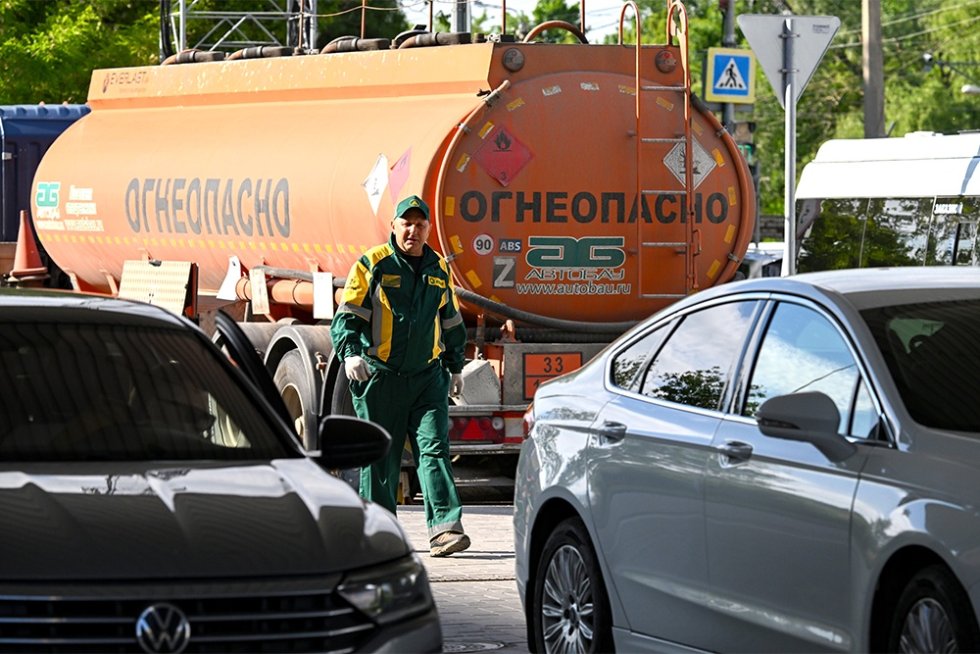
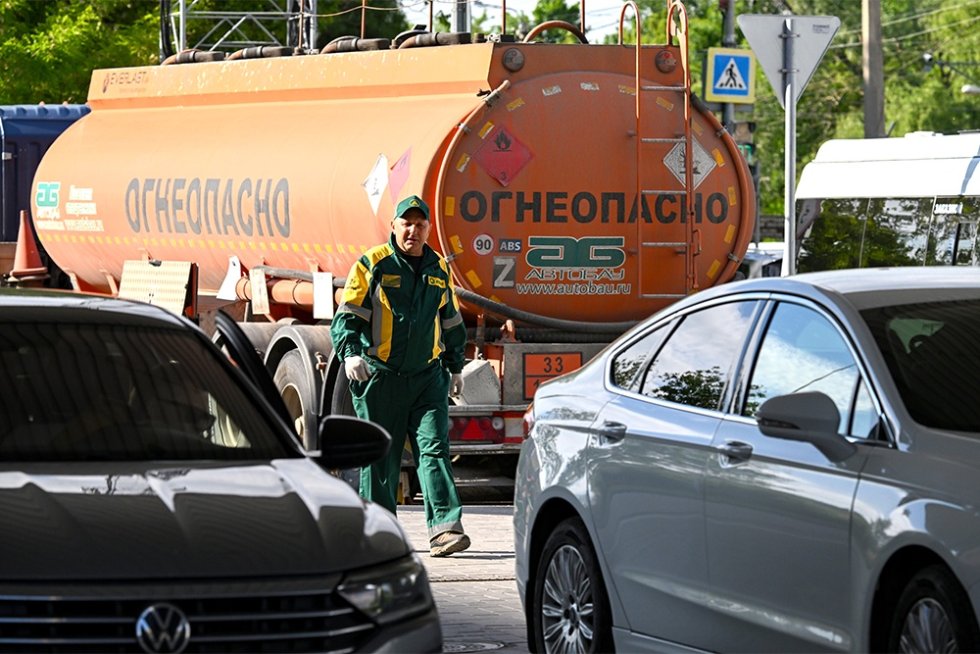
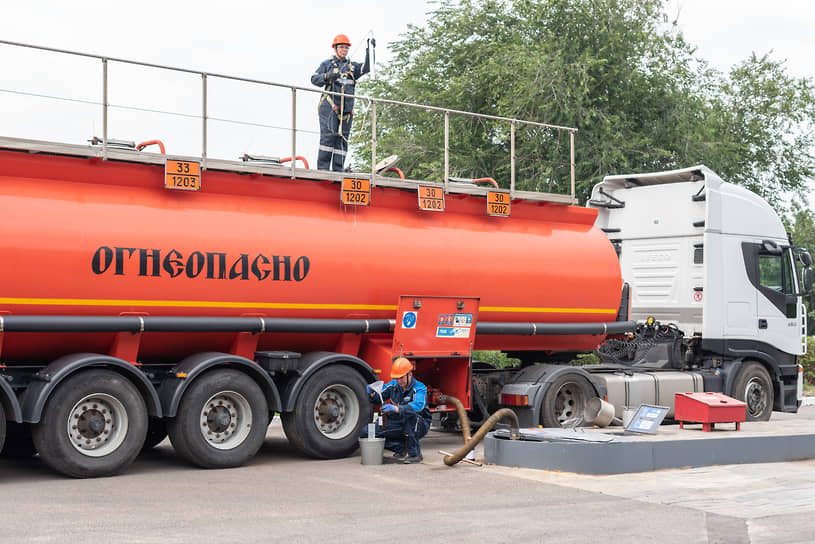
Moreover, as a temporary fuel importer, it is currently disadvantageous for our country to face disruptions in oil supplies from the Persian Gulf countries. In times of supply shortages, this could impact the import of gasoline into our country. Foreign refineries will primarily prioritize supplying their domestic markets with fuel before exporting or will charge high prices for exports.
For example, in the spring during the peak of the first round of the confrontation between the US and Iran, due to the blockage of the Strait of Hormuz that made shipping oil from Persian Gulf countries impossible, India increased export duties on gasoline, diesel, and jet fuel, which automatically made them more expensive for buyers. India is considered the main potential supplier of gasoline to Russia from far abroad. The higher the cost of Indian gasoline, the greater the amount that importers will need to compensate from the Russian budget.
Subsidies (dampers) are paid to oil producers for delivering fuel to the domestic market at prices lower than export prices.
This compensates for part of the difference (a coefficient of 0.68 for gasoline, 0.85 for diesel) between the indicative wholesale prices (set by the government for the year) in Russia and the export alternative (in Europe).
We are forced to import fuel due to the reduction in output from domestic oil refineries. According to Deputy Prime Minister Alexander Novak, this has occurred due to unscheduled repairs at refineries following drone strikes. Various estimates suggest that the reduction in oil refining volumes has ranged from 20% to 30%.
However, we are unlikely to purchase diesel fuel (DF) from abroad, as we produce it twice as much as we consume, and exports from Russia have been banned since July 9. But starting in July, Russia will import gasoline, and these shipments will also be subject to the damper. For imports from EAEU countries, a coefficient of 0.9 has been established, while a separate formula using import parity (linked to the Indian market) will be introduced for imports from other countries. Moreover, given that compensation is incomplete, internal prices in Russia may rise if global fuel prices hit record highs.
The price growth has already impacted Europe. Diesel fuel (DF) has increased the most, averaging a 14% rise since early July. Gasoline prices have increased by 10%. Such changes have occurred solely on the news of renewed tensions in the Middle East. A physical shortage has yet to be felt. In India, prices did not increase in July, but since the onset of the Iran-US conflict, they have risen by 7.8%. Initially, gasoline prices in India were already significantly higher than in Russia.
However, the issue is not only with the prices of imported gasoline and its availability. Volumes of imports are also crucial. Various estimates suggest that the reduction in oil refining volumes in Russia has been between 20% and 25%. The monthly gasoline consumption in our country is around 3 million tons. A large volume of imports comes from Belarus, with 141,000 tons in June. Kazakhstan may supply around 50,000 tons of gasoline to Russia. Thus, our demand for fuel from far abroad is unlikely to exceed 450,000 tons per month. Considering government measures (permits to lower the class of gasoline produced, production by mixing) and the return of refineries from repairs, the volume of imports from far abroad will not exceed 300,000 tons. Consequently, the burden on the budget from fuel subsidies due to imports could increase slightly above 10% (depending on the difference in coefficients).
As noted in an interview with "RG" by Dmitry Gusev, Deputy Chairman of the Oversight Council of the "Reliable Partner" Association and member of the Expert Council of the "Gas Stations of Russia" competition, we are key suppliers of raw materials for all our potential fuel exporters, and moreover, the overwhelming majority of gasoline and diesel fuel will continue to be produced in Russia, so the Hormuz crisis will not have a significant impact on prices in the domestic market. However, of course, if global oil product prices continue to rise, this will be reflected in the Russian market.
Regarding the accessibility of imports, the expert does not rule out the possibility that the supply of gasoline in foreign markets could shrink. However, again, considering that raw materials come from us, it is unlikely to significantly impact Russia.
Although we cannot completely close any potential oil deficit. According to Sergey Tereshkin, General Director of Open Oil Market, the situation in the Middle East will influence the availability of oil imports for India. Last year, India imported 262 million tons of oil, of which 36% (95 million tons) came from Saudi Arabia, Iraq, and Kuwait, countries whose export capabilities are significantly dependent on the dynamics of shipping through the Strait of Hormuz. Another 10% of supplies (26.7 million tons) were provided by the UAE, which can export about half of its oil production via the Oman Gulf, bypassing the Strait of Hormuz.
The volumes of potential gasoline supplies to Russia from far abroad are too small to impact its prices at gas stations.Key foreign fuel importers in Russia include Belarus, Kazakhstan, India, and China, notes Sergey Frolov, Managing Partner of NEFT Research. Fuel is brought to Russia by sea only from India, and currently in small volumes (estimated shipments range from 60,000 to 80,000 tons). This is negligible compared to the average monthly gasoline consumption in Russia of around 3 million tons, so there is currently no talk of any influence from these shipments on the prices of petroleum products in Russia. The primary mode of transport for supplies from other countries is rail, the expert clarifies.
Frolov emphasizes that global gasoline quotes also do not significantly affect Russia since the national wholesale price is formed based on the balance of supply and demand in the domestic market, and the retail fuel prices are regulated by the government.
All of the above holds true under the condition that fuel imports will not be long-term; that is, domestic refineries restore their capacities within one or, at most, two months. If this does not happen or unscheduled shutdowns of factories continue, the effect of fuel imports will accumulate, which could more significantly impact both internal retail prices and budget revenues.
Queues at gas stations are decreasing: The situation with gasoline is normalizing in the regions.
The situation with gasoline is slowly but surely normalizing. As reported by "RG" correspondents on the ground, in several regions, the fuel dispensing limit at gas stations has been increased, and in some areas, waiting times in line have dropped to ten minutes.For instance, in Udmurtia, gasoline supplies to municipalities have doubled, reported Prime Minister Roman Yefimov at an operational headquarters meeting. It's worth noting that just a month ago, almost 50 percent of gas stations in Izhevsk were out of service, leading motorists to spend hours in line. Now they have significantly decreased. One of the key gas station networks has doubled its supplies to the districts, and replenishment efforts for the northern part of the region are underway. Current fuel supply volumes are roughly equivalent to the levels of July last year, with a current excess of 7 to 10 percent to saturate the market.
The number of complaints is decreasing, but the issue remains acute outside of the Izhevsk agglomeration. Therefore, priorities there are reserves for school buses and heating, as well as the provision of emergency services.
Farmers purchasing fuel in bulk are receiving diesel through a single operator based on requests and quotas. The issue regarding fuel for farmers is expected to be resolved by July 20.Filling up in cans is still prohibited: with 675,000 vehicles in the region, even 400,000 refills of gasoline at 10 liters would result in an excess of 12,000 tons. This is nearly four railway shipments that could cause a collapse.
Vladimir Governor Alexander Avdeev stated that the region has managed to halt queue growth at gas stations. Currently, average waiting times are between 20 to 40 minutes. Fuel companies have increased gasoline supply volumes, but it is not specified by how much. Meanwhile, network gas stations have restrained price increases "within the recommended limits." What these limits are has not been clarified. According to gas station locators, at the stations of major operators, a liter of AI-95 is sold for 67-73 rubles. At private stations, the price can reach up to 160 rubles.
In the Vladimir region, waiting times in line have decreased from several hours to 30 minutes.
As of July 14, gasoline supplies have also been increased in the Vologda region. PJSC "LUKOIL," which controls over 90% of the region's gas stations, has raised the fuel dispensing limit per person to 30 liters, announced the head of the region, Georgy Filimonov.
The company has canceled technological breaks in gas station operations, maintaining them only during tanker unloading, and has increased daily loading volumes. Daily shipments are already saturating the market.
In Vologda, efforts are being made to support drivers as much as possible. As reported by the city's mayor, Sergey Zhistannikov, entrepreneurs and volunteers are helping Vologda residents waiting to refuel. For instance, free hot pizza, muffins, and drinking water have been provided to people, with nearly 550 liters of water distributed over a week.
Volunteers continue to stand by at gas stations: they manage the flow of vehicles, provide drivers with information about available gas stations, and assist individuals with disabilities. This kind of selflessness shows that the city knows how to unite during tough times.
Cherepovets Mayor Andrey Nakroshaev stated that 13 fuel tankers have arrived in the city over the last two days.
"From Thursday, a night shift of volunteers will be launched in Cherepovets — this will help maintain order and provide assistance to motorists around the clock," explained the head of the city administration.
City leaders are striving to normalize the operations of gas stations. Overall, government estimates show that the region is gradually returning to previous supply volumes, and the measures taken are effective. "Yesterday, we pulled into a gas station in Vologda on Preobrazhenskaya St. There was no wait in the morning; we filled up peacefully," note drivers on social media.
According to our correspondent in St. Petersburg, the queues at gas stations feel shorter: drivers have begun to actively use services that track the availability of gasoline at different stations, and this has dispersed the inflow of people looking to fill their tanks. Gas stations in less frequented areas are not even listed on the apps: a "RG" correspondent filled up calmly at one such station, with a waiting time of 10 minutes and three cars in line. However, the 95-octane gasoline that was available initially was finished — only the 92-octane was left, priced around 65-67 rubles.
Source: RG.RU