End consumers are defined as gas stations (GS), processing enterprises, and large companies that have substantial in-house vehicle fleets (for example, transportation, mining, agriculture, and others).
Brokers, a limited number of whom are members of the exchange in the "Oil Products" sector, will have the right to execute transactions on behalf of third parties. If any attempts are discovered to resell fuel purchased for "own needs" after a transaction, that buyer's access to trading will be revoked. The same rule applies to brokers.
Additionally, as of July 1, the volume of mandatory gasoline sales on the exchange for refineries has been reduced from 15% to 10% of production volumes. A similar measure is currently under consideration for DF, proposing a decrease from 16% to 10%. This is also intended to encourage more transactions to occur directly, bypassing intermediary exchanges. For instance, a direct supply contract between GS and refineries.
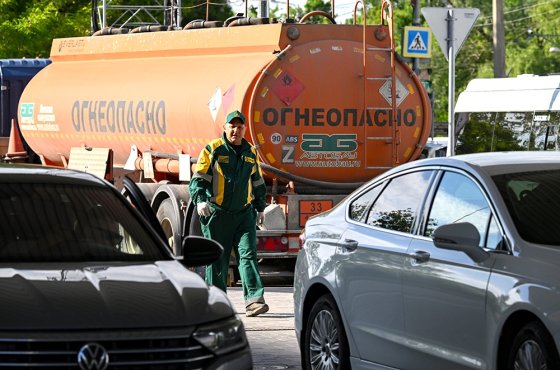
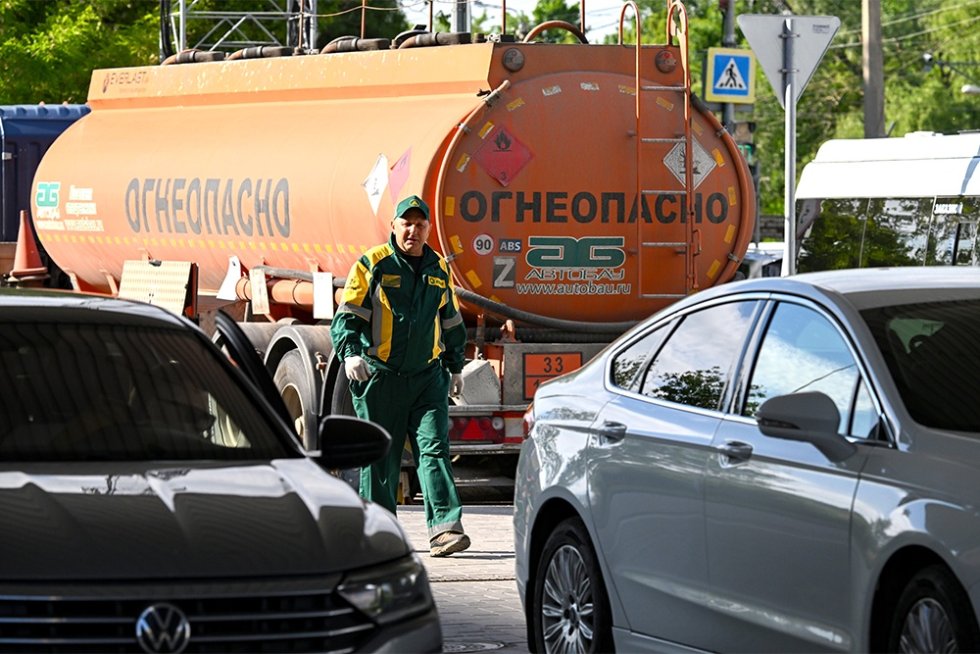
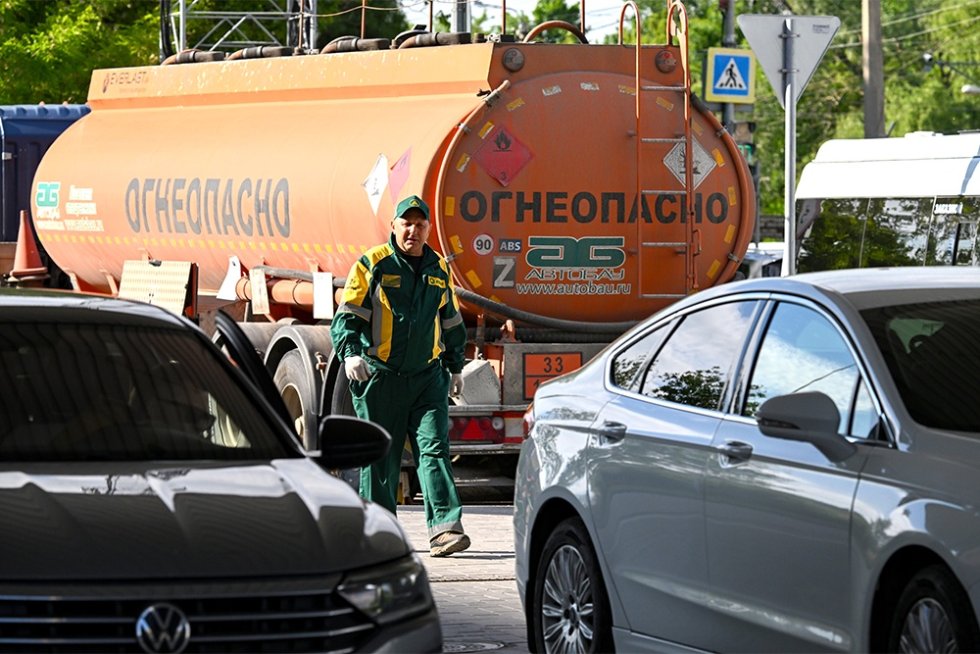
The exchange's decision comes amidst ongoing issues with fuel supply in the regions and a sharp rise in prices at gas stations. Earlier, during a government meeting, Deputy Prime Minister Alexander Novak noted the necessity to refine the trading system so that fuel goes directly to end consumers, excluding middlemen who drive up prices.
Brokers will have the right to execute transactions on behalf of third parties, a number of which is limited to members of the exchange
Formally, everything is logical: the fewer intermediaries (traders) there are, the lower the price should be, as each added "interest" to the cost of each liter. The problem, however, is that the exchange's role in our fuel market has dramatically diminished this year. In July 2023, the volumes of exchange sales of gasoline and DF fell by more than half compared to the same period last year. However, fuel consumption in Russia has not decreased. This indicates that trading has shifted to other channels. Over-the-counter sales are essentially unregulated by the state. They can either be direct: GS to refinery, or go through traders.
As noted in an interview with "RG" by Dmitry Gusev, Deputy Chairman of the Supervisory Board of the "Reliable Partner" Association and member of the Expert Council of the "GS Russia" competition, small wholesale transactions (outside the exchange) now serve as the main price indicator for the fuel market and have become a critical factor driving up prices. As a result, there is a situation where exchange prices for fuel are relatively low, gas stations of major oil companies also have low prices, but in the small wholesale market, the cost sometimes reaches up to 200,000 rubles per ton. In this situation, clear and understandable mechanisms need to be introduced rather than playing with market economics. A state regulation system for the fuel market, utilizing big data and artificial intelligence, is more efficient and less dependent on the human factor and informational background. The exchange, in contrast, is heavily dependent on them, emphasizes the expert.
On the other hand, traders did not emerge in a vacuum. First, they benefit from economies of scale. Many independent gas stations (more than half of refueling stations in Russia), which do not belong to large oil companies, simply cannot afford to acquire their own fuel storage facilities, sign contracts with refineries, and arrange transportation. For them, this would constitute an excessive financial burden.
According to energy expert Kirill Rodionov, traders are traditional scapegoats in the market. Whenever there is talk about price increases, it is always they who are blamed. In reality, traders are a natural part of any market, including the fuel market. They serve as intermediaries who have the financial and logistical resources to purchase fuel on the exchange and subsequently resell it to gas stations. The effectiveness of utilizing traders depends on the level of gasoline sales on the exchange. The higher the sales, the more fuel will be available to independent retail fuel outlets at reasonable prices. Currently, the issue lies in the insufficient fuel supply in the market. Increasing the supply on the exchange and attracting traders can help balance the market and reduce the significant price discrepancies between various gas stations, believes Rodionov.
Sergiy Tereshkin, the CEO of Open Oil Market, shares a similar viewpoint: the fuel market cannot exist without traders. The role of traders is somewhat derived from exchange standards: the higher the standard, the more significant the role traders can play in stabilizing the market.
However, the current supply is limited, making it unrealistic to expect any increase in exchange standards for now. Moreover, according to analyst Sergei Kaufman from Finam Group, the reduction in fuel sales standards only indicates that even vertically integrated oil companies (VIOC), which manage the entire production cycle—from extracting oil and refining it to selling fuel at their own gas stations—are struggling to supply enough gasoline to meet all their obligations. In such circumstances, VIOCs are compelled to send less fuel to the exchange to ensure their gas stations are adequately stocked.
Kaufman argues that the restrictions on standards and new trading rules on the exchange will have no effect on retail prices of gasoline and DF. This does not increase the overall volume of fuel in Russia, but merely alters logistics slightly. In certain instances, this might expedite fuel delivery to end consumers. However, the primary issue on the St. Petersburg Exchange remains the physical shortage of fuel. Trading volumes have significantly dropped, and prices are artificially capped (with a maximum permissible increase rule of 0.01% per day), making it often impossible to purchase the required fuel volumes physically. If oil refining resumes, the fuel market could return to normal quite quickly, and retail gasoline prices could decrease from their current anomalous levels, the expert is confident.
The current situation poses the greatest risks for independent gas stations, according to Tereshkin. Exchange trading itself will quickly recover once the restrictions are lifted. The question is how the pool of end fuel buyers from the exchange will change, as many independent gas stations lacking direct access to fuel supplies may not survive this crisis, he suggests.
Rodionov believes that traders are also at risk. Some companies may vanish. The market and exchange trading will recover very quickly once restrictions are removed.
However, the date remains unknown. The limitations on gasoline purchases by end consumers have been enacted indefinitely. Meanwhile, the sales standards for gasoline on the exchange have been lowered until September 30, although this measure may be extended if necessary.
Source: RG.RU