Has the Fuel Crisis Begun? Queues, Price Increases, and Restrictions.
06/24/2026
100
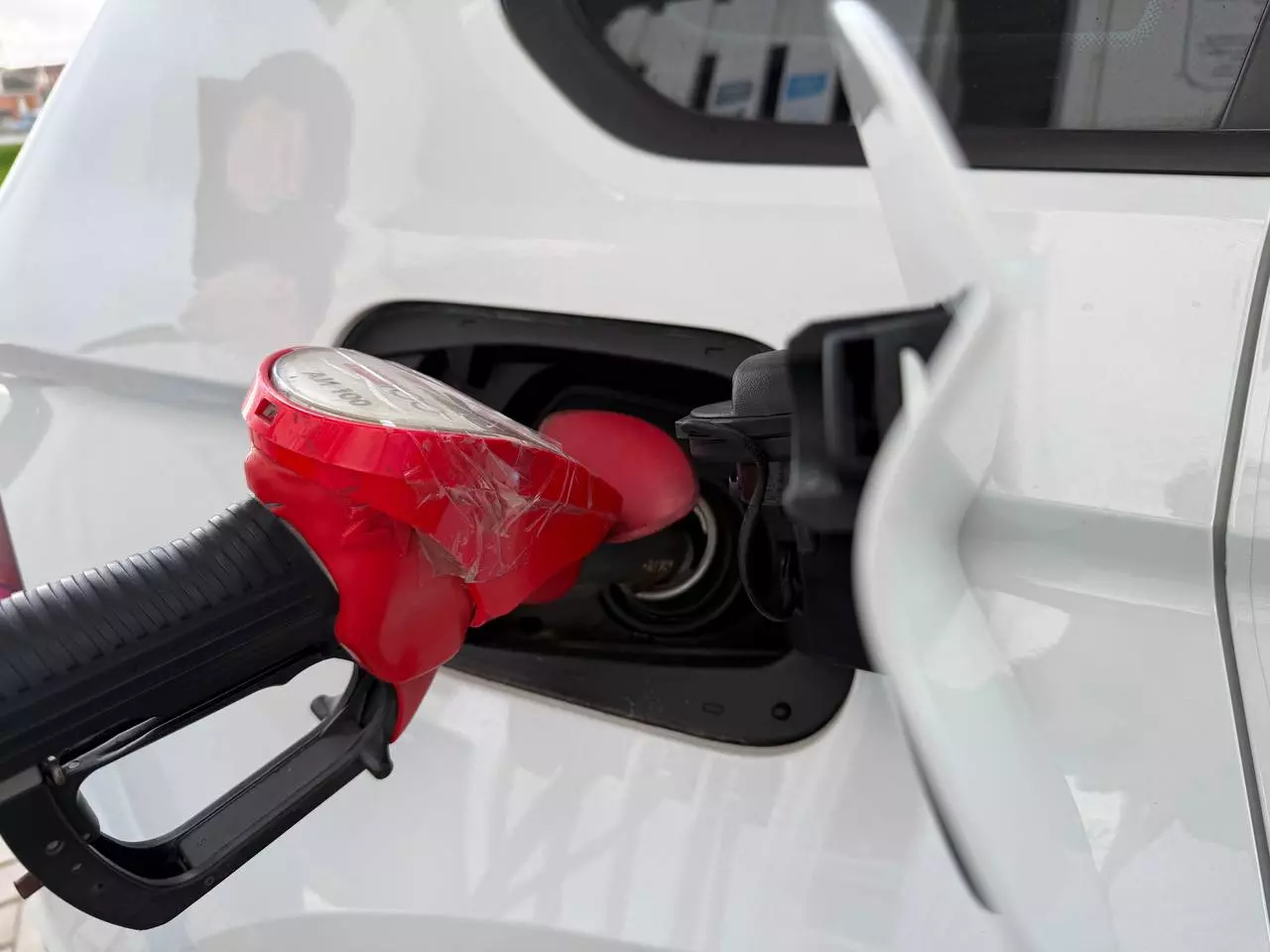
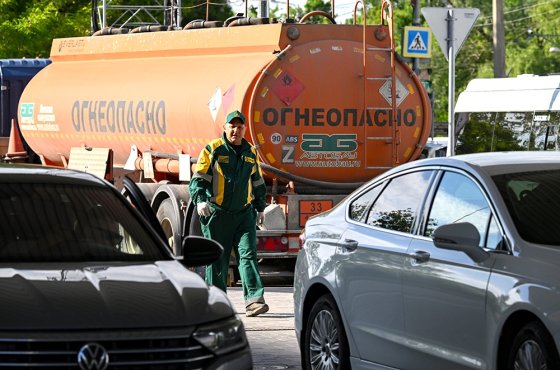
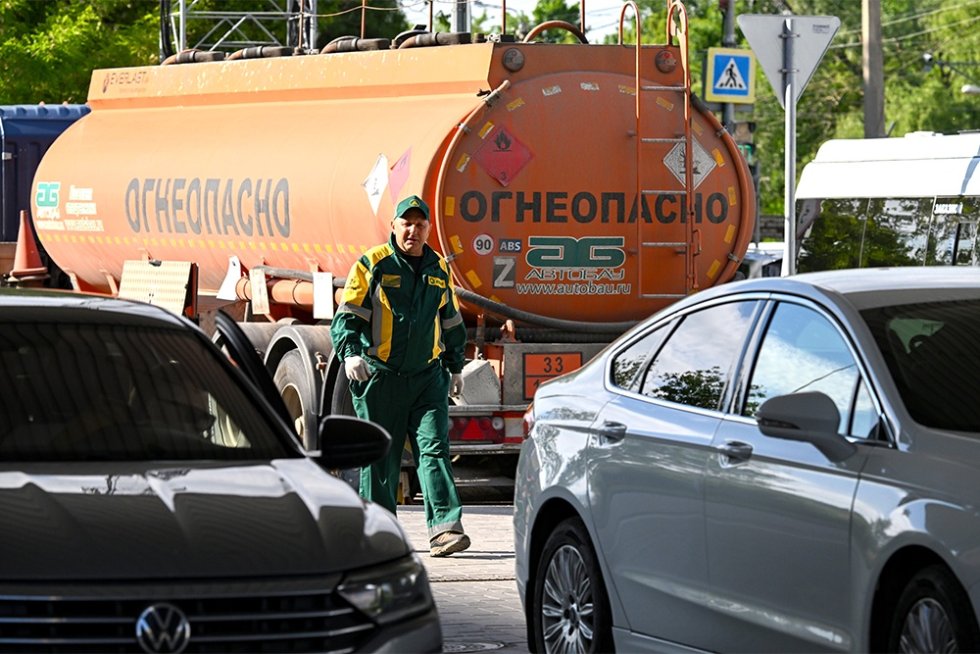
Since the end of May, authorities in various Russian regions have begun to impose restrictions on fuel sales at gas stations. Citizens are reporting shortages of gasoline and diesel fuel, long queues, and rising prices. By the end of last week, the gasoline shortage outbreak reached Moscow, where motorists also found themselves waiting in line at gas stations. By June 23, various fuel sale restrictions had been introduced in 61 regions. Forbes investigated whether this is a genuine fuel crisis or merely a temporary issue, whether it would impact Moscow, and where Russia should consider importing gasoline during this shortage — from China, India, or Belarus.
As of the morning of June 22, according to data from the information agency RZD-Partner.RU, restrictions on fuel sales had been introduced in 53 of Russia's 89 regions. By the evening of the same day, officials from the Saratov, Omsk, Voronezh, and Irkutsk regions announced new restrictions.
On June 23, during a meeting between President Vladimir Putin and government members, Deputy Prime Minister Alexander Novak stated that the current situation in the fuel market is "indeed complicated, but manageable." "What has already been done? First, a total ban on the export of gasoline and aviation kerosene has been introduced, and we are currently considering a complete ban on diesel fuel export," Novak said.
Farmers have appealed for a ban on diesel exports, arguing that it would primarily help ensure the supply to the internal market and agricultural producers.
On May 20, Reuters reported that nearly all major oil refineries in central Russia, which account for about a quarter of the country’s refining capacity, had halted or reduced production due to drone attacks. At that time, authorities asserted that the domestic market for motor fuel remained stable and the industry was prepared for seasonal demand spikes.
By June 23, the number of regions reporting restrictions had risen to 61, meaning purchasing gasoline was already challenging in two-thirds of the country.
Chronicles of Restrictions
The first to impose fuel sales restrictions was Crimea. On May 30, the head of the peninsula's administration, Sergey Aksenov, announced that from May 31, A-95 gasoline would be sold only by coupon, while the sale of A-92 would be limited to 20 liters per vehicle. On May 31, Sevastopol's Governor Mikhail Razvozhayev reported the implementation of coupon sales for automobile gasoline and set limits on gasoline dispensing.
On June 8, the Ministry of Energy acknowledged temporary difficulties in fuel supply in several southern regions due to increased drone attacks. To ensure the stable and effective operation of the country's fuel and energy complex, the ministry established a cross-industry coordination headquarters with the involvement of major oil companies, which has since held several meetings.
On June 10, 15 gas stations in the Krasnodar region ceased fuel sales due to heightened demand, according to regional operational headquarters citing the Ministry of Energy and Housing and Utilities.
On June 13, the head of Tatarstan, Rustam Minnikhanov, reported the introduction of temporary limits at several gas stations after a drone attack on Nizhnekamsk, home to two major oil refineries—TANEKO, owned by Tatneft, and TAIF-NK. On June 17, Tatneft lifted the restrictions imposed at its gas stations.
News continued to escalate. On June 15, Governor Vyacheslav Fedorishchev announced limited fuel dispensing at some gas stations in the Samara region. On June 17, the Ministry of Energy, Industry, and Communications of the Stavropol region reported that several gas stations in the area had limited gasoline dispensing to 100 liters per vehicle. On June 21, Aksenov announced the complete cessation of gasoline dispensing at gas stations in Crimea for individuals and legal entities, with exceptions for government services.
On June 22, during another meeting of the coordination headquarters, Deputy Prime Minister Alexander Novak instructed relevant agencies to prepare an action plan to maintain fuel market stability and for the Antimonopoly Service (FAS) to continue monitoring the pricing situation in the industry and take necessary measures promptly.
On the same day, the FAS reported its actions against speculators. Marketplaces, where fuel sales were already prohibited, had blocked attempts to resell gasoline, according to a statement from the agency. Representatives of major oil traders were also subjected to unscheduled inspections to identify any collusion in stock market trading and initiated a case on violations of the competition protection law against three of them. The service directed regional agencies to enhance price monitoring for fuel sales to agricultural producers.
On June 23, the Neftmagistral gas station network announced plans to lower gasoline prices following FAS inspections. The company stated it had updated fuel prices, reducing them by 15 rubles, with A-95 now costing 79.99 rubles per liter, A-92 at 70.99 rubles, and diesel at 84.99 rubles.
As of the morning of June 23, at least four governors reported limitations on fuel dispensing. By the same date, gas stations in 61 of Russia's 89 regions had already imposed various restrictions on gasoline and diesel sales.
Regional officials claim that these measures are aimed at reducing unreasonable surges in demand and potential speculation in the fuel market.
Price Increase
The existence of a shortage is indirectly supported by the discrepancy in the growth of fuel prices on the stock market and at gas stations, with attention focused on the fact that wholesale pricing is rising faster. Prices for A-92 gasoline on the St. Petersburg stock exchange from June 1 to June 23 rose by 3.6%, from 68,200 to 70,638 rubles per ton, and A-95 by 3.7%, from 75,459 to 78,241 rubles per ton. On January 12, the first trading day of the year, A-92 was priced at 56,673 rubles per ton, 29% lower than on June 23, while A-95 rose by 33% from 59,003 rubles per ton. Diesel fuel prices saw the most significant increase: from 67,467 rubles per ton on June 1 to 73,689 rubles on June 23 (up 9.2%), a 37% increase since the beginning of the year from 53,914 rubles per ton.
According to the latest published data from Rosstat, average prices for automobile gasoline at Russian gas stations from June 1 to June 15 increased by 2% to 65.41 rubles per liter for A-92 and 71.11 rubles for A-95. Year-to-date growth for both gasoline types stands at 6.6%. Diesel fuel prices increased by 1.8% over two weeks in June and by 5.7% since the beginning of the year, reaching 80.78 rubles per liter.
On gas stations, prices as of June 23 were already higher: at Moscow's Lukoil stations, A-95 cost between 72.39 and 73.87 rubles per liter, while A-92 was priced at 65 rubles and diesel at 78.88 rubles per liter. At Rosneft stations, A-95 started at 71.15 rubles per liter, and A-92 was priced between 62.8 and 65.09 rubles, with diesel at 79.35 rubles per liter.
In addition to production cuts due to unscheduled refinery maintenance, rising pricing expectations are impacting costs. Consumers are uncertain about the availability of gasoline and diesel in the coming weeks and months, accelerating price increases regardless of the actual situation regarding petroleum product output, says Sergey Tereshkin, CEO of the oil product marketplace Open Oil Market.
Is There a Genuine Crisis?
Local shortages do exist, but except for the south of the country, they are primarily driven by heightened demand rather than supply disruptions, states Maxim Shevyrenkov, head of the raw materials market analysis center at the Institute of Energy and Finance (IEF). Current quotas at some gas stations are often reasonable and aimed at cooling frenzied demand, the expert believes. "If many motorists arrive simultaneously at a gas station wanting to fill their tanks, they will naturally empty its storage, and gasoline will no longer be available," he explains. "Consumers will then head to neighboring stations and create excess demand there, which could lead to local shortages."
It is premature to speak of a full-fledged fuel crisis across Russia, says Freedom Global analyst Vladimir Chernov. However, he agrees there are local problems, some of which are quite serious. The most affected regions currently include Crimea, Sevastopol, the south, and certain regions of the Volga and Central Russia. If attacks on refineries persist, shortages in areas with complex logistics could increase. Conversely, if the damaged facilities are quickly restored and supplies from other regions, Belarus, and Asia can fill the gaps, the market will gradually stabilize. However, a rapid rollback in prices is not expected, the expert warns.
"There will be no basis to say that anywhere life will stop and transport will cease to operate," assures Stanislav Mitrakhovich, an expert from the Financial University and the National Energy Security Fund. He suggests that certain regions, in addition to increasing external supplies, may need to find solutions through rising fuel prices, consequently reducing demand. "In areas where drone attacks are particularly active, some form of rationing will likely have to be used, which is common during periods of conflict, disasters, and other extraordinary situations," Mitrakhovich adds.
Moscow Without Restrictions
According to local authorities, the drone attacks on the Moscow refinery have not affected the city’s fuel supply. Following the most recent incident on June 18, the capital's municipal services reported that fuel product deliveries to Moscow and the operation of all gas stations in the city continue as normal.
However, there are still queues and limitations on the amount of gasoline dispensed in Moscow and the surrounding areas, and some stations are simply not operational, as Forbes reporters discovered. At a Lukoil station on Bolshaya Cheryomushkinskaya Street, customers were unable to buy more than 30 liters, while at station 1116 of the OTK network in the Moscow region, the limit was set at 20 liters. Late last week, the situation was worse, with higher prices, and to fill a diesel tank, a Forbes reporter had to wait in a queue of 17 vehicles. Some were only able to find fuel at the third station they visited.
The Moscow refinery covers a significant portion of the region’s demand for gasoline, diesel, aviation kerosene, and bitumen, notes Chernov from Freedom Global. Therefore, issues at this plant represent more than just a breakdown at a single facility; they strike at one of the key sources of fuel supply for Moscow, he emphasizes. According to the plant's owner, Gazprom Neft, the Moscow refinery supplies more than one-third of the capital region's fuel market.
At the same time, the situation in Moscow does not currently appear critical: major networks continue to operate, fuel is generally available, and authorities and oil companies are prioritizing supply to the capital region, according to Chernov. He points out that some of the fuel supplies to the city can be diverted from other refineries: Yaroslavl's ("Slavneft-YANOS"), Nizhny Novgorod refinery ("Lukoil-Nizhny Novgorodnefteorgsintez", "Kirishinefteorgsintez" ("Kinef")), Ryazan Oil Refinery (RONK), as well as plants in Tatarstan and the Volga region. "It's not only about the availability of fuel," the analyst states. "It also needs to be transported: tank cars, oil depots, adjustments to railway schedules, and available capacity at the refineries are all required. Hence, replacement is possible but not instantaneous."
Moscow will likely navigate the current situation without experiencing a full-scale fuel crisis because it will be supplied on a priority basis, believes Chernov. However, prices will remain high, and local supply disruptions at certain gas stations may occur, he adds.
At the moment, regarding physical fuel supplies, the capital region does not appear to be at risk of a fuel crisis, agrees Shevyrenkov from the IEF. The Moscow region can be supplied by at least two refineries, in addition to the Moscow refinery — RONK and "Slavneft-YANOS" — and there is potential for supplies from under-capacity Belarusian refineries. Though gasoline from Belarus will be more expensive, it is deemed unlikely that gas stations will run out of fuel, asserts Shevyrenkov. "Currently, available sources suggest that the damage to the Moscow refinery is not particularly severe," he notes. "A few fuel storage tanks have burned, and apparently, a combined primary processing unit has been damaged. Fuel production at the plant will decrease, but historical practice shows that repairs of such units, barring exceptions, take between two weeks and a month. Therefore, barring further accidents, the plant could potentially resume fuel delivery as early as July."
Where to Source Fuel?
According to Reuters, drone attacks have compelled Russia to consider importing gasoline by sea, with unconfirmed sources reporting that the first batch of fuel from one Asian country could arrive as early as June.
The report of potential gasoline imports from Asia appears plausible, although it is a strange situation for Russia—a country that is itself a major exporter of oil and petroleum products, remarks Chernov from Freedom Global. "If fuel is in short supply in certain regions, importing it becomes a viable solution," he asserts. Theoretically, gasoline could be sourced from India, where Rosneft holds a stake in the Vadinar refinery, but since supplier and import volumes are not officially disclosed, this cannot be stated as a fact, Chernov cautions.
The most likely source of supply is China, which in recent years has led in both the introduction of new refinery capacities and the adoption of electric vehicles, adds Chernov. More than half of new car sales in China are already accounted for by electric and plug-in hybrid vehicles, which suggests that gasoline demand in China should gradually decline.
Deliveries of gasoline from Belarus could increase from the current 60,000 tons per month to 200,000 tons or more—sufficient to stabilize the Russian market, believes Shevyrenkov from the IEF. According to him, supplies from Asia are rather a means to calm the market; fuel there is expensive, and logistics to transport it to Russia are commercially unattractive.
Chernov agrees with this view, asserting, "Deliveries from Asia will not systematically resolve the issue. Transporting gasoline by sea is lengthy and costly, and then it needs to be distributed domestically. This is more of an emergency measure to fill gaps in the market than a new supply scheme."
Source:
Forbes