In practice, this means that prices on the exchange are effectively frozen, at least for increases. However, they have risen significantly since the beginning of the year: gasoline AI-92 - by 25%, AI-95 - by 33%, and DT - by 34%. This unique cap on prices makes it impossible for them to experience sharp spikes due to news of attacks on Russian oil refineries (NPZ) or surges in global oil prices due to crises in the Middle East. With such a growth limit, exchange prices can only increase by a maximum of just over 0.2% in a month. For wholesale fuel buyers—major agricultural producers, transportation, and construction companies—this means that they no longer need to fear unpredictable hikes in costs due to rising fuel prices. For gas stations (AZS), it means that the economics of refueling will not worsen day by day or week by week. Such concerns have often led to inflated prices at gas stations or, at times, to the temporary closure of operations. However, the aforementioned applies only to wholesale fuel buyers on the exchange, while a significant portion of fuel is sold in the market bypassing the exchange.
As noted in a conversation with "RG" by Yuri Stankevich, Deputy Chair of the State Duma Committee on Energy, the decision was made as an emergency response to a sharp spike in exchange prices. The primary goal is to artificially limit the speculative surge in fuel costs within trading sessions and cool down the overheated market. However, it is important to understand that this measure operates solely within the framework of organized exchange trading. It does not directly apply to over-the-counter contracts and the small wholesale segment. In these areas, pricing is determined by the balance of supply and demand, as well as long-term contracts between suppliers and buyers. Although exchange indicators serve as a benchmark for the market, limiting price growth on the exchange does not automatically ensure the cessation of fuel price increases in the over-the-counter segment or for small wholesale buyers. Nevertheless, stabilizing exchange prices can exert psychological pressure on participants in other market segments and slow down inflationary expectations.
According to Dmitry Gusev, Deputy Chair of the Supervisory Board of the association "Reliable Partner," and member of the Expert Council of the "Gas Stations of Russia" competition, the growth is not frozen but rather paused to prevent the escalation of wholesale prices, thus maintaining the economics at gas stations and in small wholesale. This measure will influence over-the-counter contracts since they reference exchange prices. In the small wholesale segment, the impact will be less significant, as no restrictions are currently in place for this market segment. However, expert opinion suggests that such measures may be necessary.
A different perspective on the issue comes from Sergey Tereshkin, CEO of Open Oil Market. He is confident that the market will always find a loophole. According to current regulations, the exchange accounts for only 15% of physical gasoline sales by producers and 16% of DT. More than 80% of the fuel produced is sold through other channels. Most importantly, this measure is unlikely to help fuel retail, as in the over-the-counter segment prices for gasoline AI-92, AI-95, and DT are near the threshold of 110,000 rubles per ton.
It should also be noted that the rising prices at the exchange and gas stations are not due to the greed of oil producers or gas station owners. Currently, the issues are related to supply disruptions and delays, as well as the risk of fuel shortages. There is certainly an element of "unhealthy" panic in the market, but such panic alone does not account for the limits on fuel supply at gas stations.
The limitation on the daily price increase on the exchange makes sudden spikes in prices impossible.As Sergey Frolov, managing partner at NEFT Research, points out, measures to prevent the possibility of price surges are being taken against the backdrop of a real emerging supply deficit and an enthusiastic demand. Prices at major gas station chains owned by vertically integrated oil companies (VINK — which cover the entire production chain from oil extraction to fuel sales at gas stations) will be kept as close to inflation levels as possible. It is important to wait out a period until government measures begin to take effect. The situation at independent gas stations (more than half of the stations in Russia) is complicated—not only due to pricing but also because of the capacity to procure the required amounts of fuel. Some will raise prices under these circumstances, while others may cease operations. Independent gas stations will find it increasingly challenging to compete with VINK gas stations. Selling ancillary goods and services is beneficial, but when your fuel is much more expensive or unavailable, customers simply will not come, emphasizes the expert.
In Stankevich's view, there is no direct and immediate connection between exchange restrictions and retail prices. The cost of a liter of fuel at a gas station is composed of many components: wholesale prices, transportation costs, margins of gas station chains, and, notably, fiscal burdens (excise duties). In Russia, retail price dynamics are traditionally more inert and smoothed compared to the wholesale market due to subsidy mechanisms (payments to oil producers from the budget for supplying fuel at prices lower than export prices) and regulation by the FAS. However, if exchange prices continue to rise unchecked, this would inevitably lead to increased costs for gas station owners and subsequently higher prices for end consumers. Freezing exchange prices helps to sever this chain and create conditions for stabilizing or even potentially lowering retail prices in the future, provided stable demand persists and there are no new external shocks.
Currently, we benefit from falling oil prices due to decreasing tensions in the Middle East. Subsequently, prices for petroleum products should also decline. However, some time is needed to ensure that the truce is not violated by the parties involved. Consequently, a key question arises regarding how long this growth limitation will remain effective. In the short term, it has the potential to halt price increases and smooth out fluctuations in fuel prices. Yet over a period of one to two months, if fuel supply issues persist, its impact may diminish. Prolonged manual market regulation typically does not lead to positive outcomes.
Overall, the exchange represents the most transparent segment of the fuel market, and any restrictions on exchange trading will likely encourage the market to operate "in the shadows," where prices exceed exchange levels significantly, asserts Tereshkin.
Stankevich, however, counters that introducing price change limits is a classic tool of administrative regulation. The government and regulatory bodies are compelled to resort to manual management to stabilize the situation in the short term. However, it is premature to speak of a complete shift of the fuel market towards manual management. Exchange trading with established limits is only one tool for control. The market continues to function based on fundamental economic factors: oil production volumes, refining activity, tax policy, and logistics costs. Thus, this is a matter of reinforcing supervisory measures during a crisis period, while fundamental market mechanisms remain in place, emphasizes the expert.
According to Gusev, people should pay attention to alternative forms of transportation. Not just horses and donkeys, but gas-powered vehicles and the rapidly developing electric vehicle market. Opting for a car that uses fuel that will not cause price irritation is a viable choice, believes the expert.
In the meantime,In Sevastopol, there has been an increase in the availability of gasoline for sale. Authorities have managed to boost fuel supplies and are preparing for a gradual lifting of sales restrictions. Meanwhile, refueling using QR codes will still be maintained to manage queues at gas stations. A correspondent from "RG" checked on the situation in the region today. As of June 17, fuel was available for sale at 11 gas stations, and their number is increasing daily. On June 16, there were ten such stations, and on June 15, eight. Motorists are feeling relieved. Those who had long struggled to find fuel were finally able to refuel. However, they are currently restricted to 20 liters at a time, an ongoing limitation since May 22.
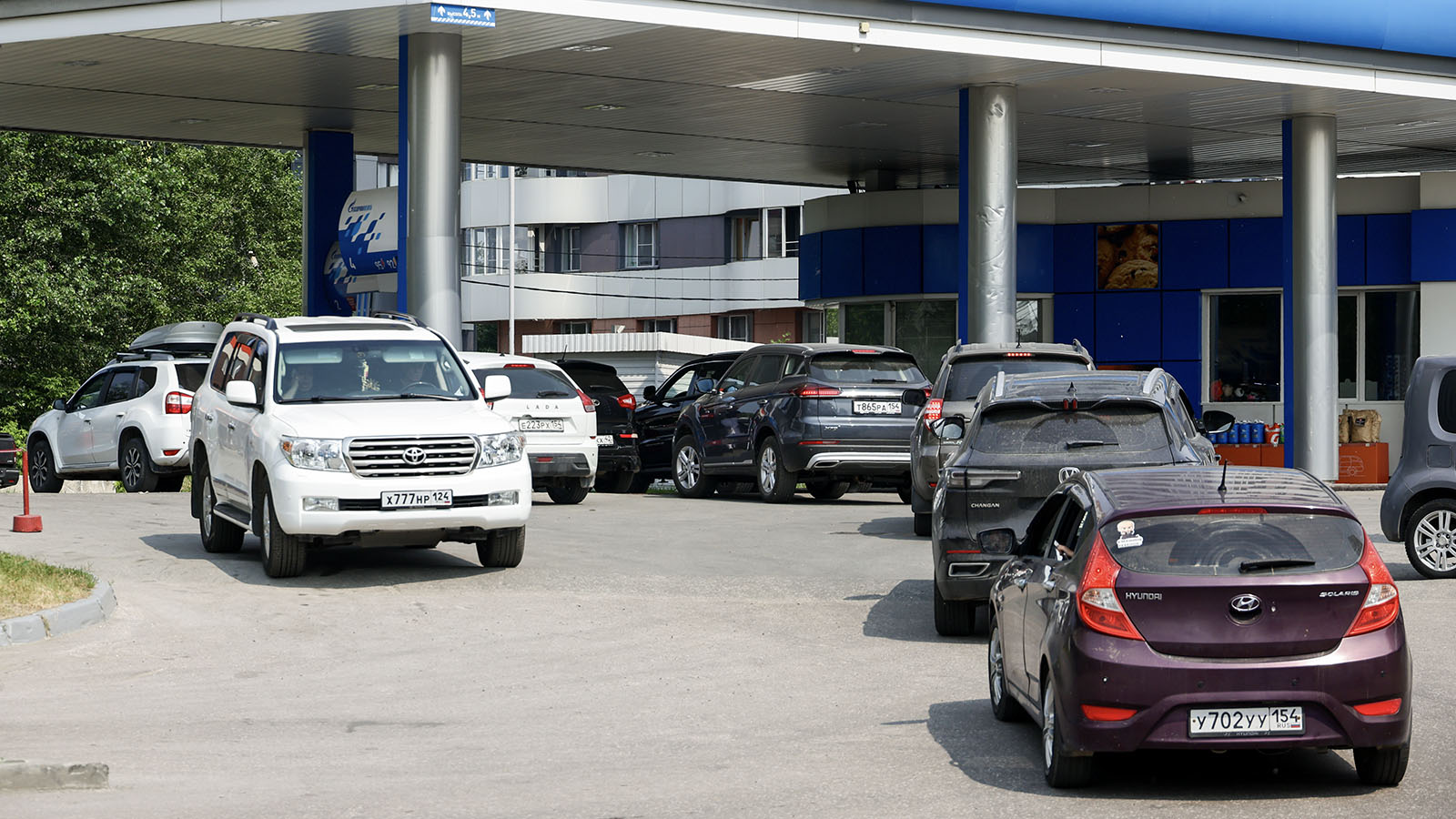
Queues started forming at the gas stations on Wednesday morning. More than 60 cars were waiting at the "ATAN" gas station on Stoletovskyi Avenue. This station has AI-92 and AI-95 Ultra available for free sale. Motorists organized the queue in such a way that they did not block the roadway or intersections. Sales commence at 9 AM, and at 9:20, an air raid alert was announced. During this time, the gas station does not dispense fuel. People wait patiently. Motorists are friendly and readily answer questions.
"It has become easier to find fuel in the last couple of days," says Kia driver Sergey. "The AI-92 can be found almost anywhere; the AI-95 is a bit rarer."
Initially, gasoline and diesel are provided for public services, emergency services, and law enforcement agencies. Remaining volumes are allocated to residents through QR codes.
Source: RG.RU