Current prices for Russian oil at loading ports are around $70 per barrel, which is almost equivalent to the average level expected for 2024. While production volumes may have decreased slightly, the only factor lowering payouts is a stronger ruble compared to two years ago.
Taking this into account, in March (to be reported in April), oil companies could channel over 730 billion rubles to the budget through the main industry tax on mineral extraction (NDPI). This will be supplemented by payments under the additional profit tax (NDD), which will be made in April for the first quarter of this year. In January and February, prices for our oil were low, at $40.95 and $44.59 per barrel, so the payout volume is unlikely to exceed 300 billion rubles significantly. Revenues from the gas sector are likely to remain at the previous level of around 170 billion rubles.
As a result, receipts from the oil and gas sector in April could exceed 1.2 trillion rubles. However, the government pays subsidies to oil companies from the budget—reverse excise taxes, investment tax deductions, and various others. Their size is also set to increase. If we look towards 2024 with the current ruble exchange rate, this may approach 130 billion rubles.
Moreover, there is a damping mechanism—compensation from the budget to oil companies for delivering fuel to the domestic market at prices below export levels. The amount of these payments is directly proportional to the difference between the export alternative (prices in Europe) and the indicative (government-assigned for the year) prices for the domestic market.
The damping can even turn negative. When the export price of fuel falls below the indicative prices, oil companies must pay the resulting difference to the budget. This occurred back in January, leading to oil companies paying 18.8 billion rubles under the damping system in February. Following this, Deputy Prime Minister Alexander Novak tasked the Ministry of Finance and the Ministry of Energy to analyze proposals for adjusting the mechanism to align it with new market conditions and support the profitability of oil refining. The situation escalated due to events in the Middle East, pushing global oil prices up. The damping mechanism once again became favorable for oil companies.
Consequently, budget revenues from the oil and gas sector could rise to a very successful level akin to that of 2024 by the end of March.
If we again consider the parameters of 2024, the damping payments for March may reach around 150 billion rubles. Reuters has estimated potential payments at 130 billion rubles. Therefore, the overall budget revenues from the oil and gas sector in April (payments for March) may total approximately 900 billion rubles. In January of this year, these revenues reached 393.3 billion rubles, increasing to 432.3 billion rubles in February.
This raises two questions. First, is there a risk that the government, faced with an anticipated budget deficit, might revise the damping payment rules, this time not in favor of oil companies but by cutting their payments instead? It is clear that the crisis in the Middle East is unlikely to last very long. Too many countries and interests are vested in its swift resolution. Once it resolves, oil prices may drop back to where they were at the beginning of the year (around $60 per barrel). Even with a reduction in the discount on our oil, about which only Western news agencies have reported, it could trade for $40-$50 per barrel, or potentially even less. Consequently, budget revenues from oil will also decline, and there exists a chance to gain additional billions for the treasury now.
However, as Dmitry Gusev, Deputy Chairman of the Supervisory Board of the "Reliable Partner" Association, noted in a discussion with "RG," the damping is essentially the sole incentive measure for oil refining in Russia. Refineries need support; we do not want to end up without fuel. Moreover, everyone remembers how the last attempt to halve the damping for oil companies ended (the fuel crisis of autumn 2023).
A similar view was expressed by Sergey Tereshkin, CEO of Open Oil Market. He argued that the increased damping payments won't pose a serious problem for the budget, as in the current conditions, not only subsidies for oil refineries will increase, but so will revenues from NDPI on oil. It is likely that the subsidy calculation rules will not change in the coming months.
According to Sergey Frolov, Managing Partner of NEFT Research, making urgent changes to the Tax Code is currently impractical, as it is unclear how long the Middle Eastern crisis will last.
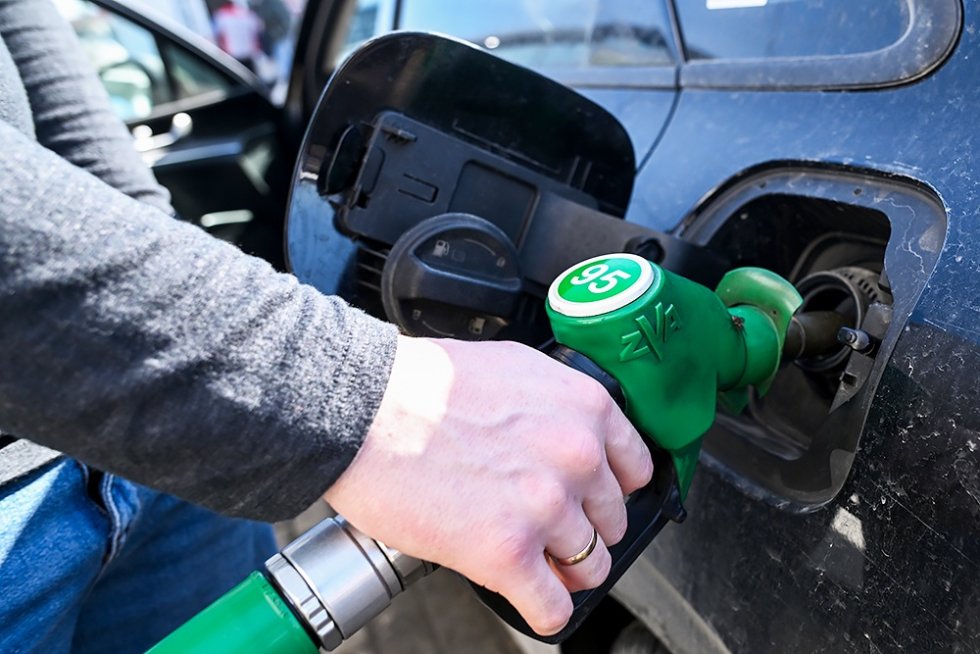
The second question pertains to fuel prices in the domestic market. Since the beginning of March, exchange prices for gasoline and diesel fuel have risen, currently hovering at the highest levels seen this year and gradually approaching the peak values of last autumn. In the retail sector, the Russian domestic fuel market is under strict scrutiny from regulators, who aim to prevent prices at gas stations from rising above inflation. However, despite stringent control, gas stations primarily purchase fuel through exchanges or oil depots based on market trades, which are in turn influenced by export alternatives (fuel prices for foreign deliveries).
If gas station prices begin to surge significantly, the government may quickly reinstate a full ban on fuel exports.Currently, Rosstat records a modest increase in prices at gas stations, slightly lagging behind average consumer inflation. But conditions can change rapidly. The Moscow Fuel Association has already noted a sharp rise in gasoline prices at gas stations in the capital—on average 21 kopecks for AI-92 and AI-95 last week.
Nevertheless, experts remain calm regarding this issue. Frolov explains that two reasons underpin the increase in exchange quotations for fuel. The first is seasonal. Fuel consumption is rising both in the private sector and in freight transportation, plus there is a significant increase in consumption in agriculture as fieldwork begins. The second reason is situational. The sharp increase in oil and petroleum product prices, linked to the attacks by the US and Israel on Iran, has inevitably affected Russia, one of the world's largest producers and exporters of petroleum products. However, the damping mechanism will somewhat mitigate these effects. Additionally, the government always has the option to impose a total ban on fuel exports, which would curb price growth. Therefore, the outcome lies in the hands of the regulator, and it is crucial to avoid delays in making necessary decisions, a recurring issue in previous years.
Although Tereshkin believes that new export restrictions are unlikely. The rise in subsidies and increased revenues from petroleum product exports will enhance the profitability of oil refining. This is expected to alleviate price pressures in the domestic market. To achieve additional revenues, oil companies will not need to raise wholesale prices significantly, suggesting that the retail situation may remain relatively stable. Overall, somewhat paradoxically, the rise in global oil and petroleum product prices may lead to a temporary stabilization of the fuel market in Russia, according to the expert.
Source: RG.RU