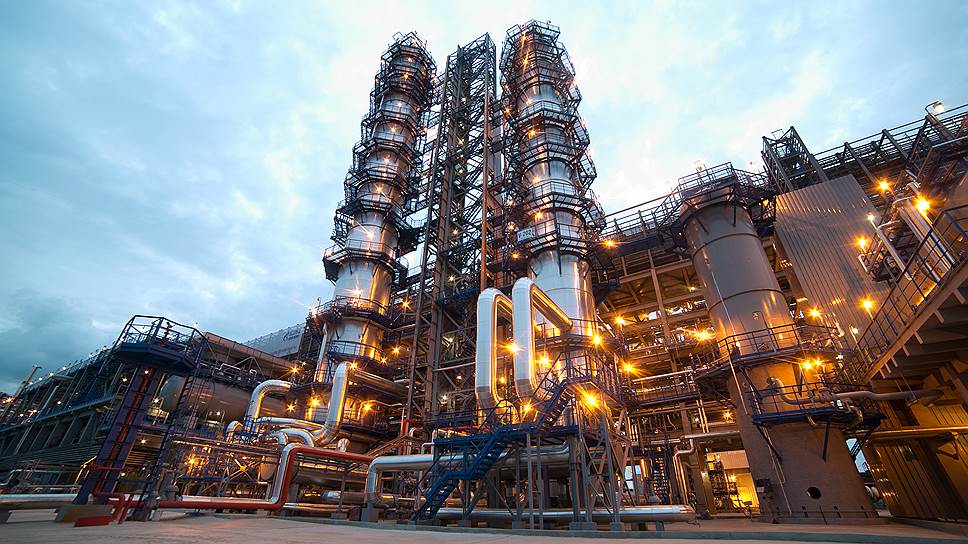
The tightening of environmental and tax policies, as well as expectations of declining oil demand, could lead to a reduction of up to 21% in global refining capacities by 2035. This is stated in a study by the company "Implementa," which was reviewed by "Izvestia." According to experts, around 10% of such production facilities have already been closed worldwide over the past decade. The majority of closures occurred in China, Europe, and North America. This article explores Russia's position in this market and what awaits domestic refineries amid the global transformation of the industry, according to "Izvestia."
What Are the Prospects for Global Oil Refining?
Over the past few decades, environmental and tax policies in the oil refining sector have undergone significant changes, driven by global environmental trends, the transition to sustainable development, and shifts in the world energy landscape. Amid this backdrop, approximately 10% of refining capacities (9 million barrels per day) have already been reduced globally, with an additional 21% (18.4 million barrels per day) at risk of closure by 2035. This is according to a study by "Implementa," reviewed by "Izvestia."
From 2015 to 2025, the highest number of closures has occurred in the Asia-Pacific region (19%) and China (30%). In Europe, 20% of the global reduction took place, while North America, the Middle East, and other countries saw reductions of 5% and 7%, respectively.
The study notes that in China, from 2015 to 2018, primarily small, low-technology refineries with a total capacity of 1.8 million barrels per day were closed. Experts also cite the tightening of environmental and tax policies among the reasons for these closures.
In Europe, in 2016, the La Mede plant (153,000 barrels per day) was closed due to low efficiency. Three years later, the site was repurposed for biodiesel production. In 2019, American Philadelphia Energy Solutions (330,000 barrels per day) went bankrupt. Its facilities were later converted into warehouses and distribution centers for non-fuel products.
Looking ahead, according to "Implementa," the structure of refinery closures by region will change significantly. By 2035, Europe could lose nearly half—or 49%—of its capacities, amounting to 6.5 million barrels. In China and other Asia-Pacific countries, 16% and 18% of refining capacity, respectively, may be shut down, while the Middle East could lose 41% of its capacities, and North America 7%.
According to Ivan Timonin, head of projects at "Implementa," 101 out of 420 refineries are at risk. The most vulnerable are old, small, and expensive plants lacking deep processing and petrochemical integration.
How the Green Agenda Affects Oil Refining
According to Energy Monitor's data for 2024, China was the leader in refining capacity, processing nearly 18.5 million barrels of oil per day. The United States and Russia occupied the second and third positions, with figures around 18.4 million and 6.7 million, respectively.
According to Ekaterina Kosareva, managing partner at "VMT Consult," there is currently a tightening of environmental standards and tax legislation worldwide.
— Many countries have strengthened their emission, fuel quality, and environmental monitoring requirements. As part of the EU's "Green New Deal," there is a goal to achieve carbon neutrality by 2050, which will have a significant impact on the oil and gas industry. Russia also has a strategy aimed at achieving net-zero greenhouse gas emissions (climate neutrality) by 2050, — the expert reminded.
Ivan Timonin noted that the reduction in global refining capacities is not primarily connected to a sharp decline in the demand for oil products but is instead due to the worsening economic efficiency of some refineries.
— Several factors are creating pressure: a slowdown in demand for gasoline and diesel, electrification of transportation, rising environmental and carbon costs, as well as competition from large, modern complexes in Asia and the Middle East. China, which has been a main driver of hydrocarbon demand growth, may peak in oil consumption as early as 2027-2030. By the end of the decade, the share of traditional vehicles with internal combustion engines in global sales is expected to drop below 50%, — noted the expert.
According to Sergey Tereshkin, CEO of Open Oil Market, the slowdown in demand growth for oil will hinder the introduction of new capacities in China, while refineries in Europe and North America will continue to reduce their capacities.
— Overall, the industry will adapt to the changing market conditions: demand for aviation fuel and low-sulfur fuel oil and gas oil for maritime transport will continue to grow, while gasoline consumption is likely to plateau, — Ivan Timonin stated.
What Awaits Russian Refineries?
In Russia, as of 2025, about 30 large refineries and approximately 80 mini-refineries are in operation. Their total capacity is estimated at 328 million tons of oil per year.
The country's energy strategy project through 2050 aims to maintain refining volumes while increasing the export of oil products. Under this target scenario, production is expected to reach about 275 million tons, with shipments abroad rising from 132 million tons in 2024 to 146 million tons in 2050.
The authors of the strategy expect this growth to be driven by the transition of Russian motorists to gas motor fuel and other types of eco-friendly transportation. Additionally, the depth of refining at refineries is expected to increase from 84.4% in 2024 to 95% by 2050.
According to Ivan Timonin, Russia is in a different logic compared to Europe or China. For domestic refining, the main challenges include energy transition, sanctions, logistics, access to technology, and infrastructure resilience.
At the same time, Russian exports have already significantly adapted to the new geography. The share of friendly countries in the export of domestic oil and gas condensate has increased from 41% in 2021 to 96% in 2025, while for oil products, it rose from 18% to 80%, even as the physical volume of exports decreased from 133 million tons to 107 million tons.
— In the long term, demand is shifting towards countries outside the western bloc: by 2040, they may account for about 62% of global oil consumption. Therefore, for Russia, the question is not so much about mass refinery closures but rather about the technological and economic resilience of the industry. The priorities are chemicalization, deep processing, digitization, import substitution of critical technologies, and the production of higher value-added products, — Ivan Timonin emphasized.
A separate factor is the slower transformation of domestic demand, the expert highlighted.
— In Russia, gas motor fuel is developing faster than electric vehicles, but the overall share of passenger cars using alternative fuels remains less than 5%. This means that the internal market for oil products will change at a slower pace than in Europe; however, this does not negate the need to modernize refineries, — he said.
It is crucial for Russia to maintain its market niche as one of the largest suppliers of diesel fuel, believes Sergey Tereshkin. He stated that this is a realistically achievable task, as the electrification of freight transportation will progress more slowly than that of passenger vehicles.
Since 2028, a mechanism for "reverse excise duty on crude oil" has been in place in Russia, incentivizing companies to modernize their refineries, reminded Ekaterina Kosareva.
— I do not rule out that some low-technology mini-refineries may close due to difficulties in selling products both in external markets and domestically due to price pressures from petrochemical monopolists. However, modern refining complexes will continue to develop. Currently, at least two plants in the Far East are under development, — the expert noted.
In the West, in her opinion, the green agenda is being artificially imposed within specific timelines at the legislative level, preventing the market from developing organically, which could lead to serious fuel crises in the future.
Source: Izvestia