The EU, as part of its 20th sanctions package, has imposed new restrictions on the Russian oil industry, the LNG market, and has prohibited the import of platinum, copper, nickel, aluminum products, molybdenum, and cobalt, according to the regulation released on April 23 by the EU Council.
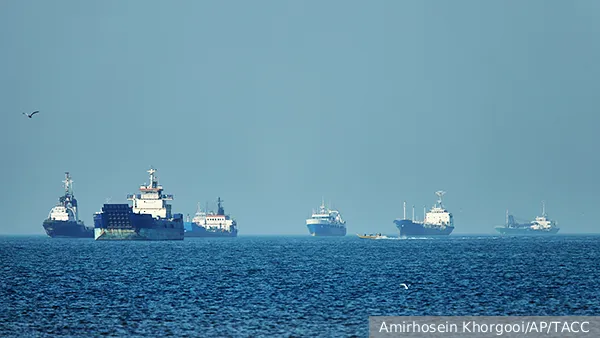
There is no announced ban on the provision of services for the transportation of Russian oil in the new package. However, the EU Council reported that this package includes a "basis for a future ban," which will be carried out in coordination with the G7. According to the regulation, it is deemed appropriate to adjust the price cap on Russian oil and petroleum products. It is expected that new restrictions will be introduced upon the proposal of the EU Foreign Affairs Representative. "This will allow alliance members to swiftly block the maritime logistics of Russian oil in the event of changes in the price cap parameters," the document states.
The EU has considered the ban on servicing maritime transportation of Russian oil as an alternative to the price cap mechanism, noted Kpler.
Currently, if the raw material's price does not exceed the cap, companies from the EU and G7 countries can participate in transporting oil from Russia. Since February 1, the EU and the UK have lowered the limit to $44.1 per barrel from the previously set $47.6 per barrel. The price ceiling is to be reviewed every six months to remain 15% below the average market price.
According to S&P Global, the push for full support from the G7 could postpone the decision on banning the provision of services for the transportation of Russian oil for several months. Representatives from major shipping economies, including Malta and Greece, as well as Hungary and Slovakia, opposed the move, analysts indicated.
Data from S&P Global Commodities at Sea and Maritime Intelligence Risk Suite show that in March, G7-affiliated tankers accounted for 20.3% of Russian oil exports, amounting to 3.4 million barrels per day. This is down from 29.2% in February and represents the lowest level in ten months. G7-affiliated tankers are reducing their shipments of Russian crude due to rising prices following the outbreak of conflict in the Middle East.
- The EU sanctions have targeted Bashneft (the largest shareholder is Rosneft), Slavneft (owned by Rosneft and Gazprom Neft), the ports of Primorsk and Tuapse, as well as 12 refineries in Russia, including Lukoil.
- 46 additional vessels have been banned from entering ports and providing maritime services, bringing the total blacklist to 632 tankers.
- The EU also imposed restrictions on the sale of tankers from EU countries to prevent their ultimate use by Russia, as indicated in the document. European nations are now required to provide documentation stating that tankers are "not for Russia."
- Additionally, the ports of Murmansk and Karimun in Indonesia have fallen under European restrictions.
As reported by Reuters, by 2025, Karimun became one of the main transshipment points for Russian petroleum products, which were then exported to Malaysia, Singapore, and China. In December, the supply volume was estimated at 300,000 tons.
Sergey Tereshkin, CEO of Open Oil Market, states that the role of tankers registered outside the EU and major OECD countries will likely become even more significant in the transportation of crude from Russia. While a reduction in re-export through the Karimun terminal poses risks, he believes that another similar location will likely be found. Overall, he notes that the main impact of the current sanctions package will be increased logistics costs. Moreover, unlike the United States, the EU lacks a mechanism to monitor previously imposed restrictions, he adds.
Regarding LNG, the EU intends to impose a ban on providing services to Russian companies for LNG terminals starting January 1, 2027. The European Commission believes that this ban provides operators of LNG terminals in the EU with an automatic basis to terminate long-term contracts with Russian companies. Marat Samarsky, advisor at Verba Legal, indicates that general foreign and security policy takes precedence over other legal sectors. "We have seen this in prior cases and more recent ones, where the court upheld the emergency imposition of sanctions without verification of the reasons given the urgency of effectiveness," he observes.
Services at LNG terminals include, among other things, unloading, storage, dispatching, docking, regasification, liquefaction, loading into tank trucks, and bunkering of LNG, including temporary storage, etc. The Yamal LNG facility (with 50.1% owned by Novatek and 20% by TotalEnergies) has a 20-year agreement with Belgium's Fluxys LNG for the use of a storage tank for LNG transshipment at the Zeebrugge terminal. A ban on re-exporting Russian LNG to third countries in EU ports took effect in April 2025, after which Russia increased its supplies to the European market.
The new sanctions also introduce a ban on services—technical, financial, or brokerage—to Russian LNG tankers and icebreakers, starting April 25, 2026.
Beginning January 1, a ban on supplying LNG to the EU under long-term contracts will come into force, while for short-term contracts, the ban starts on April 25, 2026. Due to the conflict in the Middle East, there have been isolated calls from European businesses to reconsider this ban. For instance, Claudio Descalzi, CEO of the Italian group Eni, stated that it remains unclear how the bloc could compensate for the loss of approximately 20 billion cubic meters of Russian LNG. However, the European Commission has stated that it will stick to its previous intentions. Recently, European Commissioner for Energy Dan Jørgensen asserted that the EU would not abandon its plans to stop purchasing any Russian energy, as doing so would be "a tremendous mistake."
Analysts did not expect significant impacts from the new restrictions on metal supplies for Russia (see “Kommersant” from February 9). For instance, Nornickel reported in its 2024 reporting that it has reallocated a significant portion of its sales of copper, nickel, and precious metals from Europe primarily to Asian and Russian markets.
Source: Kommersant