Global and Russian Energy Sector News as of October 26, 2025: Intensification of Sanctions, Strong Winter Preparations, Renewable Energy Records, and Stabilization of the Russian Fuel Market.
Current events in the fuel and energy complex (FEC) as of October 26, 2025, are unfolding against the backdrop of escalating sanctions between Russia and the West and the approaching winter season. The sanctions confrontation has entered a new phase: the United States has imposed direct restrictions on leading Russian oil and gas companies, urging allies to completely cease trade in Russian energy resources. Reports indicate that India and China may reduce their imports of Russian oil due to external pressures—though New Delhi and Beijing have not officially confirmed these plans, the mere signals of such intentions amplify market uncertainty. Meanwhile, the European Union is tightening its sanctions regime by closing remaining loopholes, including a ban on the re-export of oil products derived from Russian raw materials through third countries.
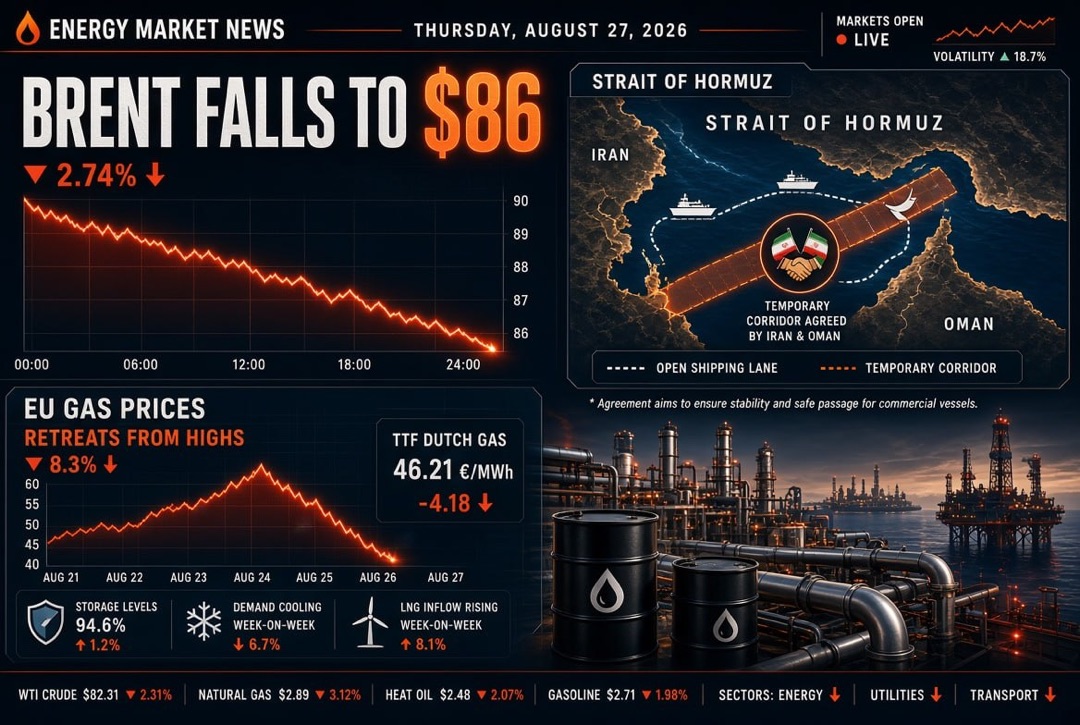
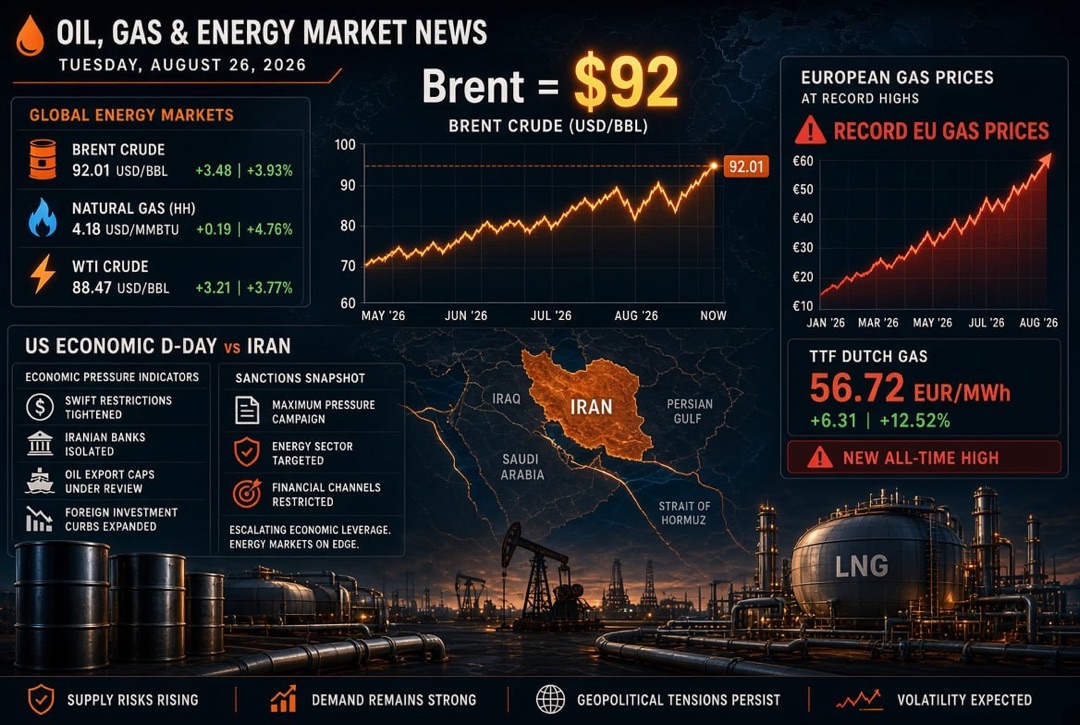
At the same time, global commodity markets are demonstrating relative stability. Oil prices, after a brief dip when Brent fell below $60 per barrel, are holding steady in the range of $60–62 due to ample supply. The European gas market is entering winter with record fuel stocks (storage facilities are over 95% full), which has allowed gas prices to drop to a comfortable level (TTF index around €30 per MWh)—provided the weather remains mild. Against this backdrop, the global energy transition continues to accelerate: investments in renewable energy are reaching new heights, and the share of clean sources in global generation is steadily increasing, even as oil, gas, and coal remain critically important to meet demand.
In Russia, the domestic fuel market has notably stabilized following emergency government measures. By mid-October, the acute shortage of gasoline and diesel observed at the end of summer has largely been resolved: wholesale prices have eased from peak levels, independent gas stations have resumed normal fuel sales, and supplies have returned to normal in most regions. Nevertheless, authorities continue to closely monitor the situation ahead of winter—export restrictions on oil products and support measures for refineries remain in place to ensure uninterrupted supply to the domestic market. Below is an overview of key news and trends in the oil, gas, electricity, renewable energy, coal sectors, and the Russian fuel market as of this date.
Oil Market: Oversupply, Sanction Risks, and the Indian Factor
Global oil prices remain under pressure due to an oversupply and weakening demand. Brent is hovering around multi-month lows (~$60 per barrel), significantly below levels from a month ago. The market anticipates that by the end of the year, oil supply will exceed demand: OPEC+ countries continue to increase production, and major producers outside of the cartel (the U.S., Brazil, etc.) are producing record volumes. Meanwhile, consumption growth has slowed amid a weak economy in Europe and China and previous high prices, resulting in rising global oil inventories, which exert downward pressure on prices.
- New Sanctions and Geopolitics. Sanction pressure on the Russian oil sector has intensified: the U.S. has imposed sanctions against major Russian oil companies, calling on allies to enforce a full embargo and thwart circumvention schemes ("shadow fleet" of tankers). Military risks remain as well—drone attacks on oil infrastructure in Russia continue, temporarily disabling certain refineries. These factors keep the market volatile: any escalation could curtail supply and trigger price spikes, despite the overall oversupply of oil.
- Flow Redirection: India under Pressure. The largest buyer of Russian oil—India—may reduce imports from Russia under Western influence. The share of Russian crude in India's imports exceeded 30%, and stepping away from it would compel Moscow to seek new buyers or cut production. Analysts estimate that the lost volumes for India can be compensated by suppliers from the Middle East, Africa, and America, preventing a global shortage. However, for Russian oil companies, losing the Indian market would mean a decline in export revenues. News of a possible "turnaround" by India temporarily supported oil prices, but fundamental factors remain weak. Analysts believe that ~$60 per barrel for Brent now acts as the lower price boundary: surplus supply prevents oil from rising in price, while sanction risks keep prices from falling significantly lower. Oil companies and investors in this market are adopting a cautious stance.
Natural Gas: A Comfortable Winter in Europe and an Eastern Vector for Russia
The European gas market is confidently welcoming winter. Underground storage in the EU is filled to record levels, creating a solid reserve for potential cold spells. Thanks to this and record LNG imports (in the autumn, there has been a significant influx of liquefied gas supplies from the U.S., Qatar, and other countries, released due to decreased demand in Asia), wholesale gas prices in the EU are being maintained at low levels. The TTF index has stabilized around €30 per MWh—significantly lower than peaks in the autumn of 2022. The risk of a gas shortage this winter has been greatly reduced, although it still depends on weather conditions and the stability of LNG supply.
Having lost the European gas market, Russia is rapidly shifting its export focus to the East. Pipeline gas supplies to China through the Power of Siberia pipeline have reached record volumes, nearing design capacity. Concurrently, the Power of Siberia 2 pipeline project through Mongolia is advancing to further increase exports to Asia. Sales of Russian LNG are also increasing: with the launch of new lines in Yamal and Sakhalin, additional shipments of liquefied gas are being directed to China, India, and other countries. Nevertheless, the total gas export from Russia remains below pre-sanction levels—fully replacing the European market is currently impossible. Gas companies are developing infrastructure and signing long-term contracts in Asia to strengthen their position in Eastern markets.
Renewable Energy: Record Growth and Integration Challenges
Renewable energy sources are projected to account for about one third of global electricity generation in 2025, coming close to the volume produced by coal for the first time. Investments in renewable energy are hitting historic records, having surpassed investments in fossil fuels, spurred by active government incentives. However, the rapid growth of solar and wind generation also presents challenges: energy systems require significant storage capacity and reserve, while the development of grid infrastructure often lags behind. In some regions, limited grid capacity and a shortage of specialists are delaying the commissioning of new renewable energy stations. Addressing these issues is crucial for further sustainable growth in green energy.
Coal Sector: Demand in Asia and Accelerated Phase-out in the West
High coal demand persists in Asia, supporting the global market. This summer, due to abnormal heat and temporary production disruptions, China and other East Asian countries sharply increased coal imports for power plants—this has kept prices from falling. Simultaneously, developed economies are accelerating the phase-out of coal generation: old thermal power plants are being decommissioned, few new projects are underway, and the share of coal in global electricity generation has already dropped to around 25%. Coal companies are profiting in Asian markets but must prepare for declining demand—diversifying their business and optimizing costs. Governments are developing support programs for mining regions to mitigate the social consequences of the coal phase-out. The global trend indicates that the role of coal will continue to diminish as climate agendas are implemented.
Russian Fuel Market: Easing the Crisis and Domestic Priority
By the end of October, efforts to improve the situation in the Russian fuel market following the late summer crisis have largely succeeded. Emergency government measures in September and October resolved the shortage of gasoline and diesel: wholesale prices have declined, gas stations have resumed normal fuel sales, and supply has stabilized in most regions. To prevent a new escalation, authorities have extended a full ban on gasoline exports and strict restrictions on diesel export until the end of the year. The fuel damping mechanism has also been maintained—the government will continue to compensate oil refiners for the difference between export and domestic prices, encouraging supplies to the domestic market. Oil companies have been advised to maximize fuel output ahead of winter (by postponing non-critical refinery repairs), and import tariffs on gasoline and diesel have been eliminated until mid-2026 to potentially attract additional resources from abroad. Moreover, price controls at gas stations have been tightened: the Federal Anti-Monopoly Service is suppressing cases of unjustified price increases while avoiding direct administrative intervention.
As a result, motor fuel production in Russia has returned to normal and current internal needs are fully met. The government asserts that the autumn measures will ensure a uninterrupted supply of gasoline and diesel throughout the winter season. Export restrictions will be lifted only as the domestic market stabilizes and fuel reserves are formed. Although oil companies are temporarily forgoing export revenues, losses are compensated by damping payments and stabilization of domestic sales. The crisis of 2025 highlighted the necessity of modernizing the fuel industry—ranging from expanding storage capacities and improving logistics to increasing the depth of oil processing. These areas are now under special government oversight to prevent similar situations in the future. Thus, the Russian FEC is entering winter under heightened state supervision, and the internal stability of the fuel market bolsters the confidence of market participants and investors.