Current Startup and Venture Investment News for Thursday, June 18, 2026: AI Agents, Physical AI, Sovereign AI, Defence Tech, and Robotics Become Key Focus Areas for Venture Funds
As of Thursday, June 18, 2026, the venture market remains under the influence of three key themes: artificial intelligence for business, technological sovereignty, and startups transitioning AI from the digital realm into the physical world. For venture investors and funds, this signifies a shift from general interest in generative AI to a more mature selection of companies; capital is directed not just towards businesses with an "AI wrapper," but those with robust infrastructure, corporate demand, industry expertise, and potential protection against imitation.
A primary feature of the current moment is the high concentration of venture investments in a few segments. AI startups continue to attract significant funding rounds, but investors are increasingly attentive to revenue quality, technology resilience, access to computational resources, regulatory risks, and the ability of startups to evolve into platforms rather than remain one-dimensional products.
Main Theme of the Day: Capital Flows to AI Infrastructure and Applied AI Agents
News from the startup and venture investment space on June 18 indicates that the market is gradually splitting into two groups. The first comprises large foundational companies building models, computational infrastructure, robotics, materials, and industrial AI. The second includes applied AI startups creating specific business solutions: office work automation, legal processes, talent acquisition, model reliability checks, and industry-specific analytics platforms.
This is a crucial signal for venture funds. The market is no longer assessing AI startups solely based on user numbers or flashy positioning. Priorities are shifting to:
- having corporate clients and recurring revenue;
- depth of technological advantage;
- ability to reduce business costs in real-time;
- integration into critical client processes;
- geographic and regulatory stability.
Megaround in AI: Investors Continue to Pay for Scale and Computational Power
Significant deals in the field of artificial intelligence remain central to the venture market. Prometheus, a physical AI startup linked to the concept of an "artificial engineer" for designing complex physical systems, stands out as a notable example. The company secured a large funding round, achieving a valuation in the tens of billions of dollars, underscoring investor interest in AI beyond conventional software.
This trend is important for venture investors for two reasons. Firstly, physical AI, robotics, new materials, industrial design, and production automation create deeper barriers to entry compared to standard SaaS services. Secondly, such companies can target markets with enormous capital expenditures: industry, healthcare, aviation, energy, logistics, and defence technology.
Investors are increasingly viewing physical AI as the next layer of growth beyond generative AI. While chatbots and office assistants rapidly become a competitive market, startups that transform engineering, manufacturing, and scientific processes potentially enjoy a longer investment horizon.
Corporate AI Agents: Office Work Automation Becomes a Standalone Market
The corporate AI agent segment remains one of the most active areas for venture investment. Startups assisting companies in automating repetitive tasks, document management, sales, customer support, hiring, and internal processes are receiving significant interest from funds.
A notable example is Convey, which secured a significant Series A round with the participation of major venture investors. The company focuses not on abstract "agents" but on AI employees responsible for outcomes in specific business processes. This reflects an important shift: corporate clients seek not demonstration AI tools but measurable economic benefits.
Key Considerations for Evaluating Such Startups
- Implementation Economics: How quickly does the client see cost reductions or productivity gains?
- Integration: Can the product work with CRM, ERP, corporate databases, and internal regulations?
- Reliability: How resilient is the system to errors, hallucinations, and incorrect actions?
- Scalability: Can the product be sold across different industries without a complete overhaul of the solution?
AI Reliability Becomes an Investment Focus
A separate direction within the current venture agenda involves startups that enhance the reliability of artificial intelligence. Pramaana Labs secured a significant seed round to develop technologies for the formal verification of AI systems. This serves as an important signal for the market: as AI becomes integrated into finance, healthcare, law, industry, and the public sector, establishing not just the power of the model but also demonstrable correctness becomes critically important.
For venture funds, such companies can emerge as an infrastructure layer for the entire AI market. As businesses implement AI agents, the demand for control, auditing, solution verification, and regulatory compliance tools increases. This creates an opportunity for B2B startups with high margins and potentially strong customer retention.
Sovereign AI: India and Europe Strengthen Technological Independence
Sovereign AI has become a primary focus within the global venture market. Indian startup Sarvam raised a substantial round and attained unicorn status by betting on models, infrastructure, and corporate solutions for the local market. For investors, this serves as an example of how national markets strive to reduce dependence on American models and cloud infrastructure.
Europe is also intensifying discussions around technological sovereignty. In light of international discussions related to AI, access restrictions to advanced models, and dependence on American cloud providers, European startups gain additional political and strategic momentum. For venture funds, this opens opportunities in cloud infrastructure, local language models, cybersecurity, computational resources, industry-specific AI applications, and compliance systems.
However, sovereign AI presents not only opportunities but also risks. Building models and infrastructure requires capital, talent, access to chips, and lengthy commercialization cycles. Therefore, investors will be more discerning in evaluating whether a startup has not only political relevance but also a clear business model.
Defence Tech and Analytics for the Defence Market Gain Traction
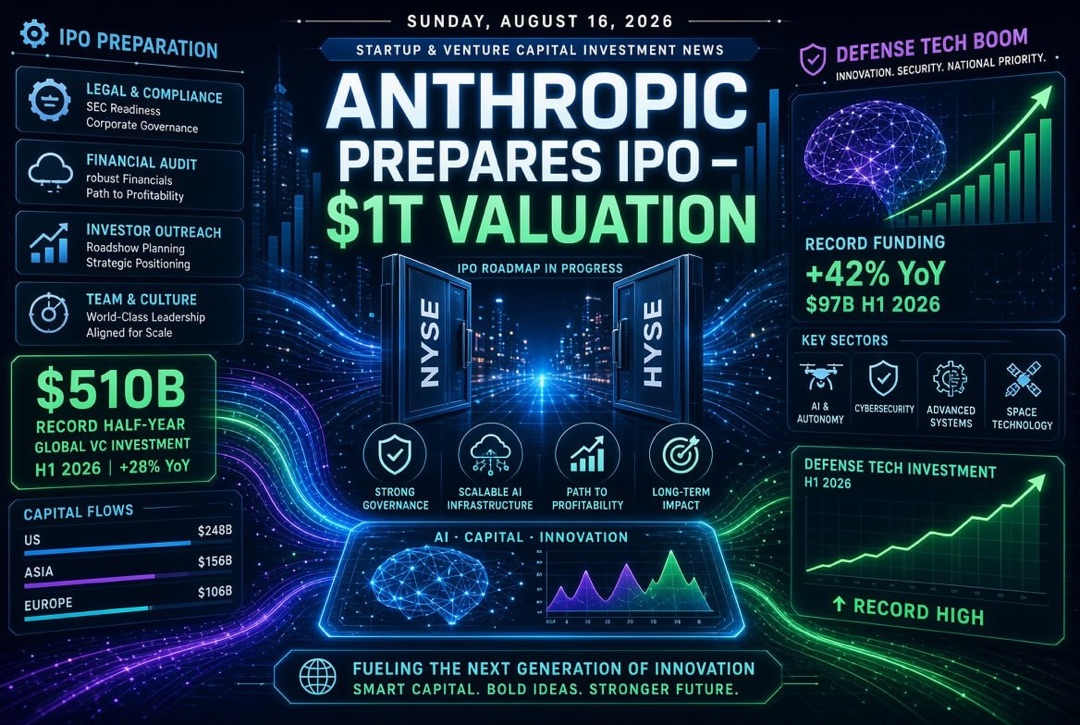
Another prominent focus area for venture investments is defence tech. Startup HighGround secured a seed round to develop an AI platform analyzing defence budgets, government contracts, procurement, and market signals. This format highlights the trend of investors increasingly looking for not only equipment manufacturers, drones, or security systems but also analytical infrastructure in the defence sector.
This is particularly appealing to venture funds because defence tech is becoming a more institutional market. The demand for tools that help understand government procurement, forecast tender winners, evaluate contractors, and identify promising companies ahead of major contracts is growing.
Robotics and Industrial AI: Europe Seeks to Create Its Own Growth Engines
The European startup market also shows increased activity in robotics. Theker, working on universal industrial robots, secured a significant Series A round. The interest in such companies is linked to labor shortages, rising production costs, and companies' aspirations to automate processes that were previously difficult to mechanize.
Venture investors increasingly view robotics not merely as a niche hardware segment but as an intersection of AI, industry, logistics, and software. Potentially strong startups in this sector will combine their own hardware, management models, data from production sites, and service-based business models.
Which Segments Appear Most Promising for Funds
In light of the recent startup and venture investment news, several directions are likely to capture the attention of funds in the coming months:
- AI Infrastructure: computing, model optimization, security, monitoring, and quality assurance.
- Corporate AI Agents: automation of office, legal, HR, financial, and operational processes.
- Physical AI: industrial design, robotics, materials, healthcare, and manufacturing.
- Sovereign AI: local models, national clouds, language solutions, and governmental AI platforms.
- Defence Tech: analytics, autonomous systems, cybersecurity, dual-use technologies, and government contracts.
- AI for Vertical Markets: finance, insurance, law, healthcare, logistics, and energy.
Conclusion for Venture Investors and Funds
As of June 18, 2026, the venture market remains strong but increasingly selective. Capital continues to flow into AI startups; however, investors are no longer inclined to finance any company that simply claims to leverage artificial intelligence in its pitch. Startups that solve complex infrastructure problems, have access to large corporate clients, create technological barriers, and can integrate into the strategic value chains of government or major corporations are prevailing.
For venture funds, the key task now is to distinguish fleeting AI hype from companies capable of becoming long-term platforms. The most promising startups appear to be at the intersection of artificial intelligence, industry, defence technology, robotics, corporate automation, and sovereign infrastructure. These are the sectors shaping the new investment landscape in the global startup market.