Current Overview of the Startup and Venture Capital Market as of March 26, 2026, with Analysis of Key Trends and Growth Directions
The main topic of the day for the startup and venture capital market is the continued concentration of capital in the AI sector. This is where the largest funding rounds, highest valuations, and most aggressive investment strategies are being formed. However, it is important to note that investors are no longer financing "AI in general." The market has become more selective and now prefers four key directions:
- infrastructure AI companies;
- applied corporate software;
- vertical platforms with clear monetization;
- providers of computing, chips, and specialized equipment.
For funds, this means that the era of broad bets on "any AI team" is quickly coming to an end. The focus is now on companies that can either control a bottleneck in the value chain or integrate into critical business processes of large clients. This is pushing the market towards larger funding rounds and widening the gap between leaders and other players in the ecosystem.
Legal Tech Transforms from Niche to One of the Hottest Vertical Markets
Legal tech deserves special attention. If not long ago this segment was perceived as a narrow professional niche, it is now becoming a full-fledged field of competition for major venture funds. The reason is simple: the legal function entails a high average transaction size, predictable demand, and a significant volume of routine tasks that are well-suited for automation.
Therefore, deals in legal AI today serve as an indicator of the maturity of the overall applied artificial intelligence market. For investors, this is an important signal:
- vertical AI is beginning to outperform universal platforms in terms of monetization;
- corporate clients are willing to pay not for technology per se, but for measurable cost reduction and process acceleration;
- segments with a high share of expert labor are becoming a priority area for new funding rounds.
In practice, this means that in 2026, the growth of valuations will increasingly take place not in consumer-related areas but in B2B segments with deep industry specialization.
Large Checks Flow Not Only into Models but Also into Infrastructure
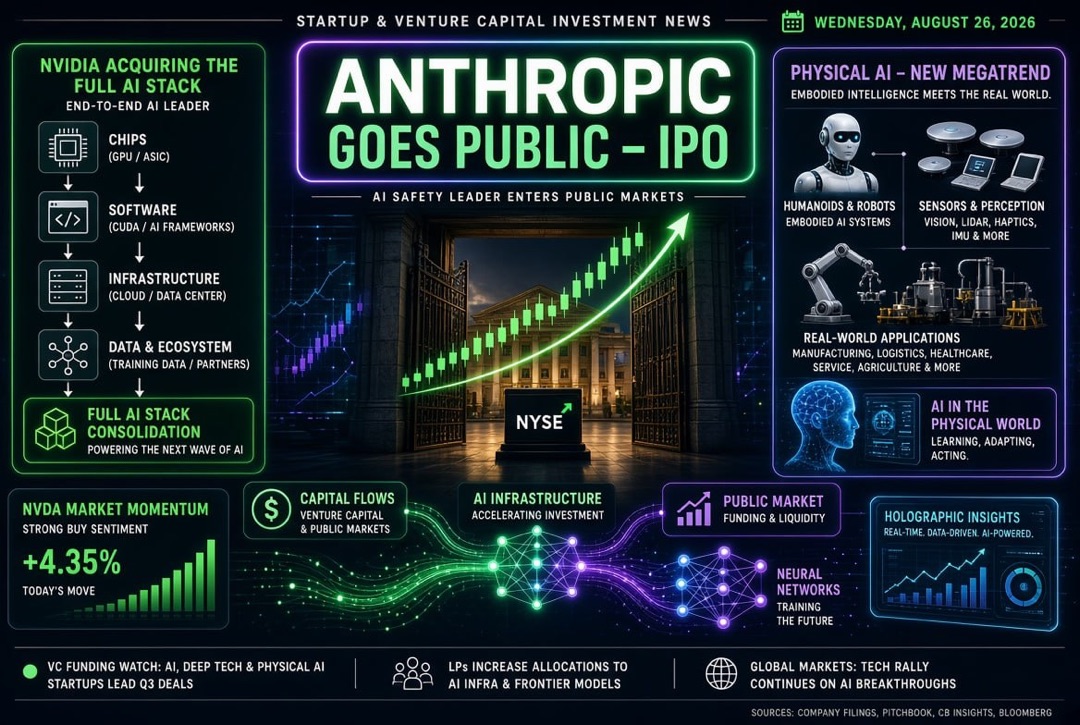
One of the most noticeable changes in global venture capital is the shift of focus from applications alone to the infrastructure layer. Startups involved in computing power, semiconductors, chip manufacturing equipment, and energy-efficient data centers are becoming strategic targets for capital.
This logic is clear. While investors previously bought into the story of rapid growth in interfaces and applications, the market now recognizes that true rarity lies in access to computing, hardware solutions, and technological foundations. Consequently, companies that:
- create tools for scaling AI workloads;
- reduce computing costs;
- enhance chip performance and server infrastructure;
- secure long-term contracts with major technology clients.
For investors, this represents an important pivot. It indicates that the next wave of super returns may arise not only in software but also at the intersection of deep tech, industry, and AI infrastructure.
Europe Strengthens Its Position in AI and Fintech but Still Lags in Mega-Round Scale
By the end of the first quarter of 2026, the European startup ecosystem appears stronger than a year ago. AI funds are gaining strength in the region, larger specialized players are emerging, and fintech remains highly active in terms of investments. However, the existing crossroads for global funds remains the same: Europe offers a quality deal flow and strong engineering teams, but the U.S. still dominates in terms of scaling speed and the ability to form extremely large rounds.
Nevertheless, for international investors, Europe presents several advantages:
- more disciplined valuations at early stages;
- strong positions in B2B SaaS, fintech, defense tech, and industrial AI;
- growing regulatory support for companies creating innovative products within a single market.
This makes European startups particularly attractive for funds seeking a combination of technological depth and less overheated valuations compared to the American market.
Defense Tech Fully Enters the Institutional Agenda
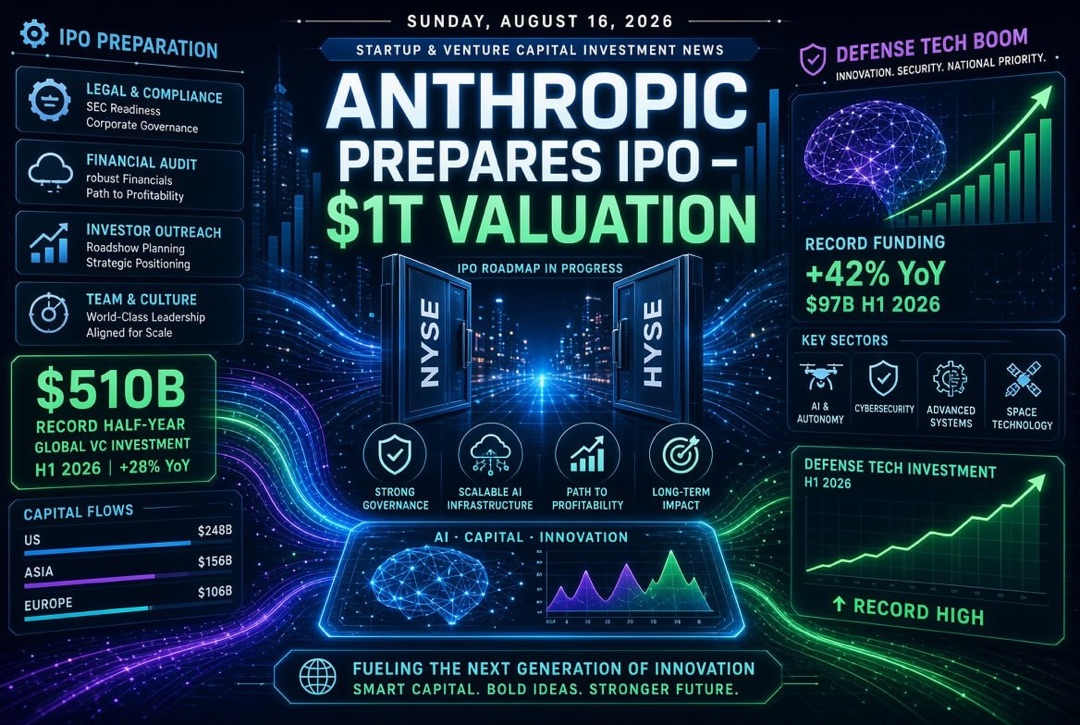
Another significant trend is the institutionalization of defense tech. What was once considered a niche for a few specialized investors is now becoming part of the strategic agenda for major funds, corporations, and government partners. The acceleration of developments in drones, autonomous systems, operational management software, and military analytics creates sustainable demand for capital.
For venture investors, this signifies the formation of a new asset category where not only technology and team matter, but also access to government contracts, international cooperation, and long implementation cycles. Defense tech is no longer solely a geopolitical issue; it has become an investment class with its own evaluation logic.
The Exit Window Begins to Open, But Selectively
Against the backdrop of rising private valuations, the question of liquidity becomes particularly important. The market has long been in a mode of deferred exits; however, there are now signals of a gradual return of IPOs and M&A to the agenda. Still, the window opens selectively. Investors and the public market continue to demand clearer economics, predictable revenue, and proven demand.
The most likely candidates for the next successful exits appear to be companies from the following segments:
- enterprise software;
- legal tech and data platforms;
- infrastructure for AI and cloud computing;
- certain mature industrial and manufacturing platforms.
This is crucial for funds for two reasons. First, the liquidity window, albeit narrow, restores the price reference for capital. Second, the market is starting to differentiate again between stories "for the next round" and stories "for an actual exit."
A New Standard of Selection: Revenue, Efficiency, and Strategic Irreplaceability
A key change in 2026 is that venture capital has become stricter regarding the quality of growth. Even in overheated verticals, investors increasingly assess not only TAM and hiring rates but also product depth, customer retention potential, unit economics, and strategic importance to the customer.
Therefore, the best positions today are held by startups that meet at least several of the following criteria:
- operate in a segment with a high entry barrier;
- possess a technological advantage that is difficult to replicate quickly;
- sell products to large corporate budgets;
- build infrastructure or a critical layer of the operational chain;
- can demonstrate a path to liquidity, not just growth in valuation in the next round.
This is why the startup and venture capital market appears both strong and stringent. There is plenty of money, but the right to that capital needs to be justified faster and more convincingly than two or three years ago.
What This Means for Venture Funds and Investors on March 26, 2026
Currently, the global startup market is forming a fairly clear investment picture. The most attractive directions are AI infrastructure, legal tech, defense tech, industrial software, and mature B2B fintech. The least appealing stories are those without industry specialization, strong revenue, or proven access to clients or resources.
For funds focused on tomorrow and the coming weeks, three practical conclusions remain:
- the winner is not just any AI company, but one that owns a narrow and valuable layer of the value chain;
- the market is increasingly willing to pay a premium for infrastructure rather than just user growth;
- exits are returning, but only for mature assets with clear economics.
This represents the main logic of the day: the startup market remains active, venture investments continue to accelerate, but capital is increasingly concentrating in companies that already appear to be future platform leaders rather than merely participants in the general technological hype.