Global Startup and Venture Capital Market — Tuesday, March 17, 2026: AI Infrastructure, Mega-Rounds in Europe, and the New Shift in Global Venture Capital
The global startup and venture capital market is entering the second half of March 2026 with a high concentration of capital. The defining feature of the current cycle is that funds continue to flow into technology platforms with strong infrastructural advantages, access to computing resources, corporate contracts, and rare engineering teams. For venture funds, this means that the startup market remains active, but the structure of deals is shifting: investors are increasingly paying not only for growth but also for control over critical layers of the AI chain.
A few key themes have emerged, shaping the agenda for funds, LPs, and institutional investors:
- Acceleration of investments in AI infrastructure and computing power;
- Growing interest in robotics and physical AI;
- Strengthening of Europe as a venue for large deep tech and AI deals;
- Maintaining a strong influx of capital into fintech and cybersecurity;
- A more cautious approach to IPO windows and liquidity.
AI Infrastructure Becomes the Main Capital Magnet
The major news for the venture capital market is the continued shift in interest from funds toward infrastructure stories. Investors are increasingly backing not just model developers, but companies that provide access to computing, chips, data centers, network architecture, and enterprise channels for AI deployment.
This trend is especially noticeable against the backdrop of negotiations surrounding the new corporate AI framework from OpenAI. The fact that major private equity players are willing to participate in platform schemes for distributing enterprise AI indicates that the boundary between the classic venture market, growth equity, and buyout investors is rapidly blurring. For startups, this is an important signal: in 2026, capital is not merely seeking a product; it is looking for a scalable entry channel into the corporate economy.
This means the following for the startup market:
- Valuations will rise more quickly for companies controlling infrastructural bottlenecks;
- A premium for access to compute and enterprise distribution becomes the new norm;
- Venture funds are increasingly competing not only with each other but also with growth investors and private equity.
Thinking Machines Doubles Down on Computational Supremacy
One of the central themes remains the development of the Thinking Machines Lab, founded by Mira Murati. The startup continues to strengthen its status as one of the most notable players in the new AI cycle. A key factor here is not only the team's brand but also access to a vast amount of future computing resources through a strategic partnership with Nvidia.
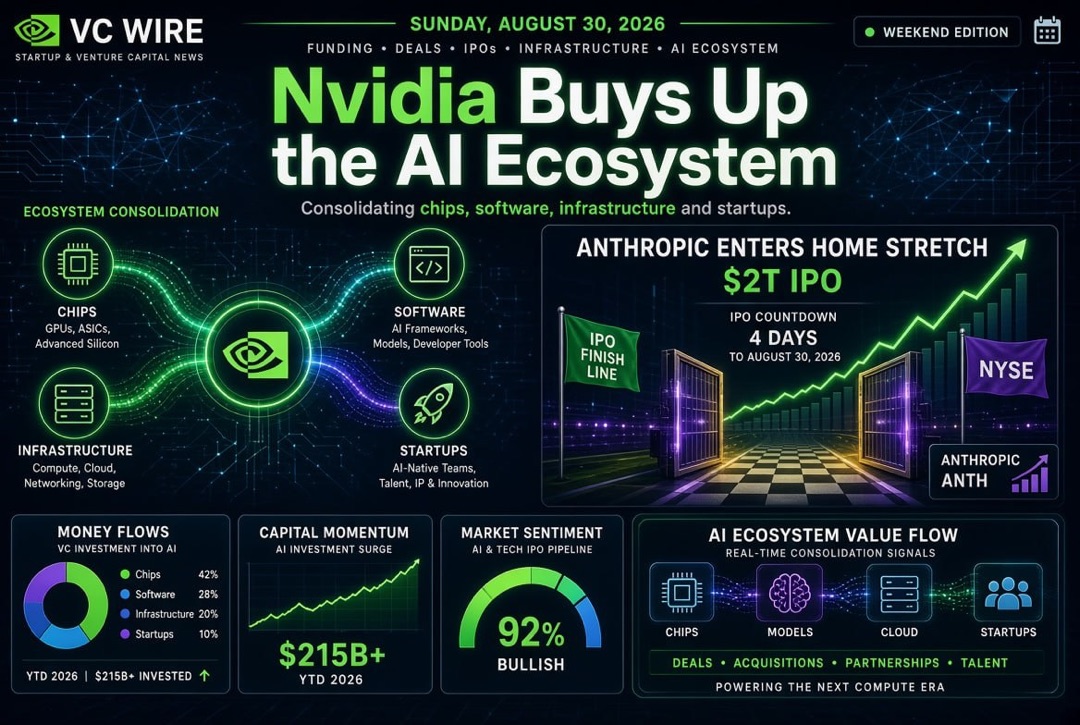
For venture investors, this story is important for three reasons. First, the market reaffirms that the best AI startups in 2026 gain an advantage not only from algorithms but also from guaranteed access to power. Secondly, Nvidia is solidifying its role not just as a chip provider but as an active architect of the startup ecosystem. Thirdly, the value of syndicates is increasing, where strategic investors provide not only capital but also growth infrastructure.
In practice, this heightens interest in the following verticals:
- AI compute orchestration;
- Networking equipment for data centers and AI clusters;
- Energy infrastructure for AI;
- Middleware and tools for managing enterprise models.
Europe Establishes Itself as a Venue for Mega AI Rounds
Another powerful signal has come from Europe. The AMI project associated with Yann LeCun raised over $1 billion in one of the largest seed rounds in the European market. This is not just a significant deal but an important indicator that the European ecosystem can support deep tech and frontier AI at a global level.
For the venture capital market, this signifies a shift in perception toward Europe. Whereas many funds previously viewed the region primarily as a talent pool and source of early technologies, Europe is increasingly seen as a robust platform for creating companies with global capitalization and their own research agenda.
It is particularly crucial that capital is not flowing into yet another "wrapper" AI product but into a company with an alternative scientific focus on world models, reasoning, and a long technological cycle. This positions the deal as a benchmark for funds operating in the segments of:
- Deep tech;
- Robotics AI;
- Industrial AI;
- Biomedical AI;
- Sovereign and transnational technology platforms.
Robotics and Physical AI Rapidly Rise to the Top of the Venture Agenda
If 2024 and 2025 were dominated by generative AI in the software domain, 2026 is increasingly shaping into a second major trend: physical AI. Significant investments in Rhoda AI and other robotics platforms demonstrate that capital is beginning to seek the next wave following the purely software-based AI boom.
Why is this important for startups and investments? Because the market is gradually shifting towards companies capable of translating intelligence into action: on the factory floor, in logistics, at warehouses, in manufacturing, and across industrial automation. In these segments, startups may face longer implementation cycles but also enjoy more robust economic protection against competitors.
For funds, this means that in the upcoming quarters, heightened attention will be given to:
- Robotics platforms for industry;
- Operating systems for physical AI;
- Data and simulation environments for training robots;
- Companies that integrate AI into existing equipment rather than solely creating new hardware.
Fintech Remains Active, But the Liquidity Window Has Become More Sensitive
The fintech market continues to exhibit notable investment activity. Over the past week, the sector has attracted significant capital, with funds being allocated not only to payment services but also to regtech, financial infrastructure, and AI solutions for enterprise risk management. This is a positive signal for venture investors focused on sustainable business models with clear revenue streams.
However, the scenario surrounding the IPO suspension of PhonePe illustrates that the public market window remains vulnerable to geopolitical factors and volatility. For funds, this signifies a straightforward but critical adjustment: even quality assets may face prolonged listing timelines not due to weak business fundamentals but because of external market conditions.
As a result, the “grow to IPO” strategy in 2026 requires greater flexibility. The agenda increasingly emphasizes:
- Secondary deals;
- Partial liquidity for early investors;
- M&A as an alternative to IPO;
- Tighter management of runway and unit economics quality.
Capital Concentration Intensifies, While Market Selectivity Rises
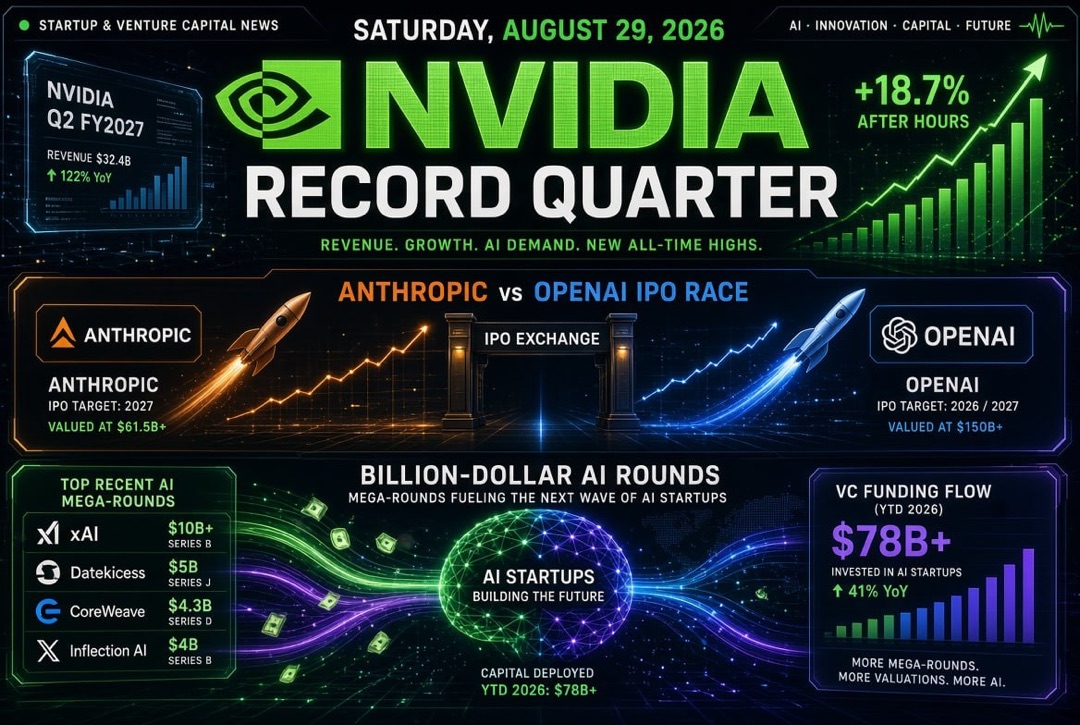
One of the most significant macro signals for the venture market is extreme concentration in funding. Major AI deals continue to take a disproportionately large share of the total investments. This creates two simultaneous realities. On one hand, headline financing appears very strong. On the other, for the average startup, attracting capital has become more challenging if it lacks technological advantages, strong sales channels, or clear industry specialization.
This is why news about startups and venture investments increasingly feature mega-rounds, while the lower end of the market is experiencing stricter vetting. For funds, this signals that 2026 is not just a growth market but one characterized by high selectivity.
What This Means for Venture Funds and Startups Right Now
As of March 17, 2026, the startup market presents a fairly clear investment map. The strongest positions are held by projects that combine technological depth, infrastructural value, and the ability to quickly integrate into corporate chains.
In the near term, venture investors should pay particularly close attention to:
- AI infrastructure and enterprise AI distribution;
- Physical AI, robotics, and industrial automation;
- European deep tech platforms;
- Fintech and cybersecurity with strong regulatory positions;
- Companies where access to data, compute, and contracts is more critical than marketing noise.
For startups, the main takeaway is also clear: capital is still available in 2026, but it is increasingly reluctant to finance abstract growth narratives. Venture investments are becoming more active in areas where there is unique technology, a protected market, scalable infrastructure, and a clear path to dominance in their niche.
On Tuesday, March 17, 2026, the global startup and venture capital market appears robust at the top tier and more stringent for all others. AI remains the primary capital magnet, but within the AI sphere, funding is rapidly shifting from universal stories to infrastructure, robotics, enterprise deployment, and deep tech. For global funds, this means one thing: a new phase of the cycle has already begun, and those who can identify which technological layers will underpin the next decade will emerge as the winners.