Global Startup and Venture Investment News as of September 8, 2025: Record Rounds in AI, Revival of IPOs, Growth of Crypto Startups, and New Funds in the CIS. A Comprehensive Overview for Investors and Venture Funds.
As of early September 2025, the global venture market continues its steady recovery following several years of decline. After a tumultuous first half of the year, largely fueled by a surge in artificial intelligence investments, funding volumes temporarily dropped to their lowest levels since 2017 in August. However, investors are optimistic as the fall season begins: the return of IPO activity and a series of mega-funding rounds instill confidence. Major players worldwide are increasing their investments in technology companies, while governments are expanding support for innovative businesses. As a result, private capital is gradually returning to the startup ecosystem, despite a continued selective and cautious approach from investors.
A rise in venture activity is noted across most regions. The USA continues to lead (especially in AI), accounting for about two-thirds of global investments since the beginning of the year. The Middle East is demonstrating rapid growth, with venture investments in the region doubling over the year due to large technology projects in the Gulf countries. In Europe, structural changes are evident: for the first time in a decade, Germany has surpassed the UK in total investment volume, although Europe's overall share in global venture capital has shrunk slightly. India, Southeast Asia, and Gulf countries are attracting record amounts of capital against a backdrop of relative decline in activity in China, where the tech sector faces domestic restrictions. The startup ecosystems in the CIS countries are also striving to keep pace—despite external challenges, new funds and programs are being launched in the region to support innovative companies. Overall, a new wave of venture growth is emerging at a global level, albeit accompanied by more thorough project vetting and moderate evaluations.
Below are the key events and trends shaping the venture market agenda as of September 8, 2025:
- Return of mega-funds and large investors. Leading venture players are raising unprecedentedly large funds and increasing investments, re-injecting capital into the market and rekindling risk appetite.
- Mega funding rounds and a new wave of AI “unicorns.” Record deals are raising startup valuations to unprecedented heights, particularly in the artificial intelligence sector.
- Revival of the IPO market. A series of successful placements and new applications confirm that the long-awaited “window” for startups to go public has reopened.
- Renaissance of crypto startups. The resurgence of the digital asset market has rekindled interest in blockchain projects, enhancing capital flow into the crypto industry.
- Defense technology and robotics attract capital. Geopolitical factors are stimulating investments in military developments, aerospace projects, and robotic systems.
- Diversification of sector focus. Venture capital is flowing not only into AI but also into fintech, climate projects, biotechnology, and other sectors, broadening market horizons.
- Wave of consolidation and M&A deals. Major mergers, acquisitions, and strategic alliances are reshaping the industry landscape, creating new exit and growth opportunities.
- New alliances of investors. Venture funds are forming partnerships and coalitions to co-invest in priority technology areas.
- Local focus: Russia and CIS countries. New funds and initiatives are emerging in the region to develop local startup ecosystems, attracting investor attention even amid restrictions.
Return of Mega Funds: Big Money Back on the Market
The largest investment players are re-entering the venture arena, signaling an increased appetite for risk. Major funds are announcing unprecedentedly large capital pools aimed at tech projects. For instance, the Japanese conglomerate SoftBank is launching a new Vision Fund III with approximately $40 billion to invest in cutting-edge directions (AI, robotics, etc.). Following them, the renowned Silicon Valley firm Andreessen Horowitz (a16z) is targeting a mega-fund of around $20 billion to capitalize on global interest in American AI startups. Sovereign funds from The Middle East have also become active, pouring billions into national tech parks and startup programs, turning the region into one of the focal points for venture capital.
Simultaneously, dozens of new venture funds are being created worldwide, attracting substantial institutional capital. Renowned Silicon Valley investment firms are increasing their presence: during the recent period of uncertainty, they have accumulated enormous reserves of uninvested funds ("dry powder")—hundreds of billions of dollars ready to be deployed when compelling opportunities arise. This influx of "big money" is filling the startup market with liquidity, allowing for the closure of new funding rounds and supporting the growth of promising companies. The return of mega funds and large institutional investors intensifies competition for the best deals, yet it strengthens industry confidence in the long-term influx of capital.
Mega Rounds in AI: A New Wave of “Unicorns”
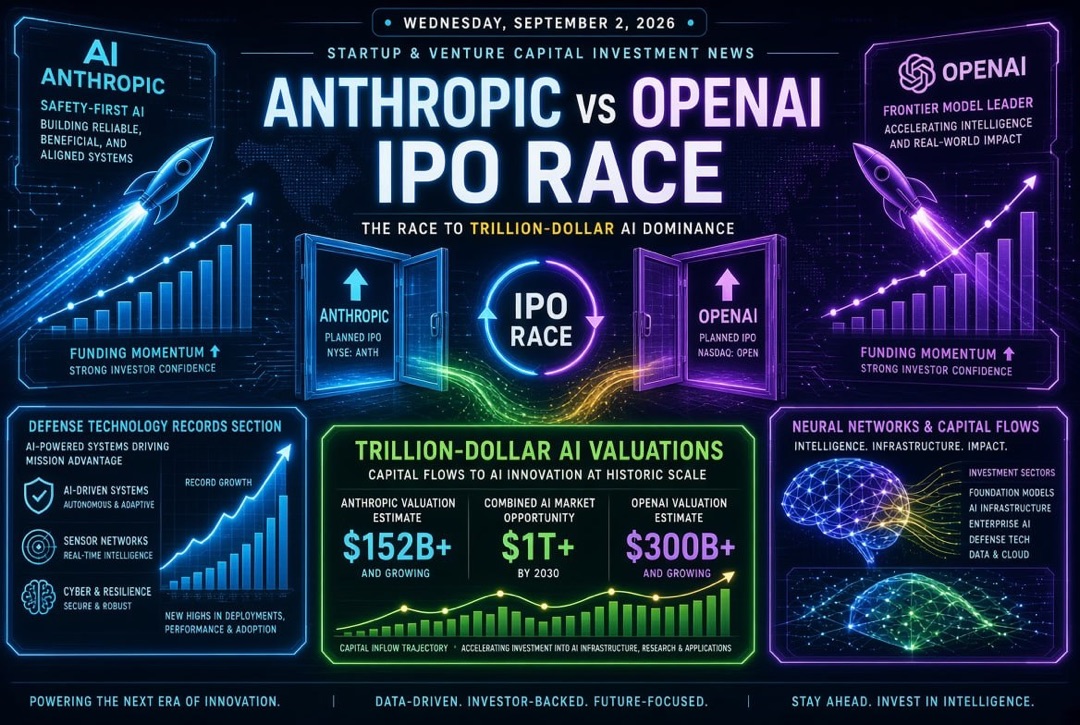
The artificial intelligence sector remains the main driver of the venture market in 2025, demonstrating record-sized deals. Investors are eager to establish themselves among the leaders of the AI race, directing colossal sums into the most promising projects. Just in recent weeks, several AI companies have attracted unprecedented funding. For example, American startup Anthropic, developing generative AI, secured nearly $13 billion in investments at a valuation of $183 billion—making it one of the world's most valuable private companies. Another example is the San Francisco-based company Sierra, which created an AI platform for customer service, attracting $350 million at a valuation of $10 billion just two years after its founding.
Such mega rounds are pushing startup valuations to previously unseen heights and spawning a new wave of “unicorns.” Not only is this trend seen in the US—companies worldwide are achieving valuations exceeding $1 billion thanks to generous funding rounds. Significant investments are also being recorded in biotechnology and medtech: for example, Treeline Biosciences in the US has attracted a total of about $1.1 billion for the development of innovative drugs, while Canadian company Enveda Biosciences raised $150 million in a round that secured its status as a “unicorn.” Despite the risk of overheating, investor appetite for innovative startups remains strong. At the same time, experts note the growth in the share of “down rounds” (rounds with decreased valuations)—nearly 16% of deals in 2025 are occurring at reduced valuations, marking the highest rate in a decade. This signals a return to caution and a focus on sustainable growth: only the most convincing AI projects continue to attract funds at record valuations, while secondary players must settle for discounts. Nevertheless, the overall trend indicates that capital remains ready to flow into promising ventures—in exchange for genuine technological advancements.
IPO Market Awakens: An Opening for Exits
After a prolonged hiatus, the market for initial public offerings is showing signs of life again. Successful IPOs of several high-tech companies confirm that the "opportunity window" for startups to go public has reopened and that investors are willing to buy shares of new issuers. The summer's standout event was the brilliant IPO of fintech giant Circle (issuer of the USDC stablecoin) on the New York Stock Exchange. The company raised about $1.05 billion, selling shares above the planned range, and on the very first day, their price surged by 168%, achieving a capitalization of over $18 billion. This success became the most successful tech IPO of the year and sent a positive signal to the entire market: demand for new tech issuers has returned. Following Circle, other “unicorns” accelerated their offerings—specifically, the American neo-bank Chime made a successful debut on the exchange, becoming one of the largest fintech stories of the year.
Riding this wave of success, other promising players are also renewing their IPO plans. For instance, Swedish fintech leader Klarna has launched a roadshow, aiming for a valuation of up to $14 billion upon the share offering in the US, while American blockchain company Figure expects a capitalization of around $4 billion. Additionally, cryptocurrency exchange Gemini (estimated value of ~$2.2 billion), US infrastructure service provider Legence (~$3 billion), and coffee chain Black Rock Coffee Bar (planning to raise up to $265 million) have all announced IPO plans. These examples demonstrate that companies from a variety of sectors—from fintech and cryptocurrency to industrial services and retail—are ready to enter the public market, taking advantage of the improved environment. Investors are positively welcoming new offerings: shares of some debutants have seen significant price increases in the initial days of trading, prompting other contenders to expedite their preparations for IPOs.
It is expected that in the second half of 2025, other well-known startups will also go public, providing venture funds with long-awaited exits. The revival of activity in the IPO market is crucial for the venture ecosystem: successful public exits allow investors to realize profits, return capital to Limited Partners, and direct funds to new projects. Thus, the IPO recovery creates conditions for the gradual unloading of the overgrown late-stage market and opens a new growth chapter for promising companies.
Crypto Startups Experience a Renaissance
The growth of the cryptocurrency market in 2025 has led to a resurgence of investor interest in blockchain startups and fintech projects related to digital assets. Bitcoin has nearly approached its historic maximum (around $120,000), instilling new optimism in the industry and marking the beginning of the long-awaited "crypto spring" after the prolonged "crypto winter" of previous years. Rising prices of crypto assets and a revival of trading activity are stimulating the influx of venture capital into crypto startups.
Key players in the industry are again targeting the public market, signaling a rise in confidence in the crypto sector:
- Gemini—a major cryptocurrency exchange owned by the Winklevoss twins—has submitted a confidential IPO application, hoping to attract capital for international expansion.
- BitGo—an American provider of digital asset custody services—also plans to go public, capitalizing on the growing demand from institutional investors for crypto infrastructure.
In the private sector, venture funding for blockchain projects is also waking up. Investors are once again willing to take risks in decentralized finance (DeFi), crypto exchanges, Web3 infrastructure, and NFT platforms, anticipating greater regulatory clarity and mass adoption of crypto technologies. Transaction volumes in this segment are still below the record levels of 2021, but a clear upward trend has emerged. Compared to the dismal years of 2022-2023, when many crypto companies were shutting down or downsizing, the industry is now showcasing new successes. Experts speak of a new growth cycle forming in the crypto industry, which could yield new “unicorns” and powerful IPOs in the coming years.
Defense Technologies and Robotics Attract Capital
The geopolitical landscape and technological breakthroughs are driving investment growth in the defense, aerospace, and robotics sectors. Startups creating products for national security, military needs, and automation have become the focus of heightened attention from venture funds and corporations. In the face of global turbulence, governments from leading countries are ramping up funding for defense developments and encouraging private capital to participate in creating new military technologies.
Modern “military-tech” startups are securing large funding rounds and often quickly find strategic buyers. For example, manufacturers of drones, cybersecurity systems for the armed forces, satellite platforms, and companies developing AI for the military have received record funding in 2025. In the USA, specialized venture funds focused on dual-use technologies are emerging, while in Europe, government programs to support defense startups have been launched. The largest deals of the year are directly tied to this sector: the corporation Palo Alto Networks announced the acquisition of Israeli company CyberArk (a leader in identity protection) for $25 billion, to enhance its solution portfolio in cybersecurity. Additionally, one of the largest funding rounds in Europe this year amounted to $694 million raised by Munich-based AI startup Helsing, which operates in the defense sector. Such activity indicates that defense and related technologies have become a new priority for investors, who see both commercial benefits and strategic significance in them.
The increased interest in the defense technology sector is also reflected in mergers: major players eagerly absorb specialized startups to gain access to unique technologies and talent. Consequently, a new cluster of rapidly growing companies at the intersection of IT and defense is forming in 2025, as venture capital gradually opens up this previously niche area as a promising market for investments.
Diversification of Investments: Not Just AI
In 2025, venture capital flows are covering an increasingly wide range of sectors. Following a period of a singular focus on AI, investors are actively searching for opportunities in other segments, realizing the importance of a balanced approach. Capital is being distributed across diverse fields, each of which is forging its own success stories:
- Fintech: Financial technologies remain one of the major recipients of investments. The largest fintech startups are attracting nine- and ten-figure funding rounds, and some, like Klarna, are preparing for an IPO, signaling sector maturity.
- Climate and Environmental Projects: Sustainability is gaining traction. A group of top investors recently united to create a new fund, “Allied Climate Tech,” with about $300 million aimed at supporting late-stage climate technologies. Governments and corporations are also investing in renewable energy, carbon capture, and waste recycling startups.
- Biotechnology and Health: After a downturn in 2022-2024, biotech is regaining the attention of venture investors. Investors are keen to fund developments in oncology, genetics, and pharmatech. Record rounds—such as those for Treeline Biosciences—demonstrate the willingness to invest substantial sums in promising drugs and platforms, especially if they integrate AI to accelerate research.
Other high-tech industries are also experiencing a resurgence. Quantum computing (European startup IQM raised over $300 million in Series B funding), space technologies, and satellite services (new constellations of small satellites are being created with venture capital support), as well as “new energy” (batteries, hydrogen solutions) are attracting significant funds. Numerous large deals—from insuretech ($147 million for Singapore's Bolttech) to space startups ($300 million for California's Impulse Space) and biomedicine projects ($80 million for Switzerland's Mosanna Therapeutics)—showcase the breadth of market revival. The venture market is clearly transcending a narrow focus, encompassing a wide array of innovations.
Thus, the venture landscape is becoming multifaceted. Investors are diversifying portfolios, not limiting themselves to a single trendy theme. This approach reduces risks and allows them to not miss out on new “growth points”—whether they be breakthroughs in life sciences, new fintech models, or climate innovations. The industry itself is learning to balance hype with real value, allocating capital across various sectors of the economy.
Wave of Consolidation: M&A Activity Gains Momentum
Alongside the investment boom, activity in the mergers and acquisitions market is rising. The year 2025 has seen a surge in major M&A deals, as mature tech companies seek to strengthen their positions through the acquisition of promising startups. According to industry analytics, over the first half of 2025, acquisitions of startups totaled more than $100 billion (a 155% year-on-year increase), while the number of deals increased by 13%. Many teams that received generous funding during the bullish period of 2020-2021 are now ready for exits, and in light of the IPO market just starting to revive, sales to strategic investors have become the main exit scenario.
The most notable deals of the year demonstrate how far tech giants and funds are willing to go for access to new technologies and talent:
- Google acquires Wiz – ~$32 billion. The largest deal of the year: Alphabet plans to absorb the Israeli cloud security startup Wiz, potentially becoming one of the largest startup acquisitions in history.
- OpenAI acquires Io – ~$6.5 billion. The creator of ChatGPT has purchased the California-based AI hardware startup (co-founded by Jony Ive) to accelerate the development of new generative AI products.
- SoftBank acquires Ampere – ~$6.2 billion. The Japanese fund has acquired the American chip developer Ampere Computing, betting on the growth of the chip ecosystem for cloud and AI computing.
- Palo Alto Networks acquires CyberArk – ~$25 billion. The largest M&A deal in the cybersecurity sector: the American giant will strengthen its presence in the data protection and identification segment by acquiring the market leader from Israel.
Additionally, venture “unicorns” are increasingly becoming buyers themselves: for example, cloud provider CoreWeave announced the acquisition of mining company Core Scientific for $9 billion to gain additional capacity for AI clouds. OpenAI has also not limited itself to one deal: in addition to Io, it acquired the developer platform Statsig for about $1.1 billion to accelerate the implementation of new features in its products. This level of activity confirms that the tech industry has entered a consolidation phase, where major players compete for key assets.
For the venture market, the increase in M&A activity has a double positive effect. Firstly, successful acquisitions provide investors with much-needed liquidity and capital returns, enhancing confidence in venture investments. Secondly, examples of large exits through sales set benchmarks for valuations for the next generations of startups and stimulate new capital inflows. Analysts note that in 2025, acquisitions have become the primary exit route, outpacing IPOs; however, it is a healthy M&A market that paves the way for the revival of public offerings.
Consolidation also affects young companies—many startups prefer to merge with competitors or sell to strategic investors to jointly achieve profitability and scale more quickly. At the same time, unique partnerships are emerging: major venture funds sometimes coordinate efforts for joint “rescue” investments in struggling companies, preventing their collapse and preserving capital. Consequently, the wave of M&A and strategic alliances is reshaping the industry landscape: the strongest players are consolidating, the weaker ones are seeking “partners,” and investors are gaining more opportunities for capital recovery. For the venture market, consolidation has become a natural response to previous overheating—it helps clear the field of redundant players and focus resources where they can achieve the most effective growth.
New Venture Alliances: Investors Join Forces
Another hallmark of the times is the emergence of formal alliances among venture investors. While funds typically compete with each other for deals, some are now willing to collaborate to jointly develop priority areas. For example, in early September, the India Deep Tech Investment Alliance was announced—a coalition of eight American and Indian VC and PE firms (including Accel, Blume Ventures, Celesta Capital, and Premji Invest) that have jointly committed to invest over $1 billion in deep tech startups in India over the next decade. This unprecedented step is driven by strategic interests: the alliance aims to strengthen technological cooperation between the US and India and address the lack of long-term capital in the Indian deep tech sector.
The emergence of such alliances reflects the maturity of the venture market and a desire to address common challenges collaboratively. Investors recognize that some issues—whether climate change, AI infrastructure, or national technological independence—require pooled resources. By forming consortia, funds can share the risks of large projects, exchange expertise, and jointly lobby for innovation interests with the government. In addition to the Indian example, international initiatives in climate technologies can be noted, where dozens of funds worldwide are coordinating investments for maximum effect. This cooperation sets a new format for the venture community, where competition is combined with partnership for achieving large-scale goals.
Local Focus: Russia and CIS Aren't Left Behind
Despite geopolitical restrictions, the Russian and Eastern European venture market is striving to develop alongside global trends. In 2025, new funds and programs aimed at supporting local startups and attracting investment into them have emerged in the region. This summer, a fund named Nova VC with a volume of 10 billion rubles was launched in Russia, focused on investments in IT startups—it has become one of the largest private venture funds in recent years in the country. In Tatarstan, with the participation of the “Perspective” fund and regional investors, a specialized fund for the “New Chemical Industry” was established with capital of up to 6 billion rubles, aimed at developing local chemical technology projects and import substitution in this field.
Government institutions are also seeking ways to stimulate innovation. At the recent Eastern Economic Forum 2025, representatives of Sberbank highlighted the need for a separate law on venture investments in Russia—a comprehensive legal framework that would facilitate investments in breakthrough technologies and protect investors' rights. Authorities have stated their readiness to increase funding for research and development: by 2030, R&D expenditures are planned to reach 2% of GDP, which is double the current level. These steps demonstrate an understanding of the importance of venture capital for the country's technological sovereignty.
Meanwhile, startups from CIS countries continue to break into the international arena. Several companies rooted in the region recently attracted foreign investments. For example, the Estonian voice training service Vocal Image, founded by Belarusian natives, received $3.6 million from a French venture fund—this exemplifies that even in challenging conditions, promising projects can find support abroad. During forums and pitch sessions (the "Territory of Innovations" at the EEF, the Russian Venture Forum in Kazan, etc.), regional startups present their developments to investors, competing for attention and funding.
In conclusion, the venture ecosystem in Russia and the CIS, while lagging in scale behind the leaders of Silicon Valley or China, is developing its infrastructure and success stories. Local funds, government initiatives, and ties with friendly foreign partners are helping startups in the region thrive in a challenging environment. For venture investors and funds, this is a signal: interesting opportunities exist not only on the global scene but also in local markets that are ready for growth with the right support.