Global Oil and Gas Sector News as of January 18, 2026: Iran, Venezuela, Oil, Gas, Renewable Energy, Coal, Oil Products, Refineries, and Key Trends in the Global Energy Sector for Investors and Market Participants.
Current events in the fuel and energy complex (FEC) as of January 18, 2026, present a mixed picture for investors and market participants. In the Middle East, there is a relative de-escalation: following unrest in Iran and threatening statements from the United States, tensions are decreasing, temporarily alleviating fears of oil supply disruptions. At the same time, cautious hopes for increased global supply arise with Venezuela gradually returning to the market: U.S.-backed measures from the new Venezuelan leadership to boost production instill optimism, although the effects will not be felt immediately. In the global oil market, prices remain under pressure from over-supply and moderate demand – Brent quotes hold steady in the mid-$60 range per barrel following volatility in the past week. The European gas market is experiencing a winter surge in demand; however, record imports of LNG and significant storage reserves help to keep prices from reaching extreme levels. Meanwhile, the global energy transition is gaining momentum: various countries are recording new records in generation from renewable energy sources (RES), although governments have yet to abandon traditional resources to ensure reliability in their energy systems. In Russia, authorities maintain restrictions on fuel exports and other stabilization measures to prevent shortages and price spikes in the domestic oil products market following last year's volatility. Below is a detailed overview of key news and trends in the oil, gas, energy, and commodity sectors as of this date.
Oil Market: Over-supply and Limited Demand Keep Prices in Check
The global oil market at the beginning of 2026 shows relative price stability at a low level. The North Sea Brent fluctuates around $64 per barrel, while the American WTI hovers around $59–60. These levels remain approximately 15% lower compared to a year ago, reflecting a gradual correction following the price peak during the energy crisis of 2022–2023. The main factors exerting pressure are the overabundant supply and only modest demand growth. While OPEC+ countries continue to adhere to production restrictions, a wave of supply from non-cartel sources is growing – primarily from increased production in North America, as well as returning volumes from previously sanctioned countries such as Iran and Venezuela. Analysts note that without significant consumption growth (for instance, accelerated economic growth and demand in Asia), oil will likely remain within a relatively narrow price range in the medium term. Short-term price spikes attributable to geopolitical events are quickly offset: fears of a potential military conflict in the Middle East caused prices to rise mid-week, but the subsequent easing of Washington's rhetoric and the maintenance of stable export flows quickly reverted prices to previous levels. In general, the balance in the oil market currently favors buyers – global oil stocks are gradually increasing, and competition for sales markets is intensifying. In the absence of unforeseen shocks or new decisive actions from OPEC, the current pricing environment is expected to remain close to present levels, with moderately low oil prices around the mid-$60 mark per barrel.
Gas Market: Cold Winter and Record LNG Imports Keep Prices from Soaring
In the gas market, attention focuses on the sharp increase in seasonal demand due to the cold weather in the Northern Hemisphere. In Europe, the prolonged winter chill has led to active gas drawdowns from underground storage facilities: stocks in EU countries have dropped to approximately 55–60% of capacity, compared to over 64% at this time last year. Nonetheless, the situation remains manageable due to the flexibility of liquefied natural gas (LNG) supplies. By mid-January, European LNG terminals achieved record regasification volumes – daily LNG deliveries to the EU gas transport network exceeded 480 million cubic meters, surpassing previous historical highs. This influx allowed for compensation of the decreased transit of pipeline gas and helped keep prices in check. Although spot gas prices in Europe rose by about 30–40% compared to the beginning of the month, they remain far from the peak levels experienced during the energy shortages of 2022. The cold weather also stimulated demand in Asia: key importers in Northeast Asia are increasing their LNG purchases, and Asian spot prices (JKM index) reached approximately $10 per MMBtu, marking a six-week high. However, the global gas market remains in balance overall: the redirecting of supply between regions, along with sufficient global production levels, satisfies the increased demand. In the U.S., the largest producer, natural gas prices (Henry Hub) hover around $3 per million BTU, which supports the competitiveness of American LNG in global markets. In the forthcoming weeks, the dynamics of gas prices will depend on the weather: if cold temperatures persist, high storage demands will continue, but record LNG import rates provide Europe with a buffer to weather the winter without significant disruptions.
Iran and Sanctions: Easing Tensions and New Supply Factors
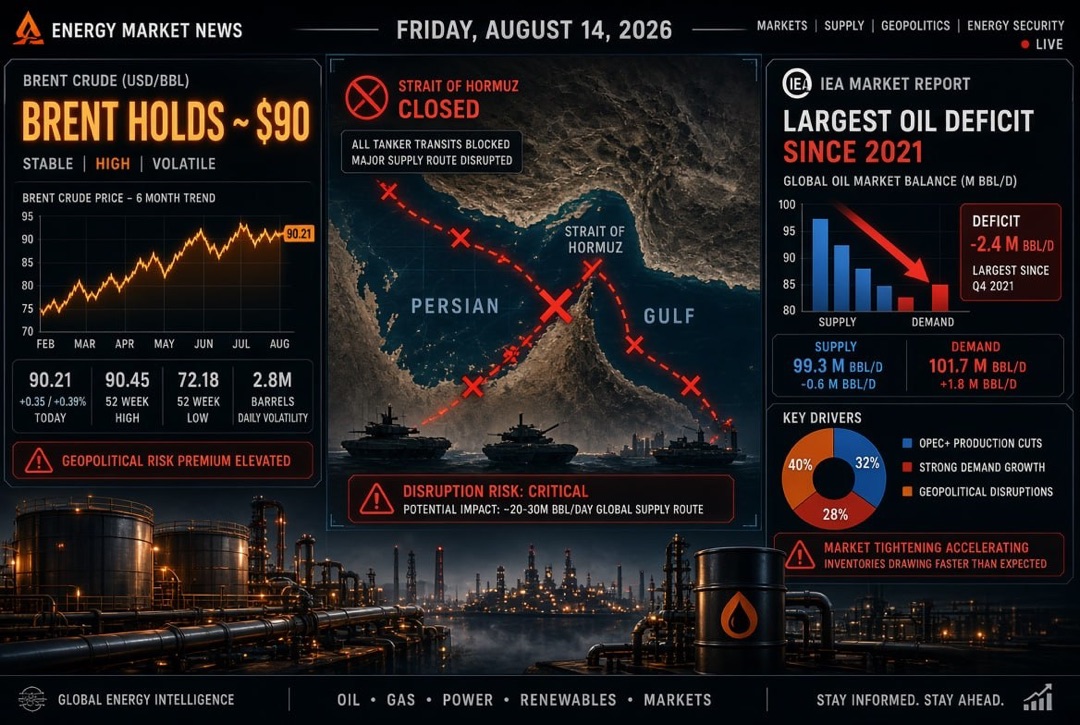
The geopolitical landscape affecting energy markets has undergone significant changes. In Iran, by mid-January, the wave of mass protests that began late last year is gradually subsiding, and the risk of immediate military escalation by the U.S. appears to have diminished. Previously harsh rhetoric from Washington regarding the possibility of strikes on Iranian sites has shifted to more measured statements, particularly after Tehran demonstrated a willingness to make certain concessions in its domestic situation. The U.S. military presence in the region (including the arrival of a carrier group in the Persian Gulf) is now more viewed as a deterrent than a precursor to imminent conflict. Market concerns regarding potential blockades of the Strait of Hormuz or other supply disruptions for Middle Eastern oil have temporarily weakened, alleviating some of the geopolitical premiums in oil prices.
Concurrently, there have been interesting shifts on the sanctions front. Washington continues to enforce all existing restrictions against the Russian oil and gas sector, with no significant easing of these measures. Russian energy resources continue to be redirected to alternative markets – primarily in Asia – at noticeable discounts, and Western sanctions remain an important factor in the global trading environment. However, regarding Venezuela, the U.S. stance has become more flexible: following political changes in Caracas, U.S. authorities are signaling a readiness to accelerate the easing of oil sanctions. In particular, licenses for international oil companies to operate in Venezuela are being expanded – in the coming months, Chevron and other operators will be able to increase exports of Venezuelan oil. These steps, supported by the new reform-oriented Venezuelan government, should gradually restore significant volumes of hydrocarbons to the global market. Experts, however, caution that the recovery of Venezuelan oil production will be gradual: years of inadequate investment and sanctions have severely reduced the country's production capacity. Nevertheless, the mere prospect of increased supply from Venezuela boosts consumer confidence and dampens speculative sentiment, limiting price increases. Thus, geopolitical risks at the beginning of 2026 have shifted somewhat: Middle Eastern tensions have eased, and Western sanctions policy exhibits targeted flexibility, collectively fostering a more favorable backdrop for the global energy market than previously anticipated.
Asia: India and China Balance Between Imports and Domestic Production
- India: Faced with pressure from Western countries demanding a reduction in cooperation with sanctioned suppliers, New Delhi has somewhat reduced its purchases of Russian oil and gas in recent months. However, India considers an abrupt cessation of these energy sources impossible due to their critical role in national energy security. The country continues to receive Russian crude on favorable terms: traders report discounts on Russian Urals crude for Indian buyers of $4–5 against Brent prices, making these shipments highly attractive. As a result, India maintains its status as one of the largest importers of Russian oil while simultaneously increasing its purchases of oil products (e.g., diesel) to meet the growing domestic demand. At the same time, the Indian government is ramping up efforts to reduce import dependence in the future. Prime Minister Narendra Modi has announced a program for the development of deepwater oil and gas production on the continental shelf: the state-owned company ONGC is already drilling ultra-deep wells in the Bay of Bengal and the Andaman Sea. Initial results are seen as promising, fostering hope for the discovery of new large oil fields. This strategy aims for India to eventually become more energy self-sufficient in the long term.
- China: The largest economy in Asia continues to increase energy consumption, combining import growth with increased domestic production. Beijing has not supported Western sanctions against Moscow and has seized the opportunity to actively increase purchases of Russian energy resources at favorable terms. According to analysts, in 2025, the volumes of oil and gas imports into China grew by 2–5% compared to the previous year, exceeding 210 million tons of oil and 250 billion cubic meters of gas, respectively. Growth rates have slowed somewhat compared to the surge in 2024 but remain positive. Simultaneously, China is setting records in domestic production: last year, national companies extracted over 200 million tons of oil and 220 billion cubic meters of gas, which is 1–6% higher than last year's figures. The government is investing significant resources in developing hard-to-reach fields, implementing new extraction technologies, and enhancing recovery from mature oil fields. However, despite all these efforts, China remains import-dependent: about 70% of its oil consumption and around 40% of its gas consumption must be sourced from abroad. These proportions are not expected to change dramatically in the coming years due to the scale of the economy and the energy intensity of its industry. Thus, India and China – the two key consumers in Asia – continue to play a decisive role in global commodity markets, skillfully navigating the necessity of importing significant volumes of fuel while striving to develop their own resource base.
Energy Transition: RES Records and the Role of Traditional Generation
The global transition to clean energy is gaining increasing speed, setting new benchmarks in energy markets. By the end of 2025, several countries recorded historic electricity generation from renewable sources. In Europe, the total generation from solar and wind power plants for the year surpassed output from coal and gas-fired power plants for the first time, solidifying the trend of shifting the balance in favor of “green” energy. In Germany, Spain, the UK, and a number of other countries, the share of RES in electricity consumption regularly exceeded 50% on certain days due to the commissioning of new capacities. In the U.S., renewable energy also reached historical highs: in early 2025, over 30% of all generated electricity came from RES, and the combined output from wind and solar for the year surpassed production from coal stations. China remains the world leader in "green" construction – in 2025, the country commissioned tens of GW of new solar panels and wind turbines, renewing its own records for clean energy production. Considering these trends, leading oil and energy companies are actively diversifying: significant investments are being directed toward RES projects, hydrogen technology development, and energy storage systems.
However, despite impressive progress in clean energy, governments and businesses still face the necessity to balance with traditional generation. The year 2025 clearly demonstrated that, during peak demand or adverse weather conditions (for example, winter when wind and solar output is low), backup capacity relying on fossil fuels remains critically important for reliable energy supply. European countries, which have reduced coal's share in recent years, have nevertheless temporarily returned some coal plants to operation during cold spells, and gas-fired plants have shouldered increased loads amidst insufficient wind. In Asia, maintaining a base of coal generation helps prevent power outages during consumption spikes. Thus, while the world is rapidly moving toward cleaner energy, the era of complete carbon neutrality has not yet arrived. The transition period is characterized by the coexistence of two systems: the rapidly growing renewable and the traditional thermal, which provides a safety net against risks and smooths seasonal and weather fluctuations. The strategy of many countries is to simultaneously develop RES and modernize traditional infrastructure – this approach aims to ensure the resilience of energy systems on the path to a carbon-neutral future.
Coal: Strong Demand Supports Market Stability
The global coal market maintains relative stability despite global decarbonization trends. Demand for coal remains high, particularly in Asian countries. In China and India – the largest coal consumers – this energy source continues to play a key role in electricity generation and the metallurgical industry. According to industry reports, global coal consumption in 2025 remained around historical highs, only slightly decreasing (approximately 1–2%) compared to the record 2024 figures. Increased use of coal in developing economies offsets decreases in its share in energy-deficient Europe and North America. Many Asian countries continue to bring modern coal-fired power plants with higher efficiency online, aiming to meet the growing energy demand of their populations and industries. On the pricing front, the situation is calmer than during the height of the energy crisis: energy coal prices in global markets at the beginning of 2026 hover around $100–110 per ton, significantly lower than the peak levels of two years ago. The easing of prices is linked to increased supply – major exporters (Australia, Indonesia, South Africa, Russia) have ramped up production, while European demand is declining as RES come online. Europe continues its planned exit from coal: a symbolic event was the closure in January of the last deep coal mine in the Czech Republic, marking the end of a 250-year history of coal mining in the country. Nevertheless, at the global level, coal remains an important element of the energy balance. The International Energy Agency forecasts a plateau in global coal demand in the coming years, followed by a gradual decline. In the long term, stricter environmental policies and competition from cheap RES will limit the development of the coal industry; however, in the short term, the coal market will continue to rely on consistently high Asian demand.
Oil Products and Refineries: Increasing Processing Capacities Stabilize Fuel Markets
The global oil products market entered 2026 without turmoil, demonstrating balance due to the expansion of refining capacities and adaptation of logistics chains. After the acute shortage of diesel and other oil products during the energy crisis, the situation has normalized: the supply of gasoline, diesel, and jet fuel in the global market is adequate to meet demand in most regions. Leading refineries worldwide operate at high utilization rates, and refining margins have stabilized at average levels.
- Launch of New Refineries: In 2025, several large oil refineries were commissioned, significantly increasing total capacity. Among them, the giant Dangote Refinery complex in Nigeria commenced operations, capable of processing up to 650,000 barrels of oil per day, enhancing local fuel security and decreasing the import dependency of several countries in the region. New projects have also started in the Middle East and Asia; modern refineries in Kuwait, Saudi Arabia, China, and India have added hundreds of thousands of barrels per day to global processing capacity. These new capacities have helped eliminate bottlenecks in supply and create excess fuel reserves in the global market.
- Restructuring Trade Flows: Sanction restrictions and shifts in demand patterns have led to a redistribution of oil product flows between regions. The European Union, having ceased direct imports of Russian oil products, has turned to procuring fuel from the Middle East, Asia, and the United States. Simultaneously, Russia has increased exports of gasoline, diesel, and fuel oil to friendly countries in Asia, Africa, and Latin America, partially replacing its previous European markets. This geographical transformation of trade is proceeding relatively smoothly: no fuel shortages have emerged in major consumption centers, and prices for gasoline and diesel in Europe and North America even decreased by the end of 2025 compared to peak levels a year prior.
- Price Stabilization for Consumers: Thanks to increases in refining and the establishment of new supply chains, prices for oil products at gas stations remain within acceptable ranges. In the U.S. and Europe, the average cost of gasoline and diesel is holding below the levels seen in early 2023, alleviating inflationary pressures on the economy. Developing countries are also benefiting from increased fuel availability: improved supply has prevented significant price spikes even amidst crude oil volatility. Governments of many states continue to closely monitor domestic fuel markets – mechanisms such as subsidies or temporary export restrictions are being employed as necessary to shield consumers from price shocks. As a result, a combination of factors – from new refinery launches to flexible policies – has led the global oil products market to enter 2026 in a state of relative equilibrium. For major fuel companies, this signifies a more predictable market environment, and for end consumers, it means stable prices and reliable supplies of gasoline, diesel, and other fuel types.