Oil Market: Geopolitical De-escalation Causes Price Drop
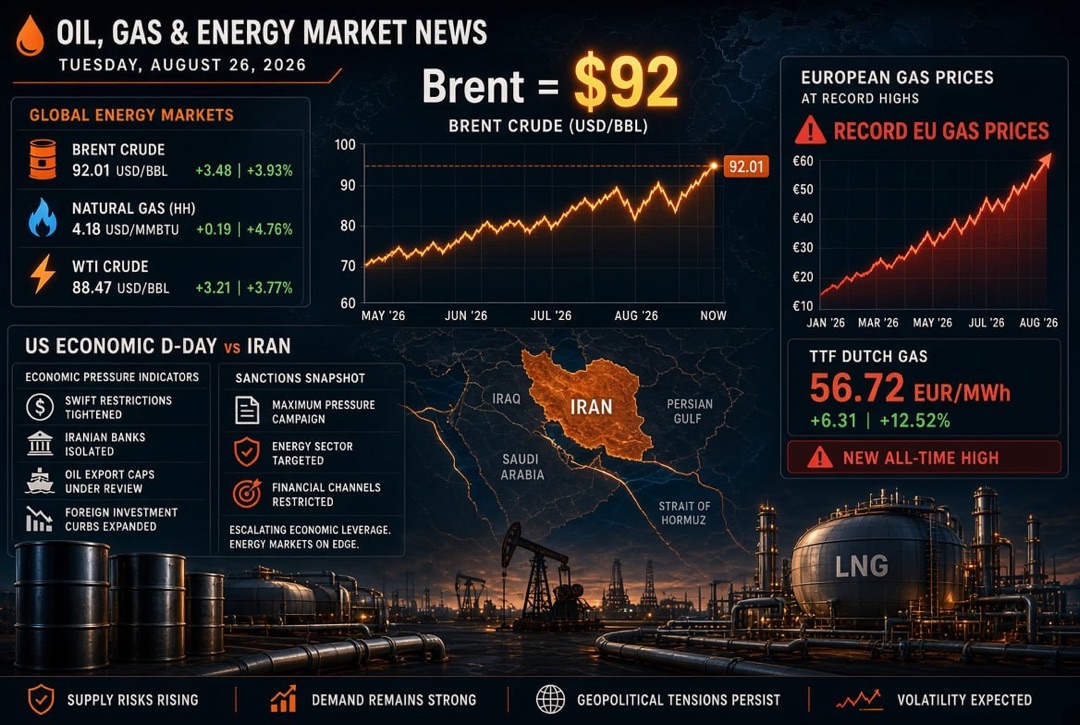
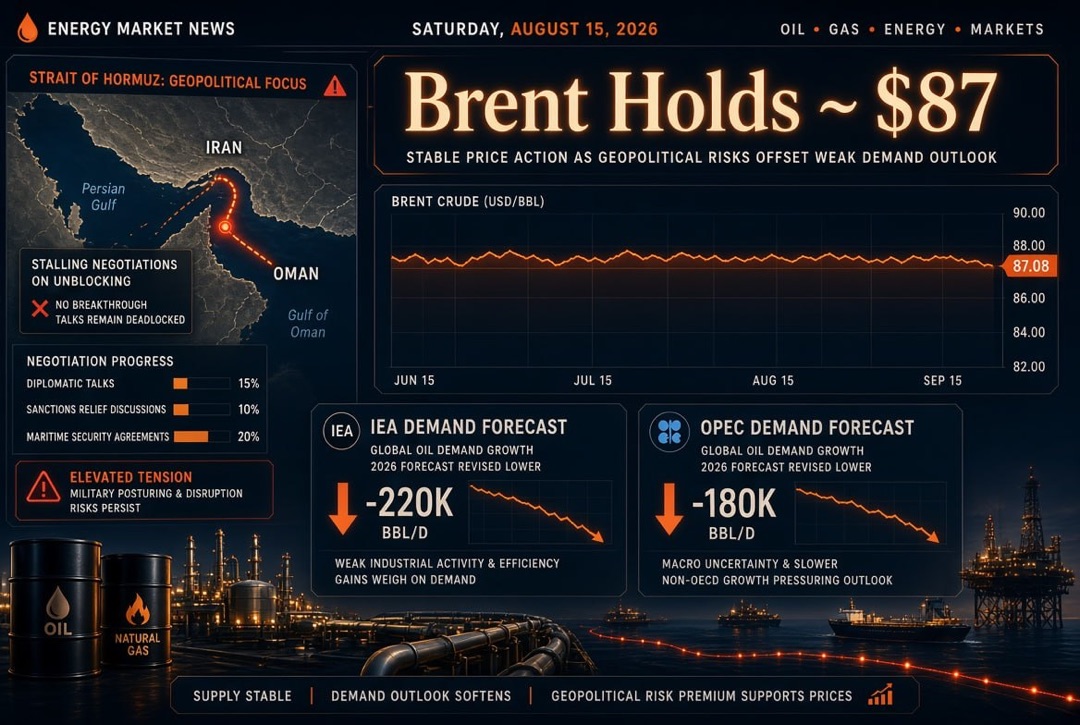
Global oil prices are experiencing the sharpest re-evaluation since the beginning of the year. Brent is trading around $79–80 per barrel, while American WTI is about $75–76. Just at the end of July, the international benchmark exceeded $90 amid attacks on tankers in the Persian Gulf; however, Washington's decision to postpone military action against Iran and initiate direct talks reversed the market downward. Weekly price declines have approached 10% as traders quickly extract the "war premium" that has been forming since spring.
Volatility remains extreme: on Wednesday, oil briefly rose in price following reports of Houthi attacks on a Saudi vessel in the Red Sea, reminding us that risks to maritime logistics are not confined solely to Hormuz. Nevertheless, the dominant trend is focused on de-escalation. Analysts warn: if the negotiations fail, a return to prices of $90 and above could happen in mere hours.
Hormuz Strait: Parameters of the Historic Agreement
A key event for the global oil and gas market is the interim agreement between the U.S., Iran, and Oman regarding the reopening of the Hormuz Strait, through which about 20 million barrels of oil and petroleum products used to pass daily before the crisis. The announcement of the deal was anticipated on Wednesday, August 5th. The main parameters of the discussed scheme are as follows:
- Duration — 60 days with the possibility of extension; this regime aims to solidify the ceasefire and pave the way for negotiations on Iran's nuclear program.
- Separate shipping routes: vessels entering the Persian Gulf will follow the northern corridor through Iranian territorial waters, while those exiting will take the southern route through Oman's waters.
- No transit fees: tariffs and fees for passage will not be collected.
- Clearing the main shipping lane within 30 days, after which a transition to a regular bilateral traffic system will be possible.
For Bahrain, Iraq, Kuwait, and Qatar, which have no alternative export routes, the reopening of the strait means the restoration of critically important flows of oil and LNG. However, Washington emphasizes that if the agreements break down, a forceful scenario will return to the negotiation table.
OPEC+: Alliance Concludes Return of Voluntary Cuts
During a virtual meeting on August 2nd, the "seven" OPEC+ members — Saudi Arabia, Russia, Iraq, Kuwait, Kazakhstan, Algeria, and Oman — agreed to increase oil production in September by 188,000 barrels per day. This step concludes the return of 1.65 million bpd to the market, which was cut during the second phase of voluntary restrictions starting in April 2023. Until the end of 2026, approved quotas will be applied to participants without additional reductions; the next monitoring meeting is scheduled for September 6th.
The paradox of the current moment is that Persian Gulf countries physically couldn't utilize their quotas due to the blockade of the Hormuz Strait. The reopening of this critical artery could quickly return significant volumes to the market, putting pressure on prices in the second half of the year — a factor investors should already incorporate into their models.
Gas Market: Europe in Race for LNG Prior to Winter
The European gas market remains the most tense segment of the global energy sector. The crisis in the Hormuz Strait has removed about one-fifth of global LNG supply, primarily Qatari, exacerbating competition between European and Asian buyers. The consequences are palpable:
- TTF hub prices remain in the range of €56–59 per MWh — about 30% higher than levels at the end of June;
- EU underground gas storage facilities are only 55–56% full — the lowest level for this time of year in nearly two decades;
- Brussels has reduced the mandatory target level for gas storage to 80% by November 1st, acknowledging supply limitations.
A promising sign was the first passage of a Qatari LNG tanker through Hormuz in late July since early July. If the agreement regarding the strait is implemented, the restoration of Qatari shipments could significantly cool gas prices and accelerate the filling of European storage facilities. Conversely, if not, the market may begin to prematurely factor in winter shortages.
Refining Sector: Global Deficit in Capacities and Fuels
The global refining sector is operating under multiple shocks. Damage to refineries in the Middle East, strikes on refining infrastructure amid the Russia-Ukraine conflict, China's export restrictions on petroleum products, and a Russian ban on diesel exports have collectively tightened the global supply of motor fuels. Crack spreads remain elevated, supporting the margins of the surviving plants, while European refiners diversify their raw material purchases, notably increasing oil imports from Guyana while bypassing traditional Middle Eastern routes.
Russian Fuel Market: Export Restrictions Until 2027
The Russian government has extended the complete ban on the export of automotive gasoline until January 31, 2027 — an unprecedentedly long restriction reflecting the depth of imbalance in the domestic market. An embargo on diesel fuel exports remains in effect at least until the end of August. The reasons for tightening are:
- Increased drone attacks on Russian refineries since March, which have reduced motor fuel production;
- High seasonal demand during vacation and harvest periods;
- The need to rein in rising exchange and retail prices at gas stations.
The effect has already become evident in the diesel segment: exchange sales of summer diesel fuel on SPbMTSB have doubled in a week, and the market is discussing the risk of oversupply, which could force plants to reduce capacity — indirectly reducing gasoline production. Regulators will need to balance between saturating the domestic market and preserving the refining economy.
Power Sector and Renewables: Renewable Generation Solidifies Leadership
The global energy transition continues to set records. By the end of 2025, renewable energy sources will, for the first time in a century, surpass coal in the global electricity balance — 33.8% compared to 33.0% of total generation. In 2026, this trend is expected to strengthen: in the U.S. during the first quarter, solar stations and storage systems accounted for 91% of all new capacity, and the renewable sector may attract up to $120 billion in investments within a year. California's energy system recorded solar generation covering up to 72% of demand in the summer, and Texas set records for solar output and battery contributions during evening peaks. Notably, in China and India — the world's largest coal-fired energy systems — fossil generation synchronized decreased for the first time in 2025: clean energy is growing faster than demand. The rise of electric transport adds additional pressure on oil demand; China's electric vehicle fleet alone displaced about 34 million tons of oil in the first half of 2026.
Coal: Correction After Geopolitical Rally
The coal market is moving in line with Middle Eastern geopolitics. Newcastle thermal coal, which surged to multi-year highs in the second quarter amid the U.S.-Iran conflict and export restrictions from Indonesia, has corrected to $127–130 per ton — still about 16% above last year's levels but noticeably lower than May peaks. Coking coal, which reached around $240 per ton, has also declined as de-escalation unfolds. Demand in Asia remains a structural support for the market: the energy needs of India, China, and ASEAN countries uphold steady imports, while under-investment in new export capacities constrains supply elasticity.
Key Milestones for Investors on August 6
The agenda for the upcoming trading sessions centers around several factors:
- Official announcement of the agreement regarding the Hormuz Strait — the main trigger for oil, gas, and freight rates; confirmation of the deal will increase pressure on Brent, while a breakdown will return prices to $90.
- Restoration rates of Qatari LNG exports — a determining factor for European gas prices and the speed of filling storage facilities before winter.
- Data on oil and petroleum product stocks in the U.S. — an indicator of supply and demand balance during the peak driving season.
- Trends in fuel exchange prices in Russia following the extension of export bans.
- September production increase by OPEC+ and the ability of Gulf countries to effectively utilize quotas with the strait open.
Forthcoming weeks will test the sustainability of diplomatic de-escalation in the Middle East for energy market participants. The combination of increasing OPEC+ supply, potential return of Gulf barrels, and record expansion of renewables creates a bearish backdrop for oil prices in the second half of 2026; however, the fragility of the ceasefire and the vulnerability of logistics from the Red Sea to Suez leave the market with a wide corridor for new price shocks.