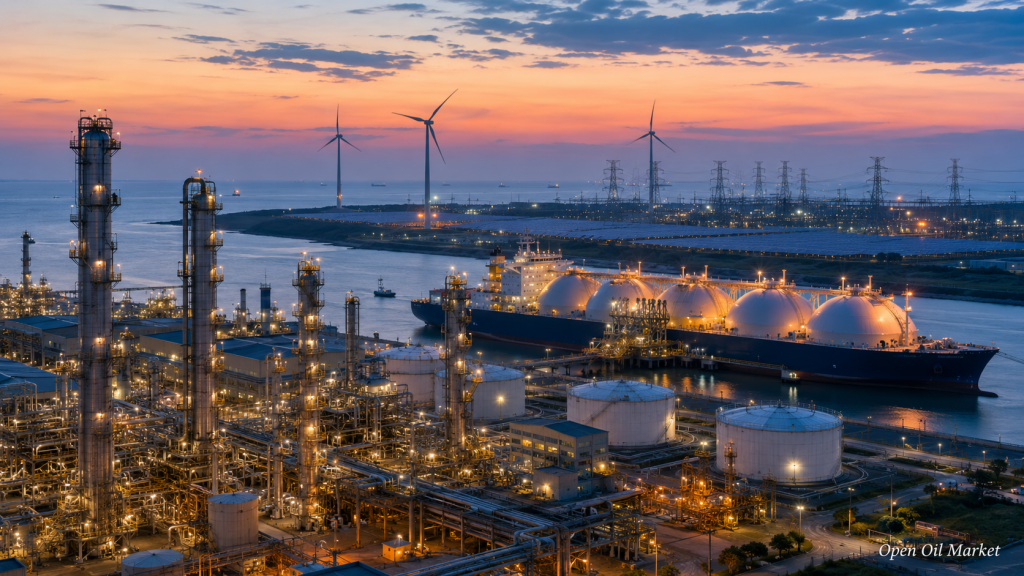
Global Energy Complex: Refinery, LNG Tanker, Power Grids, Wind and Solar Energy for an Article on Energy News for May 19, 2026
On Tuesday, May 19, 2026, the global energy sector enters a phase of heightened turbulence: the oil and gas market, electric power, coal, renewables, petroleum products, and refineries simultaneously respond to geopolitical risks, shrinking available reserves, restructuring trade flows, and rising energy costs for industry. For investors, energy market participants, fuel companies, and oil companies, the key factor is not only the price of oil but also the physical availability of raw materials, logistics, refining margins, and the resilience of energy systems.
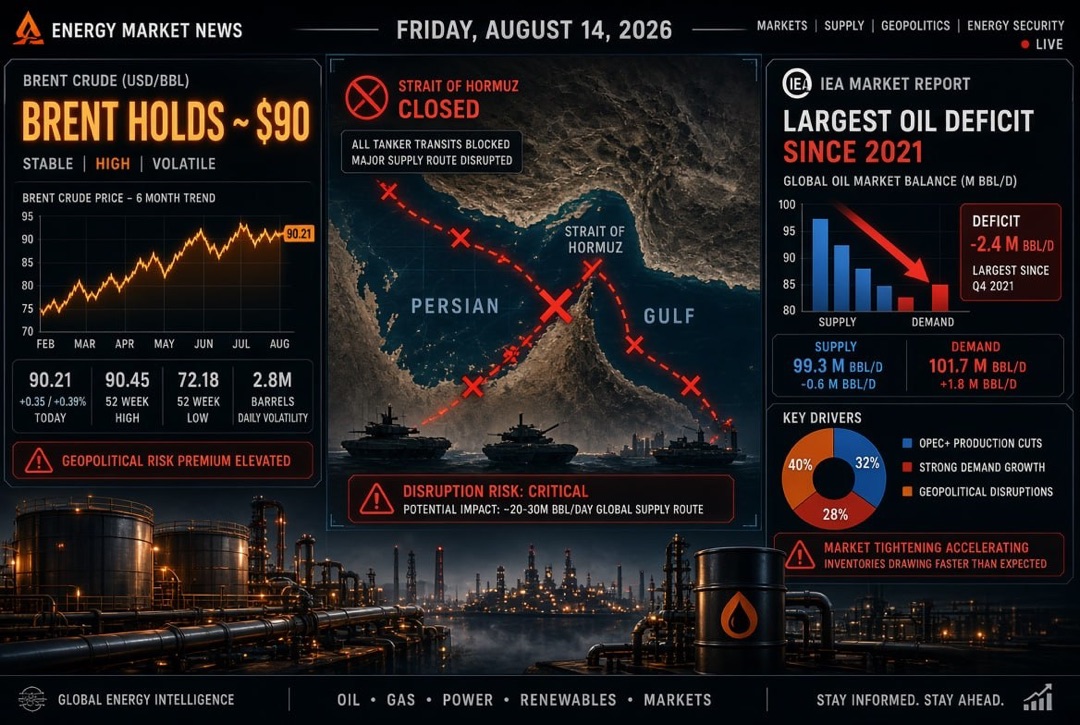
The main theme of the day is the intensifying deficit in the oil and petroleum products market. Against the backdrop of tensions around key supply routes, declining commercial inventories, and a rising risk premium, Brent and WTI remain in a zone of heightened volatility. For the global market, this means that energy once again becomes a central factor in inflation, corporate expenses, and investment decisions.
Oil: The Market Assesses Not Only the Price of Brent but Also the Physical Shortage of Raw Materials
The oil market remains under pressure on Tuesday from several factors: geopolitical instability, declining inventories, logistical constraints, and high refinery demand for feedstock ahead of the summer demand season. For investors, the shift in market structure is important: financial oil prices may temporarily adjust, but the physical market remains tight.
Key factors for the oil market:
- declining commercial oil inventories in developed economies;
- rising insurance and freight costs for maritime shipments;
- redistribution of export flows among Asia, Europe, and North America;
- elevated demand for diesel, gasoline, and jet fuel ahead of the summer season;
- persistence of a high geopolitical risk premium in Brent quotations.
For oil companies, the current situation creates a dual effect. On the one hand, high oil prices support cash flows in the upstream segment. On the other hand, volatility, rising logistics costs, and political risks limit companies' willingness to sharply increase capital expenditures.
Petroleum Products and Refineries: Refining Margin Becomes a Key Market Indicator
In the petroleum products market, the main focus shifts to middle distillates: diesel fuel, aviation kerosene, and industrial fuels. These products react most strongly to disruptions in crude oil supplies and processing constraints. For fuel companies and refineries, this means high operational demand but also increased risks in raw materials, logistics, and working capital.
Refineries in different regions of the world face varying conditions:
- Europe remains sensitive to the cost of imported feedstock and diesel fuel.
- Asia competes for alternative supplies of oil and petroleum products.
- The United States benefits from its own resource base and advanced refining capacity.
- The Middle East retains strategic importance but faces a higher logistics premium.
Investors should closely monitor not only the price of oil but also crack spreads — the margin between the cost of feedstock and petroleum products. In conditions of limited availability of diesel and jet fuel, refining could become one of the most profitable yet riskiest segments of the energy sector.
Gas and LNG: The Global Market Seeks a Balance Between Supply Security and Price
The gas market remains one of the central elements of global energy security. Growth in natural gas production in the United States, expansion of LNG capacity, and strong demand from Asia are shaping a new trade architecture. For Europe, natural gas and LNG remain critically important sources of energy system flexibility, especially during periods of unstable renewable generation.
Key trends in the gas market:
- The US strengthens its role as the largest LNG supplier to the global market;
- Asian buyers compete for long-term contracts;
- Europe aims to maintain high gas storage levels;
- Gas prices remain sensitive to weather, industrial demand, and geopolitics;
- Gas-fired generation retains its role as backup capacity for power systems.
For investors in the oil and gas sector, LNG remains a long-term investment theme. Even with the growth of renewables, gas continues to serve as a transition fuel, especially in countries where the energy system requires stable baseload and flexible generation.
Electricity: High Fuel Prices Intensify Pressure on Industry
The power sector in 2026 is increasingly dependent on fuel costs, grid condition, and the pace of new capacity additions. Rising prices for oil, gas, and coal directly affect the cost of electricity in regions where thermal generation remains the backbone of the energy mix. For industry, this means higher operating expenses, and for investors, the need to evaluate companies based on the energy intensity of their business.
The most vulnerable remain industries with a high share of electricity and fuel in their cost structure:
- metallurgy;
- petrochemicals;
- fertilizers;
- cement industry;
- transport and logistics;
- data centers and digital infrastructure.
Growing electricity consumption from artificial intelligence, cloud services, and industrial automation places additional strain on power systems. Therefore, the power sector is becoming not only an infrastructure sector but also an investment sector tied to technological growth.
Renewables: Renewable Energy Benefits from Expensive Fuel but Faces Grid Constraints
High prices for oil, gas, and coal boost investment interest in renewables. Solar and wind energy become more competitive as the cost of conventional fuel rises. However, it is important for the market to understand: rapid growth of renewables does not eliminate the need for gas, energy storage, grid infrastructure, and backup capacity.
Key challenges for renewables in 2026:
- shortage of grid connections and delays in power grid modernization;
- need for energy storage systems;
- production volatility due to weather factors;
- rising cost of financing for capital-intensive projects;
- need to balance the power system with conventional generation.
For investors, renewables remain a long-term growth area, but project returns increasingly depend on the quality of regulation, grid access, cost of capital, and the availability of power purchase agreements.
Coal: Demand Persists in Asia Despite the Energy Transition
Coal remains an important part of the global energy balance, especially in Asia. Despite decarbonization and the growth of renewables, coal-fired generation continues to serve as baseload power in countries with rapidly growing electricity demand. For investors, this creates a contradictory picture: the sector is under environmental and regulatory pressure but remains significant for energy security.
Key factors in the coal market:
- stable demand from Asian power generation;
- competition among coal, gas, and renewables in generation;
- restrictions on financing new coal projects;
- high role of logistics and maritime shipping;
- coal's persistence as backup fuel in conditions of expensive gas.
For energy companies, coal remains a reliability tool but not a long-term growth strategy. The main investment interest is shifting toward generation modernization, emissions reduction, and hybrid energy systems.
Market Geography: US, Europe, Asia, and the Middle East Shift Energy Priorities
The global energy market is becoming increasingly fragmented. The United States strengthens its position as a supplier of oil, gas, and LNG. Europe focuses on energy security, gas reserves, renewables, and reducing dependence on imported fuel. Asia remains the main center of demand growth for oil, gas, coal, and electricity. The Middle East retains its role as a key region for oil and petroleum products but faces a high geopolitical premium.
For global investors, this means the need to evaluate the energy sector not as a single market but as a system of regional balances:
- United States — export potential, LNG, shale oil, refining.
- Europe — gas security, renewables, electricity cost, industrial competitiveness.
- Asia — demand growth, raw material imports, coal generation, petrochemicals.
- Middle East — oil production, refineries, logistics, and risk premium.
What This Means for Investors and Energy Companies
On Tuesday, May 19, 2026, the main investment idea in the energy sector is the shift from assessing "expensive or cheap oil" to a more complex model: raw material availability, inventory status, refining, logistics, electricity, and supply chain resilience become no less important than Brent quotations.
Investors should pay attention to several areas:
- oil and gas companies with stable cash flow and low debt leverage;
- refineries and processors with access to stable feedstock;
- LNG suppliers and gas infrastructure projects;
- power companies with diversified generation;
- renewable projects with long-term contracts and grid access;
- fuel companies capable of managing inventories and logistics.
For fuel companies and oil companies, the priority becomes working capital management, supply insurance, route diversification, and margin control. For industrial consumers, the key risk is rising energy costs, which could erode profitability and intensify inflationary pressure.
Day Summary: Energy Once Again Becomes the Center of the Global Investment Cycle
News from the oil and gas sector and energy for Tuesday, May 19, 2026, shows: the global energy sector is entering a period where energy security, fuel availability, and infrastructure resilience become the main market themes. Oil remains a barometer of geopolitical risk, gas and LNG an instrument of energy flexibility, electricity a factor in industrial competitiveness, renewables a long-term growth area, and coal a backup element of the energy balance.
For investors, energy market participants, oil companies, fuel companies, and refinery operators, the current situation requires discipline, careful balance sheet analysis, and readiness for high volatility. The key takeaway of the day: the energy market of 2026 evaluates not only production volumes but also the ability of companies, countries, and infrastructure to deliver energy where it is most needed.