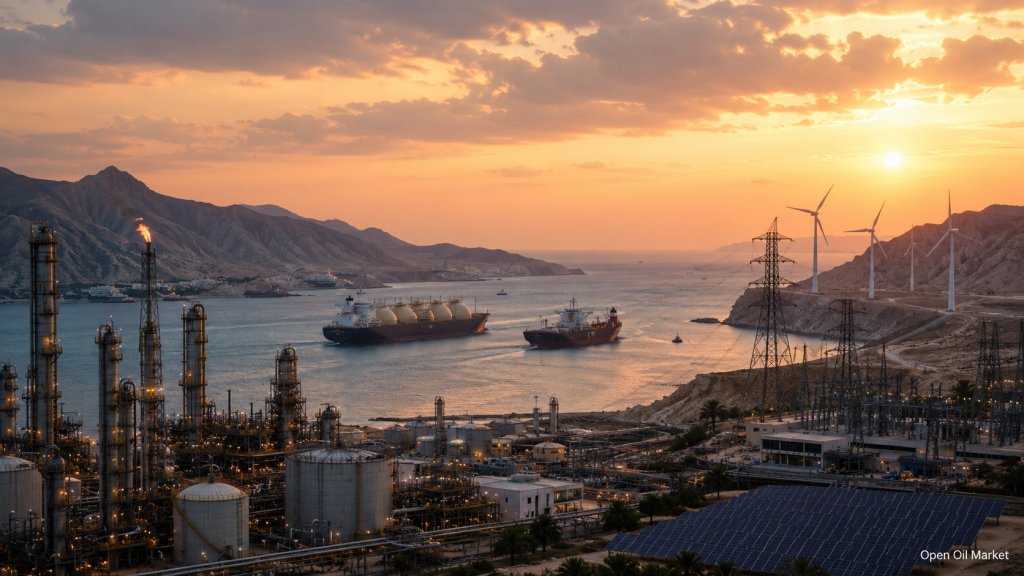
Oil Refineries, LNG Tankers, Power Transmission Lines, Solar Panels, and Wind Generators Against the Background of the Global Energy Market on May 10, 2026
The global fuel and energy complex approaches Sunday, May 10, 2026, in a state of heightened volatility. Oil, gas, electricity, renewable energy sources (RES), coal, petroleum products, and refineries are simultaneously being influenced by geopolitical factors, logistical constraints, seasonal demand, and structural restructuring of energy markets. For investors and participants in the energy sector, the key issue now is not just the price levels, but also the sustainability of supply chains.
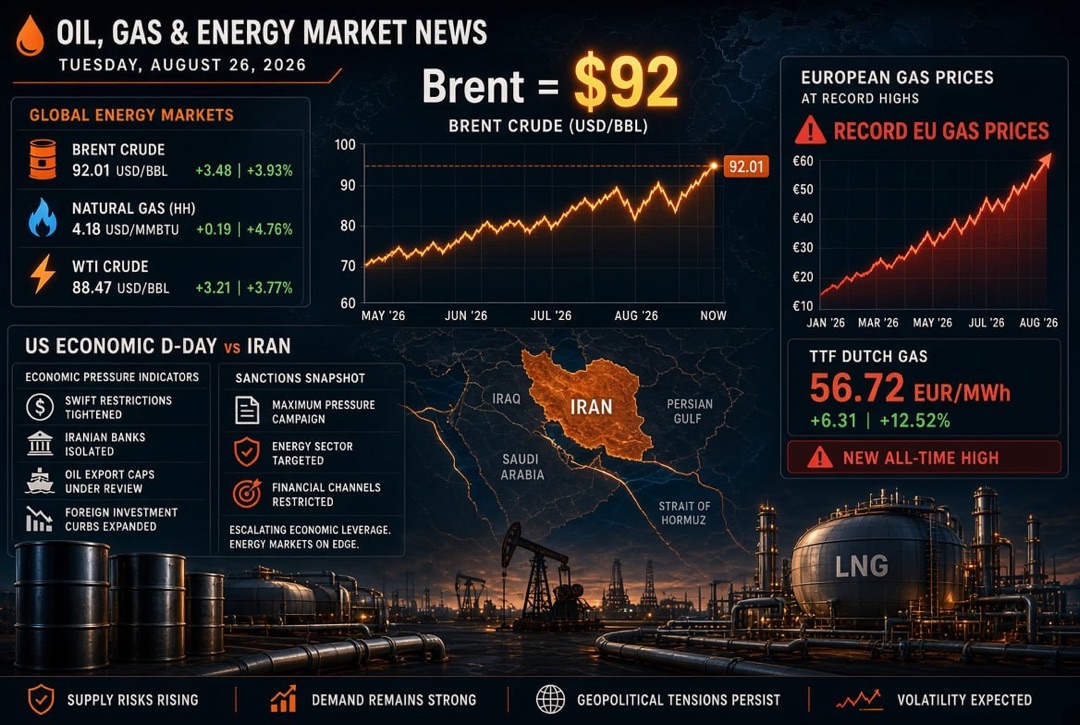
The key factor of the week is the ongoing tension surrounding the Middle East and the Strait of Hormuz. Even hopes for a negotiation scenario have not alleviated the risk premium: Brent remains above $100 per barrel, while WTI hovers around the mid-$90s. This alters the calculations for oil companies, traders, refineries, fuel companies, and electricity consumers worldwide.
Oil: The Market is Pricing in a Risk Premium
The oil market remains in a phase of nervous equilibrium. On one hand, prices have already retreated from the peak levels formed amid supply disruption threats from the Persian Gulf. On the other hand, Brent’s sustained positioning above $100 indicates that investors continue to assess the risk of disruptions as significant.
For oil companies, the current environment appears favorable in terms of revenue but complex regarding planning. The high oil price bolsters cash flows for extraction companies; however, it simultaneously intensifies political pressure on exporters, raises the risk of administrative intervention, and encourages consumers to conserve fuel.
- For extraction companies, a high Brent price supports profitability.
- For refineries and fuel companies, the risk of margin compression rises due to expensive raw materials.
- For airlines, industries, and logistics, costs are increasing.
- For investors, the importance of hedging and analyzing geopolitical scenarios grows.
OPEC+: Moderate Production Increase Does Not Alleviate Anxiety over Shortages
OPEC+ remains one of the central factors for the global oil market. Alliance participants are discussing a moderate increase in production; however, the effect of such a decision appears more symbolic than radical. Amid ongoing logistical risks, even additional supply may not quickly reach end consumers.
It is crucial for the market not only to consider the number of barrels stated in quotas but also the physical availability of oil. If transportation routes remain under threat, a formal production increase does not guarantee price reductions. This is why the oil market is currently reacting not only to OPEC+ decisions but also to news related to shipping, tanker insurance, sanctions, and port infrastructure operations.
China and Asia: Imports Decline, but Demand Remains Strategic
China continues to be one of the main indicators of the state of the global commodity and energy sector. The reduction in oil, gas, and petroleum product imports in April underscores how sensitive the Asian economy has become to supply disruptions and rising prices. However, a decrease in imports does not imply a structural decline in China's demand for energy resources.
The Asian market now balances between three tasks: providing energy to industry, keeping domestic fuel prices steady, and reducing dependence on unstable supply routes. For oil companies and traders, this means increased competition for reliable export routes, while for investors, it necessitates careful monitoring of demand in China, India, South Korea, Japan, and Southeast Asian countries.
Gas and LNG: The Market is Becoming More Rigid
The global market for natural gas and LNG remains strained. Supply disruptions from the Middle East have intensified competition between Europe and Asia for available liquefied natural gas cargoes. Simultaneously, the U.S. is benefiting as a major LNG exporter, yet the domestic American gas market faces a different issue—oversupply in certain regions and infrastructure constraints.
For Europe, filling gas storage remains a strategic priority. The higher the prices for LNG in Asia, the more challenging it becomes for European buyers to compete for flexible cargoes. This creates a dual reality for energy companies: gas becomes a more expensive yet strategically vital resource, while at the same time, incentives for developing RES, energy storage solutions, and grid infrastructure increase.
Electric Power: Grids Become the New Investment Focus
The power generation sector is increasingly catching the attention of investors. The rise in electricity consumption from data centers, artificial intelligence, industrial sectors, and transport electrification is changing the structure of demand. The challenge is no longer solely about how much oil, gas, or coal exists in the market, but whether the energy infrastructure can deliver electricity where it's needed.
Many countries are accelerating investments in power grids, substations, energy storage, and backup capacities. For utility companies, this creates long-term growth opportunities, but for consumers, it implies the risk of rising tariffs. In the U.S., Europe, and Asia, there is growing discussion about who should bear the cost of building new energy infrastructure—governments, businesses, or final consumers.
RES: Solar Generation is Growing Faster than Grid Readiness
Renewable energy continues to experience rapid growth. Solar and wind generation are becoming increasingly competitive, especially when combined with energy storage systems. However, the fast-paced growth of RES poses a new problem: energy systems sometimes struggle to adapt to drastic fluctuations in generation.
In Europe, the surplus in solar generation is already altering electricity price behavior. At certain hours, the market experiences an oversupply of cheap electricity, while during weak sun and wind periods, gas, coal, or nuclear generation is again required. Consequently, the primary investment focus is shifting from simply adding new solar panels to a more complex model:
- Development of energy storage systems;
- Modernization of grids;
- Flexible demand management;
- Construction of backup capacities;
- Creation of long-term power purchase agreements.
Coal: Short-Term Support Remains
Despite the energy transition, coal remains an important component of the global energy balance. In Asia, coal demand is supported by hot weather, increased electricity consumption, and the need for backup generation. India and several Southeast Asian countries continue to rely on coal-fired power plants as the backbone of their energy system's reliability.
However, the long-term trend remains unfavorable for the coal sector. Governments and investors are increasingly demanding emissions reductions, and major mining companies are required to prepare plans for asset closures, reclamation, and transitions to new energy projects. For investors today, coal is not a story of long-term growth, but rather a tool for short-term energy security.
Refineries and Petroleum Products: Margins Depend on Logistics and Raw Material Availability
The refinery and petroleum products sector is becoming one of the most sensitive segments of the energy sector. High oil prices increase raw material costs, while fuel export restrictions in certain countries alter regional balances of gasoline, diesel, and aviation fuel. For refining, the availability of specific oil grades, freight costs, insurance, and sanctions restrictions are critically important.
The situation surrounding Russian refineries remains an important factor for the petroleum products market. Attacks on infrastructure, restrictions on gasoline exports, and the redirection of raw material flows increase uncertainty for traders. Should disruptions at refineries persist, regional fuel markets may face additional pressure during the summer season.
What is Important for Investors in the Energy Sector in the Coming Days
For investors, oil companies, gas traders, power producers, renewable energy market participants, and fuel companies, the upcoming week will rely on a combination of geopolitical factors and the physical balance of raw materials. The primary risk is not only the high price of oil but also the potential for sharp price movements with any change in the situation surrounding the Middle East.
- Oil: Monitor Brent, WTI, OPEC+ decisions, and shipping in the Strait of Hormuz.
- Gas: Evaluate Europe’s and Asia’s competition for LNG, storage dynamics, and freight rates.
- Electricity: Consider the demand growth from data centers and industry.
- RES: Focus not only on capacity additions but also on the development of storage and grids.
- Coal: View as a backup resource during peak demand periods.
- Refineries and Petroleum Products: Track refining margins, export restrictions, and seasonal fuel demand.
Thus, the news from the oil and gas sector and energy market on Sunday, May 10, 2026, indicates that the global energy sector is entering a period of high dependence on geopolitical situations, infrastructure resilience, and the pace of energy transition. Oil remains the primary risk indicator, gas and LNG serve as indicators of energy security, electric power emerges as the focus of future investments, while RES and energy storage represent a critical direction for the structural transformation of the global market.