Global Oil Market and Energy Update for Wednesday, May 20, 2026: Oil Above $100, European Gas Security, LNG Market, Pressure on Refineries, Increased Electricity Demand, Renewable Energy and Coal in Global Energy Balance
The global fuel and energy complex enters Wednesday, May 20, 2026, in a state of high volatility. Oil remains expensive due to tensions in the Middle East and logistical risks through the Strait of Hormuz, while the European gas market refocuses on long-term supply security. Additionally, refining operations in Asia are under pressure from costly raw materials and weak margins. For investors, oil companies, fuel traders, refineries, and participants in the electricity, coal, and renewable energy markets, the key question of the day is how sustainable the balance between geopolitical premiums, physical supply shortages, and slowing demand will be.
The main theme of the day is that the energy market is gradually transitioning from a short-term shock to a new adaptation model. Companies and governments are not just reacting to the rising oil and gas prices; they are restructuring supply routes, inventories, generation structures, and investment priorities.
Oil: Market Stays Above $100 but Awaits Diplomatic Signals
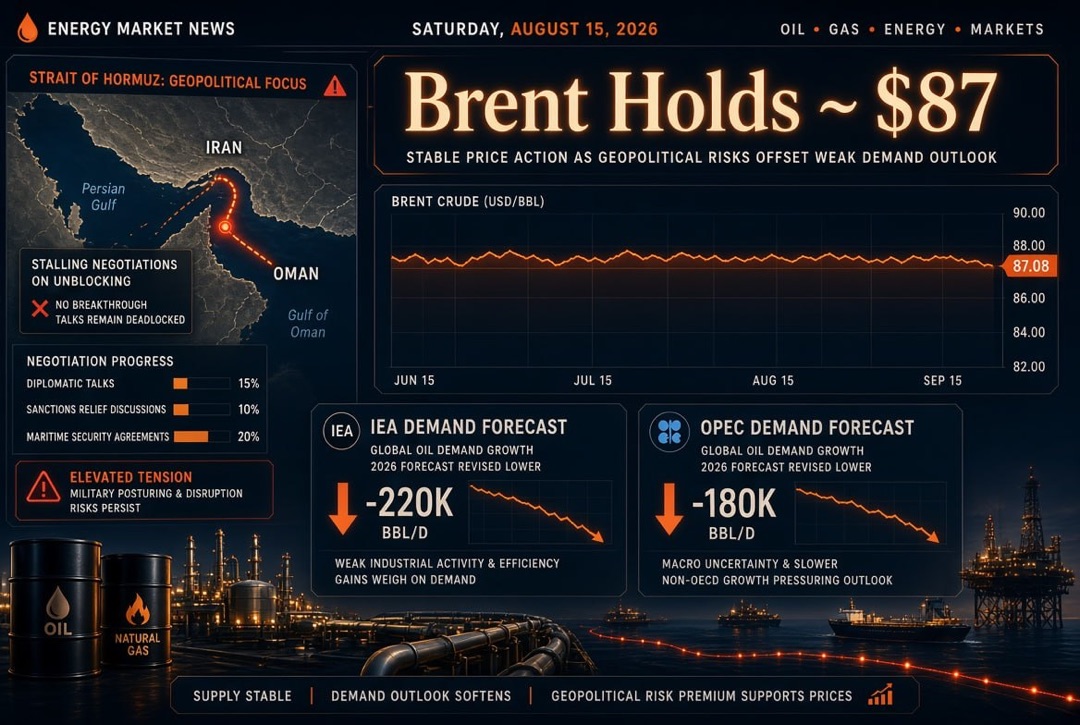
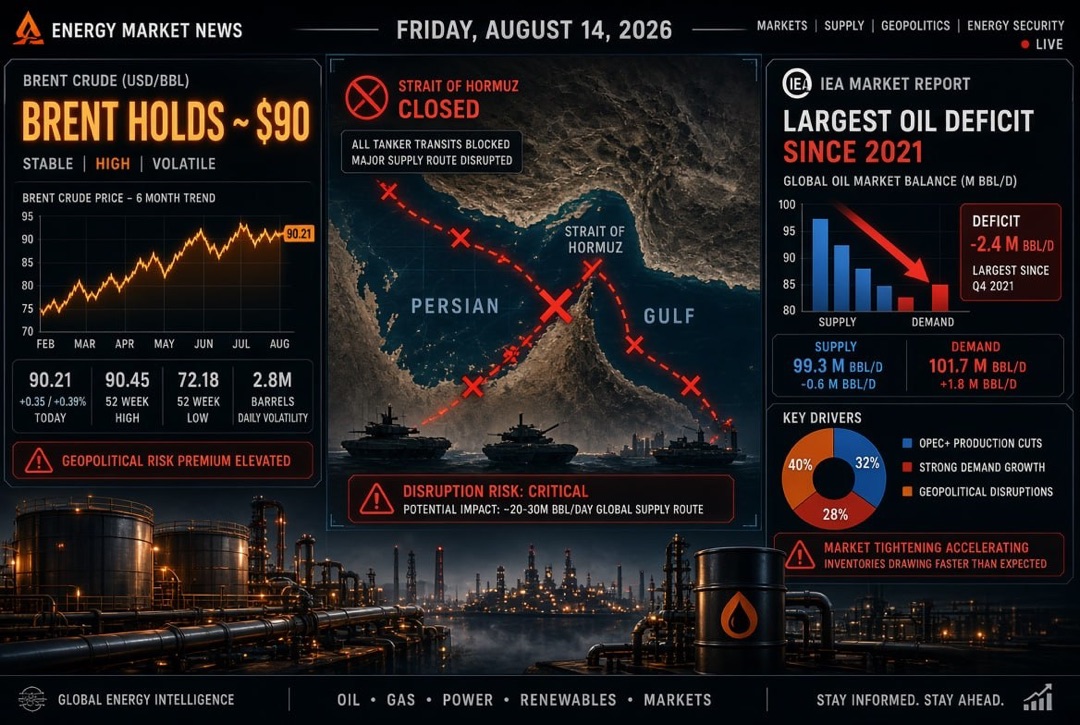
Oil prices remain in the spotlight for global investors. Brent is trading above the psychologically significant level of $100 per barrel, while WTI also holds elevated levels. After a sharp increase driven by supply risks from the Persian Gulf region, the market has begun to partially factor in the probability of diplomatic easing regarding Iran.
However, the fundamental picture remains tense. For oil companies and traders, it is not only the current price movements that matter but also the state of the physical market:
- A portion of supplies from the Middle East remains at risk of disruptions;
- Insurance and freight rates for tanker shipments retain a risk premium;
- Buyers in Asia and Europe are forced to actively seek alternative raw material sources;
- Reserves and strategic storage are again becoming a tool for price stabilization.
For investors, this means that the oil market has not yet returned to normal pricing. Even if the military premium partially diminishes, oil remains sensitive to any statements regarding Iran, sanctions, supply routes, and the policies of major producers.
Supply and Demand Balance: Shortages Become Key Assessment Factor
International oil market forecasts indicate a rare combination of factors: high price levels, a decline in part of the supply, and a simultaneous weakening of demand. According to industry agencies, global oil demand in 2026 may decrease as expensive energy sources, a weak macroeconomic environment, and fuel conservation measures begin to pressure consumption.
At the same time, supply is also constrained. Reduced production and supply disruptions enhance the significance of reserves. For the energy market, this creates a complex investment landscape: expensive oil supports cash flow for upstream companies but simultaneously deteriorates the economics of refining and consumers of petroleum products.
Gas and LNG: Europe Strengthens Long-Term Energy Security
The gas market remains one of the key focuses of the global energy agenda. Europe continues to reduce its dependence on unstable routes and aims to secure long-term contracts with reliable suppliers. Against this backdrop, agreements for the supply of pipeline gas and LNG gain special importance, including deals with Norwegian suppliers.
For European consumers, gas remains a transitional fuel: it is needed for industry, heating, balancing electricity, and replacing more carbon-intensive sources. However, the price question has changed. Now buyers evaluate not only the price of the gas molecule but also:
- Reliability of the supplier;
- Delivery route;
- Carbon footprint;
- Availability of guarantees of origin;
- Contract resilience to sanctions and geopolitical risks.
For gas companies and investors, this means increased value for quality infrastructure: LNG terminals, underground gas storage, interconnectors, and flexible contract portfolios.
LNG from Qatar, the USA, and Russia: Market Becomes More Fragmented
The global LNG market is experiencing a period of fragmentation. Projects in Qatar remain strategically important for the future balance, but some new capacities may face delays. Meanwhile, the USA strengthens its role as the largest flexible supplier, while Russian LNG continues to seek sales routes under sanction pressure.
For Asia, the key issue is the availability of long-term supplies. China, South Korea, Japan, and other major importers must balance between price, security, and political restrictions. The shipment of individual batches of Russian LNG to China, after a lengthy route, underscores that sanction logistics do not halt trade entirely but make it more expensive, slower, and less predictable.
Refineries and Petroleum Products: China Cuts Refining, Margins Under Pressure
One of the most important signals for the petroleum products market is the reduced throughput of Chinese state-owned refineries. Major processors in China have cut refining volumes due to supply disruptions with Middle Eastern oil, high raw material costs, and weak margins. This is significant for the entire global market, as China remains one of the largest centers for oil refining and fuel consumption.
The decline in refining affects several segments:
- Demand for crude oil from Asia;
- Balance of gasoline, diesel, and aviation fuel;
- Exports of petroleum products from China;
- Margins of independent and state-owned refineries;
- Pricing on regional fuel markets.
For refining, the current situation is ambiguous. On one hand, expensive oil worsens the economics of raw material procurement. On the other hand, supply disruptions with diesel and aviation fuel may support the margins of certain refineries in the USA, Europe, and the Middle East.
Electricity: Increased Consumption, Data Centers, and New Load on Grids
The electricity sector is becoming an independent driver of investment demand. The USA expects record electricity consumption in 2026 and 2027, partly due to the growth of data centers, artificial intelligence, industrial electrification, and increased grid load. This changes the market structure: electricity is becoming not just a utility commodity but a strategic resource for the digital economy.
For investors, three areas are important:
- Network companies—the growing load requires modernization of transmission and distribution lines.
- Gas generation—remains a key instrument for system balancing.
- Renewable energy sources and storage—gain additional demand due to the need for cheap and rapid generation.
The increase in electricity consumption intensifies competition for gas, equipment, transformers, and land for energy infrastructure.
Renewables and Coal: Energy Transition Accelerates, but Coal Maintains Reserve Role
The renewable energy market continues to expand, especially in solar energy. In some regions of the USA, solar generation is already reaching levels that allow it to surpass coal in output. This is an important signal for the global electricity market: renewables are becoming not only a climate factor but also an economic one.
However, coal does not disappear from the energy balance. In Asia, coal demand may receive seasonal support due to heat, increased use of air conditioning, and the need to cover peak load. However, in the long term, coal faces pressure from renewables, gas, energy storage, and environmental regulations.
For coal companies and investors, this means a transition from a growth narrative to a story of volatile, regionally limited demand. Coal remains important for energy security, but its investment profile is becoming increasingly dependent on policy, climate, and grid resilience.
Europe: Uniper Sale Shows the Price of Energy Security
The European energy market continues to restructure following the energy crisis of 2022–2024. Germany has begun the process of selling its stake in Uniper—one of the country’s key energy firms, which was nationalized during the gas crisis. This process is significant not only as a corporate deal but also as an indicator of the new role of the state in the energy sector.
Even with privatization, strategic assets in gas, storage, backup generation, and electricity remain questions of national security. For investors, this means that deals in the European energy sector will be assessed not only based on EBITDA and dividends but also on political constraints, regulatory conditions, and resilience requirements of energy systems.
What Investors and Energy Companies Should Monitor
As of May 20, 2026, the global markets for oil, gas, electricity, renewables, coal, and petroleum products remain under increased uncertainty. The main factors of the day are geopolitical dynamics surrounding the Middle East, the state of the Hormuz route, inventory trends, the behavior of Chinese refineries, European gas security, and the growth in electricity demand.
Key Indicators for the Market
- Movement of Brent and WTI above or below the $100 per barrel range;
- News regarding negotiations around Iran and maritime route security;
- Refinery throughput levels in China, the USA, and Europe;
- Gas prices in Europe and Asia;
- Rates of new LNG project launches;
- Electricity demand trends driven by data centers and industry;
- The role of renewables, gas, and coal in covering peak loads.
The main takeaway for investors: the energy sector in 2026 remains a market not only for raw materials but also for infrastructure. The most resilient positions are held by companies that control production, logistics, refining, storage, generation, and access to end consumers. In a climate of expensive oil, unstable gas, and increasing electricity demand, the advantage will go to those players in the energy sector who can manage the entire value chain—from raw materials to energy supply.