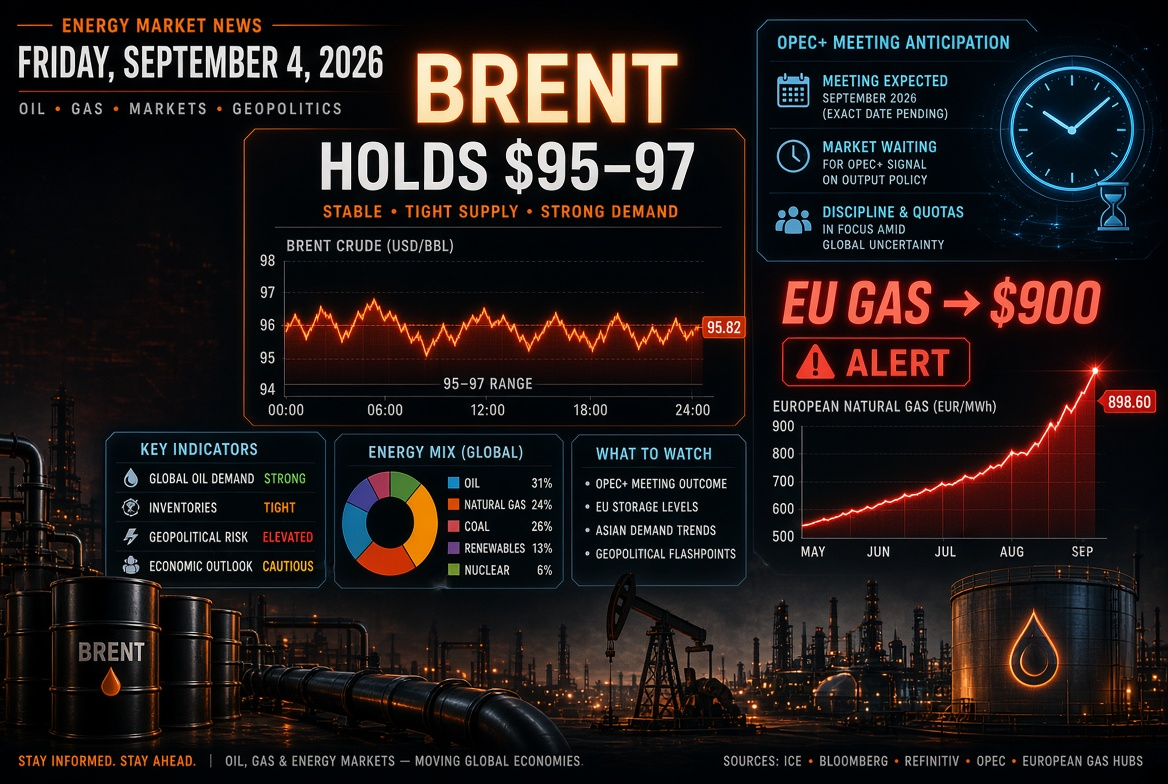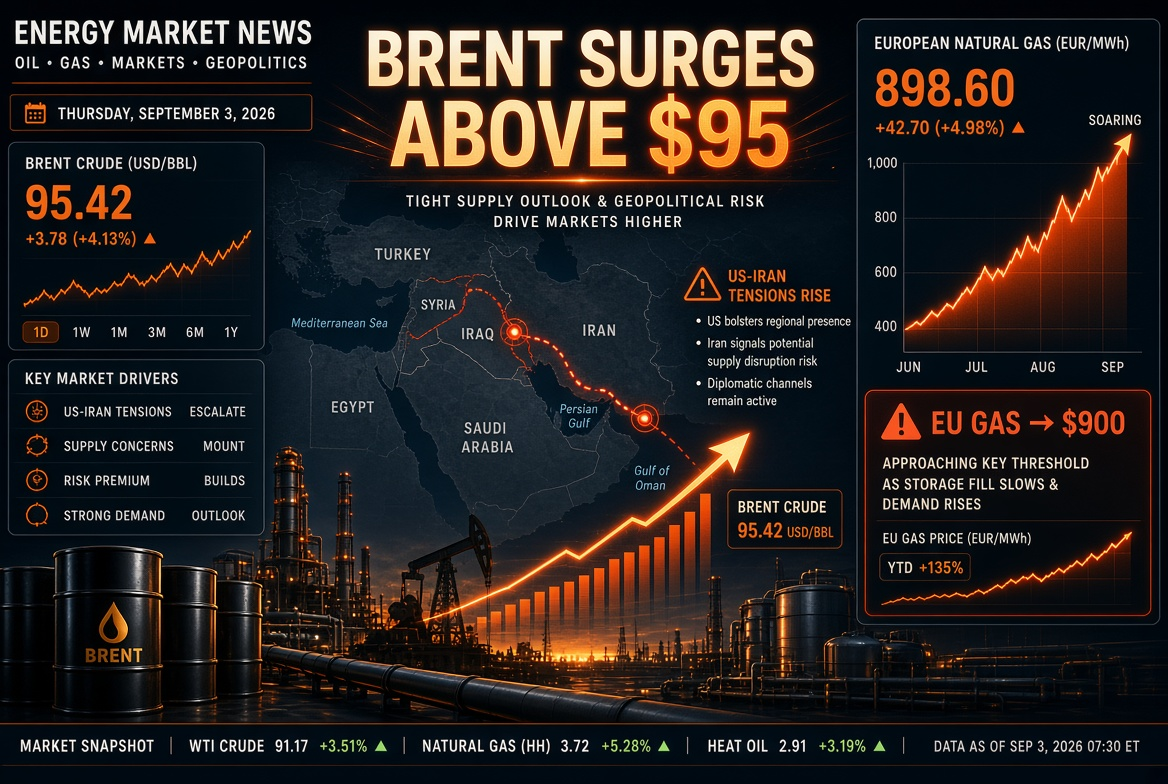
Global Oil, Gas, and Energy News as of March 11, 2026, Including Oil Price Dynamics, LNG Market State, Refinery Status, Power Generation, Renewable Energy, and Key Trends in the Global Energy Sector
As we approach mid-week, the oil market remains tense. Following a sharp rise at the beginning of the week, Brent and WTI prices have undergone a significant correction; however, the volatility itself confirms that the geopolitical risk premium in oil is far from disappearing. For the market, this is not a shift towards a sustainable decline, but rather a reevaluation of the short-term supply scenario.
Current Factors Influencing the Oil Market
- Geopolitics outweighs supply-demand balance: Traders are evaluating not only the current supply volume but also the likelihood of new disruptions from key oil-producing regions.
- Risk premium remains high: Even after the price correction, oil prices are significantly above levels justified solely by fundamental demand and supply factors.
- Expectations for strategic reserves have increased: Discussions on potential stabilization measures from major economies limit the room for any new panic-driven rallies.
For oil companies and investors, this indicates that the oil market as of March 11 is living in a rapid scenario rewriting mode. Should de-escalation be confirmed, Brent may partially lose its military risk premium. If supply risks persist, oil may again gain upward momentum, making the refined products market even more sensitive to localized disruptions.
Gas and LNG: The Main Blow to Global Energy Balance Flexibility
If oil reacts primarily through price premiums, the gas and LNG market faces a more tangible issue—disruption of physical logistics. LNG has become the key indicator of energy tension today as it links Europe, Asia, Middle Eastern producers, and spot buyers into a single competitive system.
The most noticeable shift is the sharp increase in Asian LNG prices and heightened competition for available cargos. For Asian countries that rely on fuel imports for power generation and industry, this translates into increased procurement costs and intensified pressure on tariffs and generation profitability.
Key Gas Market Trends
- Asia intensifies the competition for spot LNG parcels. Buyers are eager to hedge against delivery shortfalls, heating up the market and increasing competition with Europe.
- Cargos are being redirected between basins. Tanker logistics are becoming increasingly flexible, and trade flows are being reorganized based on higher prices.
- Gas is no longer merely a "clean bridge." With rising prices, some energy systems are beginning to favor coal and backup thermal generation once again.
For the global energy market, this is particularly significant, as LNG now forms a crucial link between oil, coal, electricity, and industrial demand. Any new shock in the gas market is automatically transmitted to adjacent segments.
Asia: Oil and Gas Dependence on the Middle East Becomes a Strategic Factor Again
As of March 11, Asia remains the most vulnerable link in the global energy balance. Major importers of crude oil, refined products, and LNG cannot quickly replace Middle Eastern volumes without incurring increased costs, reconfiguring refineries, or renegotiating long-term contracts. This applies not only to oil but also to feedstock for petrochemicals and gas generation.
For investors, the essential takeaway is that even with alternative suppliers, the speed and cost of replacement become critical. This is why the Asian market remains the main arena for price competition among oil, LNG, and coal.
- Refining in Asia depends on familiar crude grades and the technological configuration of refineries.
- Energy companies are forced to overpay for supply flexibility.
- Any increase in logistics lead time raises fuel costs for end-use electricity and industry.
Refining and Refined Products: Short-Term Support for Processing Amid Increased Infrastructure Risk
The refining sector is entering a new phase. On one hand, high oil volatility and fuel market tension could support refining margins. On the other hand, any attack on industrial infrastructure or forced operational restrictions dramatically heightens the risk of localized shortages of refined products.
For the refined products market, this means that gasoline, diesel, and aviation fuel may rise not only in tandem with oil prices but also due to logistical disruptions at specific processing and storage nodes. This is why shares of refiners, traders, and vertically integrated companies are increasingly dependent on infrastructure resilience.
Key Considerations for the Refining Segment
- Refining margins may temporarily expand due to more expensive refined products and a tight supply market.
- Infrastructure risk has become a systemic factor in evaluating oil and fuel assets.
- Companies with diversified logistics and access to different markets stand to gain a premium.
Electricity, Renewables, and Storage: The Energy Transition Continues, but Reliability Becomes the New Logic
While the oil and gas markets are preoccupied with geopolitics, the electricity and renewable energy sector continues to undergo structural changes. The main tenet of 2026 is that it is not enough to simply increase solar and wind generation; ensuring system manageability is critically important. Consequently, there is growing attention toward batteries, energy storage, and projects capable of providing electricity in a more stable profile rather than episodically.
This is particularly vital for countries where the share of renewables is rapidly increasing, while networks do not always keep pace with the volume of new generation. For the global electricity market, storage is becoming not just an addition, but an essential part of the investment cycle.
- Renewables continue to strengthen their position in the energy balance of developed markets.
- Battery projects are becoming a key tool for network balancing.
- Investors are increasingly considering not only megawatts but also the quality of power—meaning the ability to deliver energy at the required hour and not just during peak solar or wind times.
This is a positive signal for the renewables sector: capital is increasingly flowing into storage, grid resilience, and combined projects "solar generation + batteries."
Coal: The Old Resource Temporarily Regains Price Impact
The rise in LNG prices has already impacted the coal market. When gas becomes too expensive, part of the generation in countries with accessible coal infrastructure begins to see coal as an economically justified backup once again. This does not negate the long-term energy transition but confirms that in the global electricity sector, coal remains an insurance asset in case of gas shocks.
This trend is particularly noticeable in Asia, where the structure of energy systems allows for quicker fuel switching. For traders and market participants, this means that coal in 2026 remains an important variable in the global energy equation.
Europe and Global Takeaway for Investors: Energy Price Again Becomes a Competitiveness Factor
Amid renewed turbulence, the issue of economic competitiveness is once again coming to the forefront. Europe remains particularly sensitive to the high costs of oil and gas imports, while the U.S. and some exporters gain relative advantages due to their own resources and supply flexibility. For the global market, this signifies a deepening gap in energy costs between regions.
The main takeaway as of March 11, 2026, for investors and energy sector participants is as follows:
- Oil remains a market characterized by a geopolitical premium;
- LNG remains the most volatile segment of global energy;
- Refining and refined products receive support but live under heightened infrastructure risk;
- Electricity and renewables are transitioning into a phase where not only "greenness" but reliability is valued;
- Coal retains its role as a backup fuel during price stress periods.
That is why Wednesday, March 11, 2026, could become not just another day of volatility for the global energy sector but a point where the market ultimately confirms a new priority: supply resilience, processing flexibility, generation manageability, and cost control are now more important than any single commodity price.