Oil and Gas and Energy News for Monday, June 29, 2026: Declining Oil Premium After De-escalation Around Hormuz, Gas and LNG Market Situation, Oil Product Dynamics, Refineries, Electricity, Renewables, and Coal. Overview for Investors and Participants in the Global Fuel and Energy Sector
The global fuel and energy sector enters Monday, June 29, 2026, in a state of sharp risk reassessment. The main topic for investors, oil companies, fuel traders, refinery operators, and electricity market participants is the reduction of the geopolitical premium in oil following a partial restoration of shipping through the Strait of Hormuz. However, the decline in Brent and WTI does not mean a complete normalization of the energy market: diesel, jet fuel, LNG, coal, and electricity remain in a zone of increased volatility.
For the global audience, the key takeaway is as follows: the commodity market ceases to trade the scenario of an immediate supply shock but continues to account for structural refining shortages, logistics vulnerabilities, the summer peak in electricity demand, and maintained tension in the gas balance in Europe and Asia. As a result, the fuel and energy sector remains one of the main areas for assessing inflation, industrial costs, currencies of resource-rich countries, and investment strategies for the second half of 2026.
Oil: Brent and WTI Lose Geopolitical Premium, but the Market Does Not Return to Calm
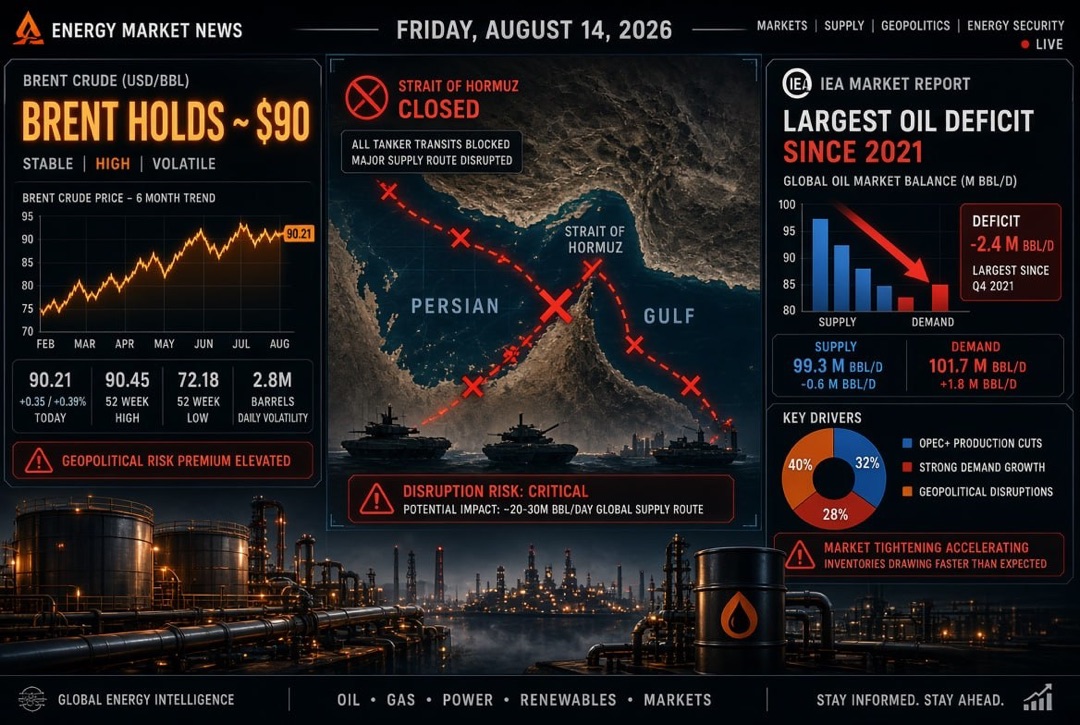
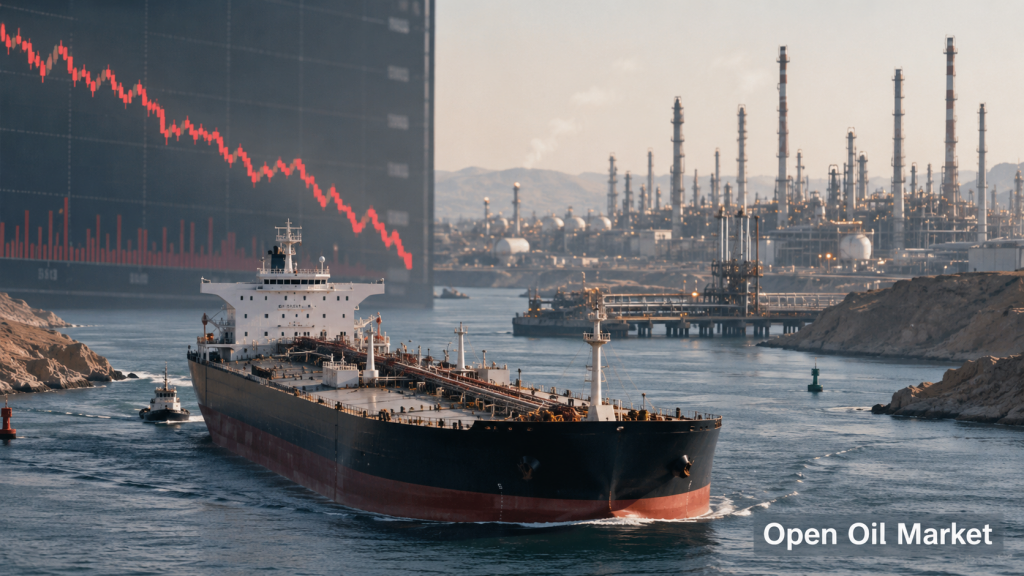
The oil market concluded the last week of June with a notable decline in prices. Brent fell to around $72–74 per barrel, while WTI approached the $69–70 range. This marks an important turnaround for the global oil market: just in the first half of June, investors priced in a higher risk of supply disruptions from the Persian Gulf, but by the end of the month, part of this premium was removed.
Three factors currently influence oil dynamics:
- Partial recovery of shipping through the Strait of Hormuz;
- Expectations of increased supplies from Middle Eastern countries after the reduction of tensions;
- A market shift from physical raw material shortages to the state of inventories and demand.
For oil companies, the decline in Brent represents pressure on revenue, but for refineries, the situation is more complex: refining margins may remain high even with cheaper oil. This is particularly important for the diesel segment, where supply is still limited.
OPEC+: Cautious Increase in Production and Monitoring Alliance Discipline
OPEC+ remains the central regulator of the oil balance. For July, the group of producers has agreed to another increase in target production levels of approximately 188,000 barrels per day. Formally, this signals the market's willingness to gradually return supply; however, the actual effect will depend on the ability of individual countries to meet their quotas.
Investors must consider that an increase in quotas does not equate to an automatic rise in physical supplies. Due to damaged infrastructure, logistic constraints, sanctions risks, and instability in the Middle East, some producers may fall short of planned levels. Therefore, the oil market will assess not only OPEC+ statements at the beginning of July but also actual data on exports, port utilization, tanker routes, and commercial inventories.
Gas and LNG: Europe Balances Between Price, Inventories, and Import Dependency
The gas market remains one of the most sensitive segments of the global energy sector. The European TTF at the end of June hovered around €40–42 per MWh, which is below the peak levels of early in the month but still reflects the increased nervousness of the market. Europe continues to inject gas into underground storage while simultaneously competing for LNG supplies with Asia.
The key risk for Europe is not only the price of gas but also the structure of supplies. The discussion surrounding a potential ban on Russian LNG starting from 2027 intensifies uncertainty for ports, traders, and industrial consumers. If Europe accelerates the replacement of Russian volumes with American and Middle Eastern LNG, this may increase dependency on the spot market and make prices more sensitive to weather conditions, liquefaction plant repairs, and LNG vessel charters.
For the global fuel and energy sector, this means that LNG remains a strategic asset: suppliers with flexible portfolios, long-term contracts, access to a fleet of tankers, and the ability to redistribute shipments between Europe and Asia are the winners.
Refined Products: Diesel and Jet Fuel Are More Significant Than Crude Oil for the Market
The main internal tension in the oil market currently focuses not on crude oil but on refined products. Diesel crack spreads in the U.S. and Europe remain high, as the global refining system has not fully recovered from supply disruptions and infrastructure attacks. Distillate inventories in the U.S. remain below seasonal norms, and the market remains cautious of new logistics disruptions.
For investors, this is an essential signal: refined products may remain expensive even with declining Brent prices. Refineries with high refining depths, robust logistics, and access to stable raw materials stand to benefit. Conversely, airlines, road transport companies, the agricultural sector, and industries where diesel and jet fuel directly impact operational costs are under pressure.
Refineries and Infrastructure: Refining Becomes a Bottleneck in the Energy Market
Global refineries are shifting to the center of attention. While the market discussed raw material availability in 2022–2024, in 2026, the ability to convert crude oil into necessary products, such as diesel, gasoline, jet fuel, fuel oil, and petrochemical feedstock, is gaining importance.
The situation is complicated by:
- Damage to part of the refining infrastructure in Russia;
- Limited diesel and jet fuel production capacity in several regions;
- Summer demand growth for gasoline, jet fuel, and electricity;
- Logistical delays between falling oil prices and decreasing pump prices.
As a result, refining margins may remain above historical average levels. For the stock market, this supports the shares of individual refiners but simultaneously intensifies inflationary pressure on end consumers.
Electricity: Heat in Europe Reveals the Price of Reliability in Energy Systems
The European electricity market faces a new challenge: heat has increased demand for air conditioning, reduced efficiency in some generation, and intensified network load. In certain countries, wholesale electricity prices have surged to multi-year highs, particularly during peak demand hours.
For the energy sector, this is not a localized episode but a systemic trend. As the share of solar and wind generation rises, balancing capacities, networks, energy storage, and flexible demand management become increasingly crucial. Gas-fired power stations, pumped hydro storage plants, batteries, and international electricity transfers are now part of the new architecture of global power generation.
Investors should look not only at electricity producers but also at companies operating in network infrastructure, energy storage, load management, and the construction of backup capacity.
Coal: Asia Again Supports Demand Despite the Energy Transition
The coal market demonstrates resilience, particularly in Asia. China, India, Japan, and South Korea continue to utilize thermal coal as a hedge against expensive LNG and instability in gas supplies. In China, thermal generation increased from January to May, and electricity demand is supported by industry, transport electrification, and summer cooling needs.
This creates a contradictory picture: in the long term, the world is moving towards renewable energy and reducing carbon intensity, but in the short term, energy security is bringing coal back to the forefront. For coal exporters in Australia, Indonesia, South Africa, and other regions, this means sustained demand, while investors must consider political, climate, and regulatory risks.
Renewables and Investment: The Energy Transition Accelerates but Requires Networks and Capital
Renewable energy remains the main direction for long-term investments in the global fuel and energy sector. In 2026, global investments in electricity infrastructure, generation, networks, and electrification are projected at record levels. Solar power retains its leadership among renewables, but investors are increasingly paying attention not only to panels and turbines but also to networks, storage, and peak load management.
The primary challenge of the energy transition is not a lack of technologies but the speed of integration. Rapidly building solar stations is feasible, but without networks, storage systems, and backup generation, their contribution to the reliability of energy systems is limited. Therefore, companies working at the intersection of renewables, network digitalization, industrial energy storage, and distributed generation become the most attractive investments.
Key Considerations for Investors in the Global Fuel and Energy Sector
Monday, June 29, 2026, opens a week in the fuel and energy market where not only oil prices will be crucial, but also a broader energy balance. Investors, oil companies, fuel traders, and electricity market participants should monitor the following indicators:
- Dynamics of Brent and WTI after the reduction of the geopolitical premium;
- Actual implementation of July's OPEC+ production increase;
- TTF and JKM prices amid competition between Europe and Asia for LNG;
- Refinery margins for diesel, gasoline, and jet fuel;
- Levels of distillate and oil inventories in the U.S., Europe, and Asia;
- Electricity demand during heat waves and the resilience of networks;
- Growth of coal generation in Asia as an indicator of energy security;
- Investments in renewables, energy storage, and network infrastructure.
The main takeaway for the market is that while oil prices may decline, energy overall does not become cheaper. In 2026, the global fuel and energy sector increasingly depends on the quality of infrastructure, the flexibility of supplies, refining depth, and the capacity of energy systems to withstand climate and geopolitical shocks. This is why oil and gas, LNG, refined products, electricity, coal, and renewables should be seen not as separate markets but as part of a unified system of global energy security.