Current News in the Oil, Gas, and Energy Market for Sunday, July 5, 2026: OPEC+ Prepares to Increase Production, Oil Prices Decline, LNG Returns to the Center of Competition, and Renewables and Electric Power Reshape the Structure of the Global Energy Sector
The global fuel and energy complex enters Sunday, July 5, 2026, in a state of fragile equilibrium. After several months of high geopolitical risk premiums, the markets for oil, gas, electricity, coal, petroleum products, and renewables are gradually shifting from a scenario of scarcity to one of selective oversupply. The main topic of the day for investors, industry participants, fuel companies, oil firms, and refinery operators is OPEC+'s anticipated decision to further increase production amid the recovery of shipping through the Strait of Hormuz and declining raw material prices.
In the first half of 2026, the key issue was the physical availability of barrels, gas, and petroleum products. Now, the market is returning to classic issues: demand and supply balance, refining margins, refinery utilization, competition for LNG, electricity prices, the resilience of coal generation, and the pace of renewables expansion. For a global audience of investors, this shift indicates a move away from assessing military risks toward analyzing who will benefit from the normalization of logistics and who will face price declines and margin compression.
Oil: The Market Shifts from Scarcity Premium to Anticipation of Oversupply
On the oil market, the central event is the OPEC+ meeting, where alliance members are expected to agree on another increase in target production levels starting in August. The baseline scenario predicts an increase of about 188,000 barrels per day, continuing at the same pace as seen in the June and July quotas. For the oil and gas sector, this is an important signal: the cartel is gradually reintroducing volumes previously kept under supply constraints to the market.
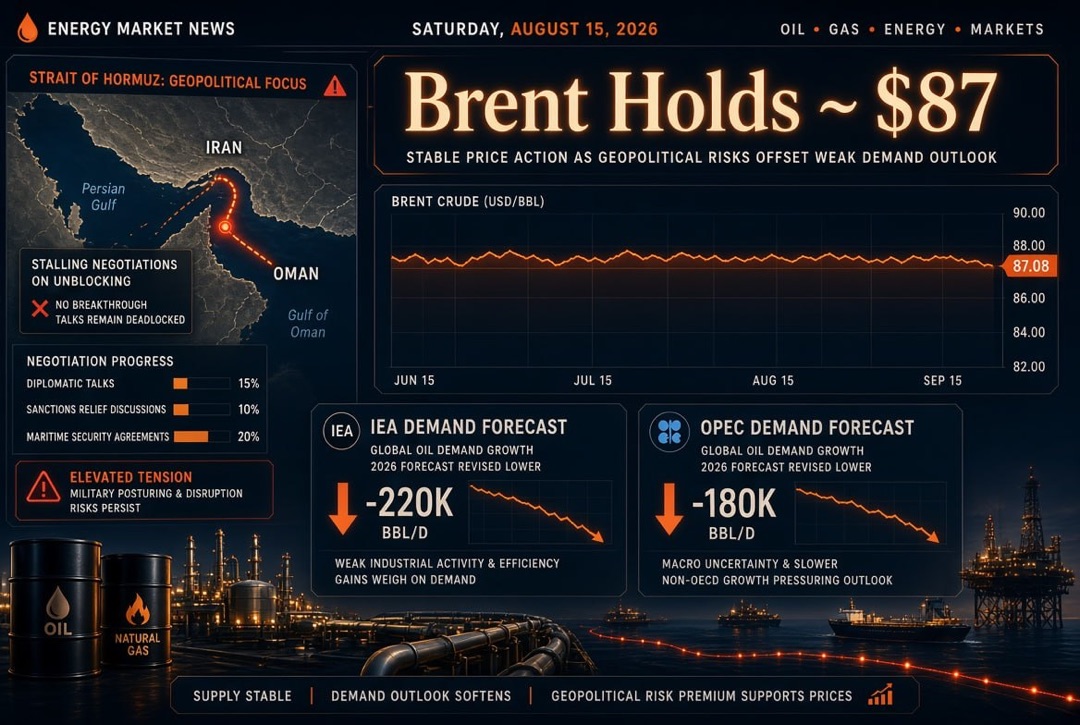
Brent and WTI prices have stabilized at levels significantly below the peaks observed during recent Middle Eastern tensions. Brent recently closed around $72 per barrel, while WTI was approximately $69 per barrel. However, more critical than the price level is the market structure. The Brent curve has entered contango, where near-term deliveries are priced lower than longer-term contracts. For oil companies, traders, and storage holders, this indicates the market sees adequate short-term supply and allows for stockpiling.
- For producers, risks include declining realization prices;
- For traders, the opportunity exists to store oil given a sufficient contango depth;
- For refineries, an advantageous purchasing window for raw materials opens;
- For investors, operational efficiency gains importance over mere Brent exposure.
Strait of Hormuz Factor: Shipping Resumes, but Risk Premium Persists
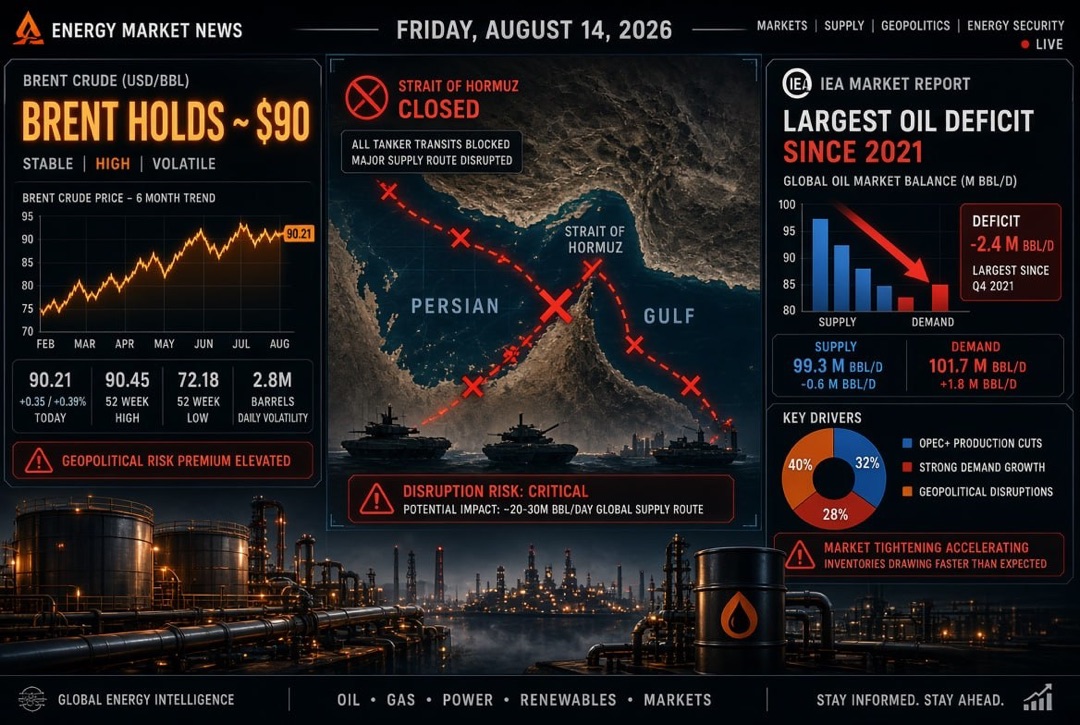
The recovery of flows through the Strait of Hormuz remains the primary factor in reassessing the oil and gas market. Some oil and LNG supplies have already reverted to the system, and hopes for stability in the U.S.-Iran dialogue are reducing the geopolitical risk premium in quotes. However, risks remain: logistics have not fully normalized, and issues related to shipping administration and route safety remain sensitive for the Middle East, Asia, and Europe.
For the global energy sector, this indicates that the market has yet to return to pre-war stability. Oil supplies from the Gulf region are increasing, but insurance, freight, tanker schedules, and vessel availability continue to contribute to volatility. Oil and fuel companies will closely monitor not only Brent quotes but also transportation costs, spreads among oil grades, and the availability of feedstock for Asian and European refineries.
Refineries and Oil Products: High Utilization in the U.S. Sustains Demand for Feedstock
The petroleum products segment remains one of the most important indicators of actual demand. According to the latest weekly data from the U.S., commercial crude oil inventories decreased, gasoline stocks also declined, and refinery throughput capacity increased. This indicates that U.S. refineries are actively processing feedstock during the summer driving season.
The outlook for the petroleum products market is uneven. Gasoline benefits from seasonal demand, while diesel and distillates remain more sensitive to industrial activity, logistics, and the state of global trade. For fuel companies, this generates several practical takeaways:
- Refinery margins may remain stable if feedstock prices decline faster than finished petroleum products;
- Gasoline demand is dependent on the summer season and consumer activity;
- Diesel remains an indicator of industrial activity, construction, freight, and agriculture;
- Export of oil products is increasingly vital for the balance between the Atlantic basin and Asia.
Gas and LNG: Supply Competition Shifts Towards Asia and Emerging Markets
The gas market has regained its global character, with LNG becoming the main tool for redistributing energy flows. In June, less than half of U.S. LNG exports went to Europe; a significant portion was directed to Asia, Egypt, Latin America, and other regions where prices and premiums have been more attractive. This serves as an important signal for European gas consumers: even with existing infrastructure, the LNG market will prioritize areas with higher prices and more immediate demand.
India has already lifted restrictions on gas suppliers following the restoration of LNG shipments from the Middle East. This confirms that the physical market is gradually stabilizing but simultaneously highlights the dependence of emerging economies on maritime gas routes. For oil and gas investors, this heightens interest in companies related to LNG infrastructure, regasification, transportation, and long-term contracts.
Europe: Electricity, Gas Storage, and Renewables Form a New Energy Security Model
The European energy market remains under pressure from several factors: the need to replenish gas storage, competition for LNG, high electricity prices, and the accelerated development of renewables. European gas is trading above last year's levels, despite a drop from the peak values seen during periods of tension. This indicates that Europe's energy sector has not yet returned to cheap normality.
At the same time, the long-term trajectory is evident: solar and wind generation are becoming foundational elements of the power sector. It is projected that over 400 GW of net renewable capacity will be added in the EU between 2026-2030, with the majority of this increase coming from solar energy. For investors, this creates a structural demand for networks, energy storage, flexible generation, balancing capacities, and the digitization of energy systems.
Coal: China and India Maintain the Importance of Coal Generation
Despite the rise of renewables, coal remains a critical element of global energy. China, the largest consumer of coal and simultaneously a leader in solar and wind capacity installation, is maintaining a dual strategy: rapidly expanding renewable energy while not abandoning coal generation as a tool for energy security. Analysts expect a rebound in output from China’s coal-fired power plants in 2026, following previous declines.
For the coal market, two directions remain critical: thermal coal for power plants and coking coal for metallurgy. India continues to shape long-term demand for metallurgical coal, while increases in its own output and renewables may limit imports of thermal coal. For investors, this suggests that the coal sector is not disappearing but becoming more selective: asset quality, logistics, export markets, and regulatory stability are gaining importance over total consumption growth.
Renewables and Networks: Growth in Green Energy Hits Infrastructure Challenges
Renewable energy remains a key direction for global investments, but the sector increasingly faces challenges not with generation but with integration. Solar and wind projects are developing faster than networks, storage solutions, and balancing mechanisms. This is particularly evident in Europe, where renewables are expected to cover a significant portion of the increase in electricity demand, but infrastructure constraints may delay benefits for end consumers.
For energy companies and investors, the investment logic is changing. Simple ownership of solar or wind generation is no longer sufficient. Projects that integrate are becoming more attractive:
- Renewables and energy storage systems;
- Generation and long-term corporate PPA contracts;
- Electric grids and digital load management;
- Flexible gas generation as a backup for unstable output;
- Infrastructure for industrial electrification.
What This Means for Oil Companies, Fuel Companies, and Investors
For oil companies, the coming weeks will test their ability to operate under lower oil prices and potential increases in OPEC+ supply. Companies with low production costs, access to export infrastructure, and flexible logistics appear more resilient. For fuel companies, margins, inventory management, access to petroleum products, and accurate pricing policies amidst fluctuations in gasoline, diesel, and raw material costs are becoming increasingly vital.
For refineries, the current situation could be favorable if cheap oil is coupled with stable petroleum product prices. However, risks remain: weak industrial demand, changes in feedstock flows, competition from Asian processors, and freight volatility could quickly alter refining economics.
For investors in the global energy sector, it is advisable to categorize the sector into several segments:
- Oil and gas production: sensitive to Brent price, OPEC+ quotas, and geopolitics.
- LNG and gas infrastructure: benefits from regional price disparities and growing demand in Asia.
- Refineries and petroleum products: reliant on refining margins and seasonal demand.
- Electricity and networks: supported by electrification, data centers, and industrial load.
- Renewables: continue long-term growth but require investments in networks and storage.
- Coal: remains significant in Asia but poses regulatory and environmental risks.
Main Indicators for Sunday, July 5, 2026
The main market indicator of the day will be the decision from OPEC+ and the market's reaction to potential increases in supply beginning in August. If the alliance confirms a rise in supply, Brent may remain under pressure, especially with weak demand in China and a recovery of supplies through the Strait of Hormuz. Conversely, if OPEC+ maintains a cautious tone, the market may attempt to stabilize above current levels.
For the global energy sector, Sunday becomes a day of reassessing the balance. Oil is no longer traded as an asset in sharp scarcity; gas and LNG are redistributed according to price signals; electricity relies on networks and weather factors; renewables demand infrastructural investments; coal retains its role in Asia; and petroleum products remain indicators of actual demand. In this environment, companies that succeed are not merely those present in the energy sector but those adept at managing logistics, inventory, margins, contracts, and capital expenditures.
For investors, market participants in the energy sector, fuel companies, oil firms, and refinery operators, the key takeaway is straightforward: the energy market on July 5, 2026, is entering a phase of normalization, but this normalization does not imply tranquility. It signifies a transition to more complex competition, where oil prices, gas costs, refining margins, developments in the power sector, the growth of renewables, and the stability of coal will be assessed not individually but as a unified global energy security system.