Global Oil, Gas, and Energy News for Saturday, January 10, 2026. Oil, gas, electricity, renewable energy, coal, oil products, and refineries: key events in the global fuel and energy complex for investors and stakeholders in the energy sector.
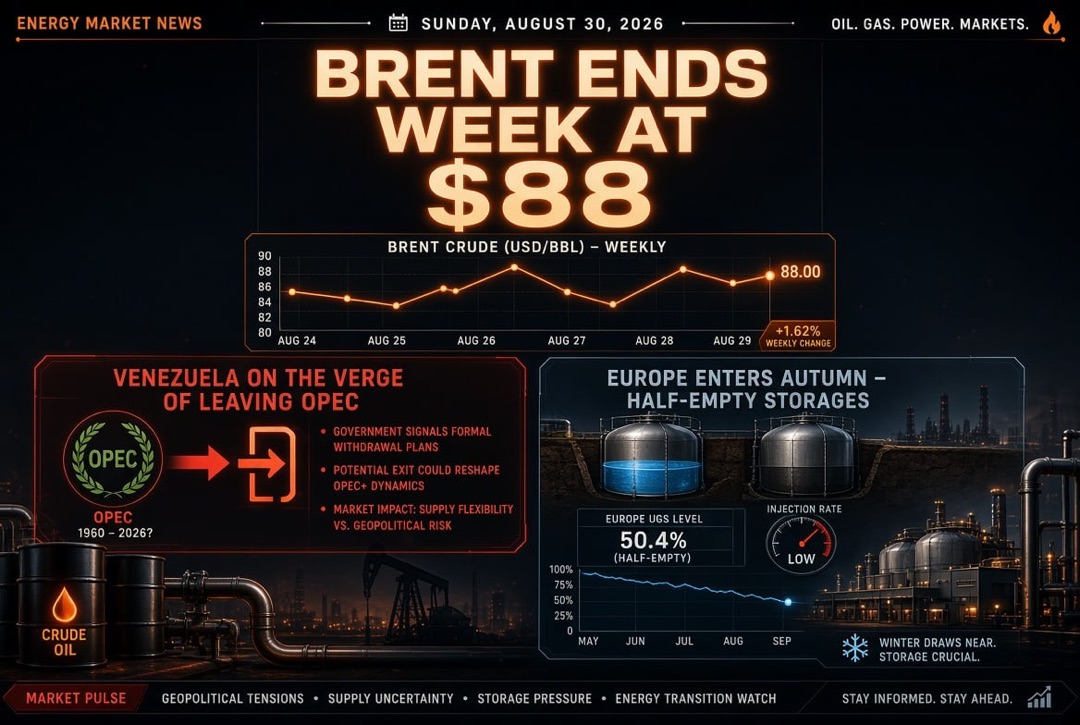
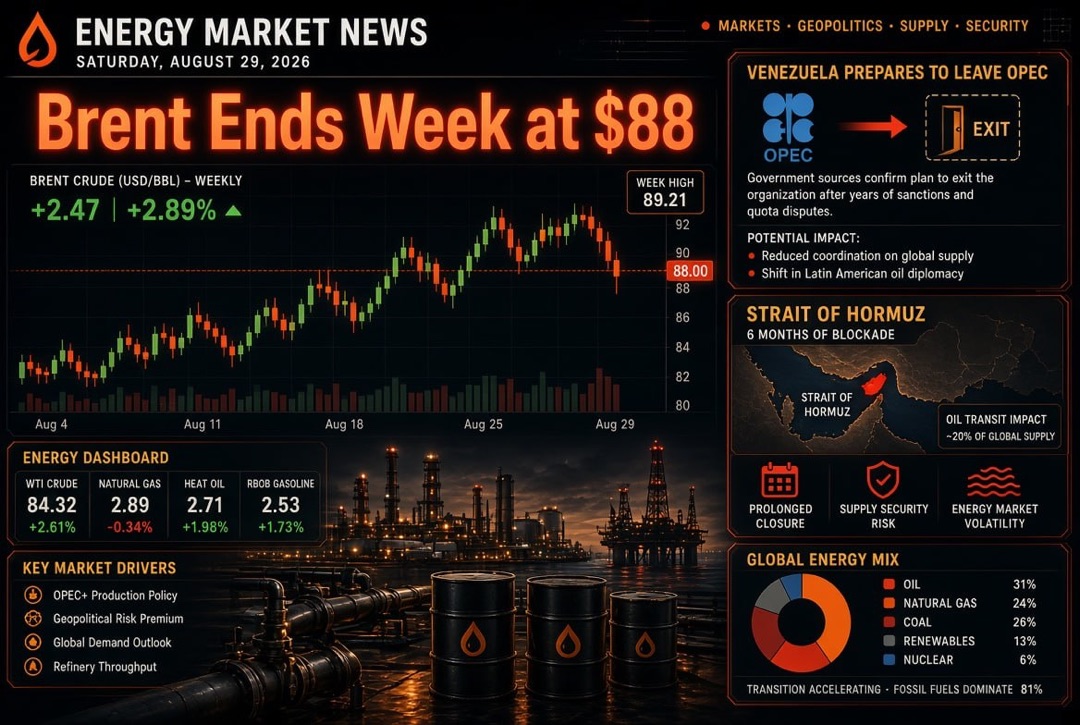
As we approach 2026, the global energy resource market demonstrates a state of balance: surplus supply is restraining price increases for oil and gas, while moderate demand is preventing sharp spikes. Prices for Brent crude have stabilized around $60–63 per barrel, while the U.S. WTI trades in the $55–58 range (data as of early January). The natural gas market is experiencing a relatively calm period: thanks to record volumes of LNG supplies and a mild winter in Europe and Asia, gas prices remain low (approximately €28–30/MWh in Europe, with China at five-year lows). Investors are also noting an acceleration in the transition to green energy, as renewable sources are achieving record electricity production; however, traditional coal and gas plants still play a crucial role in maintaining the energy system's balance.
The Oil Market: Surplus Supply Keeps Prices in Check
The oil market continues to grapple with fundamental pressures: global supply remains high, while demand growth has slowed. In 2025, oil prices fell by nearly a fifth from last year’s values (the most significant annual decline since 2020), reflecting increased production and sluggish global economic growth. The OPEC+ alliance suspended planned increases in production at the beginning of 2026 in December 2025 due to "market oversaturation." During their January meeting, leading exporters agreed to maintain production freeze levels through the fourth quarter to prevent further price declines. Quotas for January to March remain unchanged: Russia at 9.574 million barrels/day, Saudi Arabia at 10.103 million barrels/day, Iraq at 4.273 million barrels/day, etc. (excluding compensation obligations).
- Pressures on oil: continuation of OPEC+ production freeze in Q1; excessive oil stocks in the market (inventory levels remain high).
- U.S. policy: the U.S. government has begun selling Venezuelan oil and oil products (up to 30–50 million barrels) from strategic reserves. This move could increase supply, although prices have not reacted sharply so far.
- Oil prices: Brent futures rose to approximately $62–63 per barrel (the low of December 8), partly due to geopolitical risks. However, analysts predict that if current trends persist, prices will remain moderate, with Brent potentially dropping to $50–55 by mid-year.
- Russian Urals oil is trading at a record high discount to Brent – about $20–25 (double the annual figure). This reflects sanction pressures and surplus supply in the markets. With the ruble strengthening to around 80 against the dollar, the ruble price of Urals has dropped to approximately 3000 rubles/barrel (half the level of a year ago).
The Gas Market: Record LNG Inflows and Comfortable Stocks
The gas market benefits from favorable pricing dynamics: inventories in European underground storage exceed two-thirds of maximum capacity, providing a buffer for mid-winter. February futures on the TTF maintain levels of €28–30/MWh, significantly lower than the spring peaks of 2022. In 2025, LNG deliveries to Europe reached a record 100 million tons, compensating for decreased pipeline volumes from Russia. Increased competition in the LNG market is expected in 2026: the U.S. is ramping up gas exports, directing about 70% of supplies to Europe, while new LNG infrastructure reaches its design capacity.
- Supply-demand balance: surplus LNG and a mild winter lead to lower prices. Analysts predict that average gas prices in Europe may drop by 15–20% (to approximately $350–370 per 1000 m³), and in Asia, by 15% (to around $11 per million BTU) due to oversupply and lack of significant demand growth.
- LNG exports from the U.S.: In 2025, American LNG shipments broke records — more than 124 billion cubic meters from January to October (up 23% from 2024). The majority is sent to Europe (about 70% of exports), intensifying competition in the regional market.
- Prices in Asia: cold weather is diminishing, and wholesale LNG prices in China have dropped to five-year lows due to the mild winter and ample stocks. Storage facilities are filled to more than 70%, forcing sellers to offload excess fuel at reduced prices.
Geopolitics: Venezuela, Sanctions, and Internal Consolidation in OPEC+
Political events significantly impact the energy sector. Firstly, an unprecedented crisis has erupted in Venezuela: on January 3, the U.S. detained President Maduro and effectively took control of most of the country's oil sector. Trump announced plans to engage American oil companies to upgrade Venezuela's infrastructure and increase oil production. Despite Venezuela having the largest oil reserves in the world, current production levels are low, and recovery will take years. The market's reaction is calm so far: investors understand that the transition to increased supply will require time.
Secondly, internal contradictions within OPEC+ are evident: Saudi Arabia and the UAE are in conflict (due to the situation in Yemen), marking the most serious rift within the alliance for years. However, at the January meeting, the "group of eight" (Russia, Saudi Arabia, UAE, Kazakhstan, Iraq, Algeria, Oman, Kuwait) demonstrated unity — all unanimously confirmed the production freeze and rejected increases in quotas for February. This indicates a desire among key players to avoid sharp supply fluctuations and support market stability.
New sanctions actions from the West exacerbate uncertainty. At the end of 2025, the U.S. administration expanded sectoral sanctions on major Russian oil companies "Rosneft" and "Lukoil," further restricting export opportunities for raw materials and technologies. The European Union, in turn, is discussing tougher environmental regulations (for example, establishing a carbon customs mechanism), which indirectly impacts the global fuel sector. Overall, geopolitical risks intensify competition for markets and accelerate the diversification of supply chains.
Asia: India and China – Balancing Imports and Increasing Production
- India: traditionally one of the largest purchasers of cheap oil. Russian oil at discounts (~$5 below Brent) continues to enter the Indian market, helping to keep internal fuel prices in check. However, under U.S. pressure (import tariffs), the largest importer, Reliance Industries, announced its refusal to accept Russian supplies in January. This is expected to reduce imports of Russian oil to India below 1 million barrels/day, the lowest level in recent years. India is simultaneously trying to increase its own production and refining, while actively developing renewable energy (solar and wind) to diversify its energy balance and reduce dependence on imports.
- China: in 2025, P.R.C. introduced record volumes of oil and gas to the domestic market, comparable to the previous year. Beijing actively procured resources from Russia, Iran, and Venezuela at favorable prices to replenish strategic reserves. Domestic oil and gas production grew only slightly (about 1–2%), with China still covering around 70% of demand through imports. Beijing is investing heavily in exploring new fields and developing technologies, while rapidly expanding renewable energy production (solar panels, wind turbines, batteries). Despite efforts to increase domestic production, China will remain one of the largest global importers of energy resources for the next few years.
Energy Transition and Renewables: Record Growth and the Role of Traditional Sources
- New records in renewables: the global transition to clean energy is gaining momentum. In 2025, many countries set historical highs in solar and wind generation. In Europe, combined output from solar PV and wind power plants for the first time surpassed generation from coal-fired power plants. This reflects an acceleration in the shift from coal to green technologies.
- Investments in green energy: major global energy companies (e.g., Shell, BP, Total, and even Rosneft and Novatek) are announcing large-scale "green" field projects - from offshore wind farms to large solar PV installations and storage systems. The push to meet climate targets and reduce carbon footprints stimulates billions in investments in clean energy.
- Maintaining backup capacities: as the share of renewables increases, the burden on energy systems grows, as solar and wind plants produce unstable energy. Therefore, countries are maintaining reserves of traditional sources: gas, coal, and nuclear power plants continue to provide baseload and balance the network during peak consumption periods.
- Climate goals: many countries are tightening environmental policies and decarbonization plans. Governments are imposing quotas, carbon taxes, and stimulating green technologies (hydrogen, electric transport, smart grids). This creates a long-term trend toward gradually reducing the share of fossil fuels in the global energy balance.
The Oil Products Market and the Internal Fuel Market in Russia
- Export restrictions: the Russian government has extended the ban on exporting gasoline, diesel, marine fuel, and other oil products until the end of February 2026. This is to ensure sufficient internal supply following the shortages of 2025. The restrictions are lifted only for refiners (refineries) that can export products with unused capacities.
- Market stabilization: authorities cite several risks: attacks by Ukrainian drones on Russian refineries and oil depots, as well as a sharp rise in wholesale fuel prices in the summer of 2025. The situation is calmer now; some refineries have already restored normal operation levels, and the seasonal decline in demand (winter) eases pressure on the market.
- Fuel imports from the CIS: Belarus has increased fuel supplies to Russia, allowing internal stocks to be replenished and reserves to be built up. In the event of oversupply, the Ministry of Energy is ready to cut imports from Belarus to avoid overproduction. Thus, the risk of total shortages in the internal market is decreasing.
- Gasoline prices in Russia: due to declining wholesale prices and restored production, experts expect price stability at gas stations in January 2026. Following the autumn spikes, Russian authorities have lifted some regulatory measures (excise tax exemptions), and there is a moderate decrease in wholesale prices, which should prevent retail prices from rising sharply. Overall, the beginning of 2026 is traditionally considered calm for the fuel market.