Global Energy Market News as of March 4, 2026: Increases in Brent and WTI Oil Prices, Surges in European Gas and LNG, Supply Risks through the Strait of Hormuz, Dynamics in Oil Products, Refineries, Electricity, Renewable Energy, and Coal, Analysis for Investors and Participants in the Global Energy Market
Key Figures in the Oil, Gas, and Energy Market
Below are the benchmarks that shape the "risk pricing" for oil, gas, electricity, and oil products at the beginning of Wednesday. These levels are important for assessing margins, hedging, and stress scenarios in supply chain contracts.
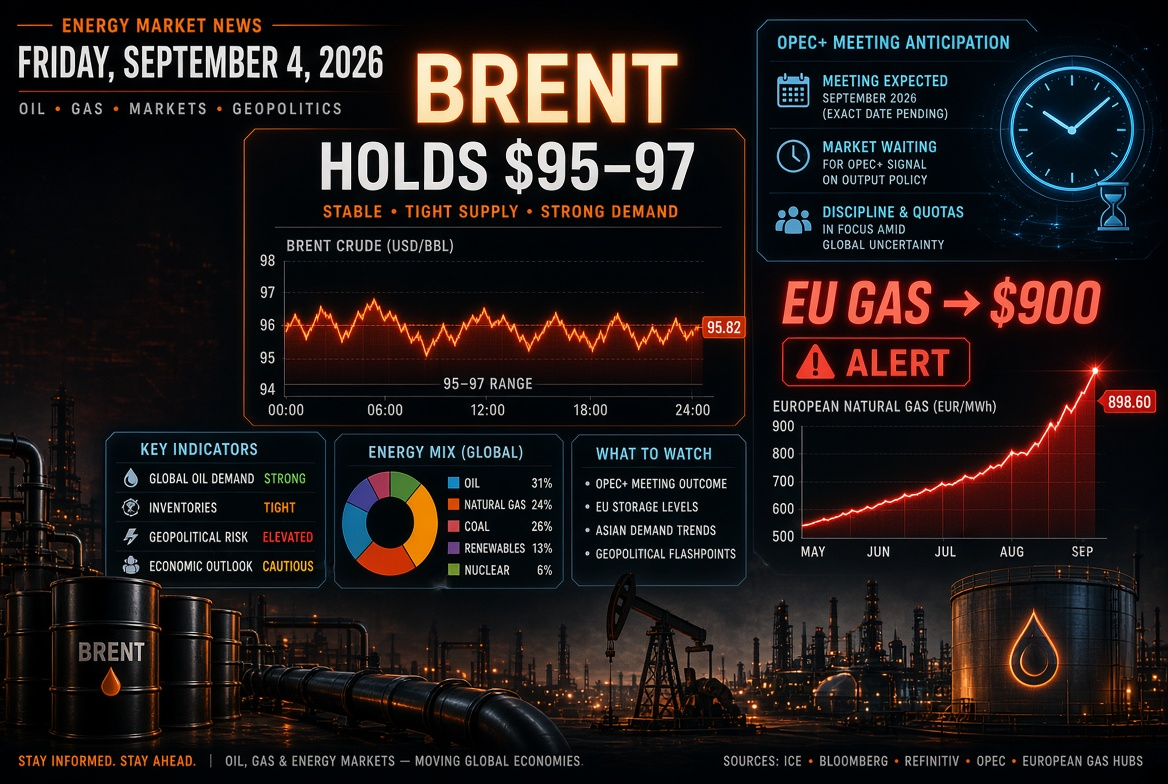
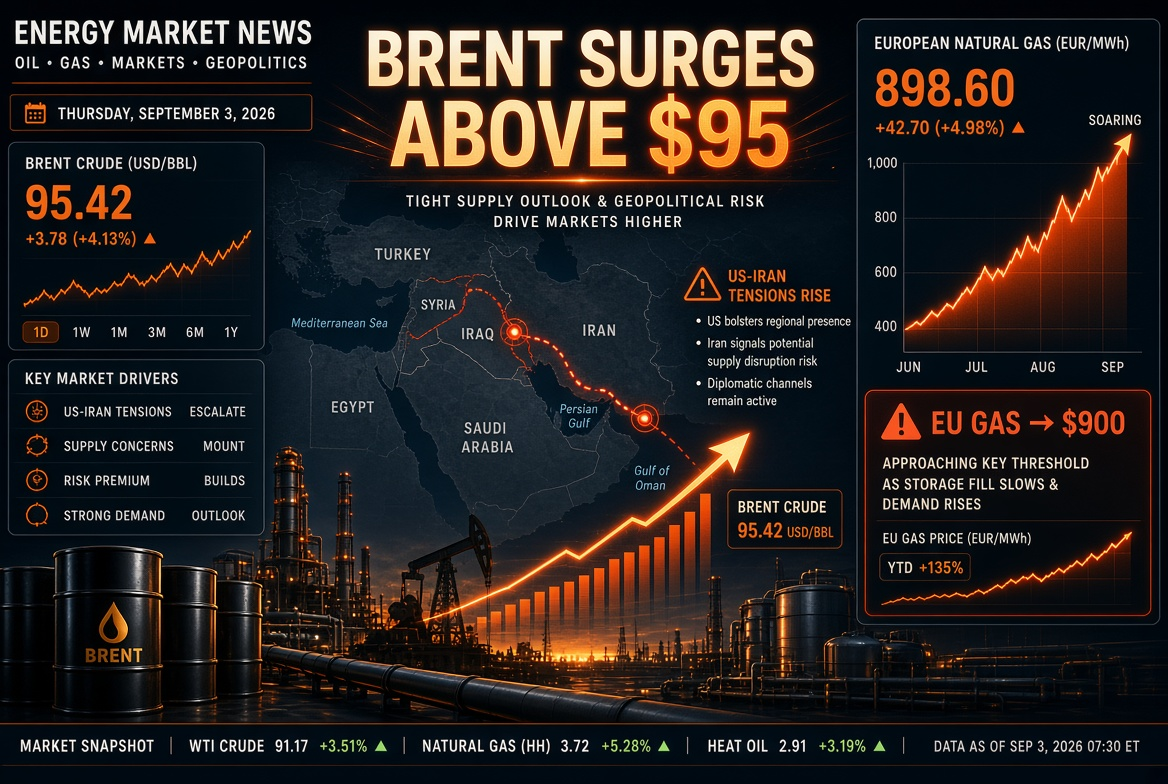
- Oil (Brent/WTI): the market has priced in a sharp risk premium for supply disruptions; Brent and WTI quotes have moved erratically in recent sessions, testing multi-month highs.
- Gas (Europe, TTF): European gas prices have shown one of the strongest spikes in a short period since the crisis years, intensifying expectations for rising electricity and heat generation costs.
- LNG (JKM, Asia): Asian LNG indicators have risen due to undersupply risks and rising freight costs; for importers, this means higher "last-mile" costs.
- LNG Freight: rates for LNG transportation have accelerated upward — this directly impacts the economics of spot purchases and the flexibility of traders' portfolios.
- Coal: thermal coal and coal generation are being reconsidered by parts of the market as "insurance" against expensive gas, especially in countries where a quick shift in generation is possible.
- Carbon Regulation (EU ETS): carbon prices in Europe remain a standalone factor for electricity generation and energy-intensive industries, but during crisis periods, they temporarily yield priority to gas.
Oil: Geopolitical Premiums, OPEC+, and Supply Routes
The main driver is the risk of physical supply cuts through a critical point of global energy logistics. In the oil markets, this is swiftly reflected in a rise in "risk premium" and a reassessment of barrel availability in the short term. An important detail for investors: even with formal reserves, short-term tanker shortages, insurance cover issues, and secure routes can sharply elevate the price of delivery "here and now."
Moreover, the OPEC+ decision to gradually adjust production (scheduled increase from next month) is viewed by the market as a secondary factor against the backdrop of logistical disruption threats. The key question is how many "real" barrels can quickly come to market and via which routes if tensions persist. An additional layer of uncertainty involves the ability of certain producers to redirect exports to alternative terminals and pipeline corridors: the cost of such restructuring is high, and infrastructure capacity is limited.
It is also crucial to keep an eye on Asia: China, as the largest oil importer, is already beginning to adapt at the refining level — history shows that declining throughput at sensitive refineries can rapidly serve as a "valve" for balancing the domestic crude market and decreasing supply deficit risks. For the global market, this signifies a potential redistribution of demand for spot cargoes and changes in premiums/discounts for different grades.
For the U.S., the focus is on the strategy to smooth price shocks for consumers. The factor of strategic reserves (SPR) remains a tool, but markets will evaluate not statements but actual readiness for intervention and the scale of such actions. Institutional investors should note: even without immediate releases of oil from reserves, the signal of possible action can affect the futures curve and volatility.
Gas and LNG: Europe and Asia Compete for Molecules Again
The main gas shock relates not only to raw material prices but also to the "quality of supply availability." The halt of LNG production at a key export center has instantaneously intensified competition between Europe and Asia for alternative maritime volumes. In Europe, the issue appears particularly sensitive as the level of storage in underground gas storage facilities entering the replenishment season is below typical values — increasing the likelihood of aggressive purchases as early as spring, despite the traditional shoulder season.
Asia is responding pragmatically: importers are assessing which volumes can be secured through long-term contracts and which will need to be purchased on the spot market at expected higher prices. India faces the most direct risks — visible response measures are already being implemented on the side of gas distribution and preparations for spot tenders. In Japan, the focus is shifting toward inventory management and coordination among companies, including the use of internal mechanisms to redistribute LNG cargoes. For the market as a whole, this signifies a rise in the "value of flexibility": portfolios with access to American LNG and free volumes are becoming strategic assets.
A separate factor is freight and insurance. Even if gas is physically available, the cost of delivery and insurance restrictions can render spot purchases economically unviable for some buyers. This increases the risk that poorer importers will be squeezed out of the market, heightening socio-political risks and the likelihood of regulatory interventions in certain countries.
Oil Products and Refineries: Diesel, Jet Fuel, and Gasoline Prices Rise Faster than Oil
Oil product markets traditionally react more sharply to logistical disruptions than the crude oil market. The reason is straightforward: products represent the "final stage" of the supply chain, meaning that sensitivity to refinery disruptions, supply routes, and regional deficits is higher. Diesel and jet fuel take center stage — key fuels for industries, logistics, and aviation, where rapid replacements are limited.
A noticeable increase in premiums and spreads between regions is already apparent: Europe is structurally vulnerable regarding diesel and may actively draw cargoes from Asia during prolonged restrictions, altering traditional trade flows through Singapore and Northeast Asia. For traders, this means expanding arbitrage opportunities but also increasing operational risks (vessel timing, fleet availability, insurance, counterparty limits).
An additional layer of risk lies in possible shutdowns and maintenance at refineries. Any unplanned losses in processing in the Middle East or other regions, as well as seasonal repair increases in Europe and Asia, enhance the likelihood of a "product shock," even if the physical oil deficit proves less dramatic. For fuel companies, this is a signal to reconsider inventory levels, supply logistics, and pricing strategies.
Electricity and Renewable Energy: Grid Resilience as a Price Factor
The gas surge inevitably translates into electricity costs in those regions where gas remains the marginal fuel. Hence, markets increasingly assess not only gas availability but also the ability of the energy system to smooth short-term peaks — through renewable energy sources (RES), energy storage, and grid infrastructure.
In Europe, interest in scaling up energy storage is accelerating in this context: battery projects are becoming tools for both integrating RES and managing price extremes (shifting consumption/production over time). For investors, this confirms the thesis that "energy transition" encompasses not only generation (wind/solar) but also balancing infrastructure. In Asia, the role of dispatching and reserves is simultaneously strengthening, with the development of trunk networks and ultra-high voltage in China remaining a cornerstone for the long-term expansion of energy consumption and the transfer of resources between regions.
Coal and Nuclear: Alternatives Amidst Expensive Gas
When gas and LNG prices surge sharply, coal generation often temporarily regains its attractiveness — primarily in countries where coal infrastructure is preserved and switching between fuels is possible without prolonged investments. In the short term, this may support coal indices and freight, increasing the demand for low-sulfur grades in Asia. At the same time, some of the largest systems (including China) possess domestic production and controlled imports, which reduces vulnerability to sudden global price spikes.
Concurrently, the nuclear generation segment remains within the "alternative" fuel block: amid recurring energy stresses, regulators and major consumers are growing increasingly interested in reliable low-carbon baseload power. The uranium market remains a separate story, but for long-term portfolios (energy/infrastructure), its dynamics could serve as a marker of sustainable political demand for nuclear projects and the fuel cycle.
What to Watch for Investors and Energy Companies on March 4
On Wednesday, the focus shifts from "shock news" to testing market resilience: will logistical constraints be confirmed, will alternative routes emerge, and how quickly will consumers adapt their demand and inventory? For the oil, gas, electricity, and oil products markets, key triggers can be consolidated into a brief checklist.
- Statistics and Inventories: weekly data on oil and oil products in the U.S. (as a signal for demand and refinery utilization), as well as comments from regulators and industry associations.
- Shipping and Insurance: dynamics of tanker and LNG vessel passage, availability of insurance coverage, rising freight rates, queues of vessels, and risk of unloading delays.
- Oil Products: diesel and jet fuel spreads between regions, changes in premiums in Asia and Europe, signs of forming deficits in specific hubs.
- European Gas and Underground Storage: pace of storage filling, measures to reduce demand, competition for LNG cargoes.
- Corporate News: reports from major producers, refineries, and traders on redirecting flows, force majeure, repairs, and terminal availability.
The fundamental takeaway for investors: in the upcoming sessions, energy markets will reward not just "bets on direction" but the quality of risk management — through diversification, hedging, liquidity control, and assessment of secondary effects (oil products, electricity, freight, insurance). In such an environment, companies with flexible supply portfolios, strong logistics, and access to alternative raw materials and LNG markets will win.