Current News in the Oil, Gas, and Energy Market as of April 17, 2026: Oil, Gas, LNG, Oil Products, Electricity, and Renewable Energy in the Context of Global Flow Reconfiguration
The main topic of the day is the resilience of the global energy balance amidst disruptions in Middle Eastern supplies. Oil remains expensive, the gas market is tightening again, and the oil products market shows that processing and logistics could become the most vulnerable links in the global fuel and energy chain. For the global audience, this means the focus today is not only on production but also on routes, storage, export capacities, refineries, power grids, and backup generation sources.
Oil: The Market Operates Under a Geopolitical Premium
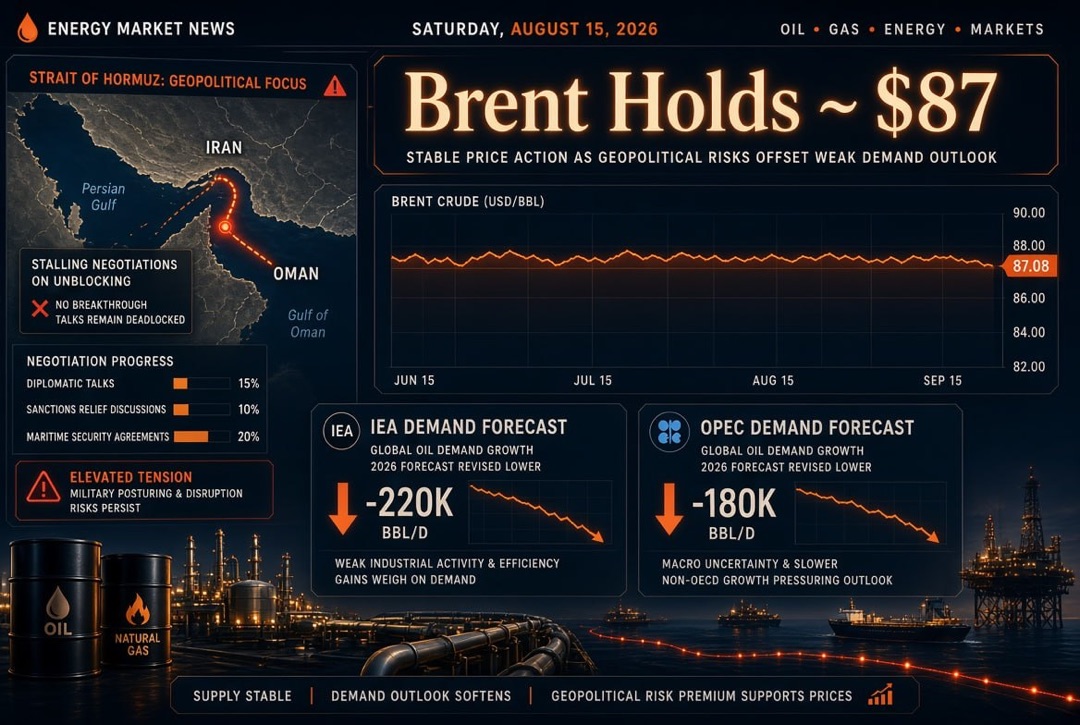
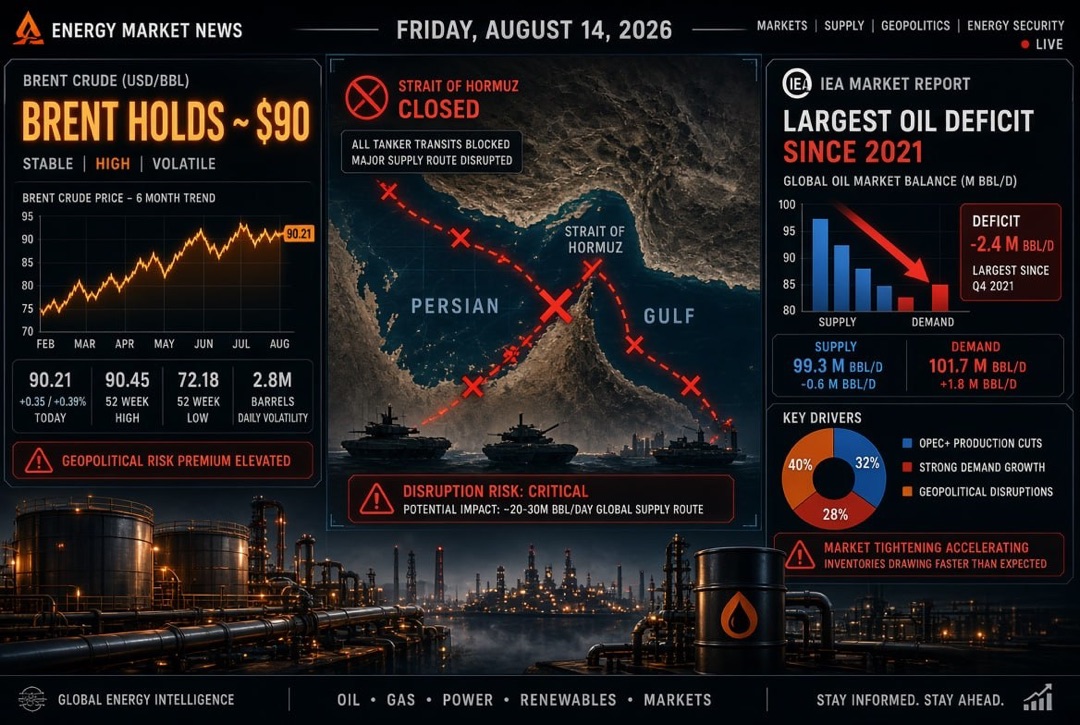
The global oil market concludes the week with a persistent geopolitical premium. For the oil and gas sector, this means that prices remain high even as market participants attempt to factor in the potential for de-escalation. However, the physical oil market continues to indicate a shortage of specific grades and the high value of prompt delivery.
Several factors are currently vital for the market:
- Disruptions in traditional Middle Eastern supply chains support high oil prices and volatility;
- Demand for substitutive barrels from the U.S., Africa, and Europe remains elevated;
- The spread between paper and physical markets indicates that logistics and raw material availability have become as crucial as formal futures quotes.
For investors, this suggests that oil will be evaluated in the coming weeks not just through the classic supply-demand balance but also based on route reliability, shipping insurance, fleet utilization, and export infrastructure accessibility. In the current phase, the global oil market appears tense even when exchange quotes do not visually indicate an extremum.
Supply and Demand Balance: Forecasts Have Deteriorated, but Prices Remain High
The paradox of the current market is that the fundamental forecast for global oil demand has weakened, yet prices are not declining as rapidly as they would in a typical cycle. This shift occurs because the energy sector has temporarily transitioned from a "macro" mode to an "energy security" mode.
For oil companies, traders, and refineries, the following insights are particularly important:
- Pressure on the global economy limits the potential for a vigorous demand growth for raw materials;
- Simultaneously, supply risks prevent the oil market from quickly returning to lower price ranges;
- The scenario for the second quarter still presupposes high oil prices, and more noticeable cooling is possible only with the restoration of supply chains and easing of risk premium.
This is why the oil and gas sector is currently trading not so much on expectations of the economic cycle, but on the anticipated duration of the logistical shock. For energy market participants, this creates an environment where short-term trading in raw materials and oil products may prove more profitable than classic bets on long-term macro trends.
Gas and LNG: The Market is Tightening, and Competition for Flexible Volumes is Intensifying
As of April 17, the global gas market appears tighter than expected at the beginning of the year. Previously, many market participants viewed 2026 as a period of gradual softening in the gas balance, but now the focus has shifted back to the physical availability of LNG and supply flexibility. Europe, Asia, and developing countries are simultaneously competing for available cargoes, amplifying the price sensitivity throughout the sector.
Key focal points include:
- The redistribution of global LNG flows towards regions with the most urgent demand;
- The increasing role of the U.S. as a key supplier of flexible LNG volumes;
- The search for new diversification pathways for Europe, including unconventional logistics routes.
For gas companies and traders, this means the gas market remains trade-oriented rather than comfortably surplus. Even if shortages do not become systemic throughout the year, the spot segment already demonstrates sensitivity to any new disruptions. This is particularly important for the power sector since expensive gas directly impacts generation costs, tariff solutions, and the utilization of alternative capacities.
Oil Products and Refineries: The Weak Link in the Global Energy Balance
Whereas in previous years the market primarily focused on crude oil, oil products and refinery operations are now gaining increasing significance. Processing has become the main filter between extraction and end consumers. In other words, even if the market finds substitute crude oil, it does not guarantee an adequate production of diesel, aviation fuel, and other light oil products.
The most notable pressure point is aviation fuel. The European market demonstrates that disruptions in Middle Eastern supplies quickly impact the jet fuel segment. For fuel companies and refineries, this signals increased margins on specific products, while concurrently elevating the risks of shortages and regulatory interventions.
From an industry perspective, three signals warrant close monitoring:
- The refinery utilization rates and processing volumes;
- The dynamics of gasoline, distillates, and aviation fuel inventories;
- The capacity of the U.S. and other exporters to cover shortfalls for Europe and Asia.
For participants in the oil products market, this implies that the refining sector may soon remain one of the primary beneficiaries of high volatility in the energy sector. Yet, simultaneously, processing remains an area where the risk of imbalance quickly transitions from a market issue to an infrastructure one.
Electricity: Expensive Gas Accelerates Policy Reassessment and Network Investments
The electricity market has once again become directly dependent on the dynamics of the raw material complex. For Europe, this means pressure on energy costs and accelerated discussions around reducing tax burdens on electricity. For the U.S. and several Asian markets, the primary question revolves around how to meet the rapidly growing demand from industries, data centers, and new digital capacities.
A new balance is forming in the energy sector:
- Electricity demand is growing faster than previous expectations;
- Gas generation remains critically important for system stability;
- Without substantial investments in networks, storage, and flexible power capacities, even rapid growth in renewables does not eliminate systemic risks.
For the global market, this is an important signal: the electricity sector can no longer be considered separately from oil and gas. The electrification of the economy enhances the long-term role of networks and renewables, but in the short term, it makes the energy system more sensitive to the costs of gas, coal, and oil products.
Renewables: The Energy Transition Continues, Becoming Part of a Resilience Strategy
Despite the current raw material shock, renewable energy sources are not being sidelined. On the contrary, renewables are increasingly viewed not only as an environmental agenda but also as a means to reduce dependence on imported fuels. This is particularly crucial for regions where electricity remains linked to expensive gas or unstable hydrocarbon logistics.
For the energy sector, this creates a dual effect:
- In the short term, traditional energy maintains high margins;
- In the medium term, investments in renewables, networks, and storage gain additional strategic justification.
Hence, the global energy transition in 2026 appears not as an alternative to oil and gas, but as its institutional complement. Investors are increasingly evaluating oil companies, electricity generation, and renewables within a unified framework: which entities are best able to withstand price shocks, secure supplies, and maintain cash flow.
Coal: A Backup Resource Receives Short-Term Support Again
The coal market is also receiving temporary support amidst high energy prices and increased demand for backup generation. For some electricity systems, coal remains a safeguard in case gas becomes too expensive or unstable. However, strategically, this does not change the long-term picture: coal wins tactically but does not create a new long-term investment narrative in most developed markets.
For investors, the conclusion is straightforward: coal in 2026 is primarily a tool for short-term hedging against energy stress—not a main structural beneficiary of the new cycle. Its role in the global energy sector remains significant, but increasingly utilitarian.
Key Considerations for Investors and Energy Market Participants
On Friday, April 17, key indicators for the market will be:
- The dynamics of Brent and WTI — the market will reveal whether it is pricing in continued tension or gradually decreasing the risk premium;
- News regarding LNG and gas — any signals about new supplies, force majeure events, or rerouted cargoes will influence not only gas but also electricity;
- Refinery margins and oil product market — particularly in the diesel and aviation fuel segments;
- Political decisions in Europe and the U.S. — taxes on electricity, subsidies, generation stimulation, and energy security measures;
- The "energy + infrastructure" link — not only producers will benefit, but also those who control processing, exports, terminals, grids, and flexible generation.
The day's conclusion for the global market is this: oil, gas, and energy remain in a phase of heightened restructuring. Oil maintains high levels, gas and LNG have become strategic assets once again, oil products and refineries reveal real bottlenecks in the system, and electricity and renewables increasingly transform into the center of a new energy architecture. For investors, this is a market where specific links in the value chain—from the well and tanker to refineries, terminals, power grids, and end consumers—play a crucial role rather than general slogans.