Current News in the Oil, Gas, and Energy Sector for Thursday, December 18, 2025: Oil, Gas, Electricity, Renewable Energy, Coal, Refineries, and Key Events in the Global Energy Market.
Oil and Oil Products
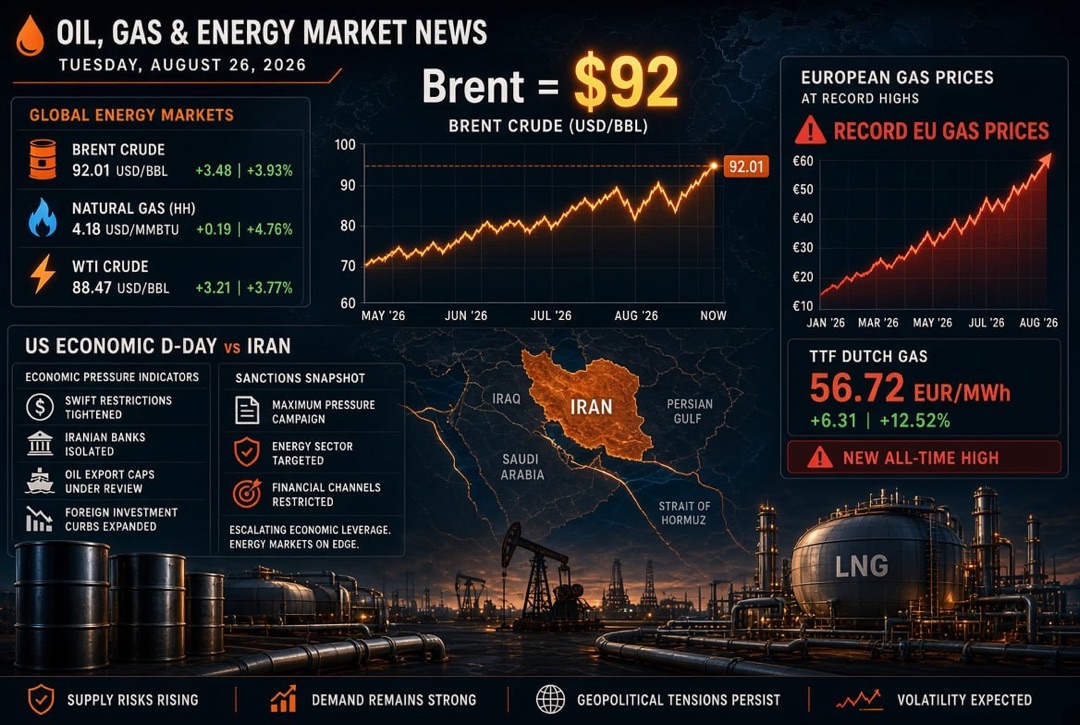
The global oil market remains under pressure: Brent crude is trading near $60 per barrel, while WTI hovers around $55 per barrel—its lowest levels in several years. The main factors driving down oil prices include:
- Expected Supply Surplus: A surplus in production over demand is forecasted for 2026 as non-OPEC countries ramp up production to record levels.
- Hope for Peace in Ukraine: Progress in negotiations between Russia and Ukraine has sparked expectations of easing sanctions and a return of some Russian oil exports to the market.
- OPEC+ Policy: The OPEC+ alliance has decided to pause its production increases in the first quarter of 2026 after months of gradual escalation, signaling caution amid risks of oversupply.
As a result of these factors, oil prices have significantly decreased compared to the beginning of the year. Brent and WTI may end 2025 at their lowest values since 2020. The decline in crude prices has already affected the oil products markets: gasoline and diesel prices have also dropped. In the U.S., retail gasoline prices have decreased in most states ahead of the holiday season, reducing consumer spending. European refiners, having switched to alternative oil supplies instead of Russian crude, are operating under stable raw material supply. Globally, refineries maintain high levels of processing, benefiting from lower oil prices, despite moderate fuel demand increases. Refining margins remain stable, and no new deficits of gasoline or diesel are observed in the global market.
Gas Market and LNG
The gas market presents a paradoxical situation: despite an early and cold winter, natural gas prices in Europe continue to decline. Prices at the Dutch TTF hub have dropped below €30 per megawatt-hour, marking the lowest level since spring 2024. This is nearly 90% lower than the peak prices during the 2022 crisis and 45% below prices at the beginning of 2025. The primary reason for this decline is the massive influx of liquefied natural gas, especially from the U.S., which offsets reduced pipeline supplies from Russia. Gas storage facilities in the European Union are about 75% full, which, while below average historical levels, combined with record LNG imports, provides sufficient resources for stable prices.
- Europe: High volumes of LNG are reducing gas prices, even with lower storage levels. The U.S. supplied over half of European LNG imports in 2025, redirecting supplies from Asian markets. This has led to a significant narrowing of the spread between European prices and cheaper American gas.
- U.S.: In North America, gas futures have risen due to forecasts of abnormal cold weather. Henry Hub prices climbed above $5 per MMBtu due to the threat of polar vortex conditions and increased heating demand. However, domestic production in the U.S. remains high, which helps mitigate price increases as weather conditions normalize.
- Asia: The Asian gas market is relatively balanced as the year closes. Demand in key countries (China, South Korea, Japan) has been moderate, allowing for additional LNG shipments to be redirected to Europe. Prices at Asian hubs (such as JKM) have remained stable without sharp fluctuations, as competition for cargoes between Europe and Asia has lessened compared to 2022.
Thus, the global natural gas market enters the winter with much more confidence than a year ago: adequate stocks and imports are available to meet demands even during cold spells. The flexibility of the LNG market plays a crucial role, as tankers swiftly change routes toward Europe, alleviating regional imbalances. Assuming average temperatures persist, the pricing situation for gas consumers promises to remain favorable.
Coal Sector
The traditional coal segment reached a historical peak in consumption in 2025, but prospects indicate a forthcoming slowdown. According to the International Energy Agency (IEA), global coal consumption in 2025 rose by approximately 0.5% to a record 8.85 billion tons. Coal remains the largest source of electricity generation globally; however, its share is set to decline: the IEA forecasts that coal demand will plateau and gradually decrease by 2030 due to the growth of renewable energy and nuclear power. Regional trends are diverse:
- India: Coal consumption has decreased (only the third drop in the last 50 years) due to an exceptionally strong monsoon season. Abundant rainfall has boosted hydroelectric production and cooled demand for electricity from coal-fired power plants.
- U.S.: In contrast, coal usage has increased in the U.S., facilitated by higher natural gas prices in the first half of the year and political support for the sector. The new administration in Washington has suspended the decommissioning of certain coal power plants, temporarily boosting domestic coal demand for electricity.
- China: The world’s largest coal consumer has maintained its consumption at last year’s level. China burns 30% more coal than the rest of the world combined; however, a gradual decline is expected by the end of the decade as huge capacities in wind, solar, and nuclear energy come online.
Therefore, 2025 will likely mark a peak year for coal. Increased competition from gas (where applicable) and especially renewable energy sources will push coal out of the energy mix of many countries. However, in the short term, coal remains in demand in developing Asian economies, where energy consumption growth outpaces the construction of new clean capacities.
Electricity and Renewable Energy
The electricity sector continues to transform under the influence of climate agendas and fluctuating fuel prices. In 2025, the share of renewable energy sources (RES) in global electricity production reached new heights: many countries have introduced record capacities in solar and wind generation. For example, China has significantly increased its solar generation capacity, and new offshore wind farms and photovoltaic projects have been introduced in Europe and the U.S., spurred by government support and private investments. By year-end, global investments in green energy remain high, approaching investments in fossil fuels.
However, the rapid development of RES presents challenges for the stability of energy systems. This winter, Europe has experienced the impact of weather variability: periods of low winds and short daylight hours have heightened the load on traditional generation. Early in the winter, EU countries have had to increase gas and coal production due to low generation from wind farms amid anticyclonic conditions. This temporarily raised electricity prices in certain regions. Nevertheless, thanks to the growth of RES capacities coupled with a high share of gas in the energy mix, serious supply issues have not arisen. Governments and energy companies are also investing in energy storage systems and grid modernization to smooth peaks and integrate renewable energy.
Climate commitments continue to dictate the trend: at the recent global climate summit (COP30) in Brazil, calls were made to expedite the energy transition. Several countries agreed on measures to triple RES deployment by 2030 and enhance energy efficiency. Additionally, there is a revival of interest in nuclear energy: new nuclear power plants are being constructed in various regions, and the lifespan of existing plants is being extended to ensure baseload generation without emissions. Overall, the electricity sector is moving toward a cleaner and more sustainable future, although the transition period requires balancing between supply reliability and environmental goals.
Geopolitics and Sanctions
Geopolitical factors continue to exert a significant influence on energy markets. At the forefront is the conflict in Eastern Europe and the associated sanctions:
- Peace Negotiations: December saw the most significant progress in dialogue aimed at resolving the situation in Ukraine since the conflict began. The U.S. has expressed willingness to offer Ukraine security assurances similar to NATO, and European diplomats have reported constructive negotiations. Expectations have surged for a potential ceasefire, although Russia states it will not consider territorial concessions. Growing hopes for the cessation of hostilities have sparked discussions about the potential lifting or easing of oil and gas sanctions against Russia in the future.
- Sanction Pressure: Simultaneously, Western countries have indicated readiness to intensify pressure if the peace dialogue stalls. Washington, in particular, has prepared another package of sanctions against Russia's energy sector that may be implemented if Moscow rejects the proposed peace agreement terms. Earlier in the fall, the U.S. and the U.K. already imposed additional restrictions on Russian oil giants “Rosneft” and “Lukoil,” complicating their efforts to attract investments and technology.
- Infrastructure Risks: Combat operations and sabotage continue to pose threats to energy supply. In the past week, Ukraine has intensified drone attacks on oil infrastructure targets deep within Russia. Notably, fires occurred at refineries in Krasnodar Krai and along the Volga due to drone strikes. Although these incidents have a locally minor impact on the overall fuel supply, they underscore the ongoing military risks to the industry until a lasting peace is achieved.
- Venezuela: In Latin America, geopolitics also play a role in oil markets. Following a partial easing of sanctions against Venezuela last fall, the United States has tightened control over adherence to transaction conditions. In December, an incident occurred in which a tanker carrying Venezuelan oil was detained due to suspected breach of license conditions. State-owned company PDVSA faced demands from customers to increase discounts and alter supply terms. This complicated the growth of Venezuelan exports despite the recent U.S. allowance for a temporary increase in production in exchange for political concessions from Caracas.
Overall, the sanctions standoff between Russia and the West, along with other international disagreements, continues to inject uncertainty into the global FEC. Investors are closely monitoring political developments, as any changes—from breakthroughs in peace negotiations to the imposition of new restrictions—could significantly impact oil, gas, and commodity prices.
Corporate News and Projects
The largest oil and gas companies and energy projects worldwide are concluding the year with several important events and decisions:
- Shell Exits German Refinery: British-Dutch Shell has resumed attempts to sell its 37.5% stake in the Schwedt refinery in Germany. This refinery was previously controlled by “Rosneft” and came under German government management after 2022. Shell aims to find a buyer by the end of January, seeking to distance itself from an asset that carries sanction risks.
- Middle Eastern Expansion: In Kuwait, oil and gas service company Action Energy (AEC) has successfully conducted an initial public offering on the local stock exchange and announced plans for regional expansion. The funds raised will be directed toward enhancing drilling and maintenance services in Kuwait and neighboring countries where oil and gas production is increasing. This move reflects the strengthening position of Middle Eastern businesses amid rising oil extraction in the region.
- New Gas Deals in Europe: European buyers continue to diversify their gas supply. The Hungarian state conglomerate MVM signed a 5-year contract with American Chevron for the delivery of liquefied gas, amounting to around 2 billion m3 per year. This LNG will arrive via European terminals, decreasing Hungary's reliance on pipeline gas and bolstering the country's energy security. The deal illustrates the deepening cooperation between the U.S. and Eastern Europe in the gas market.
Overall, oil and gas companies are adapting to the new market realities: some are reassessing assets and portfolios considering geopolitical risks (like Shell in Europe), while others are capitalizing on favorable conditions for growth (like Middle Eastern players). Simultaneously, investments continue in both traditional oil and gas projects and areas of energy transition. Industry giants are required to balance short-term profitability with long-term decarbonization trends, which drives key strategic decisions in the energy sector as we approach 2026.