Global Energy Market May 4, 2026: OPEC+ Decision, Tensions in the Strait of Hormuz, Oil Market, Gas, LNG, Refineries, Oil Products, Electricity, Renewables, and Coal
Monday, May 4, 2026, marks the beginning of one of the most tense weeks of the year for the global fuel and energy sector. Investors, oil companies, refineries, fuel traders, gas suppliers, and electricity market participants remain focused on three key factors: the situation surrounding the Strait of Hormuz, the OPEC+ decision to further increase production quotas, and the growing risk of fuel shortages in certain regions of the world.
The global oil market continues to operate in a state of heightened volatility. Even after a pullback in Brent prices from extreme levels, the market has yet to return to a state of normal balance: physical supplies remain constrained, costs for insurance and freight are rising, and refineries in Asia, Europe, and the U.S. are responding differently to the shortages of crude oil and oil products. For the global investor audience, the main takeaway is clear: the energy sector has once again become a central source of inflationary, geopolitical, and corporate risk.
Oil: OPEC+ Increases Quotas, but the Market Focuses on Physical Supplies
The key news for the oil market is OPEC+'s decision to increase production quotas for June by 188,000 barrels per day. Formally, this marks the third consecutive increase in quotas; however, what is more important for the market is the actual ability of these additional volumes to reach buyers amidst logistical disruptions in the Middle East.
For investors, this means that the traditional logic of "increasing quotas leading to downward pressure on prices" is currently limited in its applicability. Under normal circumstances, additional OPEC+ production might have cooled the Brent and WTI markets, but under the current situation, oil supply is determined not only by production, but also by the availability of shipping routes, tankers, insurance, and port infrastructure.
- Positive Factor: OPEC+ demonstrates a willingness to maintain market stability and prevent panic.
- Negative Factor: Actual exports from several Gulf countries remain below potential levels.
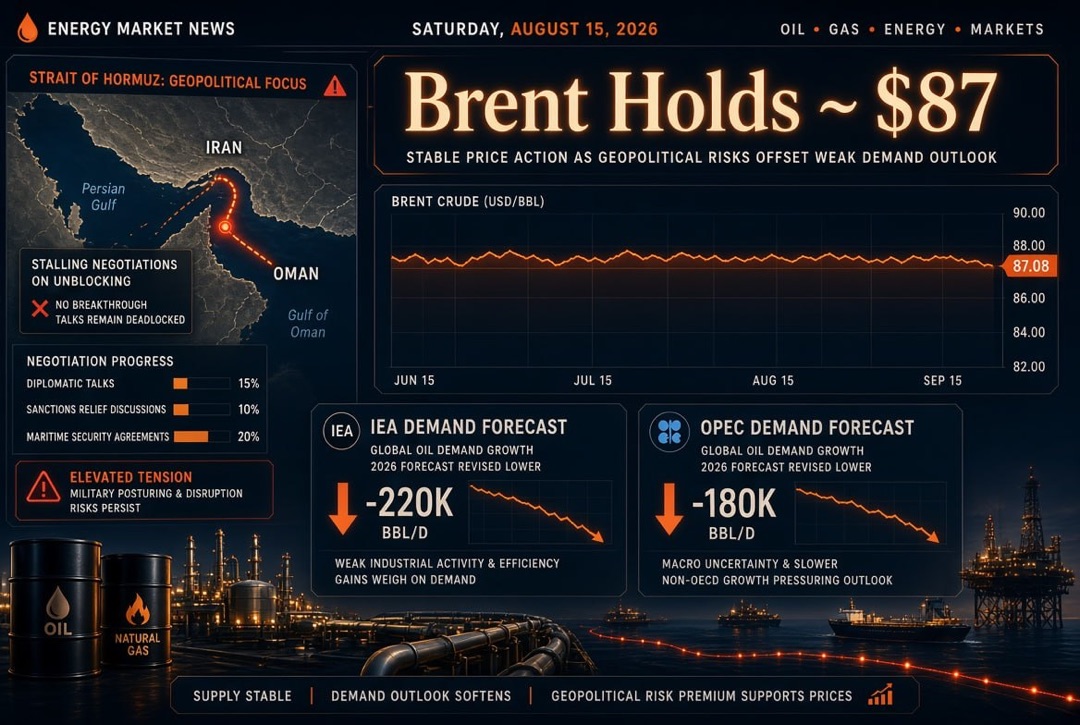
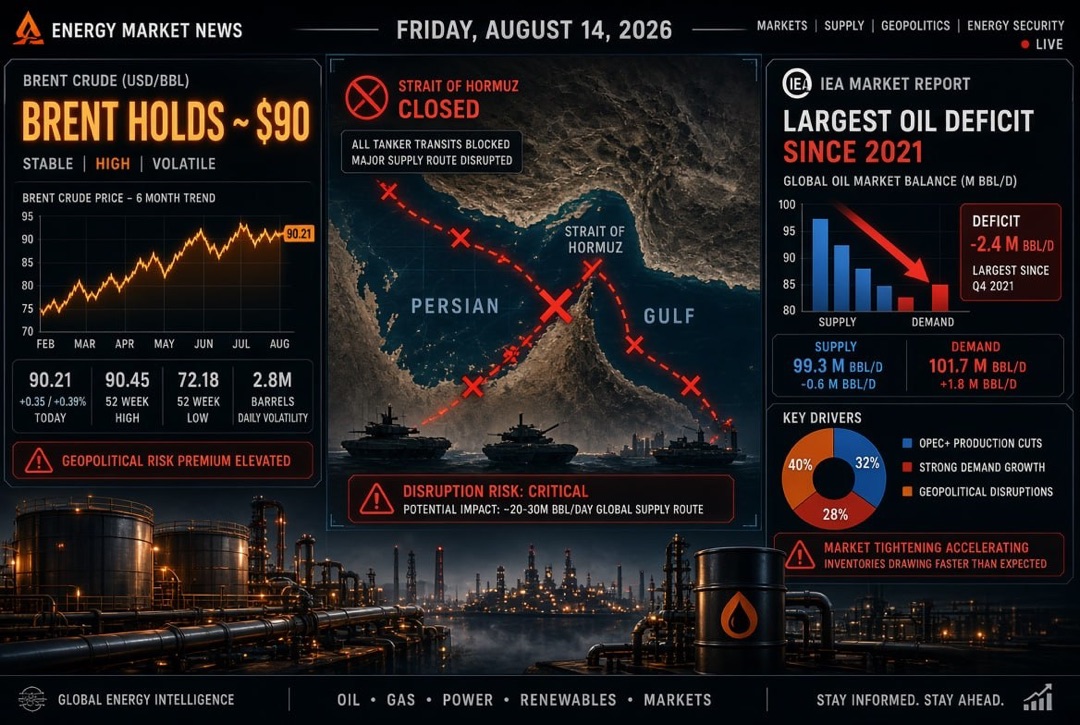
- Market Conclusion: Oil prices will be sensitive not so much to quota announcements as to the real restoration of flows through the Strait of Hormuz.
Brent and WTI: The Market Maintains a Risk Premium
Oil prices remain elevated by historical standards. Brent, following sharp fluctuations, is holding above levels that were previously considered stressful for the global economy. WTI is also trading with a noticeable geopolitical premium, reflecting increased demand for more reliable supplies from North America.
For oil companies, this presents an ambiguous scenario. On one hand, the high price per barrel supports the revenues of producers, particularly those with low extraction costs. On the other hand, excessively high oil prices heighten the risk of demand destruction, pressures on refining, and political intervention by governments seeking to curb prices for gasoline, diesel, jet fuel, and electricity.
Over the coming days, the market will evaluate three scenarios: partial restoration of shipping, the maintenance of current restrictions, or a new escalation. This crossroads will determine the behavior of Brent, the spreads between different types of oil, and the profitability of the oil and gas sector.
Refineries and Oil Products: Diesel, Gasoline, and Jet Fuel Become the Main Bottleneck
The raw materials and energy sector is increasingly shifting its focus from oil as a raw material to oil products as a final commodity. Refineries are experiencing varied margins depending on the region. American processors, especially along the Gulf Coast, are benefiting from high demand for exported oil products. In contrast, European refineries are under pressure due to high raw material costs, competition for supplies, and the risk of shortages of specific fuel types.
Investors are paying particular attention to middle distillates: diesel, gas oil, and jet fuel. The shortage of these products has the potential to impact logistics, aviation, industry, and agriculture the most quickly. For fuel companies, this underscores the growing importance of managing inventories, supply contracts, and regional arbitrage opportunities.
- Refineries with access to stable crude supply gain an advantage.
- Oil product exporters from the U.S. strengthen their positions in the global market.
- Import-dependent countries in Asia and Europe face rising fuel costs.
- The diesel and aviation markets remain more strained than the gasoline market.
United States: Oil and Fuel Inventories Decline, Refining Remains High
The U.S. oil products market has become one of the key indicators of the global balance. Recent data on the U.S. shows high refinery utilization rates alongside declining commercial inventories of crude oil, gasoline, and distillates. For the global market, this is an important signal: even with developed infrastructure and strong production, the U.S. is not fully insulated from external energy shocks.
The decline in gasoline and distillate inventories is particularly significant ahead of the seasonal demand surge. If the summer driving season in the U.S. coincides with a sustained shortage of middle distillates and high freight costs, refinery margins may remain elevated, but consumers and industries will face higher prices.
Gas and LNG: The Hormuz Factor Extends Beyond the Oil Market
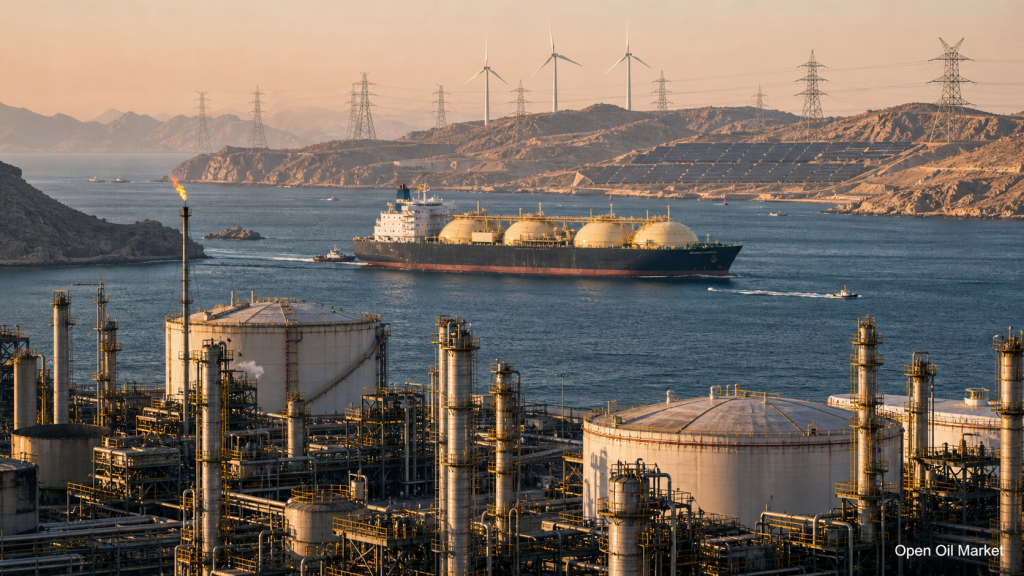
The gas market is also under pressure. LNG has become a critical element of energy security for Europe and Asia, but some of the flows depend on logistics in the Persian Gulf. Reports regarding tankers passing through the Strait of Hormuz are viewed by the market as a positive signal; however, this does not yet signify a full restoration of safe and stable shipping routes.
For LNG buyers in Asia, the key risk lies in competition for limited cargoes. Japan, South Korea, China, India, and Southeast Asian countries are closely monitoring the cost of spot deliveries. Europe, despite its developed LNG import infrastructure, remains sensitive to prices, as gas impacts the cost of electricity, fertilizers, chemicals, and industrial production.
Electricity: Demand Grows Due to Heat, Data Centers, and Electrification
The electricity market is becoming a standalone investment center within the global energy sector. The rise in consumption is attributed not only to weather but also to deeper structural factors: the electrification of industry, the growth of data centers, artificial intelligence, electric vehicles, and digital infrastructure.
Further growth in electricity consumption is anticipated in the United States in 2026-2027. In India, heat has already led to record peak loads, forcing the country to increase generation from coal and gas. This indicates that the energy transition does not eliminate the need for backup capacity. On the contrary, the higher the share of renewables, the more important grid stability, energy storage, gas generation, coal reserves, and flexible demand management become.
Coal: Traditional Fuel Returns as a Safety Resource
Coal remains a controversial but crucial element of the global energy mix. In times of hot weather, gas disruptions, and expensive LNG, many countries utilize coal-fired generation as a tool for stabilizing their energy systems. This is particularly evident in Asia, where demand for electricity is growing faster than the capacity of grid infrastructure and energy storage.
For investors, the coal sector remains high-risk: long-term pressures from climate policies, ESG constraints, and competition from renewables loom large. However, in the short term, coal provides energy security, particularly in places lacking adequate volumes of gas, hydropower, or nuclear generation. Therefore, in 2026, coal will be evaluated not only as a raw material asset but also as a component of energy system reliability.
Renewables and Energy Transition: Crisis Accelerates Investments in Grids and Clean Generation
High prices for oil, gas, and oil products are stimulating interest in renewable energy sources. For governments, renewables are becoming not only a climate project but also a means of reducing import dependency. Solar and wind power are gaining additional momentum, but the main investment deficit increasingly lies not in generation itself but in grids, storage, balancing, and cross-border electricity transmission.
This is why major international financial institutions are betting on energy infrastructure. For the global market, this is an important signal: future profitability in energy will be shaped not only by oil and gas extraction but also by electricity grids, critical minerals, energy storage, digital load management, and projects for interstate energy integration.
What Matters for Investors and Energy Market Participants on May 4, 2026
The main topic of the day is not just the high price of oil, but the restructuring of the entire energy chain: from extraction and transportation to refining, trading in oil products, electricity generation, and investment in renewables. The global markets for oil, gas, LNG, refineries, coal, electricity, and renewable energy are now more interconnected than usual.
Investors and energy market participants should pay attention to several factors on Monday:
- real volumes of oil and LNG exports through the Middle East;
- dynamics of Brent, WTI, and spreads between the physical and futures markets;
- refinery margins for diesel, gasoline, and jet fuel;
- inventories of oil and oil products in the U.S., Europe, and Asia;
- weather factors and rising electricity demand in India, the U.S., and Asia-Pacific;
- government decisions on subsidies, tariffs, and fuel restrictions;
- investments in grids, renewables, LNG infrastructure, and critical minerals.
The baseline scenario for the coming days is the continuation of elevated volatility across the entire commodity and energy sector. Even if diplomatic signals improve, the market will require confirmation through physical deliveries, lower freight costs, and inventory recovery. Until then, oil, gas, and energy will remain among the main topics for global investors, fuel companies, oil producers, refineries, and electricity market participants.