Global Oil, Gas, and Energy Industry News for Friday, January 16, 2026: Oil, Gas, Electricity, Renewable Energy, Coal, Oil Products, Refineries, Key Events, and Trends in the Global Energy Market.
The global oil and gas markets at the beginning of 2026 are showing signs of growing supply and persistent volatility. Oil prices remain moderate despite escalating geopolitical tensions in the Middle East, while demand for hydrocarbons is curtailed by slowing economic growth. At the same time, there is increasing focus on the active expansion of wind energy, solar generation, and the development of other sources of "clean" energy. Investors and participants in the energy market are closely analyzing the balance between the oversupply of fossil fuels and the large-scale transformation of the energy sector.
Global Oil Market
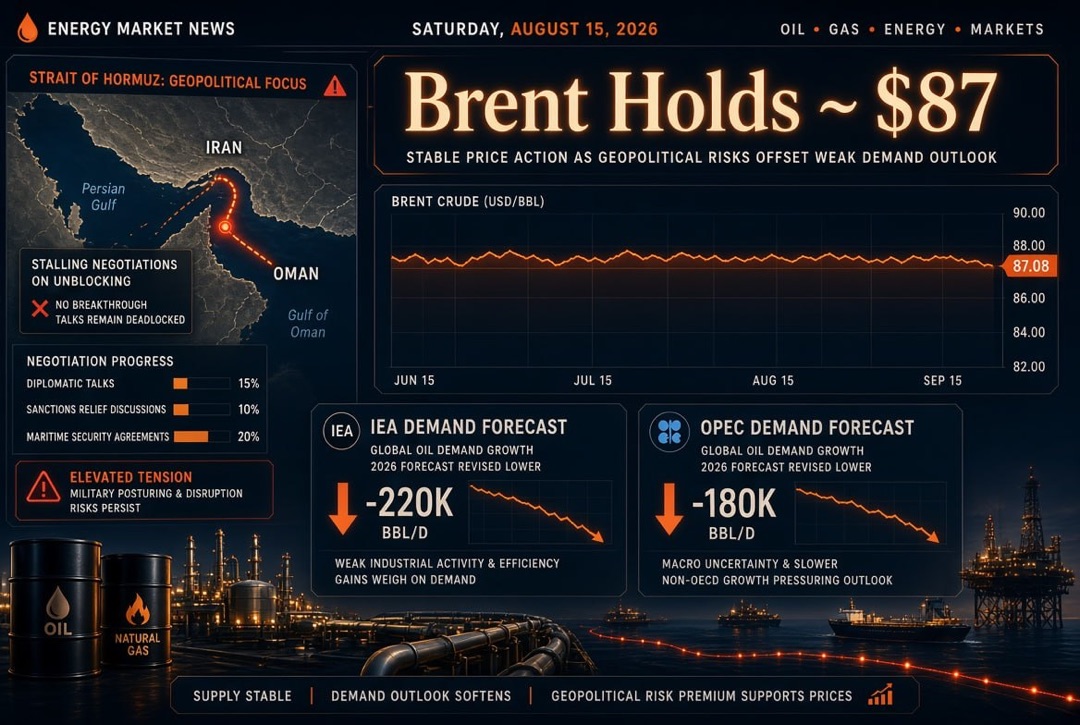
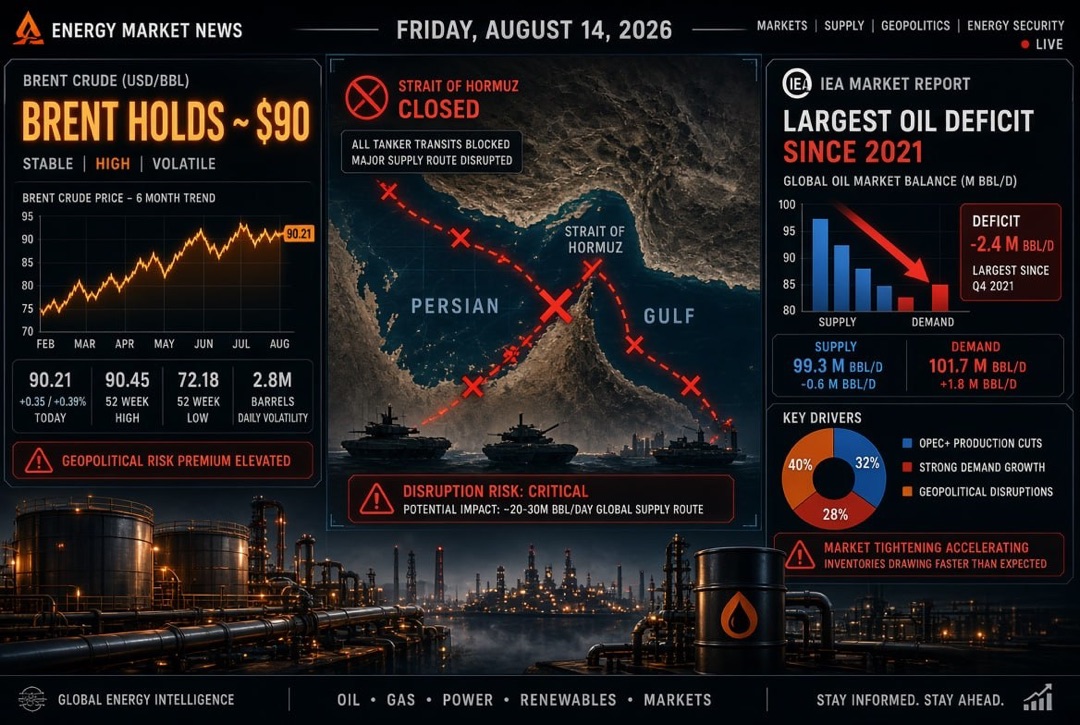
- In January 2026, exchange prices for oil are stable in the range of approximately $60–65 per barrel for Brent (WTI – around $58–60). A sharp decline in prices (-3%) over the last week was prompted by a softening of the White House's rhetoric on Iran: statements about possible non-intervention by the U.S. sharply lowered expectations for supply disruptions and eased market tensions.
- Despite the geopolitical backdrop, the oversupply continues to pressure prices. Oil production in the U.S., Canada, and Latin America has reached record levels, shifting the balance toward excess. Experts predict average Brent prices of about $55–60 in 2026, indicating risks of further declines. According to the U.S. Department of Energy, the average annual price for Brent in 2026 is expected to be around $56/barrel.
- OPEC also confirms demand growth: the January report forecasts a rise in global oil consumption in 2026 to 106.52 million barrels per day (+1.38 million b/d from the previous year). Despite this, the OPEC+ meeting on January 4 kept the quotas unchanged—the cartel aims to balance the market without drastic cuts.
- European regulators continue to pressure supplies from Russia: as of February 1, 2026, the price cap on Russian oil has been lowered to $44.1 per barrel, below the current price of Urals (~$39). At the same time, the White House is actively enforcing energy sanctions: the U.S. has already sold the first batch of Venezuelan oil worth $500 million, and the proceeds are frozen in foreign accounts (the largest one in Qatar).
- Global refineries are responding to the surplus: many refining facilities are reducing processing of excess crude oil, while governments are forced to adjust fuel policies. For example, quotas on gasoline exports from Russia are being discussed to prevent shortages in the domestic market. In Europe and Asia, the export of oil products is increasing, reflecting the balance between energy resources and clean energy.
Global Gas Market
- The European gas market is experiencing a new crisis due to winter cold. In mid-January, spot prices at the TTF hub exceeded $387 per 1,000 cubic meters—a more than 11% increase since the beginning of the week. The deficit in wind generation (with wind contributing about ~15% of consumption compared to 20% a year ago) intensified demand for gas-fired power plants.
- European storage levels are at record lows: as of January 13, stocks were just ~52% of maximum capacity. Due to a deep deficit of pipeline gas (transit from Russia via Ukraine has ceased), EU countries have dramatically increased LNG imports: 109 million tons of LNG were delivered in 2025 (+28% compared to 2024). In January 2026, around 9.5 million tons of LNG is expected (+18% year-on-year) to meet winter needs.
- Significant changes are also noted in Eastern Europe. Ukraine has increased gas imports by ~20% (to 30 million m³/day) through Slovakia and Poland to compensate for the halted transit and declining domestic production. Turkey and Southeast European countries are negotiating increased supplies from Azerbaijan and the U.S. for diversification purposes.
- Meanwhile, Russia is diversifying its exports: Gazprom delivered 38.8 billion cubic meters to China via the Power of Siberia for the first time in 2025, exceeding total deliveries to Europe and Turkey. This reflects a shift in demand geography: Asia is increasing long-term purchases of Russian gas against the backdrop of growing renewable energy sources.
Electricity and Renewable Energy
- Renewable energy continues to experience rapid development. In 2025, China introduced record capacities for wind and solar generation—over 300 GW of new solar and 100 GW of wind power plants. This has allowed clean electricity to outpace demand growth and ensure the first historical reductions in generation from coal-fired power plants (see below).
- The growth of renewable energy occurred amid a general increase in electricity consumption; however, the trend is clearly shifting towards "green" generation. Many countries are boosting investments in solar and wind: new auctions for building solar and wind power plants in Europe and Asia are held for hundreds of megawatts each year.
- The nuclear vector is also interesting: Germany is revising past decisions and plans to bring nuclear power plants back online. Chancellor F. Merz called the phase-out of nuclear energy in 2022 a "strategic error" and announced plans to build new nuclear reactors to ensure the stability of the energy system.
- Overall, the share of non-carbon generation is increasing. The pace of introducing hydro, geothermal, and biomass capacities is accelerating, along with the development of energy storage solutions. This intensifies competition with traditional sources and creates favorable conditions for reducing electricity prices in the future.
Coal Energy and Climate
- The results for 2025 show a historic dynamic: coal generation at coal-fired power plants in China and India simultaneously decreased for the first time. In China, coal production volume fell by approximately 1.6%, while in India, it declined by 3.0% compared to 2024. The last time a similar decrease was recorded was in 1973.
- The decline in coal demand is associated with record growth in renewable energy and a slowdown in economic growth. In China, the rapid introduction of solar and wind capacities fully compensated for the increase in electricity consumption, leading to the first simultaneous drop in coal generation in both of the largest coal-producing countries.
- As a result, the global energy structure is changing: the share of coal generation is decreasing, which positively impacts greenhouse gas emissions. This is critically important for fulfilling climate commitments from many countries and helps curb the rising global electricity prices, reducing risks of energy deficits.
Oil Products and Refineries
- The balance in the oil products market reflects the phenomenon of fuel surplus. Many countries are experiencing elevated prices for gasoline and diesel due to low stocks and costly logistics in 2025. Refineries are cutting processing of excess crude, and regulators are introducing new measures: for instance, in Russia, the introduction of quotas on gasoline exports is being considered to prevent fuel shortages in the domestic market.
- In the European Union, some refineries are refocusing on exporting fuel to developing countries. Oil product inventories in EU countries remain unstable amid severe winter conditions, leading to a high likelihood of further corrections in the fuel market as the economy recovers. Strong demand in Asia supports prices for heating oil and diesel, encouraging investments in additional storage and processing capacity.
Global Energy Policy and Deals
- Sanctions and alliance policies continue to shape the market. The European Union has lowered the price cap on Russian oil to $44.1/barrel, while the U.S. has intensified pressure: the U.S. Treasury has renewed its license for operations with the foreign assets of Lukoil, effectively easing sanctions against the oil company.
- Serbia and Hungary are preparing an intergovernmental agreement in energy: a 113-kilometer oil pipeline from Novi Sad to Aldyo (with a capacity of 5 million tons/year) is planned, along with the expansion of cooperation in electricity and gas supply (for example, reserving gas capacities). This is part of regional initiatives for supply diversification.
- On the international stage, ties in LNG and pipelines are strengthening. China and Southeast Asian countries are coordinating long-term contracts for LNG from the U.S. and Qatar, while Russia is promoting new gas routes (Central Asia–China, "Nord Stream – 3" in the future) to serve customers in Asia and Europe.
Forecasts and Investments
- Analytical agencies point to the dual nature of prospects. On one hand, OPEC forecasts an increase in oil demand (+1.38 million b/d in 2026), but fundamental factors indicate oversupply in the market. According to EIA data, Brent could "drop" to ~$56/barrel in 2026, with oversupply leading to an increase in global stocks.
- On the other hand, the investment flow into clean energy is intensifying. According to the International Renewable Energy Agency, despite a temporary slowdown in job growth, global investments in wind and solar projects will continue to grow at record levels in 2026. Interest is also increasing in hydrogen energy and energy storage: corporations are allocating new amounts for the development of storage systems and "green" hydrogen.
- Investors are reorienting their portfolios: oil and gas companies are increasing expenditures on R&D in the area of renewable energy sources and energy efficiency, while Western funds are gradually reducing their investments in hydrocarbons. In the securities market, there is growing interest in stocks of "green" startups and renewable projects, which may potentially adjust the balance of supply and demand in traditional energy markets in the future.